Vaccines Before, During and After Pregnancy in South Korea
Start with your stage of pregnancy
If you receive care in South Korea, bring your vaccination history to an obstetric appointment before booking individual shots. The important distinction is whether you are planning pregnancy, already pregnant, or recovering after delivery. Your clinician needs the gestational age documented in your maternity record, your expected delivery date, and the vaccines you have already received. This guide was checked on 7 October 2026. [1][2]
A pregnancy-week calculator can help organize questions, but it cannot establish vaccine eligibility. Tell the vaccination clinic if pregnancy is possible, even before a pregnancy has been confirmed. Ask the obstetric and vaccination teams to agree on a plan when they work at different institutions.
Before pregnancy: collect evidence, not just a remembered result
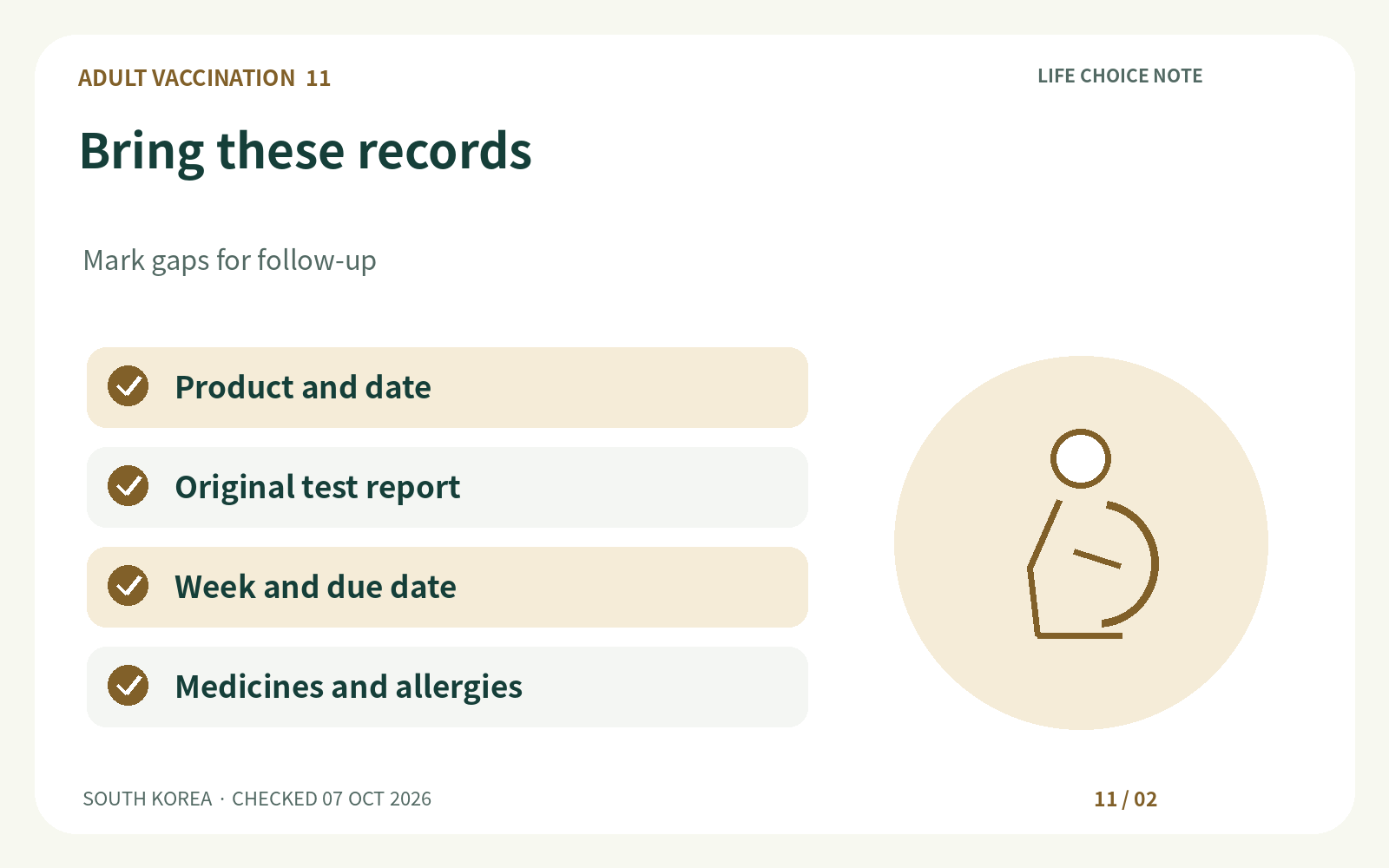
Look for MMR records, varicella records, previous prenatal blood tests, and any documented history of infection. Useful Korean terms are 풍진 for rubella, 수두 for chickenpox, and 예방접종기록 for vaccination records. Bring the actual laboratory report rather than translating everything into “antibody positive” or “antibody negative.” The test name, date, and prior documented doses matter. [2]
MMR and varicella are live vaccines and are contraindicated during pregnancy. If vaccination is needed before conception, ask about the interval between doses and the pregnancy-avoidance period in the specific Korean product information. Do not assume one waiting period covers every live vaccine sold in Korea. Ask for the date when your clinician considers it appropriate to resume trying to conceive. [2][6]
During pregnancy: ask specifically about Tdap
The Korean Society of Infectious Diseases recommends Tdap during weeks 27–36 of every pregnancy. A dose during a previous pregnancy does not replace a review during the current one. Tdap contains tetanus, diphtheria and pertussis components; Td does not include pertussis. A remembered “tetanus shot” therefore needs its product name checked. [1]
Tell your obstetrician if you have already received a tetanus-containing vaccine during this pregnancy, including after an injury. Bring its date and product record before arranging another dose. Seasonal influenza and COVID-19 questions should be checked against the current Korean guidance and your personal circumstances. They are separate decisions rather than an instruction to receive every available vaccine. [1][2]
Maternal RSV vaccination: the Korean approval changed in 2026
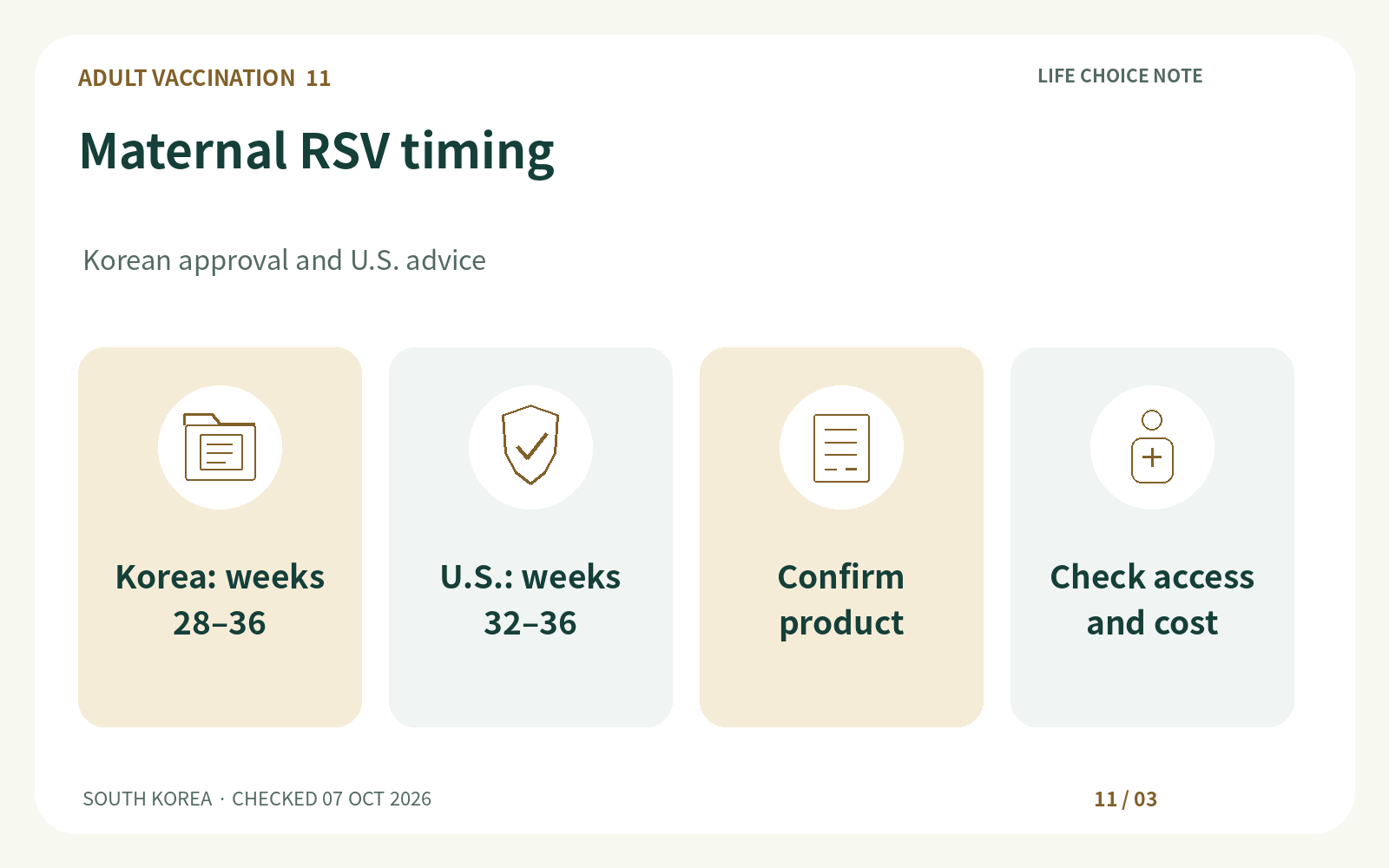
South Korea approved Abrysvo (아브리스보) on 13 August 2026. Its Korean label includes one maternal dose during weeks 28–36 of pregnancy to prevent RSV lower respiratory tract disease in infants through six months of age. The mother receives the vaccine; antibodies transferred to the baby contribute to the intended infant protection. Approval does not by itself establish a nationwide funded program or availability at every maternity clinic. [3]
The U.S. CDC uses a different recommendation: 32 weeks 0 days through 36 weeks 6 days, with September–January administration in most of the continental United States. Those are U.S. recommendations, not the Korean product window. If you will give birth abroad, share the country of delivery and any earlier maternal RSV vaccination with both teams. [3][5]
Arexvy (아렉스비) is not an interchangeable maternal option. Its Korean product information does not recommend use during pregnancy. Confirm the product name when asking for an RSV appointment. [4]
The Korean Abrysvo label states that the need for revaccination in a subsequent pregnancy has not been established. Do not assume the every-pregnancy Tdap recommendation also applies to RSV vaccination; report any previous maternal RSV dose. [3]
Ask about combined appointments and individual risk
Do not schedule Tdap and maternal RSV vaccination together solely because an overseas page says coadministration is possible. The Korean Abrysvo label states that coadministration studies were not performed in pregnant women. A study with Tdap in nonpregnant women found lower immune responses to pertussis components; the clinical significance was not established. Your clinician should consider the actual products, your gestational age, and the time remaining before delivery. [3]
The maternal trial principally enrolled uncomplicated singleton pregnancies. A history of preterm birth or a current pregnancy complication deserves a specific discussion about the applicability of the evidence. Neither “completely risk-free” nor “known to cause prematurity” is an appropriate summary of the label. [3]
If you were vaccinated before realizing you were pregnant
Contact your obstetric team with the product name, vaccination date, and pregnancy dates. Inadvertent MMR or varicella vaccination is not, by itself, considered a reason to terminate a pregnancy in CDC guidance. Counseling is still needed for the individual situation. Do not make a major pregnancy decision based on an online checklist. [2]
Severe breathing difficulty, swelling of the face or throat, or loss of consciousness after vaccination requires immediate emergency assessment. Do not wait for a routine prenatal appointment. [6]
Make a postpartum plan before delivery
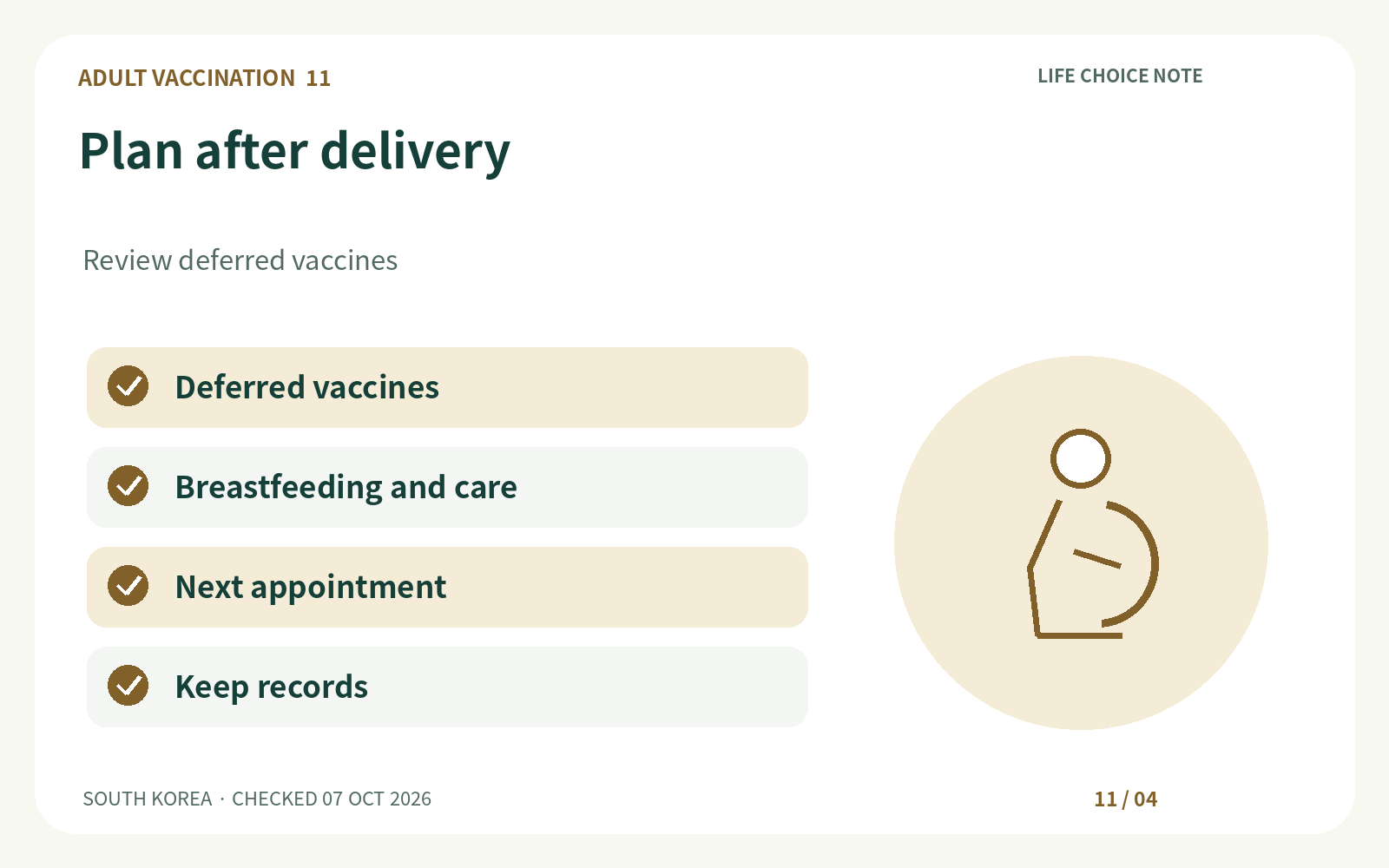
Ask which deferred vaccines should be reviewed after birth and where that review will happen. Breastfeeding does not automatically require postponing all vaccines, but product-specific exceptions and the mother’s health still matter. Recent transfusions, immunoglobulin treatment or immune-suppressing medicines can be relevant to the plan. [2]
A useful clinic request is: “I would like to review my vaccines before and after delivery. Could you check my records, current gestational age, and any vaccines already given during this pregnancy?” You can show this Korean sentence: “임신 전후 예방접종 계획을 상담하고 싶습니다. 접종기록과 이번 임신 중 접종 내역을 확인해 주세요.”
Before leaving, write down the next appointment, who is responsible for arranging it, and any records you still need. This is general health information, not an individual vaccination prescription. Your obstetric and vaccination clinicians should determine your products, timing and follow-up in South Korea.
Related published guides
Sources
- Recommendations for Adult Immunization by the Korean Society of Infectious Diseases, 2023 · 대한감염학회 / Infection & Chemotherapy · 2024-06-12 · 2026-10-07 KST
- Guidelines for Vaccinating Pregnant Women · CDC · 2025-08-22 · 2026-10-07 KST
- 아브리스보주 의약품 제품정보 · 식품의약품안전처 · 최초허가 2026-08-13 · 2026-10-07 KST
- 아렉스비주 의약품 제품정보 · 식품의약품안전처 · 효능효과 변경 2026-07-01 · 2026-10-07 KST
- RSV Vaccine Guidance for Pregnant Women · CDC · 2024-08-30 · 2026-10-07 KST
- 예방접종 후 이상반응 관리지침 · 질병관리청 · 본문 10차개정 2022-07 · 2026-10-07 KST