Vaccines With Chronic Illness or Immune Suppression in South Korea
Keep treatment decisions with your treating team
If you have a chronic illness or take immune-suppressing medicines in South Korea, a vaccine review should use your treatment plan as well as your vaccination record. Do not stop, reduce, or postpone prescribed treatment to create a vaccination window yourself. Your team needs to consider vaccine safety, the likely immune response, and the timing of necessary care. Information was checked on 7 October 2026. [1]
A chronic condition does not automatically mean severe immune suppression. A person with stable diabetes and someone receiving intensive chemotherapy may need very different assessments. Feeling tired or frequently catching colds cannot establish an immune-suppression category. Bring the diagnosis and treatment details rather than describing yourself only as having “low immunity.” [1]
Prepare five groups of information
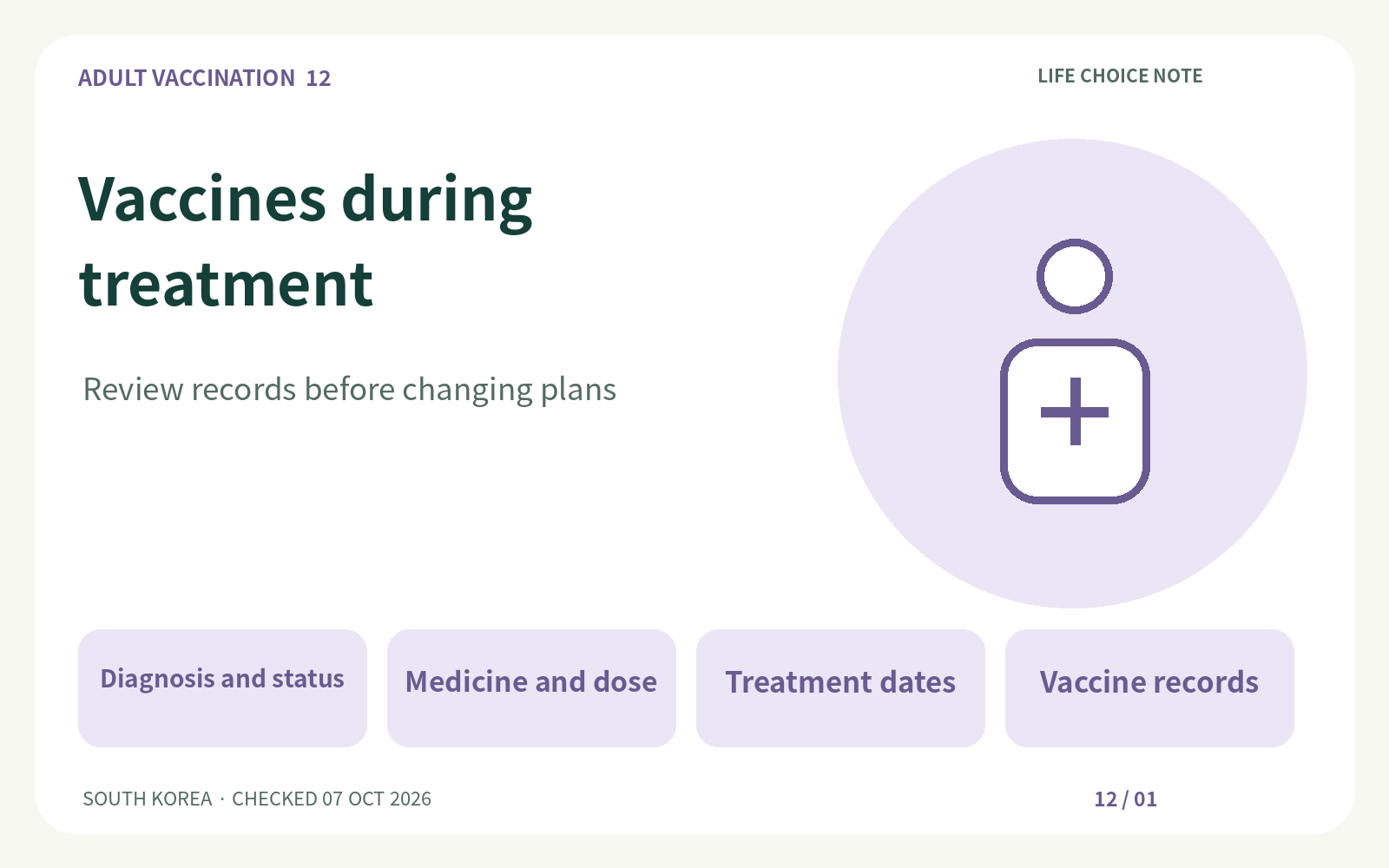
First, list your diagnoses and whether treatment is planned, ongoing, or completed. Second, bring medicine names, doses, routes and dates. Include injections, tablets and medicines from other hospitals. A steroid inhaler, a topical preparation and a high-dose systemic course are not interchangeable descriptions. Photographs of medicine packaging can help when the Korean and English brand names differ. [1]
Third, write down both the most recent treatment date and the next scheduled date. Fourth, collect vaccine product names, dates and previous laboratory reports. Fifth, include transplant details, recent blood products or immunoglobulin, and any severe vaccine allergy. Mark missing records as “not yet confirmed” rather than guessing. [1][3]
Live and non-live vaccines raise different questions
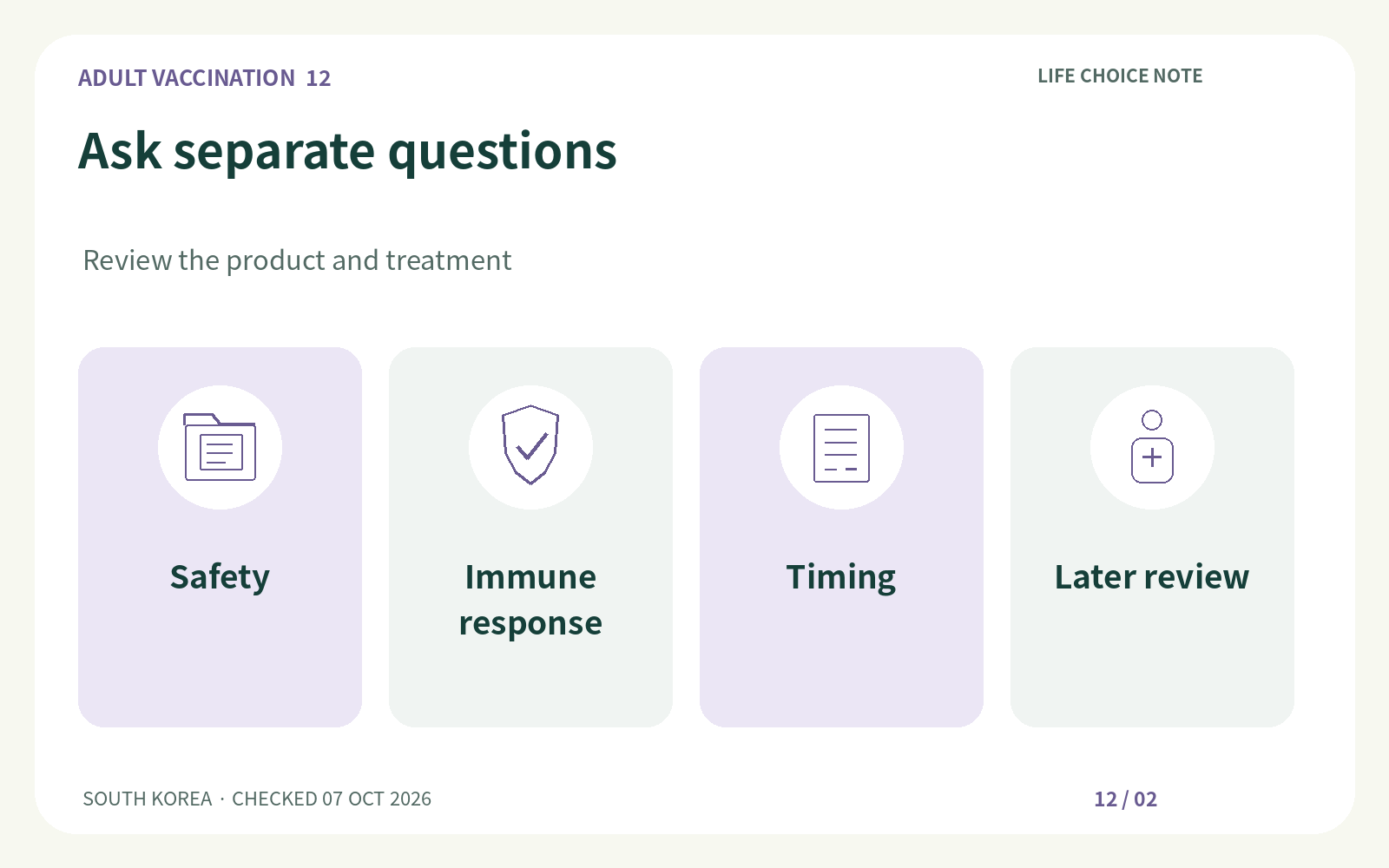
Live vaccines include MMR, varicella and yellow fever. In substantial immune suppression, their weakened organisms can cause safety problems. These vaccines generally require avoidance or specialist assessment rather than a routine walk-in appointment. A previous uneventful vaccination does not establish that the same vaccine is suitable during a new treatment regimen. [1][5]
Non-live vaccines can often be used in people with immune suppression, but treatment may reduce the response they produce. Ask two separate questions: “Can I safely receive this product?” and “When is it likely to work best for me?” Some doses given during treatment may need later reassessment. Do not independently repeat every vaccine or assume that every pre-treatment dose has become invalid. [1]
Ask early when treatment is being planned
When chemotherapy, an immune-suppressing regimen, transplantation or splenectomy is planned, ask for a vaccine review promptly. This may identify useful opportunities before treatment. It does not justify delaying urgent disease treatment to finish a vaccination series without the treating clinician’s agreement. [1]
There is no single waiting period after “immune-suppressing medicine.” Drug effects differ, and B-cell-depleting treatments can affect responses for a prolonged period. Your clinician should consider the actual regimen and recovery rather than applying an internet countdown to the last dose. This guide does not provide instructions for holding individual medicines. [1]
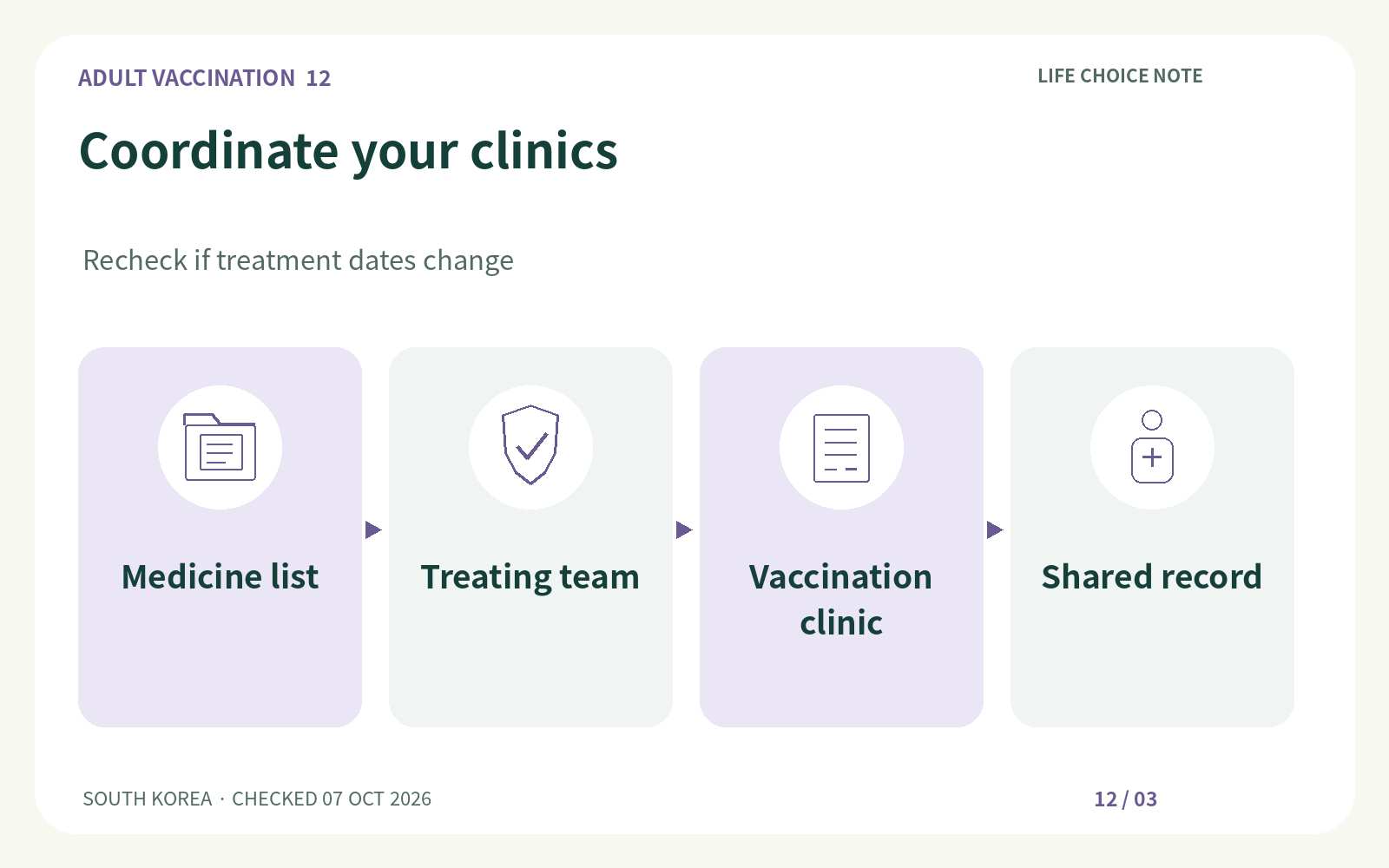
If your vaccination clinic is separate from your specialist hospital, ask what written information the clinic needs. Agree on who will confirm the date and whom to contact if the next treatment cycle changes. A deferred vaccine should have a review point, not simply disappear from the plan.
Stem-cell transplantation needs its own revaccination review
After hematopoietic stem-cell transplantation, immune protection can change substantially, so earlier completed vaccinations may not settle the current plan. The transplant team considers the conditioning treatment, graft-versus-host disease, immune recovery and ongoing medicines. Both autologous and allogeneic transplant recipients need an individualized review. The Korean term is 조혈모세포이식. [3]
Do not equate a positive or negative antibody result with a complete revaccination decision. The result has to be interpreted alongside the test used, the timing, the vaccine history and the treatment context. Ask which results are useful for the particular vaccine rather than requesting a universal “immunity panel.” [1]
What changed in Korean funding in July 2026
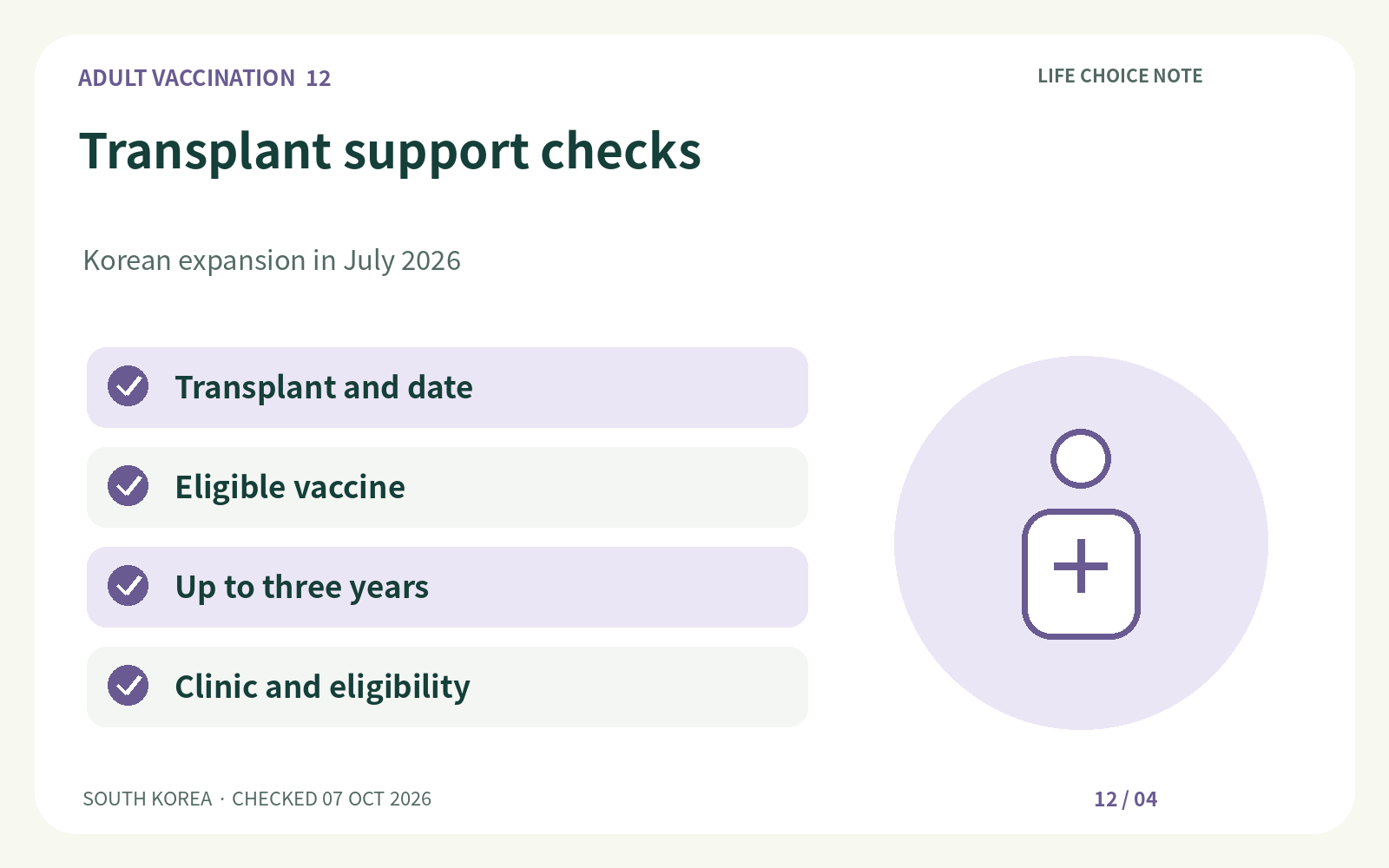
KDCA expanded national vaccination support for stem-cell transplant patients to all ages from 27 July 2026. The announcement specifies new recipients transplanted on or after 1 January 2026, with support extending for up to three years from transplantation. It covers vaccination costs for 17 vaccine types preventing 15 infectious diseases. [2]
These conditions do not mean that every person taking immune-suppressing medicine, every historical transplant recipient or every solid-organ recipient receives the same funding. Ask the participating clinic to verify your transplant date, planned product and individual eligibility, including any administrative documentation needed for your status in Korea. Do not assume that an English-language article confirms your funding entitlement. [2]
The announcement says some vaccines can begin from at least three months after transplantation, depending on the vaccine. That is not a universal three-month start date for all products. Clinical timing and funding eligibility are separate checks. [2][3]
Leave with a practical plan
Try this request: “Please review my vaccination records alongside my medicines and treatment dates. Which vaccines should be considered now, which need later review, and who will confirm the timing?” In Korean: “복용약과 치료 일정을 기준으로 예방접종 계획을 확인하고 싶습니다.”
Before vaccination, report any recent treatment change or new acute illness. Afterward, follow the fever and emergency instructions supplied by your oncology or transplant team. Do not assume that a new fever is simply a vaccine reaction. Severe breathing difficulty, facial or throat swelling, or loss of consciousness needs emergency care. [3][5]
This guide provides general health information. Your treating team and vaccination clinician should decide the products, dates and possible repeat doses. Never change prescribed medicines on your own to arrange vaccination.
Related published guides
- COVID-19 Vaccination in Korea 2026–2027: Who Is Eligible?
- Blood Test Results Explained | Lab Values, Units & Reference Ranges
Sources
- Altered Immunocompetence · CDC · 2024-06-26 · 2026-10-07 KST
- 조혈모세포이식 환자 국가예방접종 지원, 전 연령으로 전면 확대 · 질병관리청 · 2026-07-26 발표 / 2026-07-27 시행 · 2026-10-07 KST
- 조혈모세포이식: 예방접종 · 질병관리청 국가건강정보포털 · 2026-05-28 업데이트 · 2026-10-07 KST
- Recommendations for Adult Immunization by the Korean Society of Infectious Diseases, 2023 · 대한감염학회 / Infection & Chemotherapy · 2024-06-12 · 2026-10-07 KST
- 예방접종 후 이상반응 관리지침 · 질병관리청 · 본문 10차개정 2022-07 · 2026-10-07 KST