Shingles Treatment After 72 Hours: Is It Too Late to Get Care?
Seek urgent assessment for eye or nose involvement, vision changes, facial weakness, or severe illness. Do not delay while calculating whether 72 hours have passed.
If your shingles rash started more than three days ago, contact a healthcare professional anyway. Antiviral treatment works best when started early, but a later visit may still lead to treatment, pain management, or an assessment for complications. The calendar alone cannot determine what you need.

When does the 72-hour clock start?
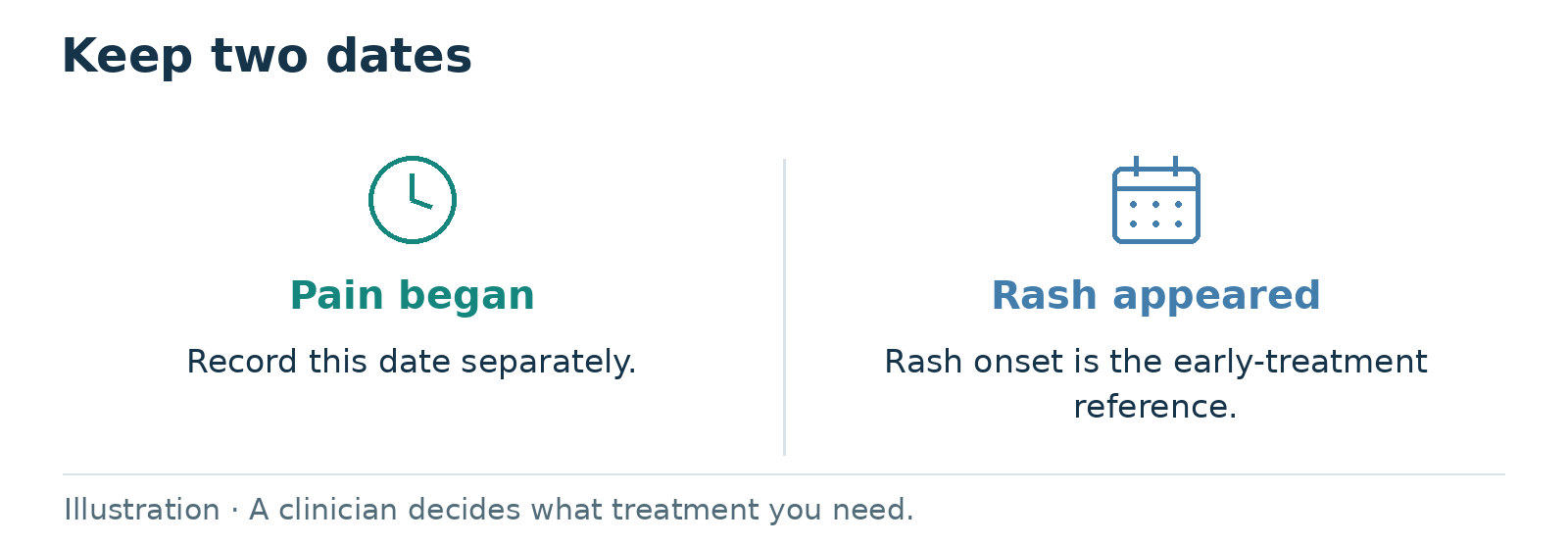
The early-treatment window discussed here is measured from the start of the rash, rather than an earlier unexplained ache. KDCA guidance explicitly uses rash onset, and the American Academy of Dermatology discusses treatment within three days of getting the rash.
If tingling began on Monday and you first saw a rash on Wednesday, report both dates. You do not need to invent an exact hour. Explain which timing is certain and which is an estimate.
Tap the diagram to view full size
Why early treatment matters
Antivirals can help lesions resolve, limit new lesions, and reduce acute pain. These are among the benefits described in the CDC clinical overview. Pain-relief medicines address a different part of the illness and may also be needed.
A 72-hour window is a reason to seek care promptly, not permission to wait until the third day. Likewise, a rash that hurts less today does not tell you whether antiviral treatment is appropriate.
What a clinician considers after three days
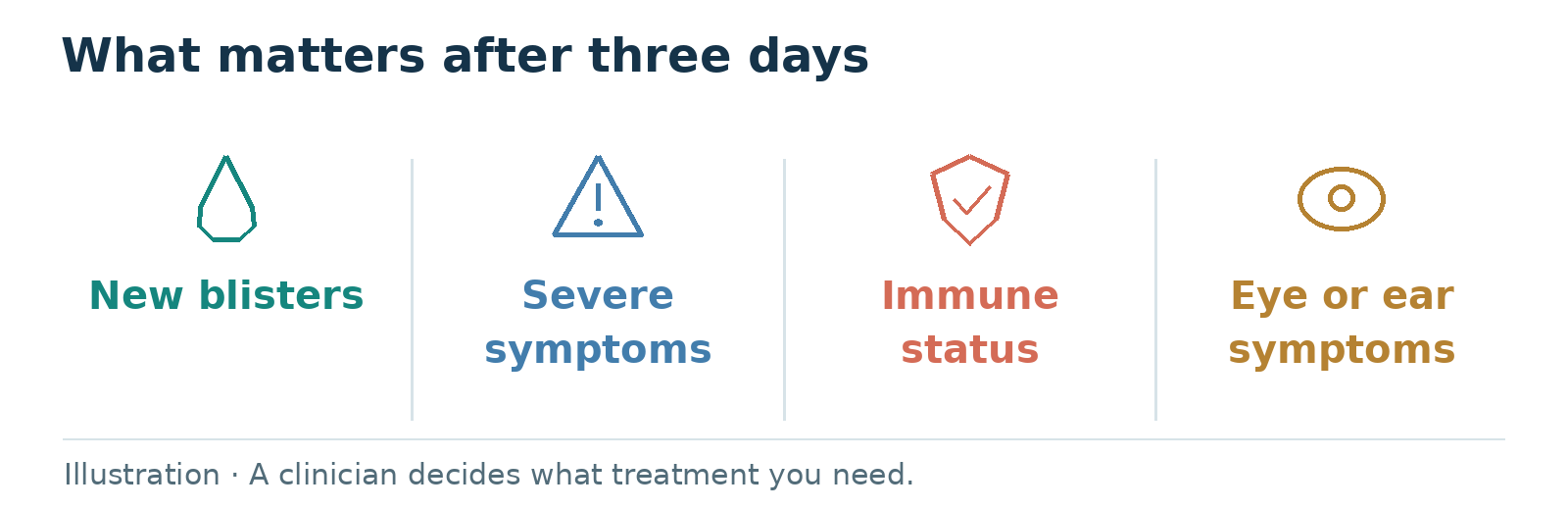
Important details include continuing new blisters, the severity of pain and rash, eye or ear symptoms, and a weakened immune system. KDCA specifically notes that immunocompromised people may need antiviral treatment even after 72 hours. The American Academy of Dermatology also advises being seen when the rash has lasted longer than three days.
The NHS England pathway considers selected higher-risk or still-active cases presenting later. That is a UK pathway, not a universal US prescribing cutoff or a US pharmacy treatment service. Its timing rules should not be used to decide at home that treatment is either mandatory or useless.
Even if every blister has crusted, persistent severe pain or new symptoms deserve assessment. The decision about an antiviral is separate from the need to manage pain or investigate a complication.
Tap the diagram to view full size
Does early treatment guarantee no lasting nerve pain?
No. Benefits during the acute illness and prevention of long-term postherpetic neuralgia are different outcomes. Some people have pain after the skin heals despite receiving timely treatment.
A 2014 Cochrane review did not find that oral acyclovir reduced the incidence of long-term postherpetic neuralgia, and found insufficient evidence for other antivirals. Its search covered evidence through 2013. This older review does not mean that antiviral treatment has no value for the acute illness.
What to bring and what to ask
Bring the rash timeline, a note about new blisters, and a list of medicines. Tell the clinician about kidney disease, cancer treatment, or medicines that suppress your immune system. Describe whether pain is interfering with sleep, clothing, work, or daily activities.
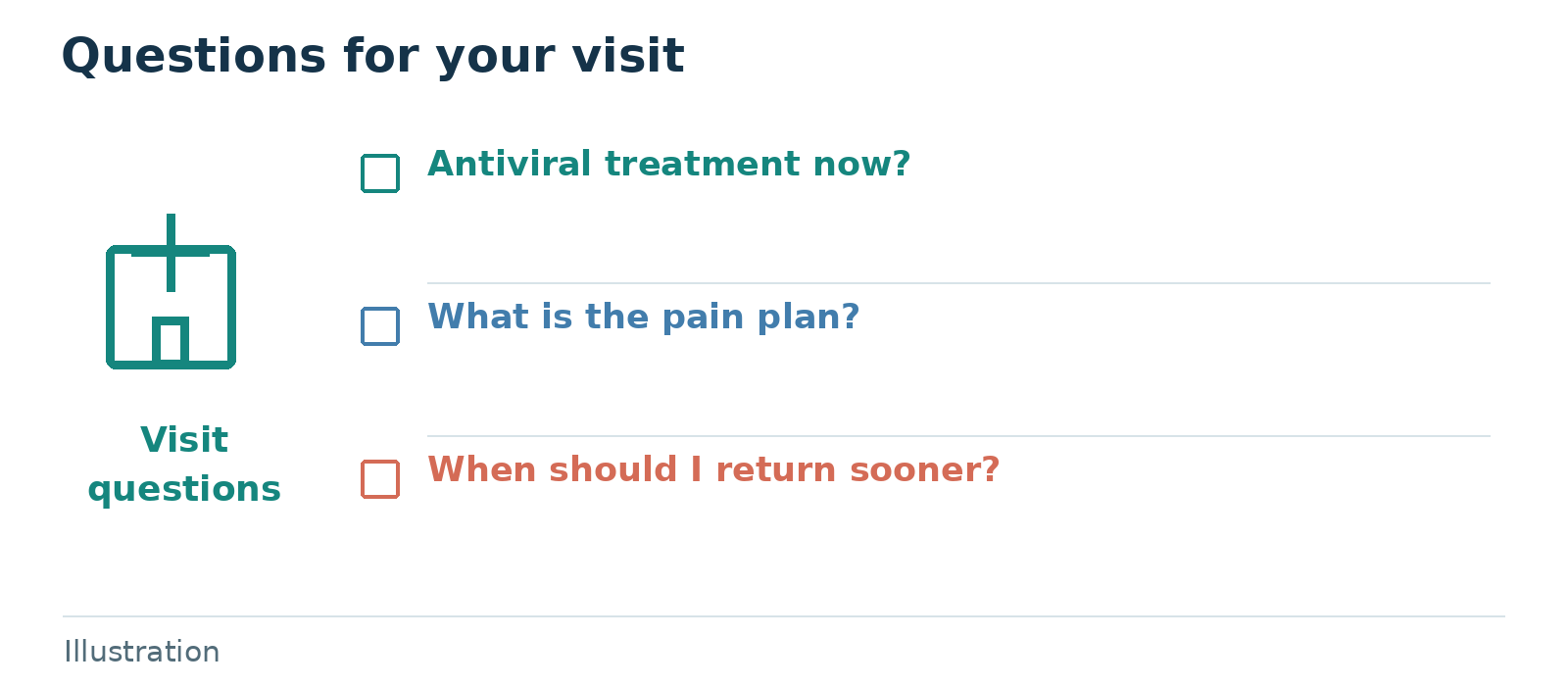
Ask whether an antiviral is appropriate now, what the pain-management plan is, and which changes require an earlier review. Do not use someone else’s prescription or an online dose schedule to start treatment yourself.
Tap the diagram to view full size
Frequently asked questions
What if I do not know when the rash began?
Tell the clinician when you first noticed it and how certain you are. New blisters and other current findings are also relevant. Uncertain timing should not keep you from seeking care.
Is day four automatically too late?
No. Your symptoms, new lesions, immune status, and possible complications matter. A clinician can assess whether treatment is still appropriate.
Can I skip evaluation if a pain reliever helps?
Pain relief does not confirm the diagnosis or determine whether an antiviral is needed. A new painful rash still deserves prompt assessment.
Scope and safety
This article provides general health information, not a diagnosis or an individual treatment plan. Your symptoms, medical conditions, and medicines can change the care you need. Do not delay urgent care to complete notes or read more material.
Helpful resources for your visit
Sources and review date
- KDCA: Antiviral treatment for shingles (Korean)
- CDC: Clinical overview and treatment of shingles
- NHS England: Shingles clinical pathway, page 6 (UK)
- Cochrane: Antivirals to prevent postherpetic neuralgia, 2014
- American Academy of Dermatology: Shingles diagnosis and treatment
Public sources checked and text reviewed: October 5, 2026.