Early Shingles Symptoms: What to Notice Before and After the Rash
Get prompt medical care for a rash near your eye or nose, eye pain, or changes in vision. Sudden facial weakness, new limb weakness, or confusion needs urgent assessment.
An unusually sensitive patch of skin can be an early sign of shingles. Burning, tingling, itching, or pain may come before a rash, followed by grouped blisters on one side of the body or face. This is a pattern to report to a clinician, not a reliable way to diagnose yourself.
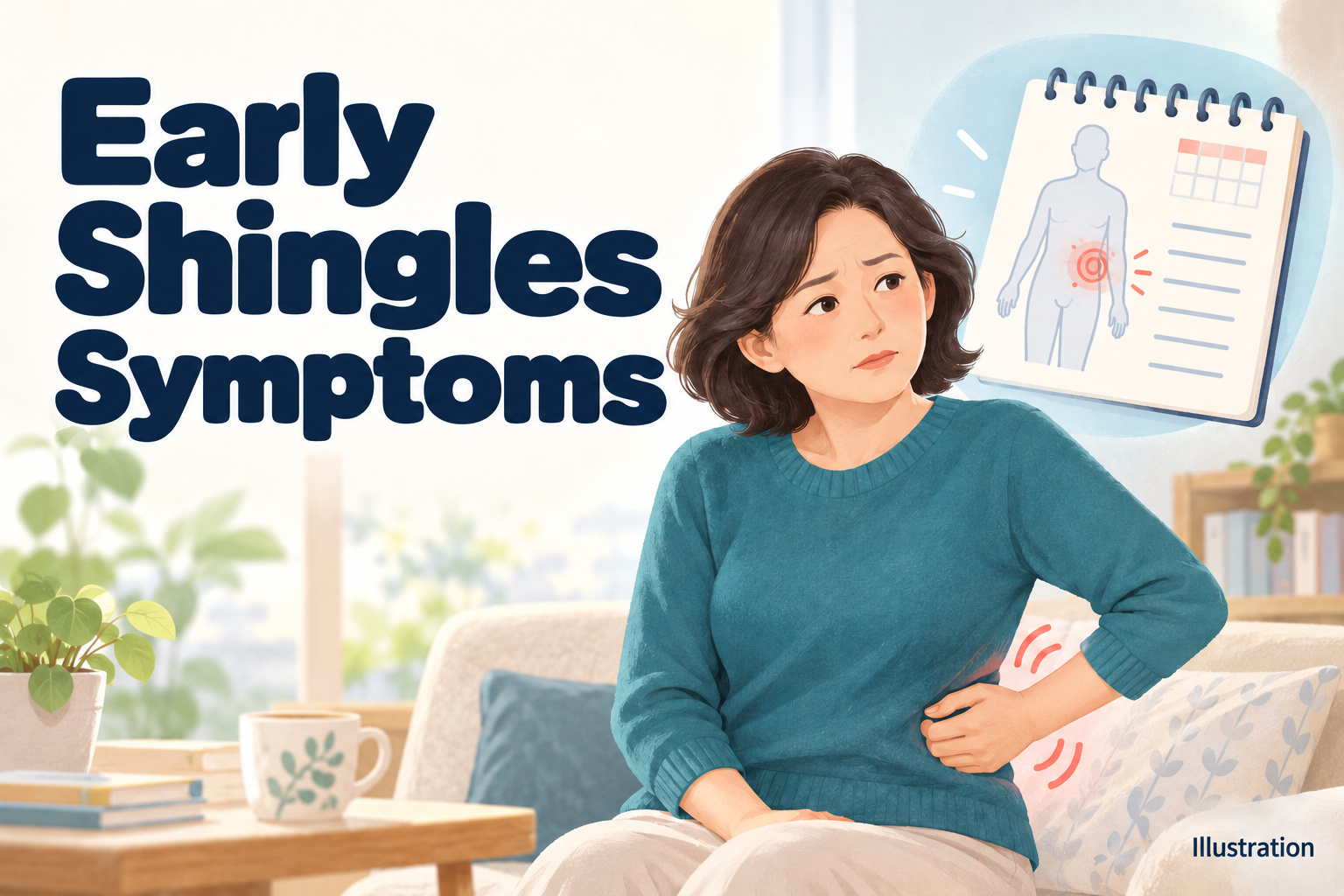
Which changes make shingles a possibility?
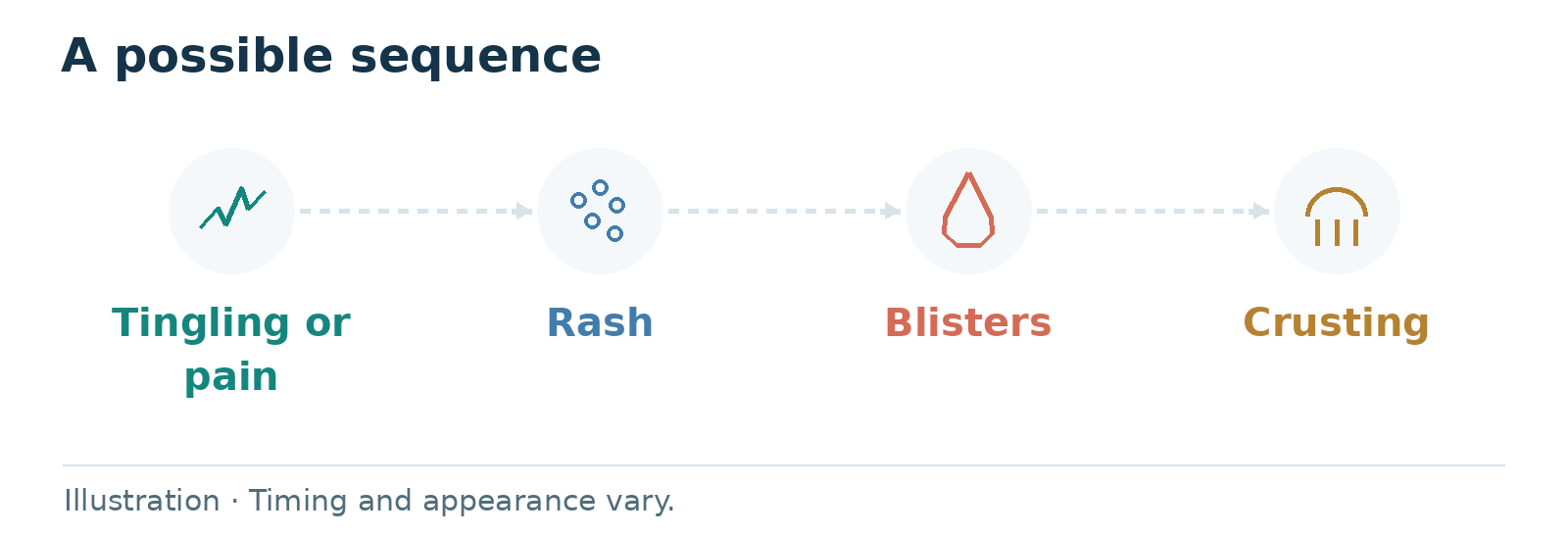
Look at the location, the skin sensations, and how the area changes over time. Shingles often follows a localized band on one side and usually does not cross the middle of the body. Blisters may then dry and crust. CDC describes these common symptoms, while KDCA provides a similar overview in Korean.
There is no single day-by-day appearance that every case must follow. A clear stripe may never form, and some people notice itching more than pain. Mild discomfort does not rule shingles out.
Tap the diagram to view full size
Why a photograph cannot settle the diagnosis
Several conditions can resemble parts of the shingles rash, including contact dermatitis, insect bites, and herpes simplex. Lighting, skin tone, and the stage of a rash also change how a photo looks. Clinicians consider the distribution, symptoms, and medical history together. CDC clinical guidance notes that diagnosis can be difficult without a rash.
If there is no visible rash, do not assume that unexplained pain is shingles. Persistent or worsening pain deserves evaluation. Chest pain, trouble breathing, or sudden weakness should never be watched at home while waiting for blisters.
When the location or other symptoms change the urgency
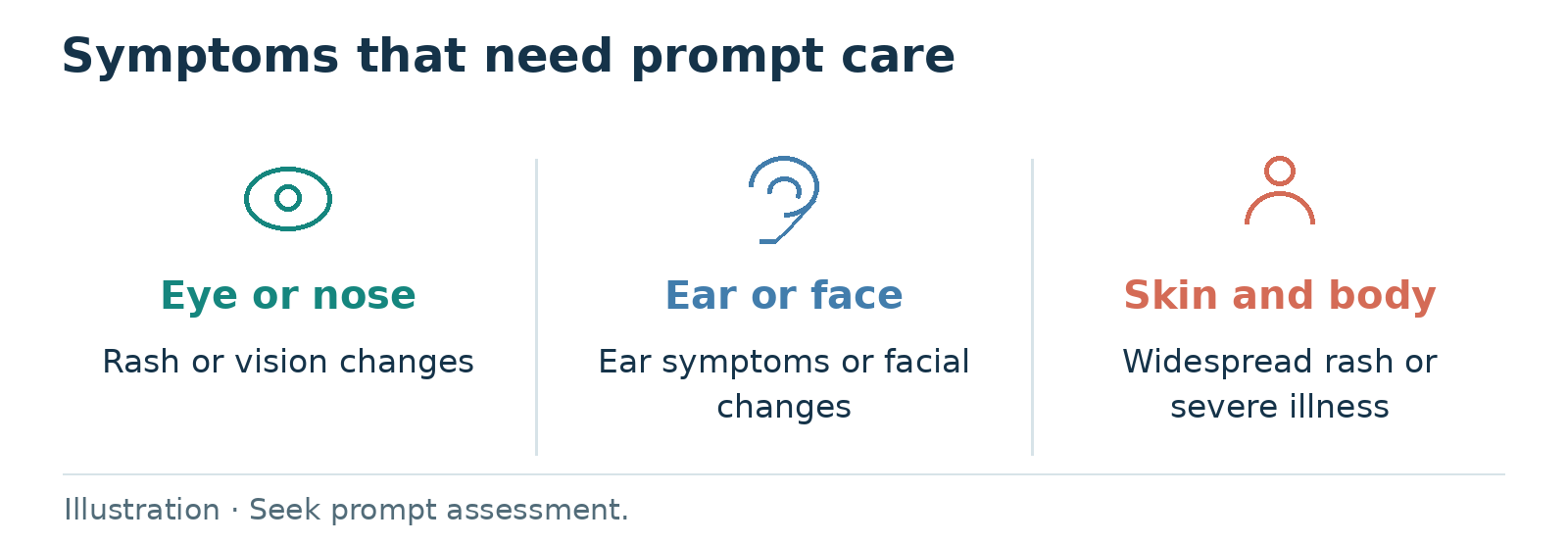
A rash on the forehead, eyelid, or nose needs prompt attention, especially with redness, light sensitivity, pain in the eye, or a vision change. Ear symptoms with hearing changes or facial weakness also need urgent assessment. The NHS shingles page identifies eye and nose involvement and vision changes as reasons for urgent advice; its UK service instructions are not a US care pathway.
If you receive chemotherapy or treatment that suppresses the immune system, tell your treating team about a new rash promptly. A widespread rash or feeling severely unwell calls for urgent evaluation. Even without those warning signs, contact a healthcare professional promptly about a new painful rash.
Tap the diagram to view full size
What to record before you are seen
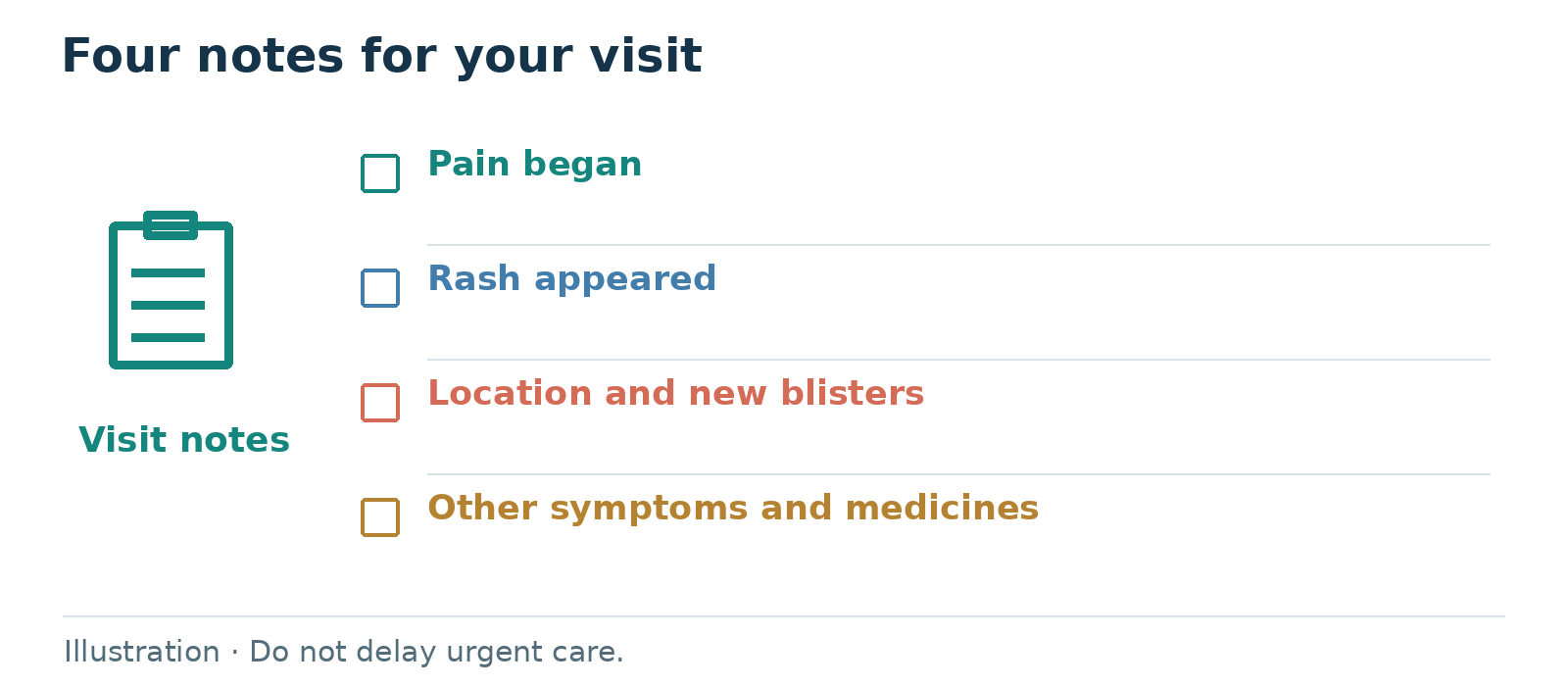
Write down when the pain began and when you first noticed the rash as two separate dates. Add where it started, whether new blisters are appearing, any eye or ear symptoms, and your current medicines. If the timing is uncertain, say so.
Early antiviral treatment matters. The commonly used 72-hour window is counted from rash onset in the guidance used here, not from the first unexplained ache. Being beyond that window does not mean an evaluation is pointless. A few photos can help show change, but collecting them should not delay care.
Tap the diagram to view full size
Frequently asked questions
Does shingles always cause severe pain?
No. Pain varies, and itching or unusual skin sensitivity may be more noticeable. Pain intensity alone cannot establish or exclude the diagnosis.
Can I rule out shingles because a rash is on both sides?
No. A one-sided pattern is common, but distribution alone is not a diagnostic test. A widespread rash is especially important to assess if your immune system is weakened.
Should I wait for blisters before calling?
Do not wait if symptoms are worsening or involve the eyes, ears, or nervous system. A clinician can advise on unexplained persistent pain even before there is a clear rash.
Scope and safety
This article provides general health information, not a diagnosis or an individual treatment plan. Your symptoms, medical conditions, and medicines can change the care you need. Do not delay urgent care to complete notes or read more material.
Helpful resources for your visit
Sources and review date
- KDCA: Chickenpox and shingles (Korean)
- CDC: Clinical features of shingles
- CDC: Shingles symptoms and complications
- NHS: Shingles and urgent warning signs (UK)
Public sources checked and text reviewed: October 5, 2026.