Can Weight Loss Help Gout, and How Should You Exercise?
Weight management may help some people with gout, but crash dieting or exercising through a swollen joint is not the goal. For someone with overweight or obesity, a sustainable combination of eating changes and suitable activity may support urate and flare control. The plan should fit current health and mobility rather than demand the fastest possible change on the scales.[1][2]
Gout is not a measure of willpower. Inherited factors, kidney urate handling, medicines and other conditions also contribute. Losing weight does not automatically remove the need for urate-lowering treatment. A useful plan focuses on safe, repeatable actions while keeping clinical monitoring in place.[1][3]
1. Establish whether weight loss is appropriate
ACR conditionally recommends a weight-loss programme for people with gout who have overweight or obesity. NIAMS describes potential benefits for urate and flares. The size of the benefit varies, however, and no particular weight guarantees that gout disappears. Review weight alongside urate results, flare history and how you are functioning.[1][3]
If you are already lean, eating poorly or losing weight unintentionally, do not apply weight-loss advice automatically. Older age, muscle maintenance, diabetes, heart or kidney disease and eating difficulties can change the priorities. Ask what a suitable goal and timeframe would be. If frequent weighing is stressful, include practical behaviour goals rather than making the scale the only measure of progress.[4]
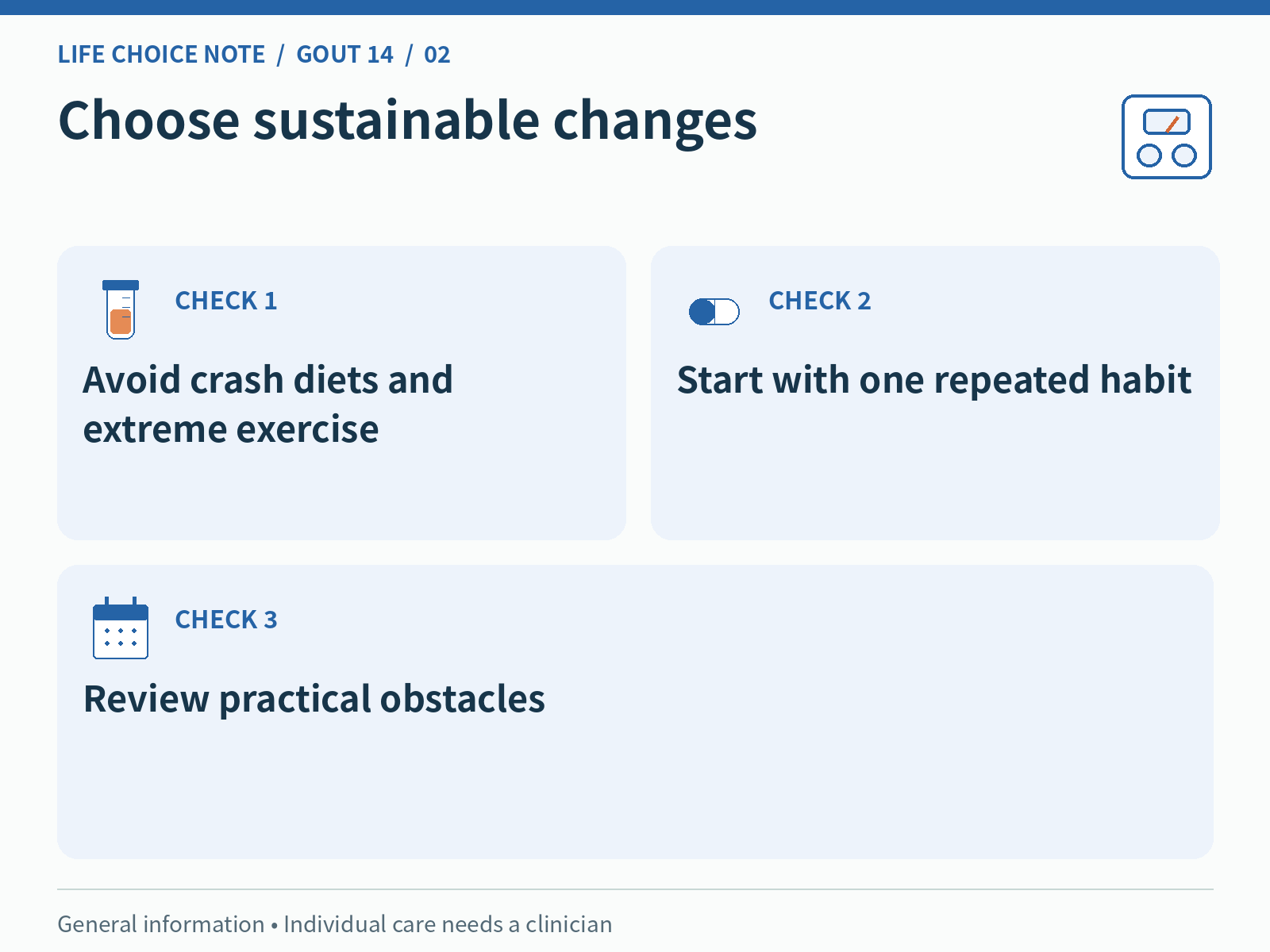
2. Avoid crash diets and compensatory extremes
NHS gout advice recommends weight loss when appropriate while avoiding crash diets. Fasting aggressively or trying to sweat out water is not a sustainable weight-management plan. A very narrow diet can also make adequate nutrition harder. Discuss balanced changes rather than removing nearly every food or treating a short-term fluid change as the desired outcome.[2][4]
Examples might include changing a recurring large sweet drink, adjusting repeated late-night meals or making eating times more consistent. Choose a behaviour that fits your routine rather than trying to change everything at once. If a day does not go to plan, identify the obstacle instead of compensating with starvation or excessive exercise the next day.[6]
3. Rest an acutely inflamed joint
During a flare, avoid putting continued weight or pressure through the painful joint. Resting it, raising the limb comfortably and using a cloth-wrapped cold pack may help alongside prescribed anti-inflammatory treatment. These measures do not replace treatment. Do not place ice directly on the skin for a prolonged period.[1][2]
A step-count target is not a reason to keep walking with a marked limp or to run until the pain “loosens up”. First-time, unusual or worsening acute joint pain needs assessment, particularly with fever, chills or feeling generally unwell. Infection cannot be excluded simply because a fever is absent. Ask how to manage necessary travel or daily tasks while the joint recovers.[2]
4. Resume suitable activity gradually
Between flares, regular activity supports general health and weight management. CDC’s general arthritis advice recommends starting slowly, watching how your body responds and selecting joint-friendly activities. Walking, cycling or water-based activity are examples, not requirements. The affected joint, balance, fitness and heart or lung conditions influence what is suitable.[5]
Do not sharply increase both duration and intensity at the same time. Persistent swelling or unusual pain after activity deserves review rather than being pushed through. Chest pain, severe breathlessness or fainting during activity needs urgent assessment. People with a long exercise break, recent cardiac illness, significant joint damage or fall risk should discuss a suitable starting plan.[5]
General adult activity targets should not become an immediate pass-or-fail test. After a flare, aim for a tolerable return rather than doubling the next session to make up for missed days. If one activity is uncomfortable, ask about alternatives instead of assuming all exercise must stop permanently.
5. Plan fluids without ignoring restrictions
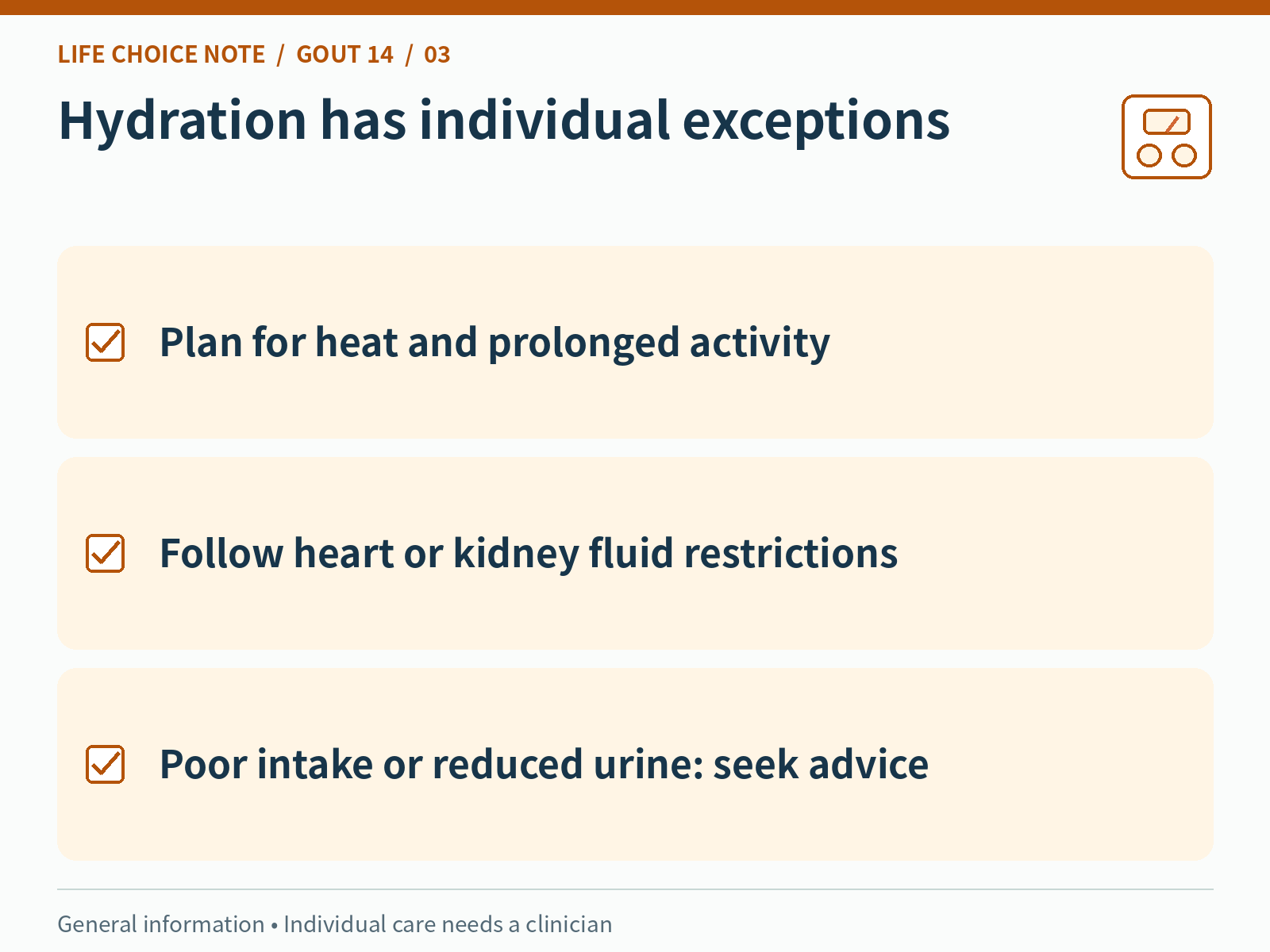
NHS identifies dehydration as a potential gout trigger. Think ahead during hot weather, prolonged outdoor activity or other situations with substantial sweating. Restricting water or deliberately sweating heavily to lower body weight is not the same as lasting weight management. Prepare access to an appropriate drink and adjust activity to the conditions.[2]
There is no single fluid amount that should be forced on every person with gout. Follow any prescribed restriction for heart failure or kidney disease, and ask how to handle hot weather or exercise within that plan. If vomiting or diarrhoea prevents drinking, or urine output drops substantially, seek prompt advice rather than continuing the activity. Water does not replace gout treatment.[1][2]
6. Bring a broader progress record to review
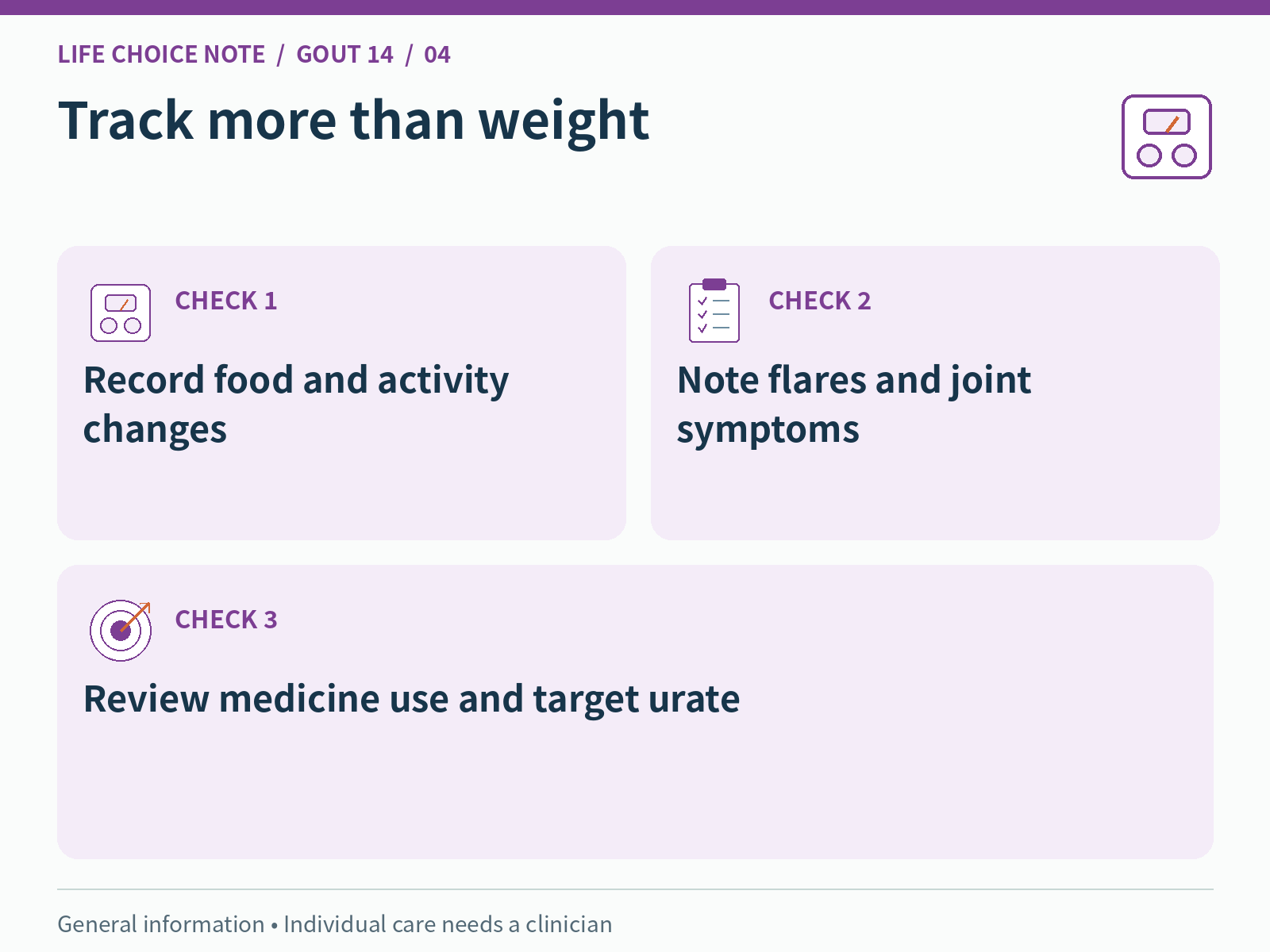
Alongside weight, note flare dates, activities tried, pain that limited movement, meal changes and drink habits. “My knee became swollen after cycling” is more useful for adjusting a plan than simply “I failed to exercise”. A brief, honest record can identify practical barriers such as shifts, commuting or food preparation without becoming another demanding task.[6]
At review, check the agreed urate target, flare frequency and relevant kidney or blood-pressure care. Medicines may still be needed after weight loss. Conversely, slow weight change does not make improved activity or eating habits worthless. Discuss treatment changes with the clinician rather than stopping or reducing medicines because the scale moved or the joint is currently comfortable.[1][3]
What to bring to your appointment
- Confirm that weight loss is appropriate for you.
- Choose a sustainable change rather than crash dieting.
- Separate flare rest from between-flare activity.
- Plan for weather and prescribed fluid limits.
- Bring activity, flare, medicine and urate records together.
Common questions
How much weight must I lose to stop gout medicine?
There is no universal amount. Flares, tophi, urate targets and other conditions still matter. Weight management can support treatment but cannot promise that medication will become unnecessary.[1][3]
Should I keep walking during a flare?
Do not force a painful joint to meet a step goal. Rest it and use the agreed flare treatment, then discuss a gradual return. First-time or unfamiliar acute pain needs clinical assessment.[1][2]
Is more water always better?
No. Avoid dehydration while following any prescribed fluid restriction. Ask for individual guidance with kidney or heart disease. Drinking water is not a substitute for urate-lowering treatment.[1][2]
This article provides general health information for adults, not a diagnosis or personal prescription. Discuss medicines, testing and dietary plans with your clinician, using Korean product information where you receive care. Sources were checked on 15 October 2026; this is not their publication date.
Related published reading
- CKD and Supplements: Bring the Bottle, Labs and Medicine List
- BMI and Waist Size for Weight Management: What Each Tells You
- Previous: Is Avoiding Beer Enough? Alcohol, Sugary Drinks, and Gout
- Next: Does Gout Increase Your Risk of Kidney Stones?
Official and primary sources
- Gout: Diagnosis, Treatment, and Steps to Take · NIAMS, U.S. National Institutes of Health · Last reviewed 2023-12 · Checked 2026-10-15
- Gout · NHS · Page last reviewed 2023-08-24; embedded video reviewed 2026-02-16 · Checked 2026-10-15
- 2020 American College of Rheumatology Guideline for the Management of Gout · American College of Rheumatology · 2020 · Checked 2026-10-15
- Gout: diagnosis and management, NG219 recommendations · UK National Institute for Health and Care Excellence · 2022-06-09 · Checked 2026-10-15
- About Physical Activity and Arthritis · U.S. Centers for Disease Control and Prevention · 현행 공식 안내; 관절염 전반에 대한 활동 안내 · Checked 2026-10-15
- Changing Your Habits for Better Health · NIDDK, U.S. National Institutes of Health · 현행 공식 환자 안내 · Checked 2026-10-15