Meat, Seafood, and Beans: How Should You Eat With Gout?
After a gout diagnosis, it is easy to collect an ever-longer list of forbidden foods. Reducing organ meats and excessive amounts of meat or certain seafood can help, but removing entire food groups can leave an unnecessarily narrow diet. The aim is a sustainable eating pattern alongside the treatment your gout requires.[1][2]
UK NICE says evidence is insufficient to establish one specific diet as a reliable way to prevent flares or lower urate, and recommends a balanced diet. This does not mean that eating habits are irrelevant. It means that a particular food or diet label should not be advertised as a substitute for effective treatment.[3]
1. Look at portions and repeated habits
Purines are substances that contribute to urate production, but a food’s purine number cannot describe an entire meal. Portion size, frequency and what else you eat matter. ACR conditionally recommends limiting purines and stresses that discussions of lifestyle should avoid blaming people for gout. Food is only one part of a condition influenced by several factors.[2]
Write down a few ordinary weekday and weekend meals. Notice whether meat is the main component at nearly every meal, organ dishes are frequent, or restaurant portions keep growing through extra orders. This is a practical observation exercise, not a requirement to calculate every milligram of purine. Include drinks and late-night eating so the record reflects what actually happens.
2. Start with the largest meat and seafood exposures
NIAMS highlights red and organ meats and certain seafood as foods to limit. If these dominate large meals or appear frequently, they are a sensible starting point for discussion. Seafood varies considerably, so avoid turning this into a rule that every small portion of every fish must be permanently forbidden. Ask about a realistic pattern for your needs.[1]
At a Korean barbecue or shared restaurant meal, consider the amount already ordered before adding more meat. Include vegetables, suitable grains and a planned protein portion rather than relying on unlimited refills. Do not compensate for one large meal by starving the next day. These are examples for adapting the overall pattern, not personalised portion prescriptions.[1][4]
3. Do beans, tofu and vegetables all have to go?
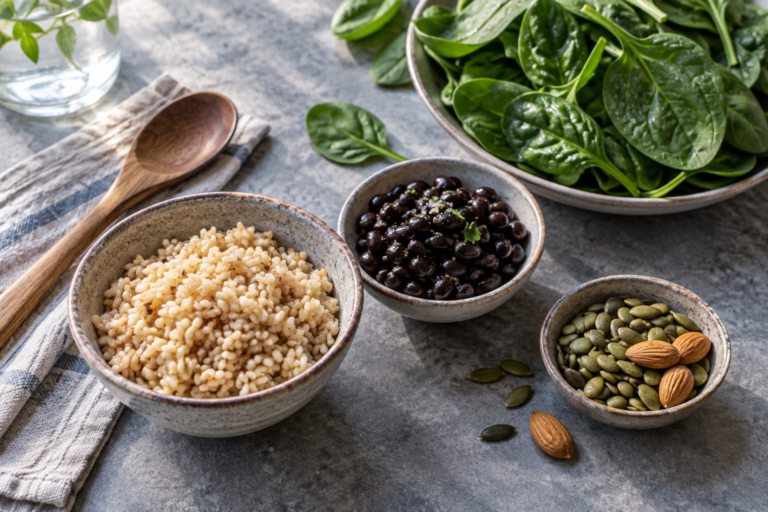
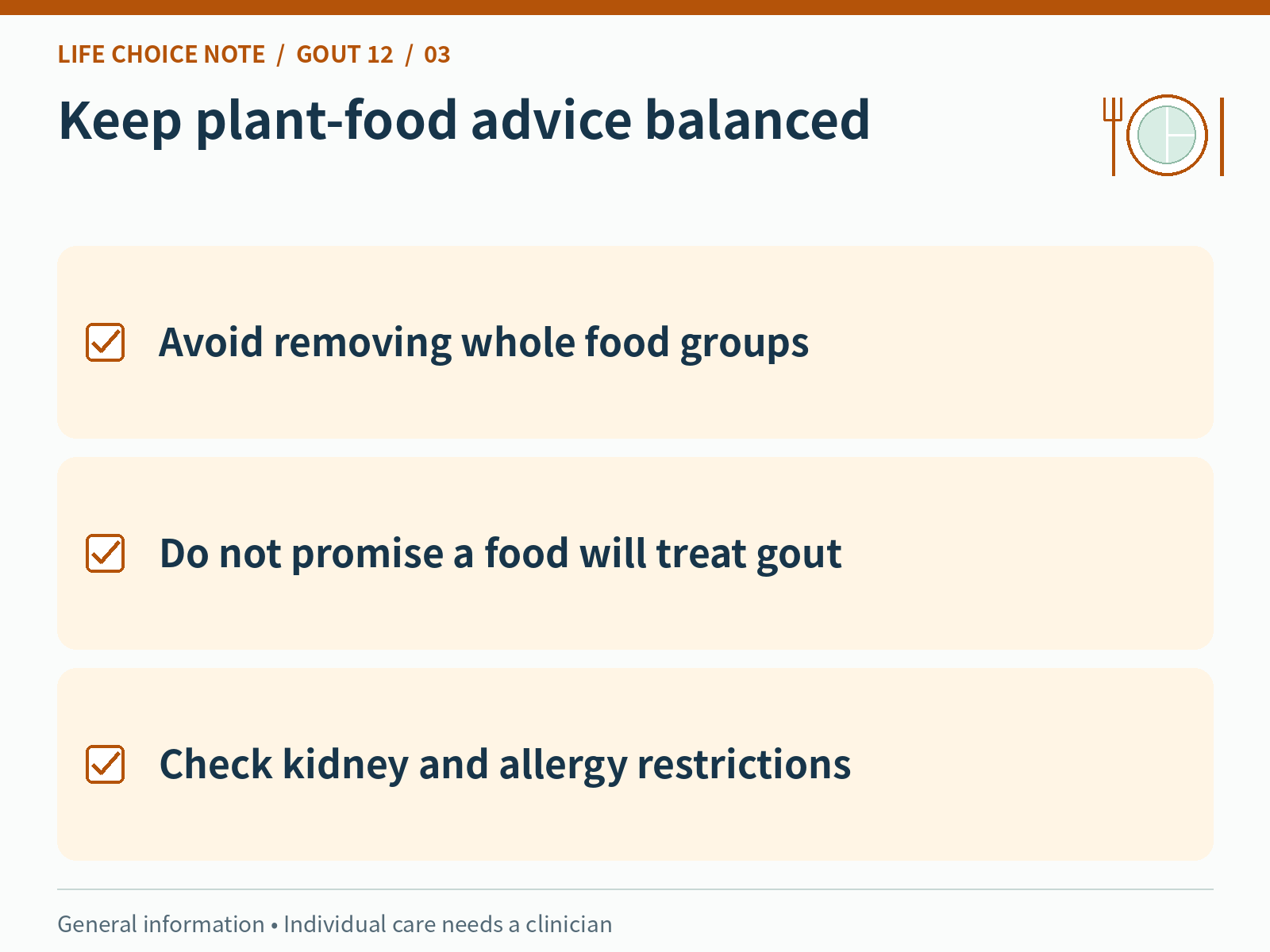
Purines in plant foods do not justify removing all vegetables, beans and protein sources. The DASH-style pattern described by NIAMS includes vegetables, fruit and whole grains; NHLBI’s DASH information also includes beans and nuts among varied food groups. The practical goal is nutritional balance, not eliminating everything that appears on a purine chart.[1][4]
Tofu, beans, eggs or dairy may provide options to discuss when reducing meat, depending on your other conditions and preferences. None should be presented as an unlimited food or a treatment that washes urate away. If kidney disease requires adjustments to protein or minerals, a general DASH example needs individual modification. A balanced plan should reflect your actual restrictions rather than adding every restriction found online.[4][5]
4. Build a pattern that fits your usual meals
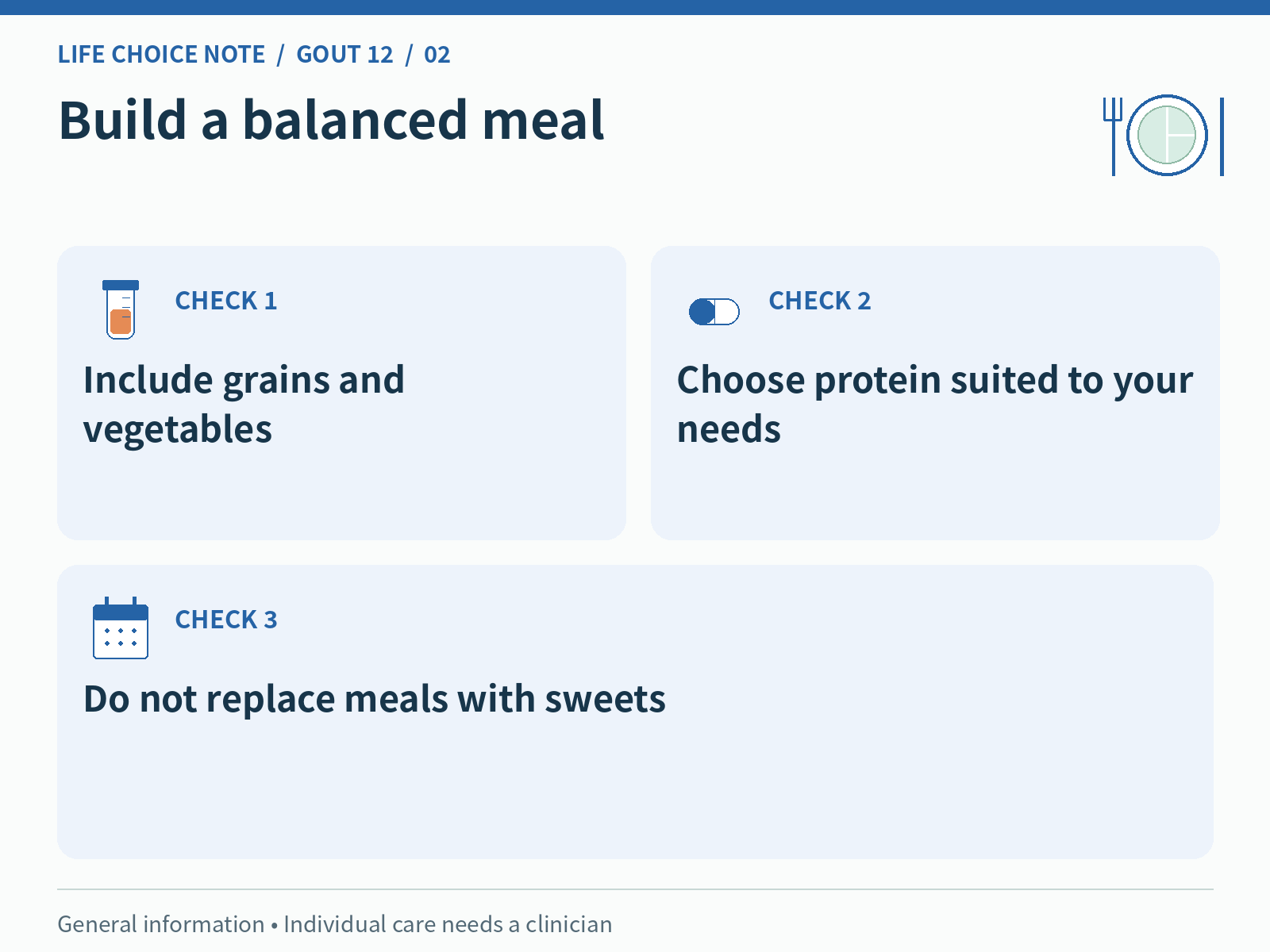
DASH emphasises a range of plant foods and appropriate protein sources while limiting excess saturated fat and added sugar. It is well established as a blood-pressure eating pattern, and NIAMS presents it as a useful option for people with gout. It does not guarantee that you will reach a urate target or never have another flare.[1][3][4]
You can apply the principle to familiar meals in Korea without buying special imported foods. Consider a suitable grain portion, vegetables and a protein component that fits your needs. Review salty processed side dishes and sweet drinks as part of the same meal. Replacing all meat with desserts or sugary snacks would miss the purpose of a balanced change.
Choose one concrete habit to work on, such as fewer organ-meat meals or fewer extra meat orders at late dinners. If budget, shift work, chewing difficulty or shared family meals make the plan difficult, say so at nutrition counselling. A plan that you can use repeatedly is more valuable than an elaborate menu that lasts only a few days.
5. Understand what diet cannot replace
With frequent gout flares or tophi, lifestyle changes alone are often insufficient; urate-lowering medicines are central to management. A flare despite careful eating does not prove a lack of effort. Kidney urate handling and inherited factors also contribute. Treatment should be assessed using your agreed urate target, flare history and clinical findings.[1][2]
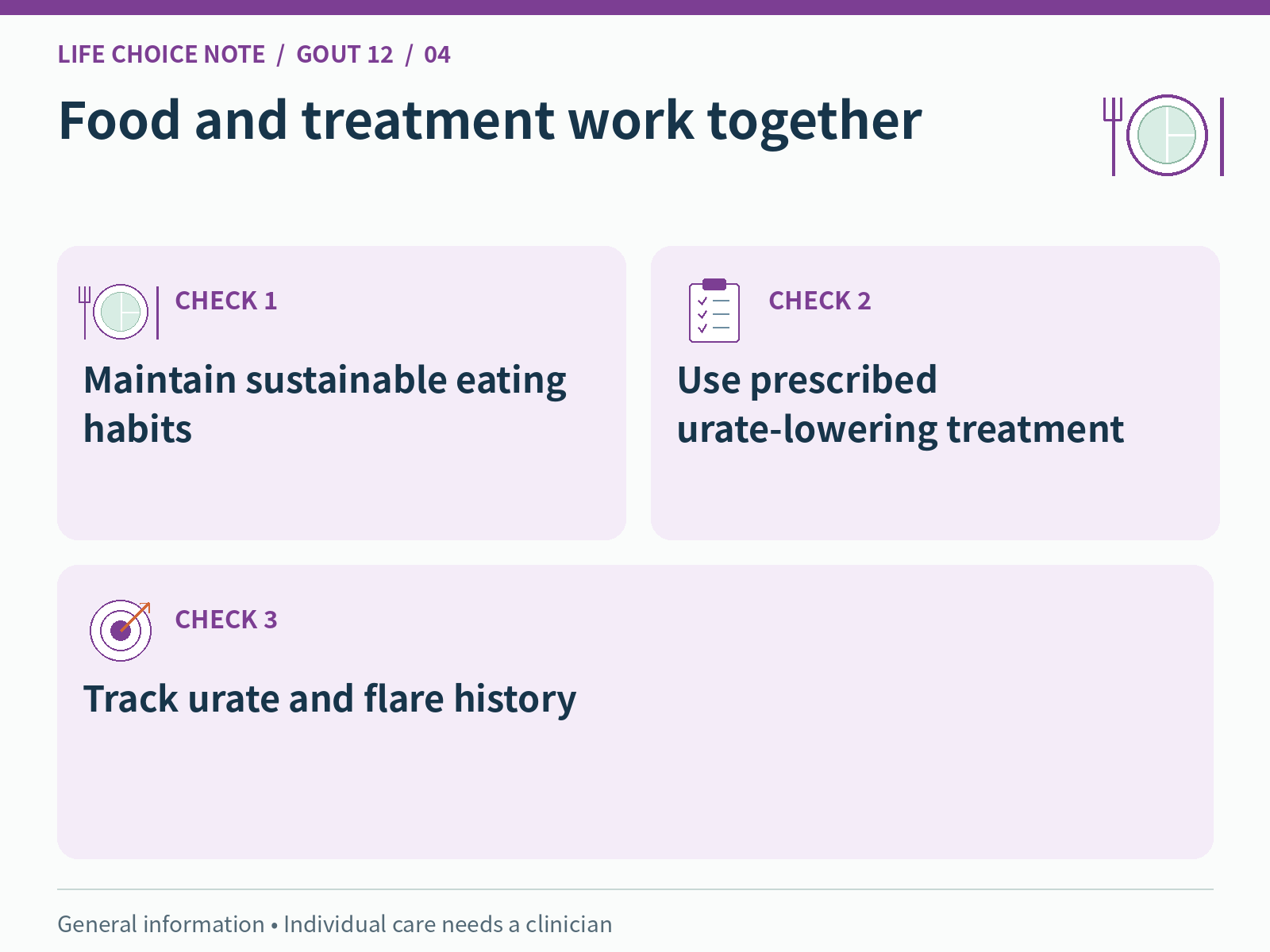
Continue prescribed treatment while discussing sustainable dietary changes. Taking a medicine is not a licence for unlimited intake, and improving your diet is not automatic permission to stop the medicine. Bring both food concerns and treatment concerns to the same visit. The objective is fewer symptoms and complications without making everyday eating unnecessarily frightening.[1][3]
6. Adapt for kidney disease, stones and nutritional needs
Kidney disease may change recommendations about protein, minerals and fluids. Stone prevention also depends on the type of stone. Do not combine separate gout, kidney and stone restriction lists until almost nothing remains. Ask a clinician or dietitian to turn them into one workable plan, with clear foods and meals that you can still eat.[5][6]
Weight management can be useful when appropriate, but the same advice should not be applied to someone who is under-eating or losing weight unintentionally. Explain if fear of gout is causing skipped meals or avoidance of nearly all protein. At the appointment, ask both “What should I reduce?” and “What suitable protein foods can I include?” This keeps the discussion focused on adequate nutrition as well as limits.[2][3]
What to bring to your appointment
- Record actual portions and frequency.
- Identify suitable protein alternatives.
- Bring existing kidney or stone dietary advice.
- Choose one realistic habit to change.
- Keep the urate target and treatment plan in view.
Common questions
Are all beans and tofu forbidden with gout?
No. Avoid a blanket ban on these food groups. Discuss amounts and variety within a balanced diet, adapting for kidney disease, allergy or other restrictions. No bean product should be promised as a gout cure.[1][4][5]
Can a good diet replace my urate medicine?
It often cannot, particularly with frequent flares or tophi. Treatment decisions use your gout history, target urate and other conditions. Do not stop a prescription solely because you changed what you eat.[1]
Should I permanently ban the food eaten before a flare?
One episode does not establish a single cause. Record repeated habits, portions and the surrounding circumstances, then discuss them. Avoid progressively narrowing your diet based on one-off associations.[2]
This article provides general health information for adults, not a diagnosis or personal prescription. Discuss medicines, testing and dietary plans with your clinician, using Korean product information where you receive care. Sources were checked on 15 October 2026; this is not their publication date.
Related published reading
- CKD and Supplements: Bring the Bottle, Labs and Medicine List
- BMI and Waist Size for Weight Management: What Each Tells You
- Previous: What Should You Know About Febuxostat If You Have Heart Disease?
- Next: Is Avoiding Beer Enough? Alcohol, Sugary Drinks, and Gout
Official and primary sources
- Gout: Diagnosis, Treatment, and Steps to Take · NIAMS, U.S. National Institutes of Health · Last reviewed 2023-12 · Checked 2026-10-15
- 2020 American College of Rheumatology Guideline for the Management of Gout · American College of Rheumatology · 2020 · Checked 2026-10-15
- Gout: diagnosis and management, NG219 recommendations · UK National Institute for Health and Care Excellence · 2022-06-09 · Checked 2026-10-15
- DASH Eating Plan · NHLBI, U.S. National Institutes of Health · 2026-02-25 · Checked 2026-10-15
- KDIGO 2024 Clinical Practice Guideline for the Evaluation and Management of Chronic Kidney Disease, sections 3.3 and 3.14 · KDIGO · 2024-03 · Checked 2026-10-15
- Eating, Diet, & Nutrition for Kidney Stones · NIDDK, U.S. National Institutes of Health · Last reviewed 2017-05 · Checked 2026-10-15