Supplements and Liver Disease: Herbal Risks and Warning Signs
A bottle labeled “liver support” does not show that its contents are safe for someone with liver disease. The relevant questions are more specific: what is in it, what form is it, what else are you taking, and when did symptoms or blood-test changes appear? A product record is more useful than a reassuring front label.
Start with a timeline, not a safety assumption
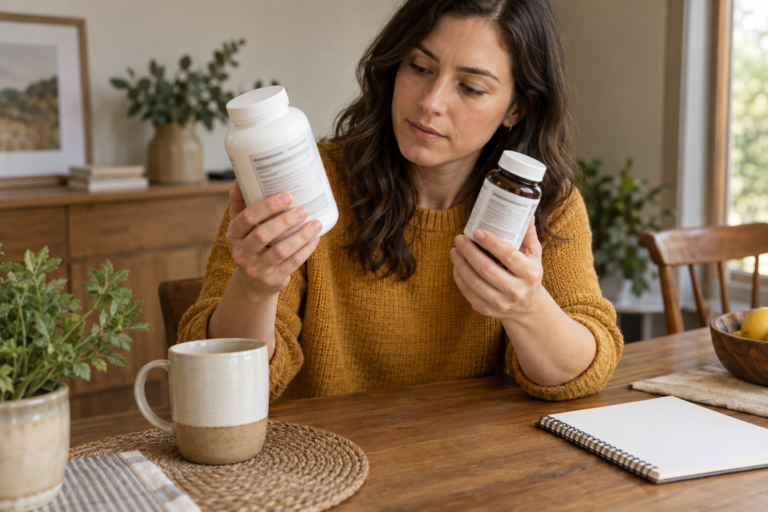
Bring the actual bottles or clear photos of every label to your liver-care appointment. Include vitamins, herbal capsules, powders, teas, weight-loss products and occasional supplements. Record the start date, stop date, amount actually taken, frequency and any recent change in use. Keep the ingredient panel, manufacturer and lot information available. Include products you have already stopped; they can still matter when assessing the timeline.
The AASLD practice guidance emphasizes a detailed medicine and supplement history when investigating suspected liver injury. Symptoms need not begin with the first dose. Timing helps clinicians assess a possible link, but timing alone does not prove causation: other liver conditions and competing causes need evaluation.
Bring your prescription and OTC medicine list too, along with recent liver results if available. Tell the team about alcohol use and every complementary product. An incomplete list can make it harder to identify an interaction or a suspected ingredient.
A food, a brewed drink and an extract are different exposures
The ingredient name is only part of the story. A concentrated extract may provide a different exposure from a food or ordinary beverage. NCCIH reports no safety concerns for green tea consumed as a beverage by adults, while uncommon liver injury has been reported primarily with green tea extracts in tablets or capsules. The drink still contains caffeine and can interact with some medicines; this distinction is not permission to consume unlimited amounts.
Similarly, turmeric used as a culinary spice is not interchangeable with a concentrated curcumin supplement. Formulation, added ingredients and enhanced absorption matter. Do not infer that a capsule is safe because the plant is familiar in cooking, or that every food containing that plant must be avoided.
Two extract warnings worth recognizing
Green tea extract belongs on the product list even when it appears inside a weight-loss or multi-ingredient blend. NCCIH describes liver-injury reports and medicine interactions. “Antioxidant” on the package does not answer whether that formulation fits your liver condition or treatment.
For turmeric or curcumin, NCCIH warns that highly bioavailable formulations may harm the liver. Some products add piperine from black pepper to increase absorption. “Better absorbed” is a formulation claim, not a guarantee of greater safety. Liver damage has been reported with enhanced-bioavailability products, but these reports do not establish that every turmeric product causes injury.
These are examples, not a complete list or a ranking of safe herbs. A blend can be difficult to assess when individual amounts are unclear. Discuss the exact product with the care team rather than substituting another “natural” product with similar marketing.
Know when the review becomes urgent
Yellow skin or eyes, dark urine, or persistent or severe nausea, vomiting or abdominal pain after starting a supplement deserve prompt medical attention. Do not assume these are signs of “detox.” If you suspect a serious reaction, stop the suspected nonessential supplement and contact a clinician promptly. The FDA identifies these adverse-event warning signs and advises stopping the suspected product. Bring its packaging; reporting a reaction to FDA can follow medical care.
Call 911 or seek emergency care for vomiting blood, black tarry stools or sudden confusion. The NHS cirrhosis guidance identifies these as emergency warning signs. Do not wait for a routine supplement appointment or try another product to treat them.
Do not independently stop prescribed medicines. Ask the prescriber urgently whether any treatment needs changing. Once an ingredient is suspected of causing liver injury, do not restart it to see whether symptoms return; AASLD generally advises avoiding rechallenge.
Read the U.S. label with its limits in mind
FDA explains that Supplement Facts lists serving size and amounts per serving. Compare that serving with what you actually take, and show the full ingredient list. A blend’s total weight does not tell the clinician how much of each ingredient you receive.
Dietary supplements follow a different regulatory pathway from medicines: FDA does not approve their safety and effectiveness before sale. A “liver support” phrase is therefore not evidence of FDA approval to treat liver disease. The presence of a legally marketed product on a shelf does not establish its suitability for your case.
Independent quality testing can check manufacturing, listed contents and harmful levels of contaminants. It cannot guarantee that a product is safe or effective, as NIH ODS explains. A quality seal does not settle whether an ingredient can injure the liver or interact with your medicines.
Keep the useful part of your care plan
Liver disease does not mean every supplement is forbidden. For people with cirrhosis who have nutrient deficiencies or inadequate intake, a clinician may recommend specific replacement. NIDDK distinguishes this from starting supplements without advice. Continue prescribed replacement unless the treating team changes the plan.
Ask what benefit is expected, how it will be assessed, whether liver tests are needed and when to follow up. There is no single laboratory schedule or label dose that can establish safety for every liver condition and formulation. Persistent symptoms need reassessment, even if the product was previously tolerated.
Frequently asked questions
Does “liver support” mean the supplement treats liver disease?
No. The phrase does not demonstrate clinical benefit or FDA premarket approval of safety and effectiveness.
Is an extract the same as tea or food?
No. Concentration, formulation and added absorption enhancers can change the exposure and risk.
Should I restart a product after symptoms improve?
Do not test a suspected culprit yourself. Discuss the reaction and next steps with your clinician.
Related guides
- Milk-thistle liver claims and the clinical evidence
- Curcumin formulas, absorption and safety
- Ashwagandha evidence, side effects and product review
- What to check about supplement–medicine interactions
General information for adults, checked September 30, 2026. This article does not replace medical assessment or provide a personal prescription.
Illustrative stock photo for discussing herbal and supplement use with a clinician. Photo: National Cancer Institute / Unsplash.