Is Avoiding Beer Enough? Alcohol, Sugary Drinks, and Gout
If you stopped beer after a gout diagnosis but switched to soju or wine, the alcohol question is not necessarily settled. ACR guidance addresses alcohol intake overall, rather than naming a different drink that is safe for everyone with gout. The amount and repeated pattern deserve attention alongside the type of beverage.[1][2]
Sweet drinks can also become the automatic replacement for alcohol. This article offers a way to review choices without promising that one product prevents flares. Drink changes support gout care; they do not replace urate-lowering treatment when it is needed or justify changing a prescription on your own.[2][3]
1. Changing the type of alcohol is not enough
Soju, wine and spirits still contain alcohol. Their names do not establish safety for gout. Official guidance encourages reviewing overall alcohol intake rather than using a simple permitted-versus-forbidden list of drinks. A previous occasion without pain also cannot guarantee that the same drink will cause no problem next time.[1][2]
At social meals, decide on your plan before choosing a beverage. Repeatedly refilled glasses make actual intake hard to remember. Record the pattern without blaming yourself or assuming that one drink explains every flare. Gout reflects underlying urate levels and several influences, so personal experience should be discussed with the clinician rather than converted into a universal rule.[2]
2. Track volume, strength and frequency
One glass is not a consistent quantity. A small restaurant glass, a large home pour and a mixed drink can contain very different amounts of alcohol. Note the drink, container or serving size, alcohol strength where known and when you drank it. You do not need a complicated app; a simple record or a photo of the container can help.
Also distinguish frequent drinking from drinking a large amount at one sitting. This article does not establish a safe weekly or per-occasion allowance for gout. General drinking limits published in another country should not be presented as a threshold below which gout flares cannot occur. Discuss your pattern, recent flares, other conditions and difficulties reducing alcohol.[2][4]
3. Look at sweet drinks throughout the day
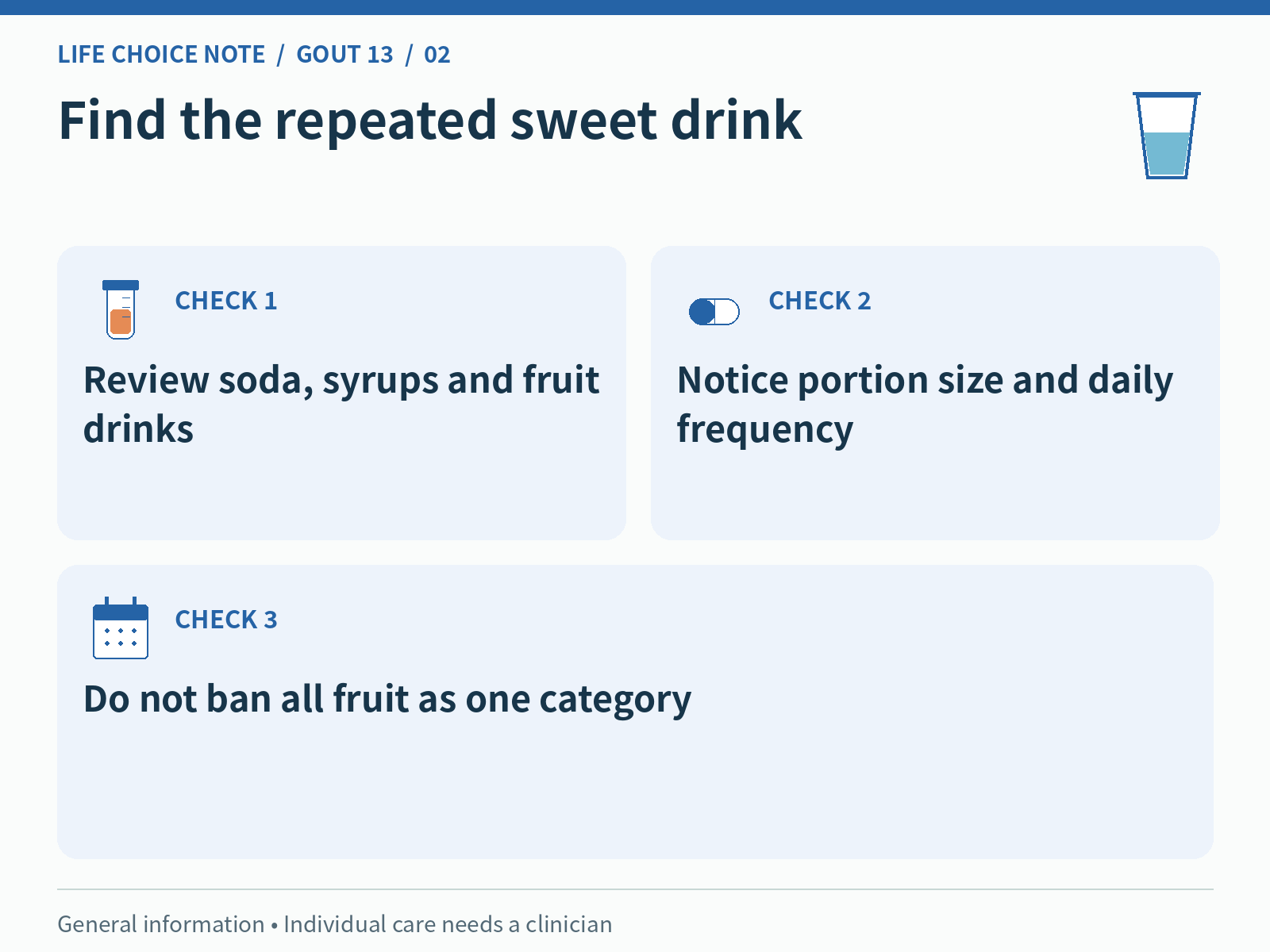
NIAMS advises avoiding sugar-sweetened drinks such as soda, while ACR conditionally recommends limiting high-fructose corn syrup. Check more than fizzy drinks: sweetened coffee or tea, energy drinks and fruit-flavoured beverages may also contribute. The practical question is what the drink contains and how much you repeatedly consume, not whether its name sounds healthy.[2][3]
Juice and concentrated drinks also deserve a portion check. No-added-sugar juice, a sweetened fruit drink and whole fruit are not identical foods, so do not turn the advice into a ban on all fruit. Start with a recurring large sweet drink or automatic syrup addition. Reducing it is a behavioural change, not proof that the replacement treats gout.[4][5]
4. Read the label and match it to what you drink
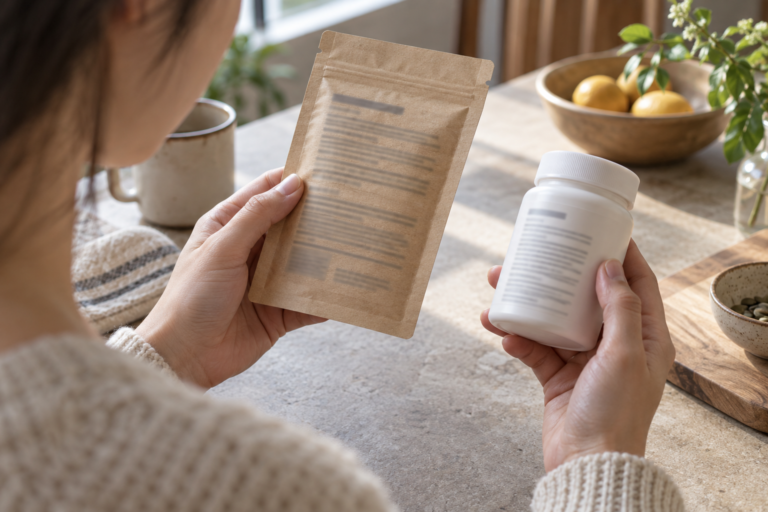
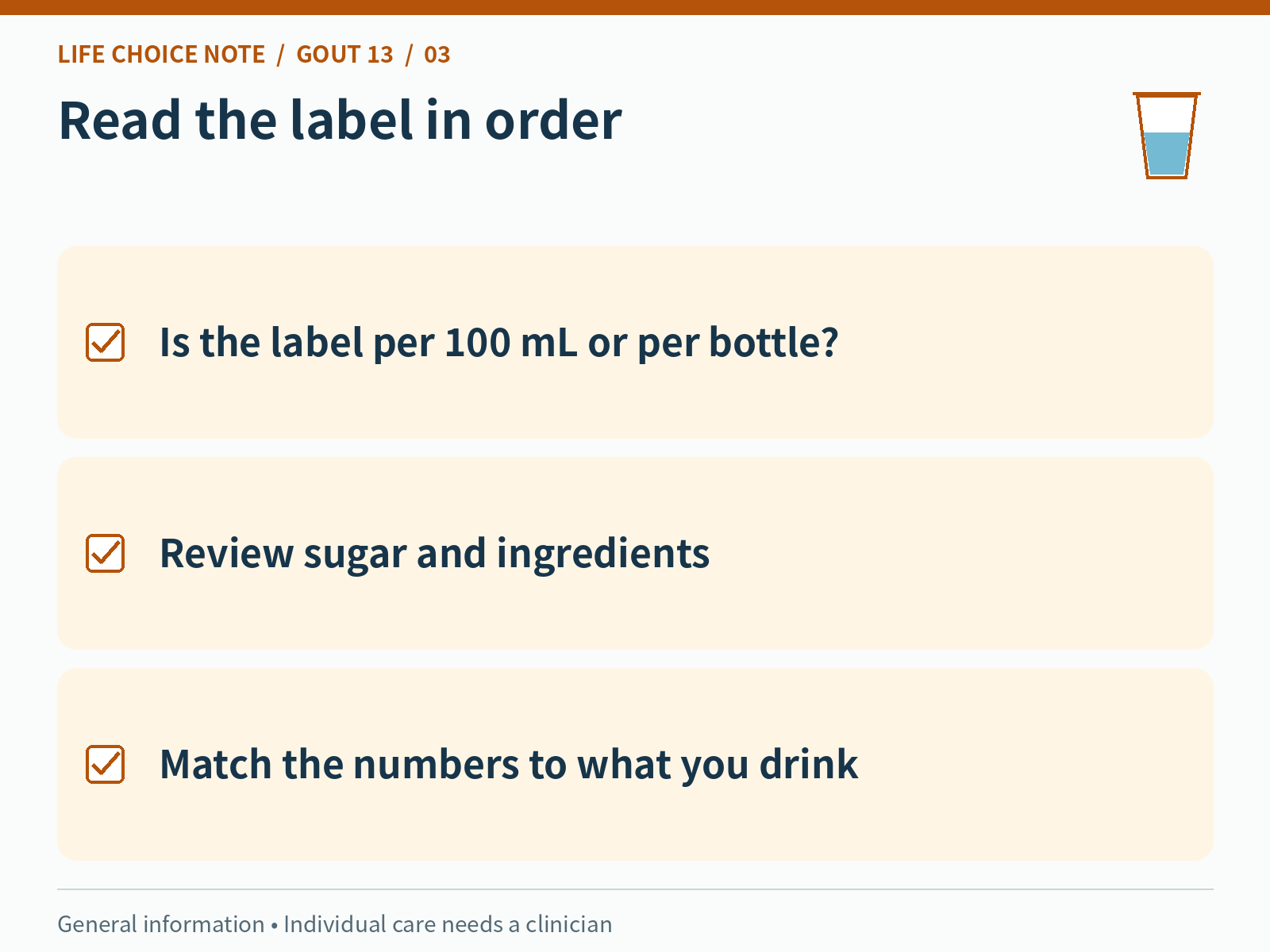
Look beyond front-of-pack terms such as natural, zero or no added sugar. Check whether nutrition information applies to 100 mL, one serving or the whole bottle. If you drink two bottles, recording the amount in only one understates your intake. This is a tool for comparing choices, not a calculator that predicts whether a flare will occur.[5]
U.S. FDA information distinguishes total sugars from added sugars, but Korean packaging does not necessarily use the same presentation. Use the actual information provided on the product, including sugar, ingredients and container volume. At a café, note the ordered size and additional syrup or toppings. If detailed recording feels difficult, begin with a simple description such as two large sweet drinks most afternoons.
5. Choose substitutes without a safety guarantee
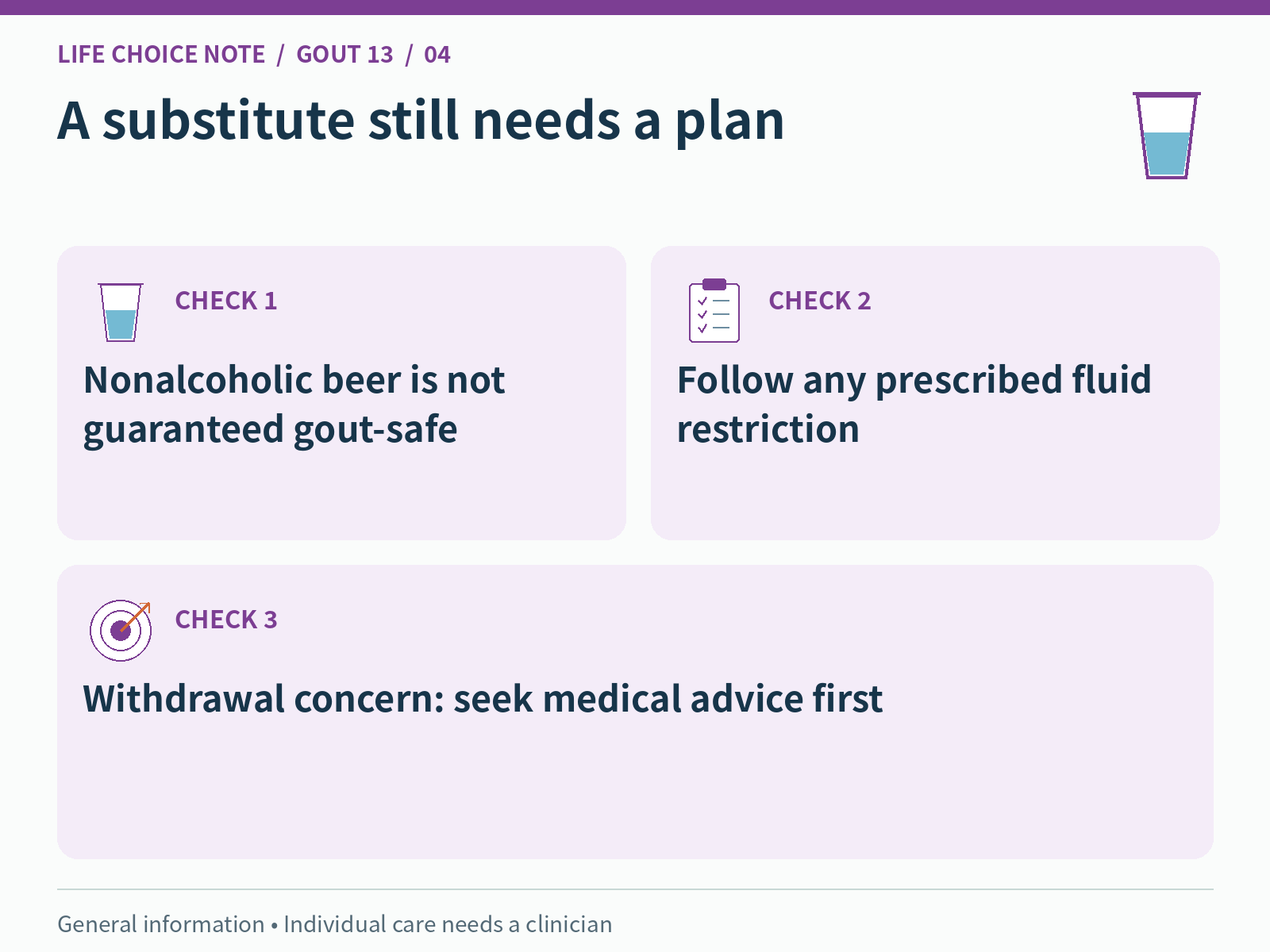
A nonalcoholic or alcohol-free label does not establish that a beer-style product is harmless for gout. NIAMS includes nonalcoholic beer in its advice about drinks to reduce. Products vary, so review ingredients, sugar, stated alcohol content and volume. Do not use one product as an unlimited substitute simply because you have reduced ordinary beer.[3]
Water or other unsweetened choices can make reducing sweet beverages easier. If you have a fluid restriction for heart or kidney disease, follow that individual plan instead of forcing extra water. No special tea, vinegar drink or fruit concentrate should be promoted as dissolving crystals or replacing gout medicine. Keep the goal focused on a sustainable overall drinking pattern.[3][4]
6. Make the change practical and safe
Observe a typical week and identify one repeated situation: drinking after work, ordering a large sweet beverage with lunch, or continuing to accept refills at dinner. Choose a concrete change you can repeat. Explain the plan briefly to people you eat with if that helps. A record is useful for discussion even when it is incomplete or includes days that did not go as planned.
If reducing alcohol causes shaking, sweating or anxiety, seek medical advice before stopping suddenly or cutting down sharply on your own. Physical dependence can make withdrawal dangerous. This gout article is not a home detoxification plan. Severe symptoms such as seizures or marked confusion require emergency care; use healthcare services where you are, rather than overseas telephone numbers.[6]
Review the drink record alongside flares, medication use and urate results. A few pain-free days do not define your personal safe amount of alcohol. Equally, a flare does not mean every change was pointless. Discuss what is difficult and adjust the plan while maintaining the rest of gout treatment.[2][3]
What to bring to your appointment
- Include all alcohol types and actual amounts.
- Identify repeated large sweet drinks.
- Check the label’s serving basis.
- Discuss fluid limits or withdrawal concerns.
- Keep your medicine and laboratory plan.
Common questions
Is soju or wine a safe replacement for beer?
No beverage switch can guarantee safety. Review actual alcohol intake, frequency and your gout status. There is no universal safe drinking allowance established here for people with gout.[1][2]
Can I drink unlimited nonalcoholic beer?
No. Check the product and amount. NIAMS also includes nonalcoholic beer in its advice to reduce these beverages; the label is not a gout-safety certificate.[3]
Was cutting sweet drinks pointless if I still had a flare?
Not necessarily. A brief symptom pattern cannot establish the full effect of a lifestyle change. Continue the agreed medicine and urate-monitoring plan, and discuss the flare with the clinician.[2][3]
This article provides general health information for adults, not a diagnosis or personal prescription. Discuss medicines, testing and dietary plans with your clinician, using Korean product information where you receive care. Sources were checked on 15 October 2026; this is not their publication date.
Related published reading
- CKD and Supplements: Bring the Bottle, Labs and Medicine List
- BMI and Waist Size for Weight Management: What Each Tells You
- Previous: Meat, Seafood, and Beans: How Should You Eat With Gout?
- Next: Can Weight Loss Help Gout, and How Should You Exercise?
Official and primary sources
- Gout: patient information · American College of Rheumatology · 2025-02 · Checked 2026-10-15
- 2020 American College of Rheumatology Guideline for the Management of Gout · American College of Rheumatology · 2020 · Checked 2026-10-15
- Gout: Diagnosis, Treatment, and Steps to Take · NIAMS, U.S. National Institutes of Health · Last reviewed 2023-12 · Checked 2026-10-15
- Gout: diagnosis and management, NG219 recommendations · UK National Institute for Health and Care Excellence · 2022-06-09 · Checked 2026-10-15
- Added Sugars on the Nutrition Facts Label · U.S. Food and Drug Administration · 현행 공식 안내; 미국 표시제도 설명 · Checked 2026-10-15
- Alcohol-use disorder · NHS · 현행 공식 환자 안내 · Checked 2026-10-15