How Is Gout Treated When Kidney Function Is Reduced?
Having chronic kidney disease does not mean that painful gout must go untreated. It means that medication selection, interactions and follow-up deserve particular care. Both flare treatment and long-term urate-lowering treatment remain possible, but a previous prescription may need review when kidney function or other medicines change.[1]
Two questions must be kept separate: are you treating symptomatic gout, or lowering an isolated urate result in the hope of slowing kidney disease? The evidence is different. For people receiving care in Korea, international guidance should inform discussion alongside Korean product information and your individual clinical assessment.[1][2]
1. Start with current kidney information
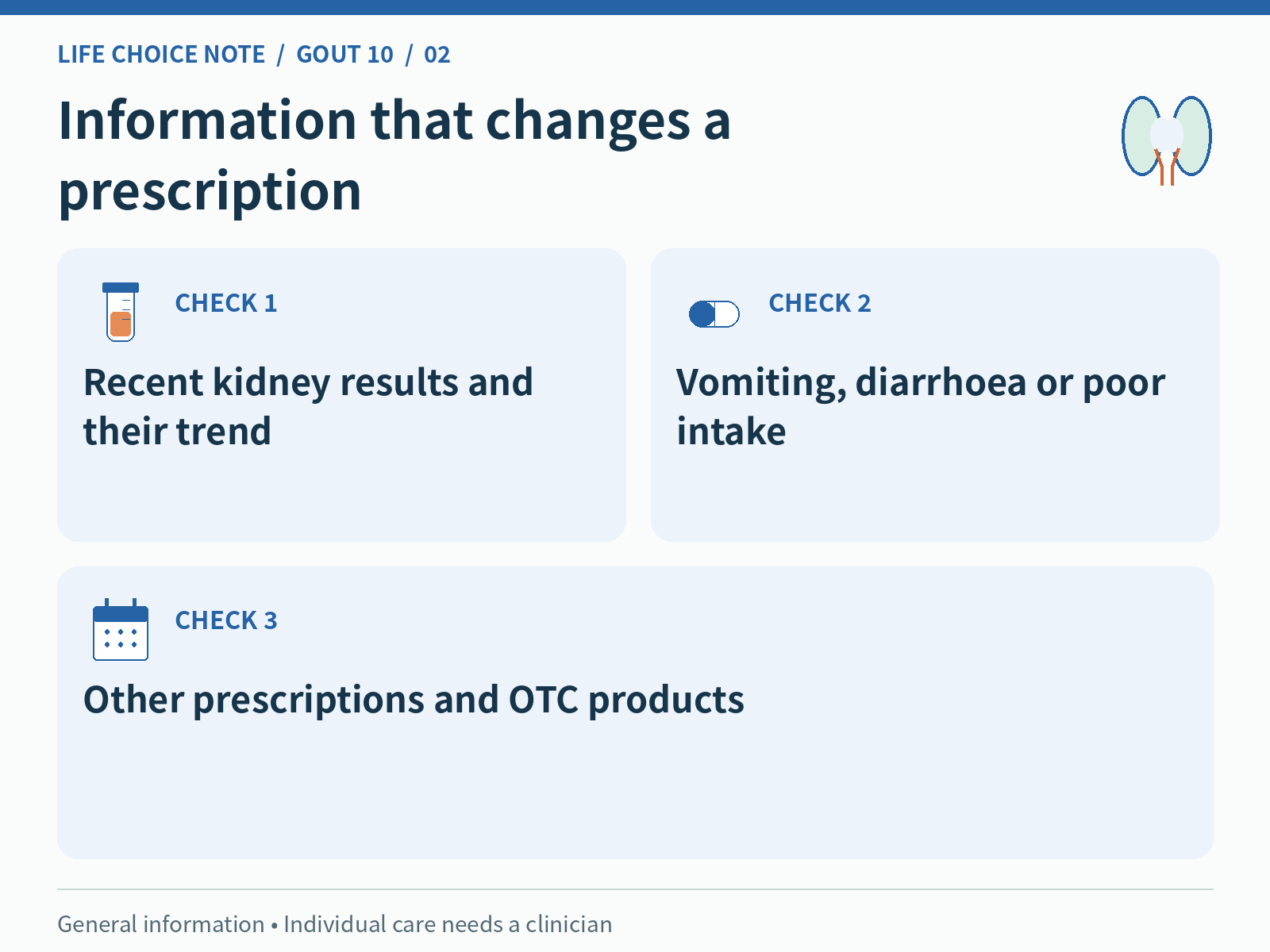
Bring recent creatinine and estimated glomerular filtration rate, or eGFR, results with their dates. A stable chronic condition differs from a sudden deterioration during dehydration or another illness. A clinician considers the trend, relevant urine tests, medical history and current condition. A single number is not a safe basis for choosing a dose from an online chart.[1]
You can use the eGFR calculator to review how a creatinine-based estimate is calculated and where it can mislead. Do not use the result to start, stop, or change a gout medicine, and do not treat eGFR as interchangeable with creatinine clearance (CrCl).
Report recent vomiting, diarrhoea, poor intake and any painkillers you have used. If separate clinics manage your kidneys and your gout, ask who will coordinate blood tests and medicine changes. Keep one current list rather than combining old and new medicine packets because they came from different hospitals. Record why a prescription changed, especially when brand names are unfamiliar.[3]
2. Treat the inflammation of an acute flare
For acute gout in CKD, KDIGO 2024 prefers low-dose colchicine or an intra-articular or oral glucocorticoid over a nonsteroidal anti-inflammatory drug, or NSAID. This is guidance for clinical selection, not a menu for self-prescribing. Infection risk, blood glucose, bleeding risk and other medicines may affect what is appropriate for you.[1]
The Korean gout guideline lists NSAIDs, colchicine and corticosteroids as first-line options in general, with choice informed by comorbidities. Kidney disease is one reason that choice changes. Ask whether a previous flare plan is still suitable. Do not combine different painkillers simply because one has not yet relieved the pain or because the packages have different brand names.[2][3]
3. Colchicine also needs a safety review
Being preferred to an NSAID in some circumstances does not make colchicine automatically safe at every level of kidney function. Kidney or liver disease and medicine interactions can alter its suitability. Tell the prescriber if you already take it for flare prevention; an extra course for pain must not be added without checking the existing plan.[1][4]
Whenever an antibiotic or another new medicine is prescribed, mention colchicine. Seek prompt advice for severe gastrointestinal symptoms. If muscle pain or weakness, or unusual bruising or bleeding develops, stop colchicine and contact your clinician immediately. Do not keep repeating doses because the joint still hurts. Suspected overdose needs emergency assessment. Use the instructions for your own Korean prescription rather than copying a schedule from an overseas website.[4]
4. Long-term treatment remains an option
The ACR 2020 guideline prefers allopurinol as first-line urate-lowering treatment, including in moderate-to-severe CKD. KDIGO prefers a xanthine oxidase inhibitor to a uricosuric medicine for symptomatic hyperuricaemia in CKD. These recommendations show that treatment options exist; they do not establish one dose or one medicine for every person with reduced kidney function.[1][5]
For people of Korean ancestry considering allopurinol, discuss HLA-B*58:01 testing and learn the hypersensitivity warning. Korean labeling requires attention to kidney disease and says to stop allopurinol immediately if a new rash or other hypersensitivity signs develop, with prompt assessment. A negative genetic result does not eliminate that risk.[6] Febuxostat has separate cardiovascular considerations, so a choice cannot be reduced to which drug is supposedly easier on the kidneys.[7]
Follow-up checks whether urate is moving toward the agreed target and whether treatment is tolerated. Contact the clinic when kidney function changes or another medicine is added. Do not increase the dose because one urate result remains high or reduce it because the next result is lower.[1][5]
5. Lowering urate solely for kidney protection is different
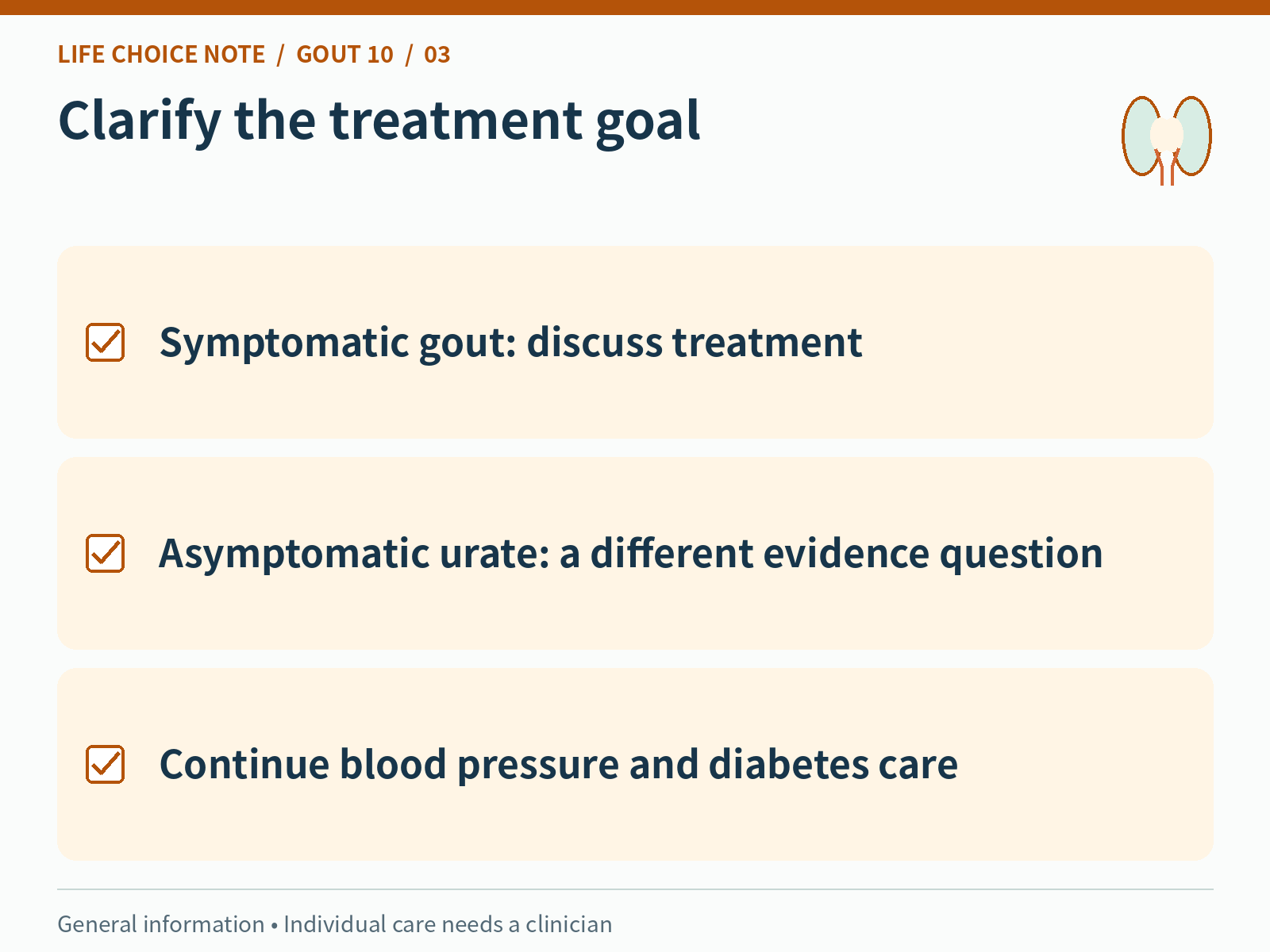
KDIGO 2024 suggests not using urate-lowering medicines in people with CKD and asymptomatic hyperuricaemia merely to delay CKD progression. That statement concerns people without gout symptoms. It should not be used to deny treatment to someone with established symptomatic gout, tophi or another valid indication requiring assessment.[1]
The 2023 Korean guideline makes broader recommendations for treating people with gout, while it did not establish a recommendation for asymptomatic hyperuricaemia with CKD because the balance of evidence was uncertain. Check the patient group before calling these recommendations contradictory. Urate treatment also cannot replace the separate management of blood pressure, diabetes or other causes of kidney disease.[1][2]
6. Plan for dehydration and nonprescription medicines
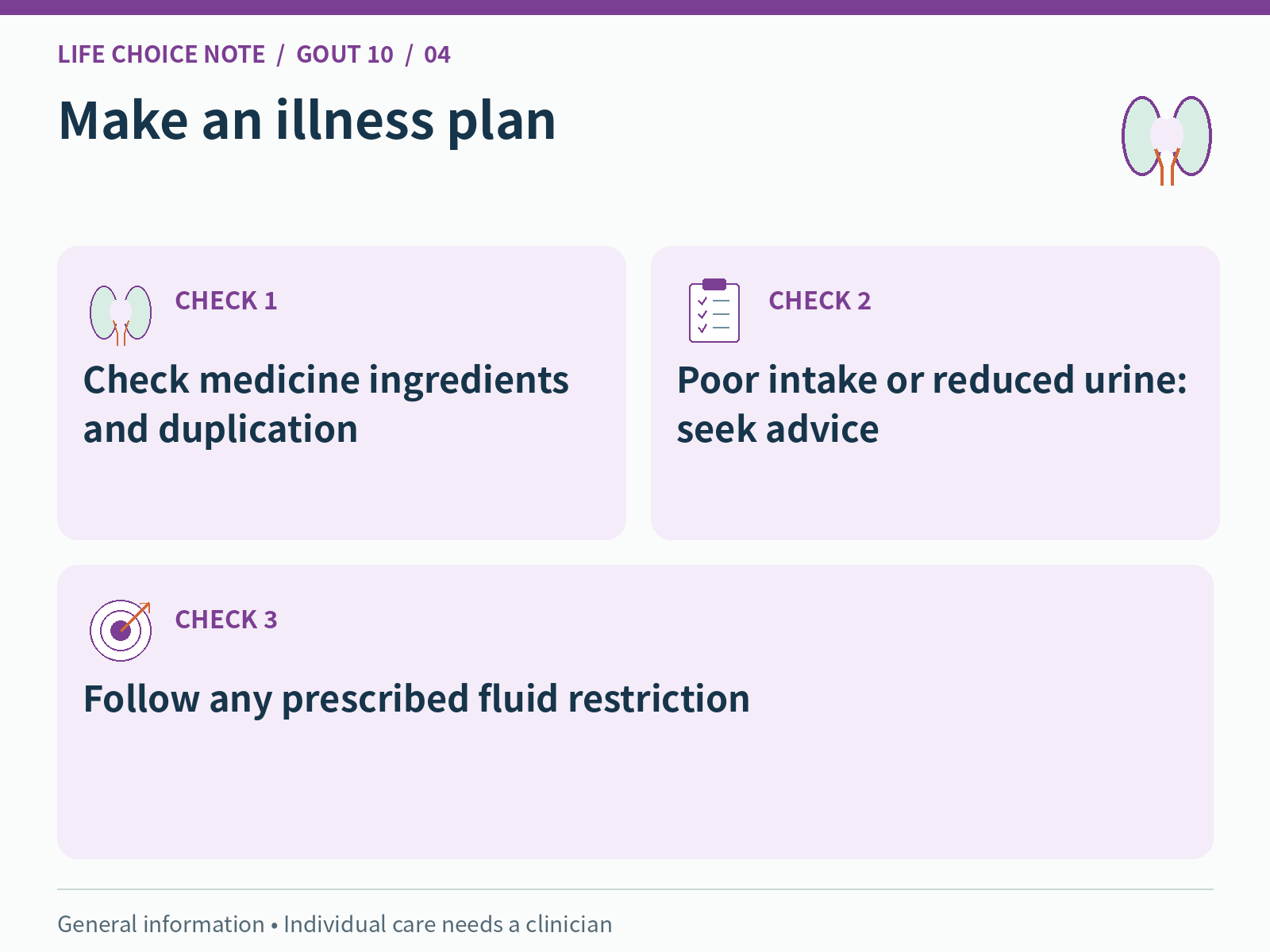
Cold remedies and nonprescription painkillers may contain NSAIDs. NIDDK warns that NSAIDs can contribute to acute kidney injury when someone is dehydrated or has low blood pressure. Ask a pharmacist about ingredients and duplication with your prescriptions. Include supplements and herbal products in the review, even if you do not think of them as medicines.[3]
If vomiting or diarrhoea prevents drinking, or urine output falls substantially, seek prompt advice. Do not force large amounts of water when you have a fluid restriction for kidney or heart disease. Ask in advance what to do when ill, which medicines need review and when to contact the clinic. Do not independently stop all blood pressure medicines or diuretics as a blanket precaution.[1][3]
What to bring to your appointment
- Bring recent dated kidney results.
- Identify long-term and flare medicines separately.
- List OTC products and supplements.
- Agree on a plan for vomiting or poor intake.
- Confirm fluid advice and the next laboratory review.
Common questions
Should I stop every gout medicine to protect my kidneys?
No. Symptomatic gout can be treated using a kidney-appropriate plan. Separate long-term treatment from flare treatment and clarify monitoring. Specific serious-reaction warnings still require immediate action.[1][6]
Will a lower urate result definitely improve my kidneys?
No. In particular, KDIGO does not recommend lowering asymptomatic hyperuricaemia solely to slow CKD progression. Ask what condition your medicine is intended to treat.[1]
Can I reuse leftover colchicine?
First check the current prescription, kidney function, other medicines and any recent colchicine use. Do not apply an old or online dosing schedule without confirming that it still fits your situation.[4]
This article provides general health information for adults, not a diagnosis or personal prescription. Discuss medicines, testing and dietary plans with your clinician, using Korean product information where you receive care. Sources were checked on 15 October 2026; this is not their publication date.
Related published reading
- CKD and Supplements: Bring the Bottle, Labs and Medicine List
- Previous: Should People of Korean Ancestry Have HLA-B*58:01 Testing Before Allopurinol?
- Next: What Should You Know About Febuxostat If You Have Heart Disease?
Official and primary sources
- KDIGO 2024 Clinical Practice Guideline for the Evaluation and Management of Chronic Kidney Disease, section 3.14 · KDIGO · 2024-03 · Checked 2026-10-15
- Korean guidelines for the management of gout · Korean College of Rheumatology · 2023-07-01 · Checked 2026-10-15
- Keeping Kidneys Safe: Smart Choices about Medicines · NIDDK, U.S. National Institutes of Health · Last reviewed 2018-06 · Checked 2026-10-15
- Colchicine: patient medication information · MedlinePlus / American Society of Health-System Pharmacists · 2025-05-15 · Checked 2026-10-15
- 2020 American College of Rheumatology Guideline for the Management of Gout · American College of Rheumatology · 2020 · Checked 2026-10-15
- 자이로릭정(알로푸리놀) 의약품 허가정보 · 식품의약품안전처 의약품안전나라 · 사용상주의사항 변경이력 2026-06-29; 현행 본문 확인 · Checked 2026-10-15
- 페브릭정40밀리그램(페북소스타트) 의약품 허가정보 · 식품의약품안전처 의약품안전나라 · 사용상주의사항 변경이력 2022-09-28; FAST 포함 현행 본문 확인 · Checked 2026-10-15