Food, supplements and alcohol during shingles recovery
No established list of foods or supplements can be promised to cure shingles quickly or prevent recurrence. Keeping up a manageable diet and following prescribed treatment come first. Do not delay care for eye, ear, facial or severe general symptoms while searching for a supplement.
Start with whether you can eat and drink comfortably
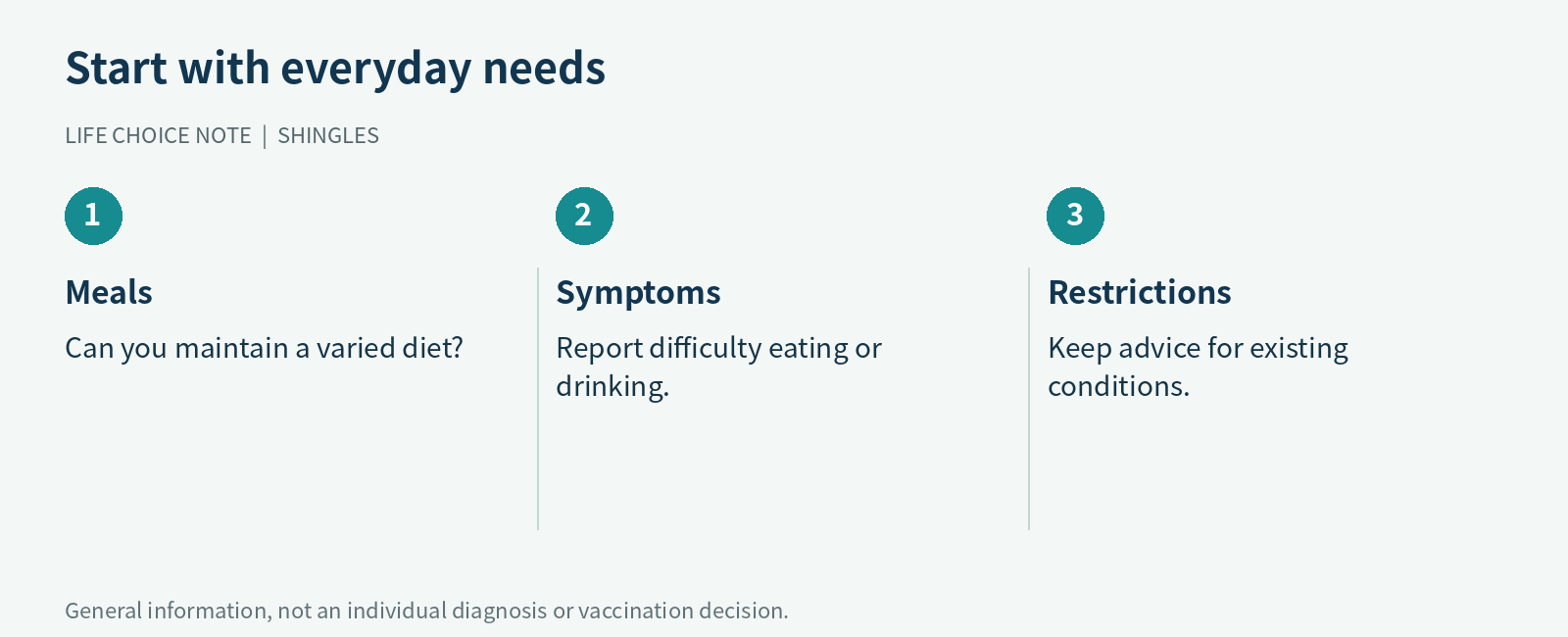
The American Academy of Dermatology recommends a balanced diet and rest during recovery. Rather than searching for a special antiviral food, identify whether pain, nausea or mouth symptoms are making ordinary meals difficult.
Choose familiar foods you can tolerate and a variety of food groups where practical. This is meal planning, not a treatment for the virus or nerve pain. Existing fluid, kidney, heart or dietary restrictions still apply; a universal high-protein diet or water target is not appropriate for everyone.
Tap the diagram to view full size
Do not remove whole food groups based on an online list
Advice to avoid nuts, beans or chocolate often relies on claims about a different condition or about concentrated ingredients rather than ordinary diets. Herpes simplex and shingles are caused by different viruses. Similar names or overlapping antiviral medicines do not make their nutrition evidence interchangeable.
Keep restrictions needed for an allergy or another diagnosed condition, but avoid expanding a restrictive diet without a clear reason. If you already eat less because of illness, additional exclusions can make adequate nutrition more difficult.
Lysine and curcumin claims need the right evidence
A frequently cited 1987 lysine trial studied recurrent herpes simplex, not shingles. It cannot establish treatment or recurrence prevention for shingles. Laboratory antiviral activity also does not show that swallowing a product improves human recovery.
NCCIH states that evidence is insufficient to conclude that turmeric or curcumin is beneficial for health purposes generally, and notes liver injury reported with some enhanced-bioavailability products. Check the population studied, comparator and actual outcomes rather than relying on the words “antiviral” or “anti-inflammatory.”
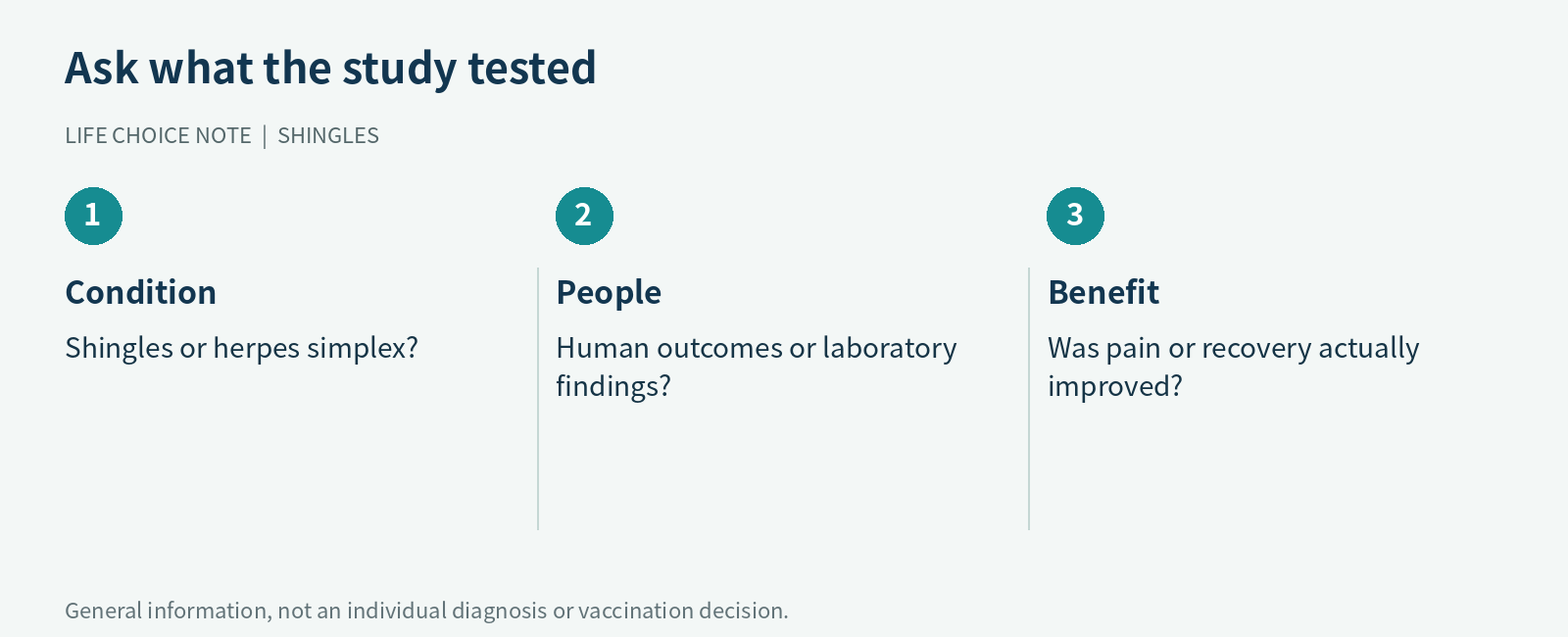
Tap the diagram to view full size
Separate correcting a deficiency from treating shingles
Supplements may help meet a demonstrated nutritional need, but NIH’s Office of Dietary Supplements emphasizes that they do not replace a varied diet. Routine high-dose B vitamins, vitamin C or vitamin D cannot be recommended to all shingles patients on the basis of the official care sources reviewed here.
A multivitamin, single-ingredient tablets and fortified drinks can duplicate ingredients. More is not automatically better. Ask about the purpose and continuing need for a supplement prescribed previously rather than changing it on your own.
Alcohol advice depends on the whole prescription
NHS information about aciclovir does not impose a blanket alcohol prohibition for that medicine. That does not establish safety with every pain medicine or other drug used during shingles. Liver disease and usual alcohol intake also matter.
FDA warns about liver injury associated with excess acetaminophen and alcohol-related risk. Do not skip medicine to drink or take extra pain relief afterward. Postpone drinking while you check your actual medicines with a pharmacist; the rash onset date cannot determine a universally safe return-to-drinking date.
Tap the diagram to view full size
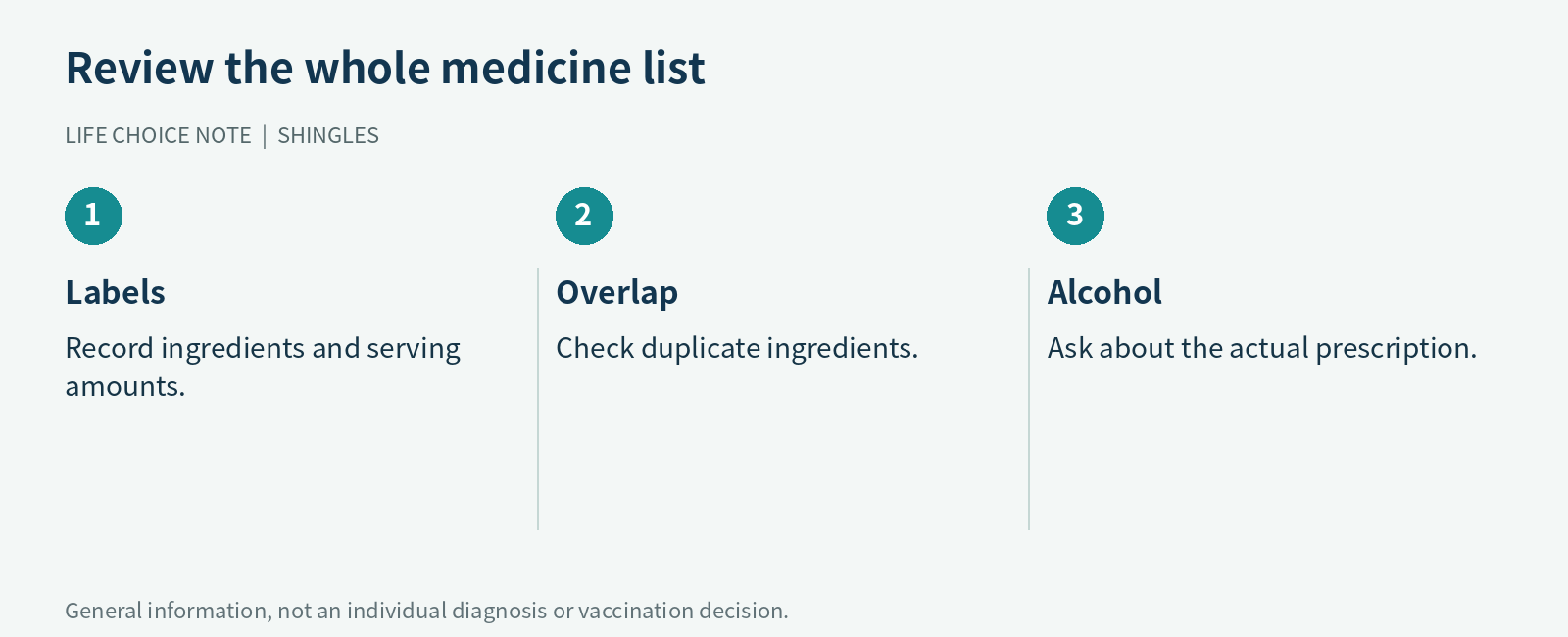
Bring labels rather than relying on product names
Prepare the ingredient panel, serving amount, frequency, start date and reason for each supplement. “Natural” is not a guarantee against adverse effects or interactions. People receiving cancer or transplant treatment, or with liver or kidney disease, should not add products without their care team’s advice.
Ask whether a product is needed, whether it interacts with prescribed treatment, and whether any ingredient is duplicated. Testimonials cannot separate natural recovery from the effects of other treatment. Before spending money, check whether food intake and pain control need more practical support.
This article is for general education. Food and supplements do not replace assessment or prescribed shingles treatment. Seek individual advice about poor intake, existing dietary restrictions or medicine interactions.
Sources and review date
- American Academy of Dermatology: Shingles Self-Care
- NIH ODS: Dietary Supplements, What You Need to Know
- NCCIH: Turmeric
- Griffith et al. (1987): Lysine in Recurrent Herpes Simplex
- NHS: Aciclovir
- US FDA: Acetaminophen Safety
Sources checked October 6, 2026. General health information; discuss individual diagnosis, treatment and vaccination with a qualified healthcare professional.