Should People of Korean Ancestry Have HLA-B*58:01 Testing Before Allopurinol?
If allopurinol has been suggested for gout, ask whether HLA-B*58:01 testing should happen before the first dose. This genetic test helps assess the risk of particular severe drug reactions. It does not diagnose gout, measure its severity, or predict how quickly your urate level will fall. People of Korean ancestry are among the groups specifically identified in American College of Rheumatology guidance.[2][3]
Testing is only one part of safe treatment. Your kidney function, previous reactions and other medicines still matter. A negative result does not remove every risk. For readers receiving care in Korea, the Korean product warning about a new rash or other signs of hypersensitivity is especially important.[1]
1. What the test can tell you
HLA genes help shape immune responses. HLA-B*58:01 is associated with severe reactions to allopurinol, including Stevens–Johnson syndrome and toxic epidermal necrolysis. A positive result identifies a risk factor; it does not mean that you currently have one of these conditions. The result should guide a discussion before treatment rather than become a diagnosis you make yourself.[1][2]
You may see the same test written as HLA-B*5801. Bring the actual laboratory report if you have been tested before. A routine uric acid blood test is different, and a general genetic test may not include this specific result. Ask the clinic to confirm which test was performed and how the result will affect the proposed prescription.
2. Why Korean ancestry is mentioned
The 2020 ACR guideline conditionally recommends testing before allopurinol in people of Han Chinese, Korean or Thai ancestry and in African American patients. This is not a statement that all Asian populations have identical risk. Ancestry, nationality and the country where someone lives are not interchangeable. Describe your background accurately rather than trying to assign yourself a risk category from appearance.[3]
Korea’s MFDS has also published patient information about pre-treatment testing. The Korean product information advises considering screening in populations where the variant is more frequent. Ask your clinician about testing alongside kidney disease and previous drug reactions. A recommendation from another country does not automatically establish Korean insurance coverage; the clinic can explain current testing arrangements.[1][2]
3. Positive and negative results need context
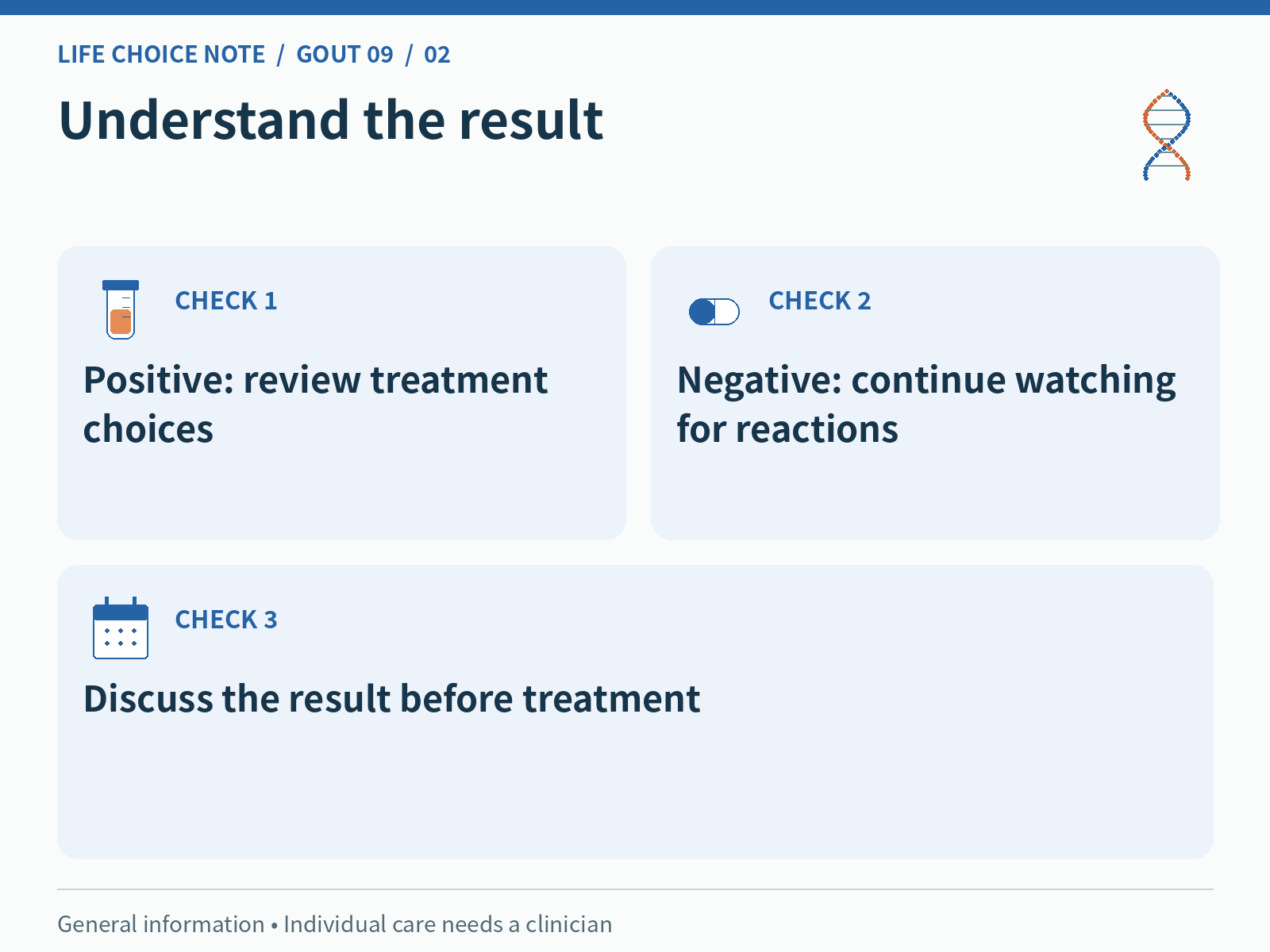
A positive result should trigger a careful review of treatment options. For a positive result, the prescriber should review alternatives and generally avoid allopurinol unless its expected benefits outweigh the risks. Selecting a replacement also requires a review of cardiovascular disease, kidney function and interactions. Do not switch to another gout medicine using an online comparison alone.[1]
A negative result is reassuring in a limited sense, but it is not a safety guarantee. Both Korean product information and U.S. labeling acknowledge that severe reactions can still occur. Keep the result with your medical records, but do not use it to dismiss a new rash, fever or painful mouth or eye symptoms after starting treatment.[1][5]
4. Know when to stop and seek urgent assessment
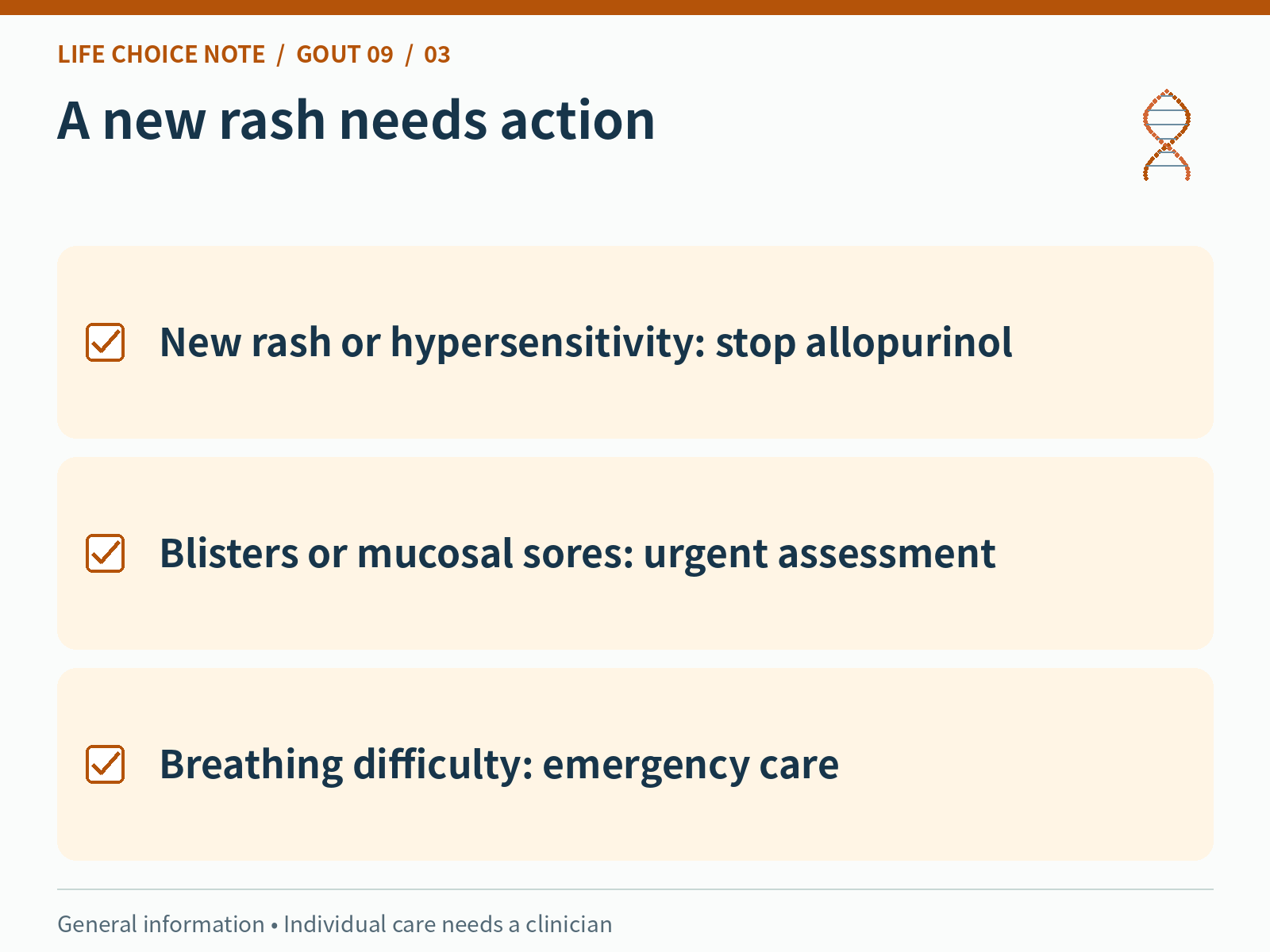
If a new rash or other sign of hypersensitivity appears while taking allopurinol, stop allopurinol immediately and obtain prompt medical assessment, following the Korean product warning. Do not wait for the next routine appointment or keep taking it while covering the rash with an over-the-counter medicine. Appearance alone cannot reliably tell you whether a reaction will remain mild.[1][4]
Blisters, peeling skin, painful sores affecting the mouth, eyes or genital area, or a spreading rash with fever need urgent assessment. Breathing difficulty or swelling of the face or lips warrants emergency care. Bring the medicine name and the timing of doses and symptoms. If a severe hypersensitivity reaction is diagnosed, do not restart allopurinol yourself; ensure future healthcare providers know about it.[1][4]
5. A gout flare and hypersensitivity require different responses
Gout flares can occur during the early phase of urate-lowering treatment. Joint pain alone does not establish an allergy or justify stopping long-term treatment without advice. Follow the flare plan agreed with your clinician and seek review for unfamiliar symptoms. Make sure you can distinguish your long-term urate medicine from a medicine prescribed to control inflammation.[3]
The instruction to stop for a new rash or hypersensitivity is a specific safety warning. It is compatible with the general advice not to stop gout treatment casually whenever pain improves or a flare occurs. If joint pain is accompanied by a rash or systemic symptoms, do not take another dose as a test of what happens. Seek assessment rather than trying to classify the reaction at home.[1]
6. Make the result part of a practical safety plan
Before treatment, report previous drug rashes, kidney or liver disease and all current medicines. Allopurinol has important interactions, including with azathioprine and mercaptopurine. Prescriptions from different hospitals, nonprescription products and supplements belong on the same list. A photo of each medicine packet may help when Korean brand names are unfamiliar.[1][4]
Before leaving the clinic, clarify who will explain the genetic result, when follow-up tests are planned and whom to contact if symptoms develop. If you have taken allopurinol successfully for a long time, do not stop and restart it simply because you have just learned about pre-treatment testing. Ask whether any testing question remains relevant to your situation and describe previous treatment interruptions accurately.[3]
What to bring to your appointment
- Confirm whether this is first use or a restart.
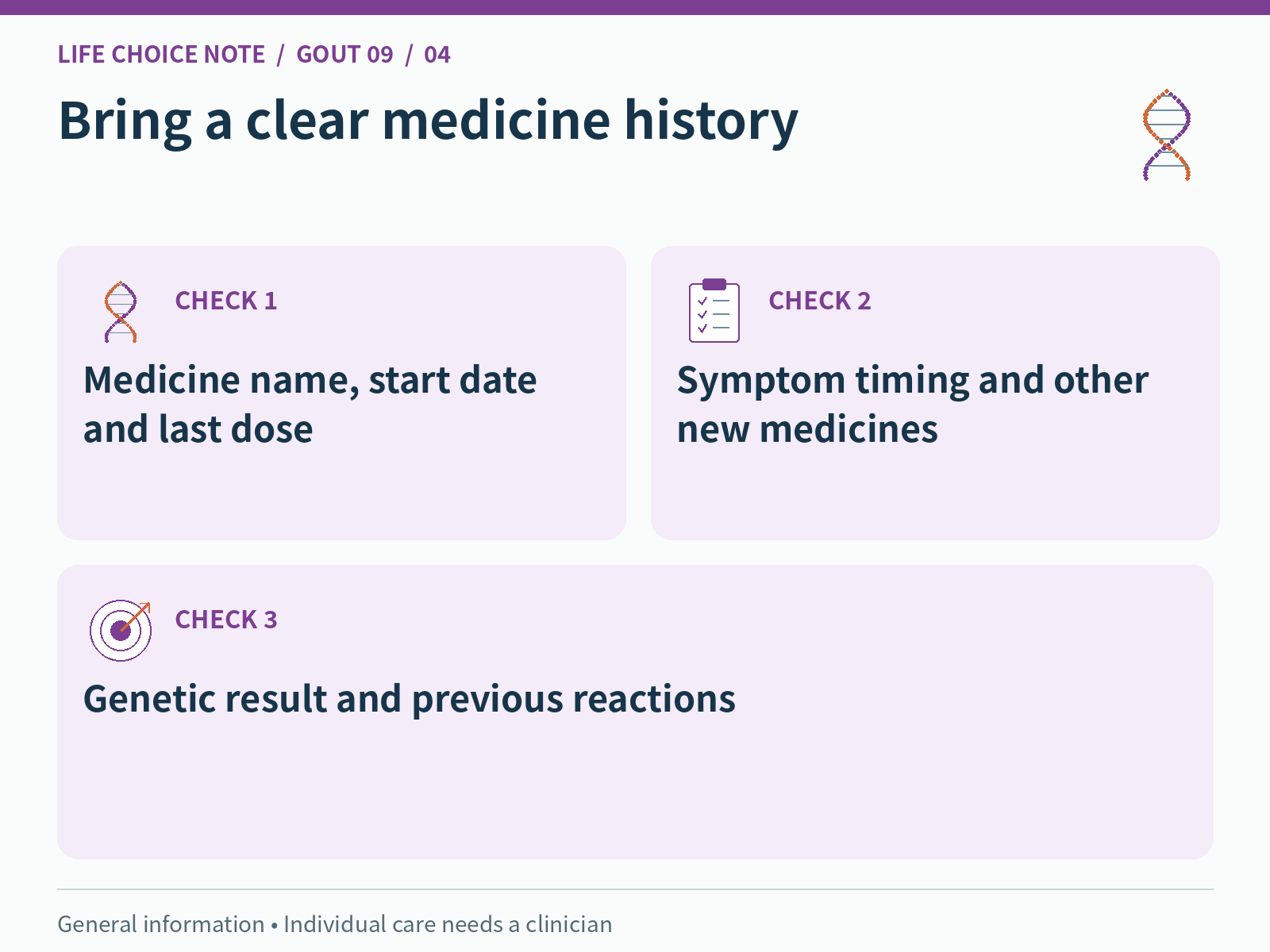
- Bring any previous HLA-B*58:01 result.
- List kidney or liver disease and all medicines.
- Know the rash warning and urgent contact route.
- Ask the clinic about testing arrangements and costs.
Common questions
Can I ignore a rash if my genetic test was negative?
No. A negative result does not eliminate severe-reaction risk. Follow the Korean warning: stop allopurinol for a new rash or hypersensitivity signs and obtain prompt assessment. Blistering, mucosal injury or breathing problems require urgent or emergency care.[1]
Does a positive result in a relative establish my result?
No. Tell the clinician about the family history, but do not substitute another person’s report for your own. The decision uses your history and, where appropriate, your own test.[2]
Must everyone already taking allopurinol be tested now?
The ACR recommendation addresses testing before initiation. If treatment is going well, ask about your records and individual need rather than interrupting it yourself. New hypersensitivity symptoms still require action regardless of how long you have used the medicine.[1][3]
This article provides general health information for adults, not a diagnosis or personal prescription. Discuss medicines, testing and dietary plans with your clinician, using Korean product information where you receive care. Sources were checked on 15 October 2026; this is not their publication date.
Related published reading
- CKD and Supplements: Bring the Bottle, Labs and Medicine List
- Supplements That Can Interfere With Lab Tests: Biotin and Beyond
- Previous: How Long Do You Need Gout Medicine Once Symptoms Improve?
- Next: How Is Gout Treated When Kidney Function Is Reduced?
Official and primary sources
- 자이로릭정(알로푸리놀) 의약품 허가정보 · 식품의약품안전처 의약품안전나라 · 사용상주의사항 변경이력 2026-06-29; 현행 본문 확인 · Checked 2026-10-15
- 알로푸리놀 투여 전 유전자 검사 안내 · 식품의약품안전처 · 2017-11-09 · Checked 2026-10-15
- 2020 American College of Rheumatology Guideline for the Management of Gout · American College of Rheumatology · 2020 · Checked 2026-10-15
- Allopurinol: patient medication information · MedlinePlus / American Society of Health-System Pharmacists · 2023-09-15 · Checked 2026-10-15
- Allopurinol tablets: prescribing information · DailyMed / U.S. National Library of Medicine · 현행 라벨; 개정일은 확인일과 구별 · Checked 2026-10-15