Is Your Collagen Subscription Worth Renewing? A Practical Look at Skin and Joint Claims
A monthly collagen subscription can become part of a routine before its purpose is clear. Perhaps the powder goes into breakfast, a new moisturizer arrived at the same time, and you also started walking more. When renewal comes around, the useful question is not simply whether collagen “works.” It is whether this particular purchase deserves a place in your budget for the outcome you want.
Decide what would make the expense worthwhile
Choose a concrete aim: less bothersome skin dryness, a visible cosmetic change, or greater comfort during a familiar activity. These are different outcomes. A study reporting improved skin hydration cannot establish relief of knee pain, and a knee-pain questionnaire cannot establish cartilage regrowth.
Compare cost using the labeled daily serving and the number of days in the package. Do not compare tubs solely by weight or assume a larger dose buys a larger benefit. Before committing to several months, decide whether you would still consider the purchase worthwhile if the benefit were small or uncertain. That is a personal spending decision, not a medical requirement.
Check whether a health problem needs assessment first
Persistent joint pain that limits ordinary activities deserves evaluation rather than repeated changes of supplement. If you already have an exercise or treatment plan, collagen should not displace it. Describe the activity that hurts and any changes over time when discussing symptoms with your clinician.
There is some positive joint evidence: a 2024 meta-analysis reported improvements in pain and function in osteoarthritis. A separate 2025 trial, however, found no added benefit over placebo from a particular combination of hydrolyzed collagen and undenatured type II collagen over 12 weeks. Neither finding applies automatically to every formulation. Osteoarthritis meta-analysis · Combination-product trial
Reduced pain is valuable, but it does not by itself demonstrate that damaged cartilage has been rebuilt. Product descriptions sometimes move from laboratory mechanisms to treatment promises without showing the human evidence needed for that step. Look for the actual clinical outcome, not an illustration of a healthier-looking joint.
Treat skin claims as possibilities with important uncertainty
Some trials report improvements in instrument-measured skin hydration or elasticity. These measurements are not interchangeable with a visibly younger face, and small, short studies leave questions about the size and durability of any benefit.
A 2025 meta-analysis found overall improvements, but benefits were not statistically significant in its higher-quality trial subgroup or in trials classified as not receiving pharmaceutical-company funding. That is a reason for caution about confident promises; funding alone does not prove that a study is invalid. 2025 skin meta-analysis
A systematic review published in 2026 also described promising skin findings while rating most included trials at high risk of bias. Current evidence therefore leaves uncertainty about how reliably a particular product will produce a noticeable improvement for an individual. An expensive subscription does not resolve that uncertainty. 2026 skin review
Work out what the product actually contains
Hydrolyzed collagen, often labeled collagen peptides, has been broken into smaller fragments. Undenatured type II collagen is a different preparation that preserves its native structure. Trials of these preparations should not be treated as evidence for interchangeable products. A bigger number of milligrams does not establish that one form is superior. Undenatured type II clinical research
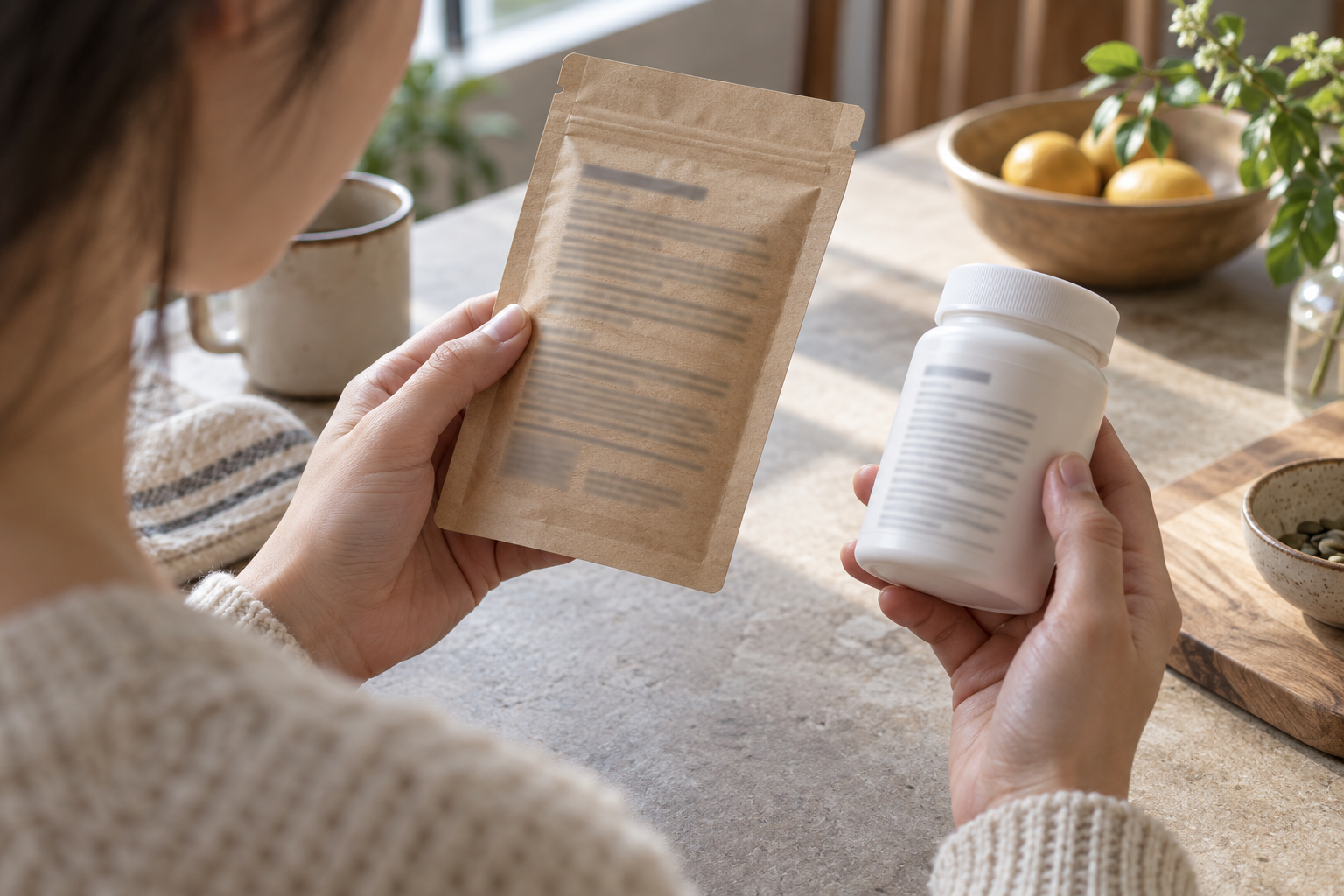
Read the ingredient identity, form, and amount per daily serving together. If a label says only “type II,” clarify whether it means undenatured or hydrolyzed collagen. If it says “low molecular weight,” that description alone does not show that it matches the ingredient in the advertised trial.
Also distinguish the weight of the whole powder, drink, or blend from its stated collagen content. Added ingredients complicate attribution: a study of a multi-ingredient formula cannot necessarily tell you what collagen alone contributed. Do not turn the amount used in a particular trial into a personal dose recommendation for a different product.
Keep allergy history ahead of source-based marketing
“Marine” is a source description, not a guarantee of safety or greater benefit. Fish collagen in a processed product has caused anaphylaxis in a person with fish allergy. If you have fish allergy, do not assume processing makes a fish-derived product safe or test it by taking a small amount at home. Fish-collagen allergy report
Fish and shellfish are not interchangeable allergy categories. Match your known allergy to the actual ingredient source and allergen information. If the manufacturer will not identify what “marine” means in that product, leave the purchase unresolved until you can verify it with appropriate professional advice. FDA food-allergen information
Avoid mistaking a changed routine for proof
If you choose to use collagen, keep a brief record of the product, start date, expense, and the outcome that matters to you. Note other changes too: a different moisturizer, reduced sun exposure, a new exercise program, or changes to prescribed treatment. Improvements that happen together do not identify which change caused them.
For skin care, continue ordinary measures such as moisturization and sun protection. In South Korea, some collagen ingredients have recognized skin-related functional claims, but those claims still have a defined scope. A moisturizing claim should not be expanded into cartilage repair or treatment of disease. MFDS skin-health information
At renewal, review the original goal and total cost. You are not obliged to keep buying because the first container is finished, and an unclear result is not a reason to double the serving. Bring the actual label to a clinician or pharmacist if you need help relating its claims to your symptoms or current care.
This article provides general information and does not replace individual diagnosis or treatment. Sources checked September 23, 2026 (KST).
Related guides
- Do You Need Supplements? Start With the Problem You Want to Solve
- Is This Supplement Actually Verified? How to Check Quality Claims Before Buying
- How to Read a Supplement Facts Label Without Misreading the Dose
References
- Myung & Park (2025) — Effects of Collagen Supplements on Skin Aging
- Bassila et al. (2026) — Hydrolyzed Collagen and Skin Health: Systematic Review
- Liang et al. (2024) — Collagen Derivatives for Osteoarthritis: Meta-analysis
- Yuenyongviwat et al. (2025) — Combined Collagen in Knee Osteoarthritis: Randomized Trial
- Lugo et al. (2016) — Undenatured Type II Collagen: Randomized Trial
- Ueno et al. (2020) — Anaphylaxis Caused by Fish Collagen
- MFDS Food Safety Korea — Skin Health and Functional Ingredients
- FDA — Food Allergies