Who Should You See for Shingles? Primary Care, Eye Care and Emergencies
In the United States, call 911 for sudden facial weakness with arm weakness or speech trouble, or other possible stroke symptoms. Do not wait for a routine shingles appointment.
For a new painful rash, contact your primary care clinician, a dermatologist, or an urgent care service that can assess the problem promptly. Call ahead to confirm their services. A rash near the eye or nose, eye symptoms, or ear symptoms with facial weakness may need a different and more urgent route.

Choose a timely first assessment
The practical goal is to have the rash examined without waiting days for a preferred specialist. The American Academy of Dermatology advises seeing a dermatologist or another healthcare provider promptly when shingles is suspected. A first clinician can assess the rash and arrange additional care when needed.
An urgent care center is not the same as an emergency department, and services vary. Ask whether the facility can evaluate your symptoms. A routine appointment is not an adequate substitute when emergency warning signs are present.
Mention eye and ear symptoms before booking
Tell the office about a forehead, eyelid, or nose rash, and any eye pain, redness, light sensitivity, or vision change. Shingles involving the eye may require urgent assessment by an ophthalmologist, a medical doctor specializing in eye care. Do not assume a routine appointment for glasses covers this problem.
Ear pain or rash with a hearing change, dizziness, or facial weakness also needs urgent medical assessment. A clinician may involve an ear, nose, and throat specialist, but you do not need to identify the final specialist yourself before seeking help. The NHS warning-sign guidance is useful clinically; its UK phone and pharmacy instructions do not apply to US services.
Know when this is an emergency
Sudden facial weakness can have causes other than shingles. Facial drooping with arm weakness or speech difficulty is a possible stroke presentation. CDC recommends calling 911 immediately for stroke symptoms. Confusion, severe neurological changes, sudden vision loss, or severe eye pain also requires urgent evaluation rather than a delayed office visit.
If you are receiving chemotherapy or treatment that suppresses your immune system, notify your treating team promptly about a new rash. A widespread rash or severe illness needs urgent assessment. Do not stop an existing cancer medicine, immunosuppressant, or steroid on your own.
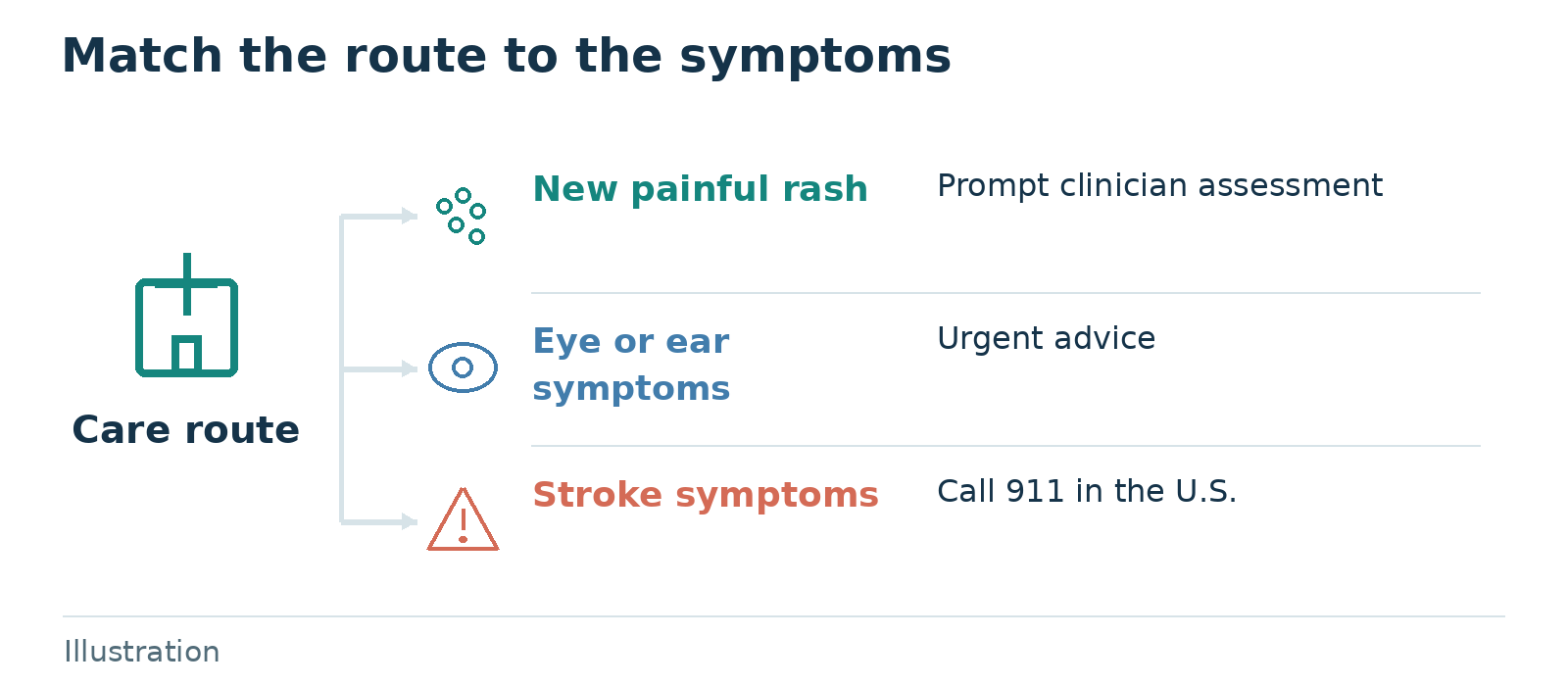
Tap the diagram to view full size
Use a short, specific phone description
You can say: “I have a new painful rash that started on [day]. New blisters are still appearing. I also have [eye or ear symptoms, if any]. Can I be assessed today, and is this the right location?” Mention treatment that weakens the immune system at the beginning of the call.
Ask whether the service can assess your symptoms, when you can be seen, what records to bring, and whether there are arrival instructions. If you have not been diagnosed, say that you are concerned about possible shingles rather than presenting it as confirmed.
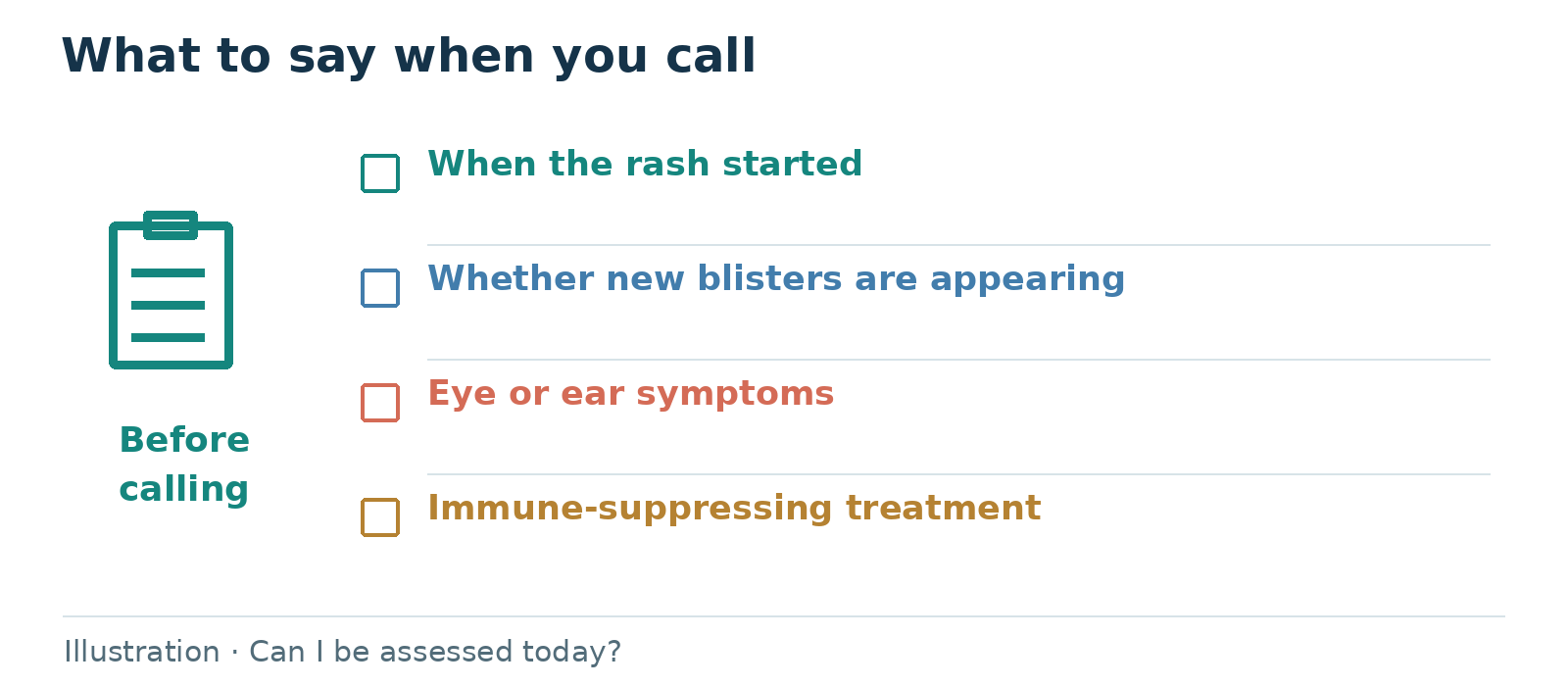
Tap the diagram to view full size
After hours and after the rash heals
For a non-emergency problem, your usual clinic’s after-hours instructions may help identify an appropriate local service. Availability varies, so verify it directly. If pain continues after the rash has healed, tell the clinician who treated you about its effect on sleep and daily life; further pain care can be arranged if needed.
Care routes differ by country. In Korea, dermatology, internal medicine, or family medicine clinics may be first contacts, depending on local services; Asan Medical Center provides Korean disease information. The KDCA emergency-information page links to Korean E-Gen services. These are Korean resources, not US service directories.
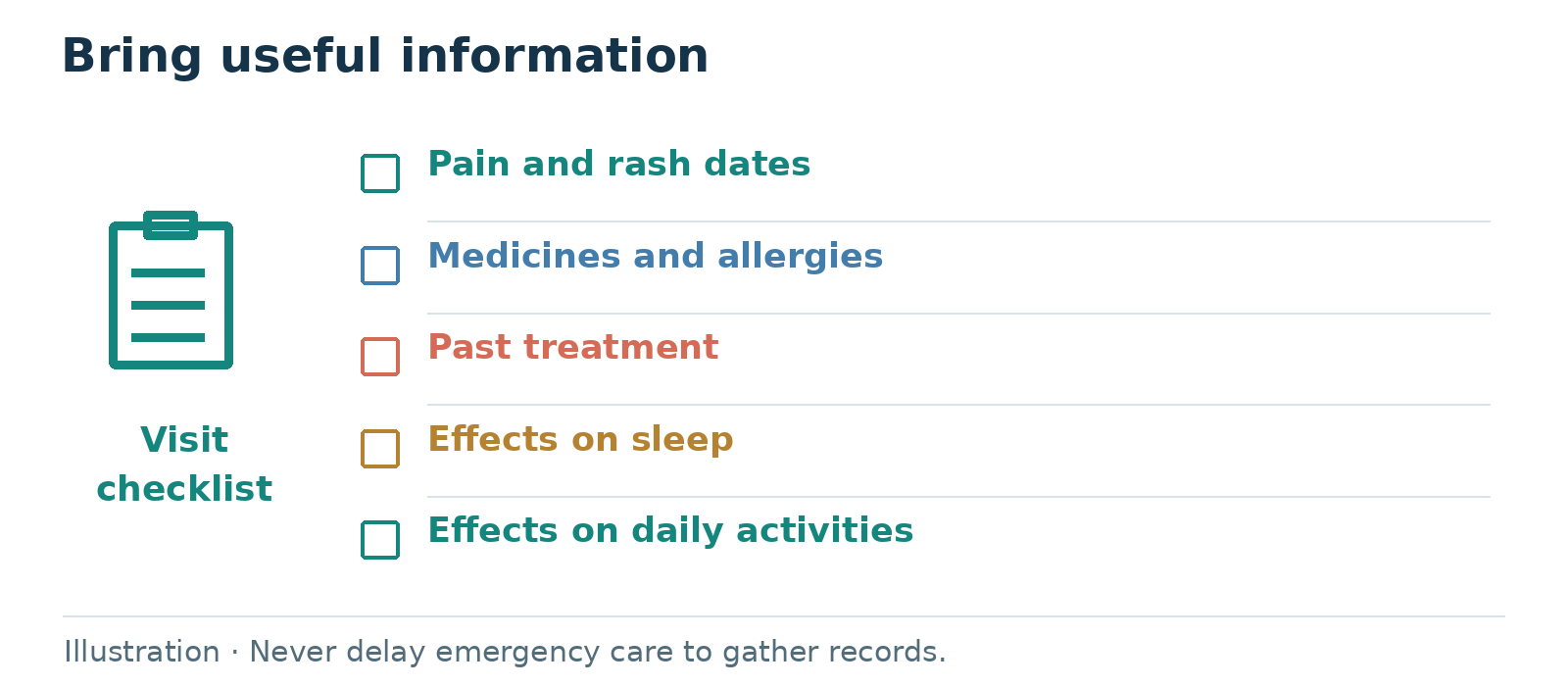
Tap the diagram to view full size
Frequently asked questions
Do I need a dermatologist before treatment can start?
Not necessarily. A qualified clinician who can assess shingles promptly may be an appropriate first contact. Ask about the service’s scope rather than delaying for a particular specialty.
Can an urgent care clinic manage eye involvement?
Capabilities vary. Describe the eye symptoms when you call and ask where you should be seen urgently. Sudden loss of vision or severe eye pain should not wait for a routine slot.
What should I bring to the visit?
Bring separate dates for pain and rash onset, your medicine and allergy list, earlier treatment information, and a note about eye or ear symptoms. Do not delay emergency care to collect records.
Scope and safety
This article provides general health information, not a diagnosis or an individual treatment plan. Your symptoms, medical conditions, and medicines can change the care you need. Do not delay urgent care to complete notes or read more material.
Helpful resources for your visit
Sources and review date
- Asan Medical Center: Shingles (Korean)
- NHS: Shingles warning signs (UK)
- American Academy of Dermatology: Diagnosis and treatment
- KDCA: Emergency information and E-Gen links (Korea)
- CDC: Stroke signs and symptoms
Public sources checked and text reviewed: October 5, 2026.