Shingles Near the Eye: When to Seek Urgent Eye Care
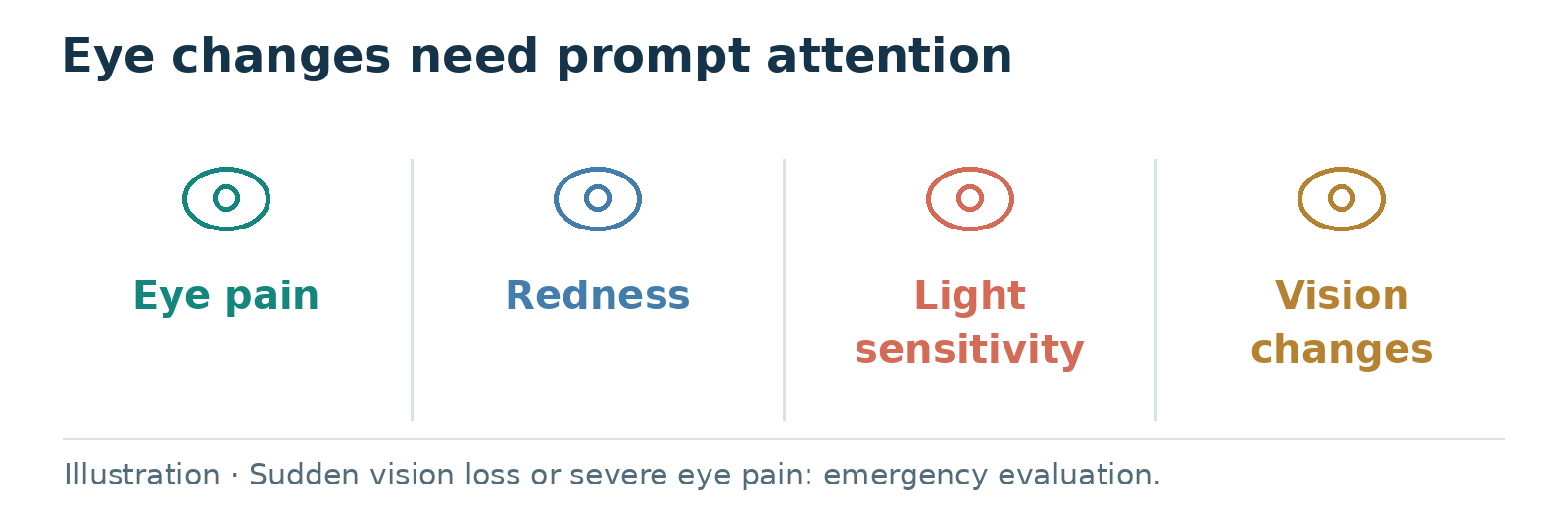
Sudden loss of vision or severe eye pain needs emergency evaluation. A rash near the eye with redness, eye pain, light sensitivity, or a vision change requires prompt eye assessment.
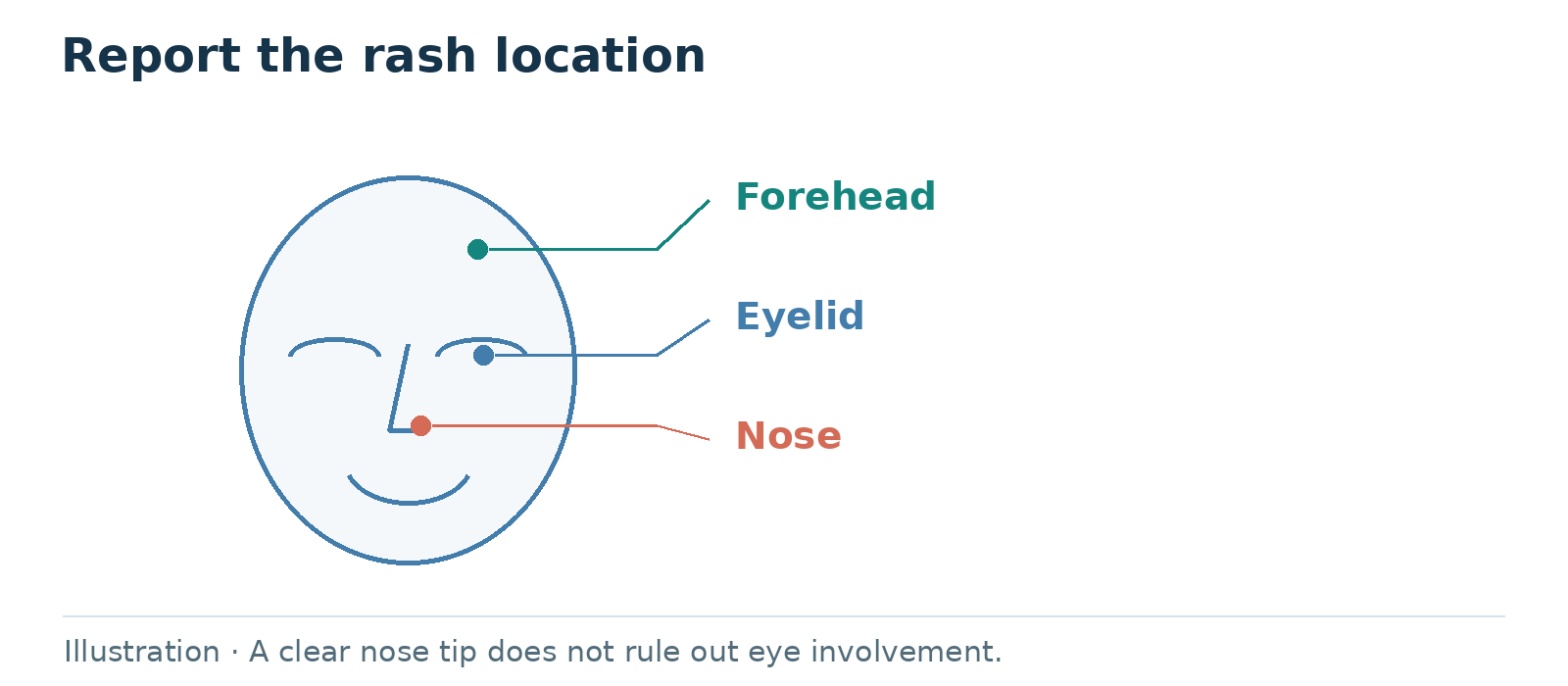
If a possible shingles rash appears on the forehead, eyelid, or nose, contact a clinician the same day. An ophthalmologist may need to check whether the eye is involved. You cannot tell that the eye is safe by looking only at the skin, and the absence of a blister on the nose tip does not rule out eye involvement.
Which symptoms should you report?
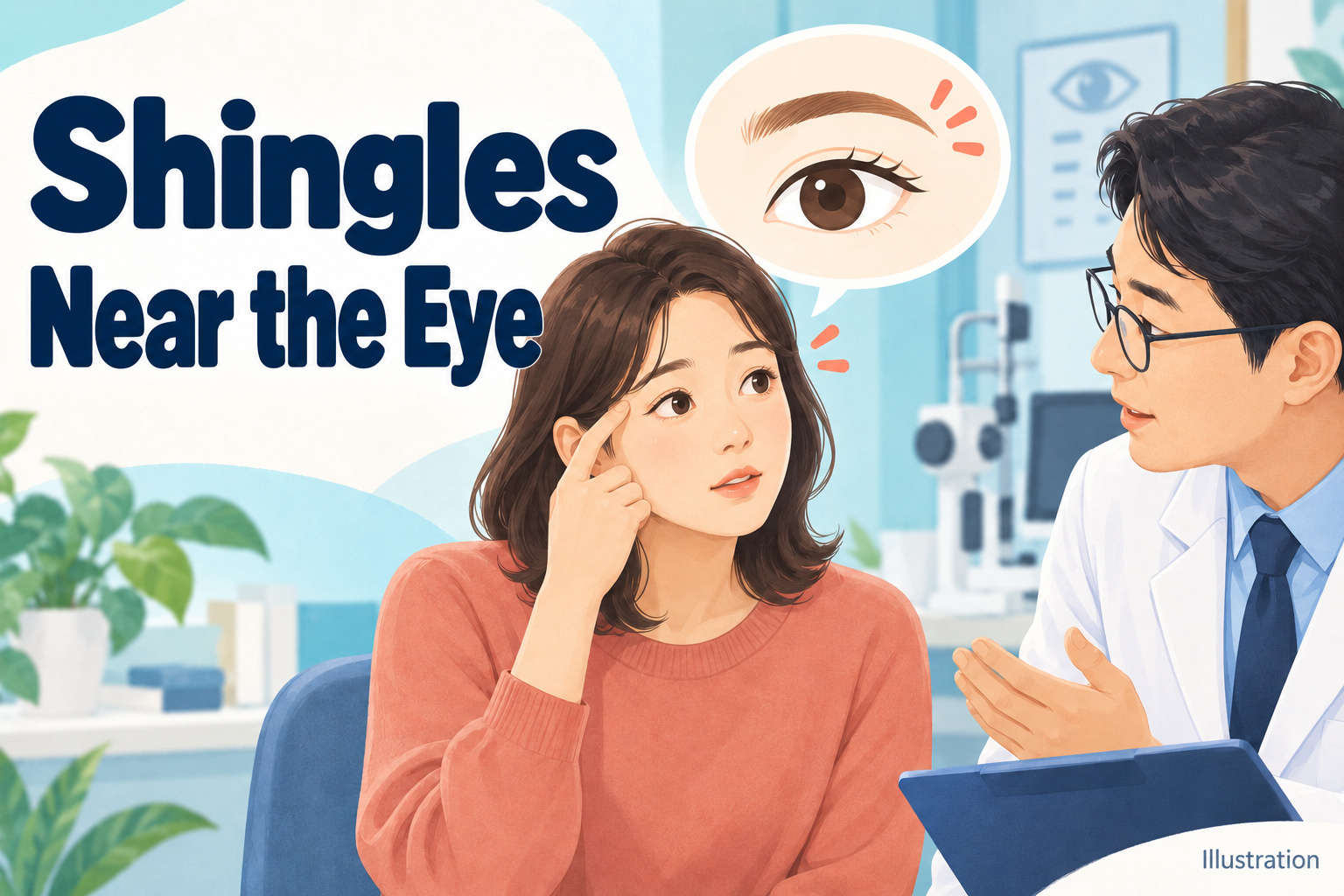
Shingles affecting the nerve region around the eye is called herpes zoster ophthalmicus. Pain and a rash may occur on one side of the forehead, scalp, eyelid, or nose. Not every rash in this region damages the eye, but an assessment helps identify problems that need treatment.
Report eye redness, pain, sensitivity to light, or blurred or changed vision along with the rash location. The NHS shingles page highlights eye and nose involvement, while the American Academy of Dermatology emphasizes prompt ophthalmology care when shingles affects the eye.
Why the tip of the nose is not a rule-out test
A shingles-type rash on the tip, side, or root of the nose is an important clue to tell the clinician about. Its absence is not a reliable test of whether the eye is affected. Eye symptoms still need assessment even if the nose looks normal.
Do not delay care while comparing your nose with online photographs. Tell the clinician where the rash began and when any eye symptoms appeared. Small blisters or faint skin redness cannot establish that the eye is unaffected.
Tap the diagram to view full size
Why the eye needs its own examination
The College of Optometrists public guidance describes possible inflammation involving the conjunctiva, cornea, or inside of the eye. The skin and the eye can need different assessments, so an improving rash does not settle the question of eye inflammation.
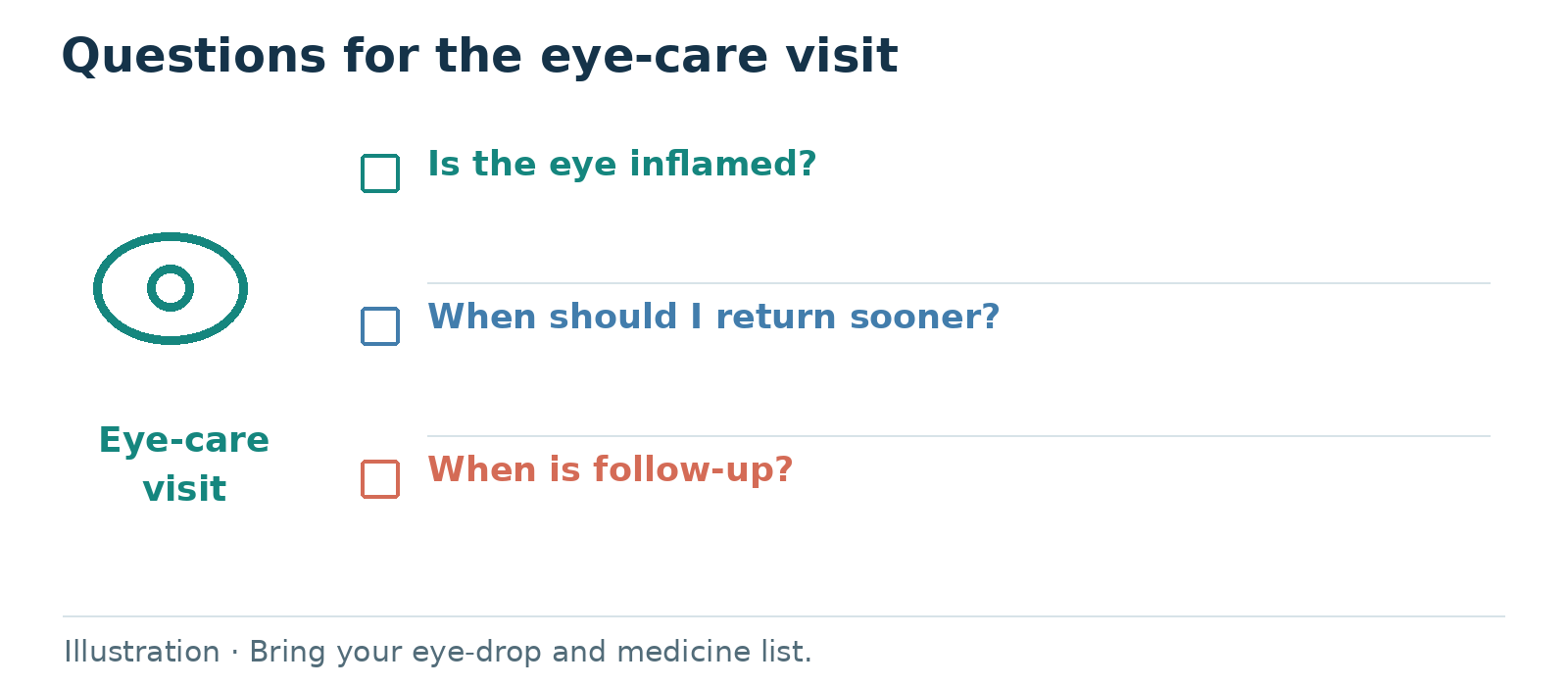
An ophthalmologist can assess vision and examine the eye. Which tests and treatments are needed depends on the findings. Ask whether the eye is inflamed, which changes mean you should return sooner, and when follow-up is needed.
Do not use 72 hours as a reason to give up on care
Early antiviral treatment is important; KDCA guidance describes the usual early-treatment window as within 72 hours of rash onset. Eye symptoms still need evaluation after that time. A clinician decides what treatment is appropriate based on eye findings and your overall health.
Sudden vision loss or severe eye pain can also be caused by other eye emergencies. Even after a shingles diagnosis, a new vision problem should not be assumed to be an expected part of recovery. If you cannot see safely, get help traveling rather than driving yourself.
Tap the diagram to view full size
Use eye medicines only as directed
Do not put a skin ointment in your eye or use someone else’s eye drops. Leftover prescription drops may be unsuitable for the current problem. Steroid eye drops in particular need clinician supervision; the NHS dexamethasone guidance explains the importance of following instructions for use and stopping.
Bring a list of eye drops and other medicines, and mention kidney disease or immune-suppressing treatment. Keep the follow-up plan even if the skin looks better. New redness, eye pain, or a vision change after improvement is a reason to contact the eye-care team again.
Tap the diagram to view full size
Frequently asked questions
Can I wait if the forehead rash does not hurt my eye?
Contact a clinician the same day to discuss a possible shingles rash near the eye. The absence of eye discomfort does not make a skin photograph a substitute for assessment.
Does no blister on the nose tip mean no eye involvement?
No. Nose findings are only one part of the assessment. Eye pain, redness, light sensitivity, and vision changes still matter.
Can I stop prescribed drops when the blisters heal?
Do not use skin healing to decide when eye treatment ends. Follow the prescriber’s instructions and attend the recommended follow-up.
Scope and safety
This article provides general health information, not a diagnosis or an individual treatment plan. Your symptoms, medical conditions, and medicines can change the care you need. Do not delay urgent care to complete notes or read more material.
Helpful resources for your visit
Sources and review date
- NHS: Shingles near the eye or nose and vision changes (UK)
- College of Optometrists: Herpes zoster ophthalmicus (UK)
- KDCA: Shingles and early treatment (Korean)
- NHS: Using and stopping dexamethasone eye drops (UK)
- American Academy of Dermatology: Shingles and eye care
Public sources checked and text reviewed: October 5, 2026.