Shingrix after shingles or a previous live vaccine: what to check
Having had shingles or an older live shingles vaccine does not automatically remove the need to discuss Shingrix. First distinguish active illness, past infection, prior live vaccination and a completed Shingrix series. Recommendations differ by country; this guide identifies US advice and Korean differences explicitly.
Separate infection history from vaccination history
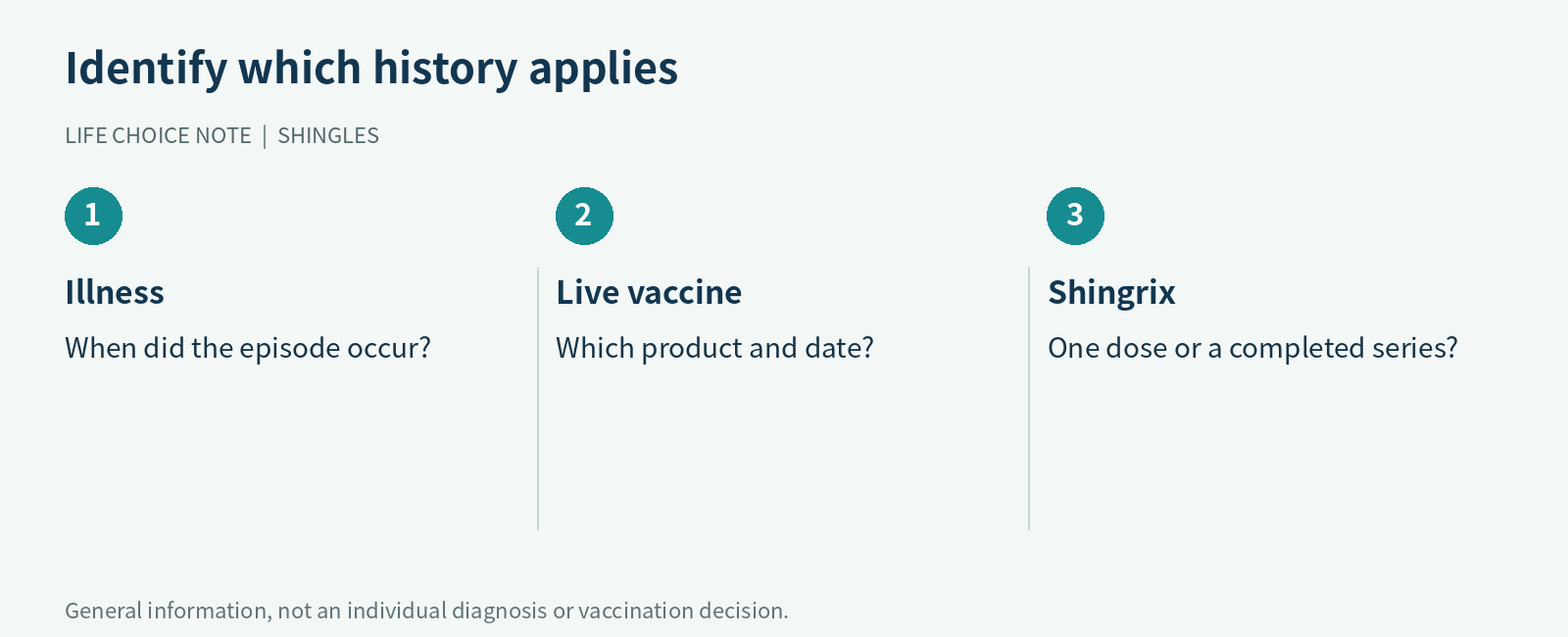
Write down when shingles occurred, when the rash began, and the name and date of every vaccine you can confirm. Zostavax and Korea’s Skyzoster are live shingles vaccines; Shingrix is a recombinant vaccine. Chickenpox vaccination is a separate history.
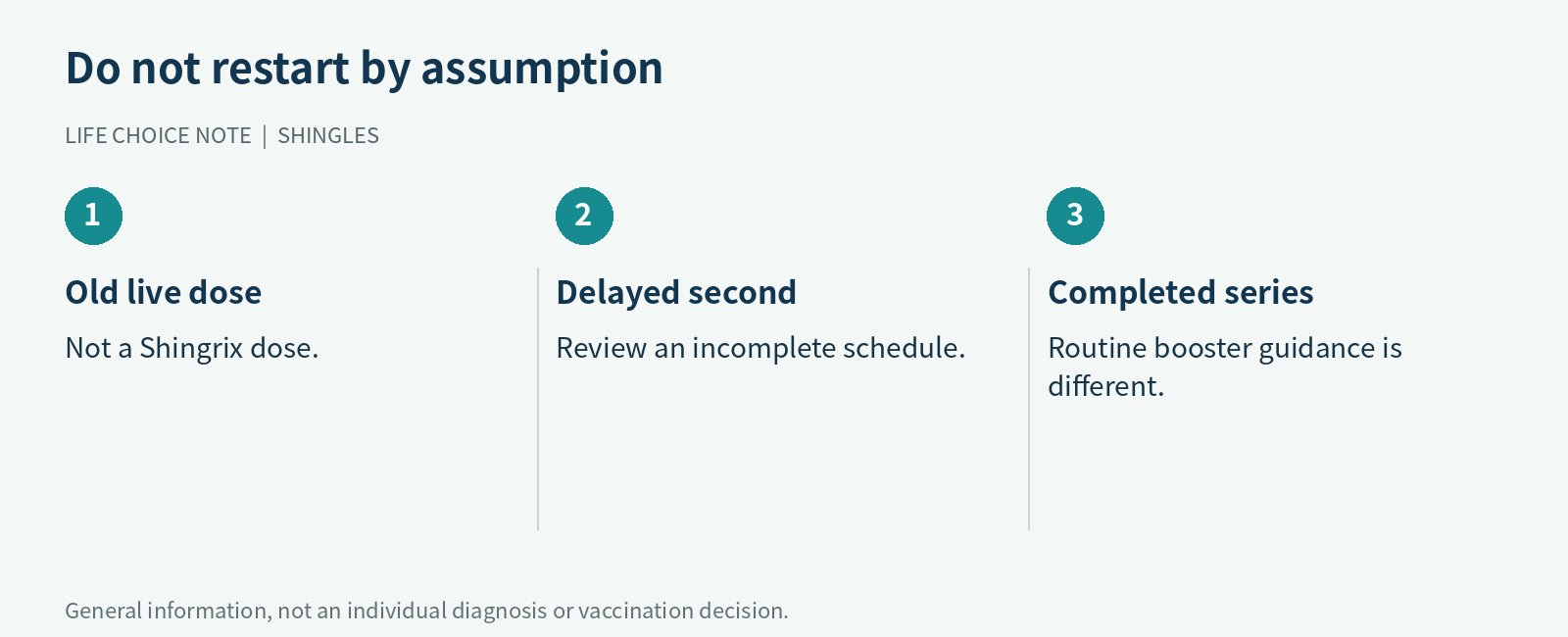
If the product is uncertain, ask the original clinic about records rather than guessing. A previous live vaccine dose does not count as the first dose of a Shingrix series.
Tap the diagram to view full size
A vaccine does not treat active shingles or existing nerve pain
New blisters, worsening pain or eye, ear and facial symptoms require assessment before planning vaccination. Prevention and treatment are different decisions. Persistent pain also deserves treatment even after the skin has healed.
Do not stop pain treatment in the expectation that vaccination will cure it. Discuss the current condition and future prevention as separate parts of the appointment.
US guidance does not set a fixed minimum wait after shingles
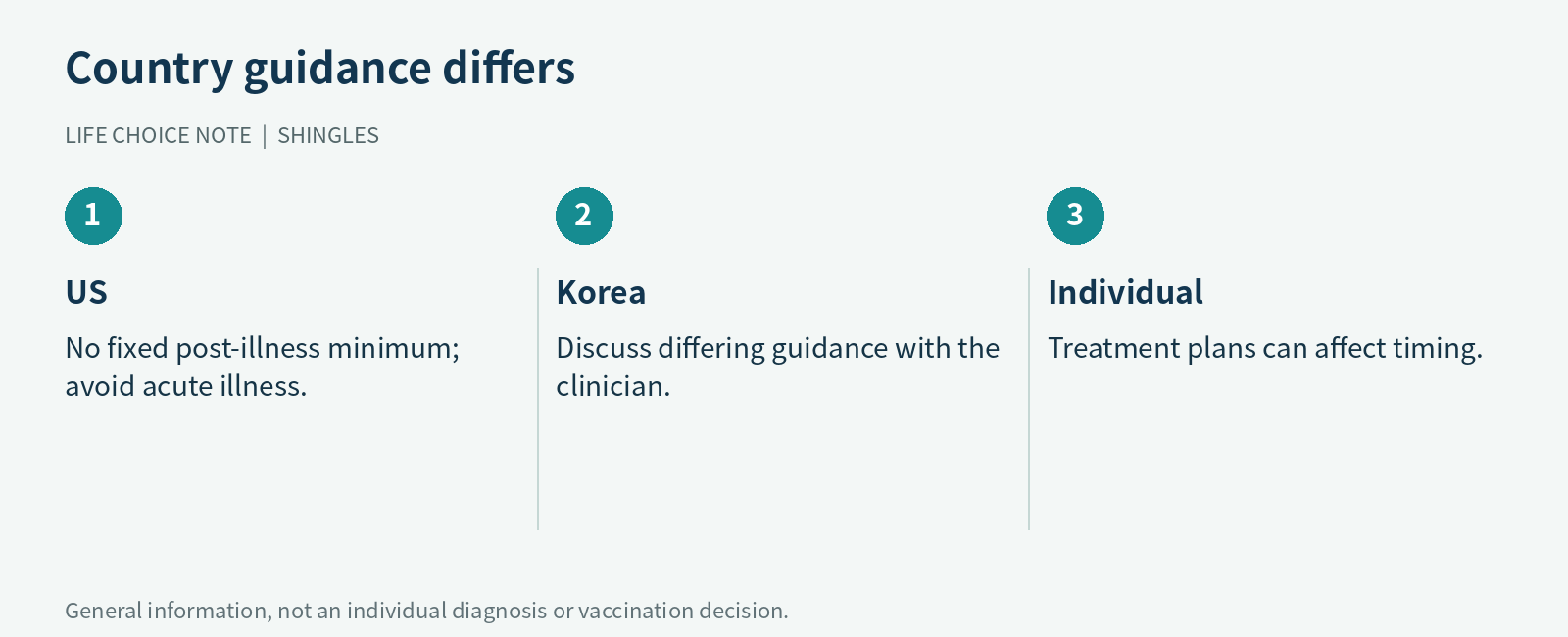
CDC says there is no specific minimum interval after a shingles episode before giving Shingrix, but it should not be administered during an acute episode. This does not mean every patient should be vaccinated immediately; eligibility and the clinical situation still matter.
Korean sources describe differing post-illness intervals: KDCA patient information discusses 6–12 months and, elsewhere, more than a year, while Korean Society of Infectious Diseases recommendations describe a preference for 1–2 years despite allowing vaccination after the acute illness improves. Do not present one number as a universal legal or clinical waiting requirement, or apply US timing automatically in Korea.
Tap the diagram to view full size
After a live vaccine, confirm the product and interval
CDC advises waiting at least eight weeks after Zostavax before Shingrix. Studies often examined longer intervals, and the minimum interval is not automatically the best individual date. Korean recommendations discuss considering a recombinant vaccine after prior live vaccination and do not recommend it within two months of a live dose.
Eight weeks and two calendar months are not always the same date. Tell the clinic which product you received and where. Confirm the complete Shingrix schedule rather than treating the old live dose as part of it.
A completed Shingrix series is a different question
CDC currently has no recommendation for booster doses after the two-dose series. Korean product information states that the need for booster vaccination has not been established. Do not start another two-dose course simply because time has passed.
Special circumstances such as transplantation or uncertain records need review by the treating team. If only the first Shingrix dose was given and the second is overdue, that is an incomplete-series question, not a booster question.
Tap the diagram to view full size
Use one clear summary at the appointment
For example: “I had shingles last year, have no new rash but still have pain, and do not know whether I received a live vaccine.” Ask separately about pain management and vaccination timing.
If cancer treatment or other immune suppression is planned, involve that treating team as well as the vaccination clinic. Bring dates and records, and ask who will confirm the final schedule.
This is general vaccine information. Confirm local recommendations, product history and the individual treatment plan before arranging a dose.
Sources and review date
- KDCA National Health Information Portal: Chickenpox and Shingles (Korea)
- Korean Society of Infectious Diseases: Revised Adult Vaccination Recommendations
- CDC: Shingles Vaccine Recommendations
- MFDS Shingrix Product Information (Korea)
- CDC: Clinical Considerations for Shingrix in Immunocompromised Adults
Sources checked October 6, 2026. General health information; discuss individual diagnosis, treatment and vaccination with a qualified healthcare professional.