Shingles in your 20s or 30s: why age and tiredness do not settle the diagnosis
Shingles can occur in young adults. Do not rule it out because of age or assume a painful rash is only a result of tiredness. Seek prompt assessment, particularly for eye or ear symptoms, facial weakness, widespread rash or symptoms during immune-suppressing treatment.
Reactivation is possible before older adulthood
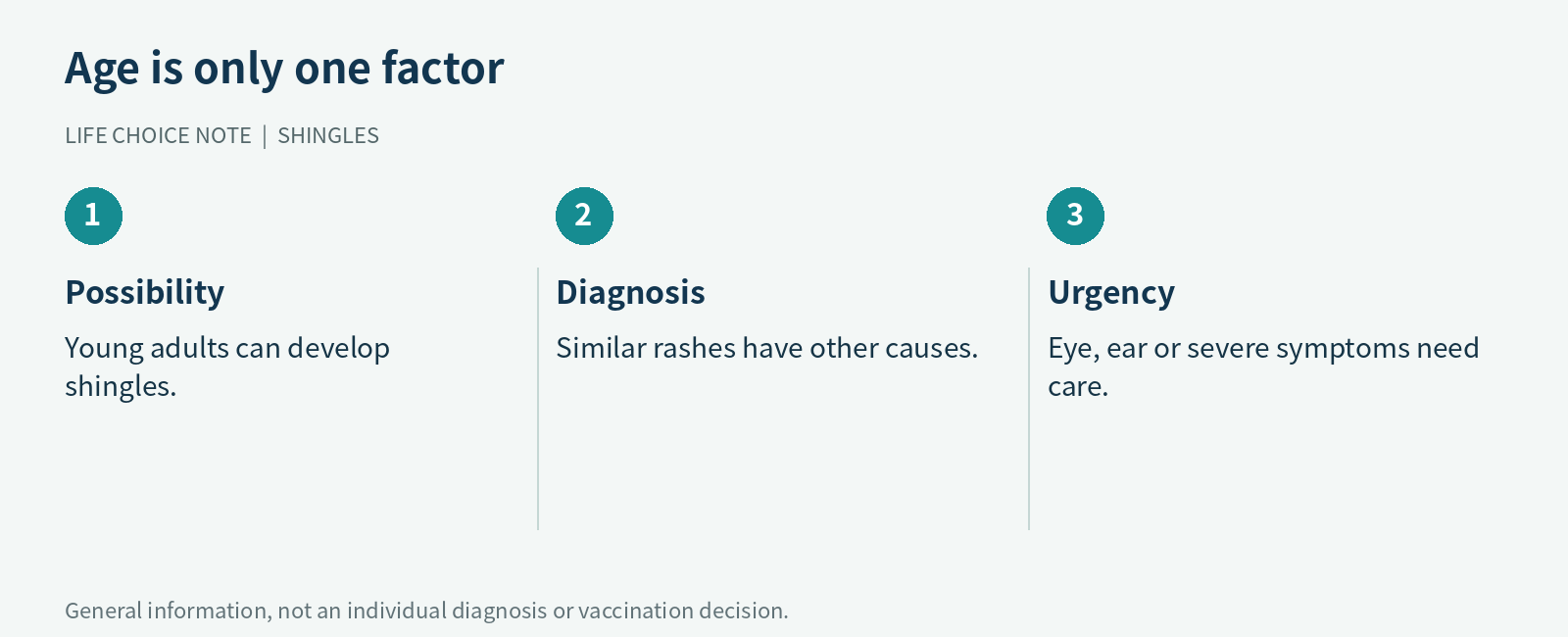
Shingles results from reactivation of varicella-zoster virus, which remains in the body after chickenpox. Risk generally increases with age, but there is no age below which an adult cannot develop it. Not remembering childhood chickenpox does not settle the question.
CDC notes that diagnosis can sometimes be harder in younger adults with mild presentations. A clinician considers the rash, symptoms and history rather than calling every mild blistering rash shingles. Accurate diagnosis also improves future discussions about recurrence.
Tap the diagram to view full size
Recent publications may describe older data
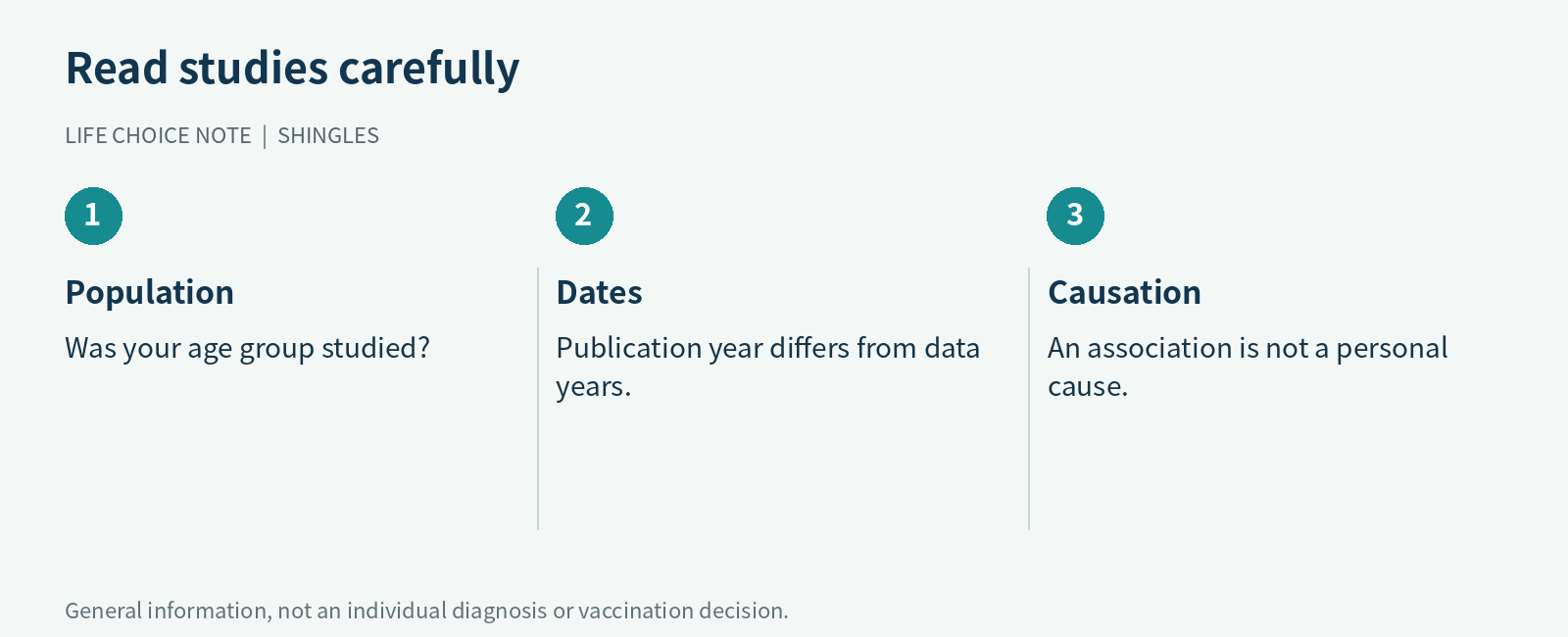
A Korean study published in 2026 analyzed health-insurance data from 2010–2022 in adults aged 20 and over. Greater burden with increasing age does not mean younger adults were unaffected. Its publication year is not the year of all the events studied.
Do not turn the study into a claim that cases among people in their 20s are currently surging. Administrative diagnosis and antiviral-prescription criteria can miss untreated or mild cases and can misclassify others. Population findings cannot diagnose your immune status.
Stress associations do not establish your individual cause
A 2021 Danish cohort studied perceived stress and shingles in 77,310 people aged 40 and over. It reported evidence of greater risk at high stress levels, with uncertainty depending on the analysis. It did not directly study people in their 20s or 30s.
An association cannot prove that a particular overnight shift or stressful event caused an individual episode. Rest and sleep support recovery, but neither guarantees that shingles will not recur or replaces medical assessment.
Tap the diagram to view full size
Tell the clinician exactly which treatments you use
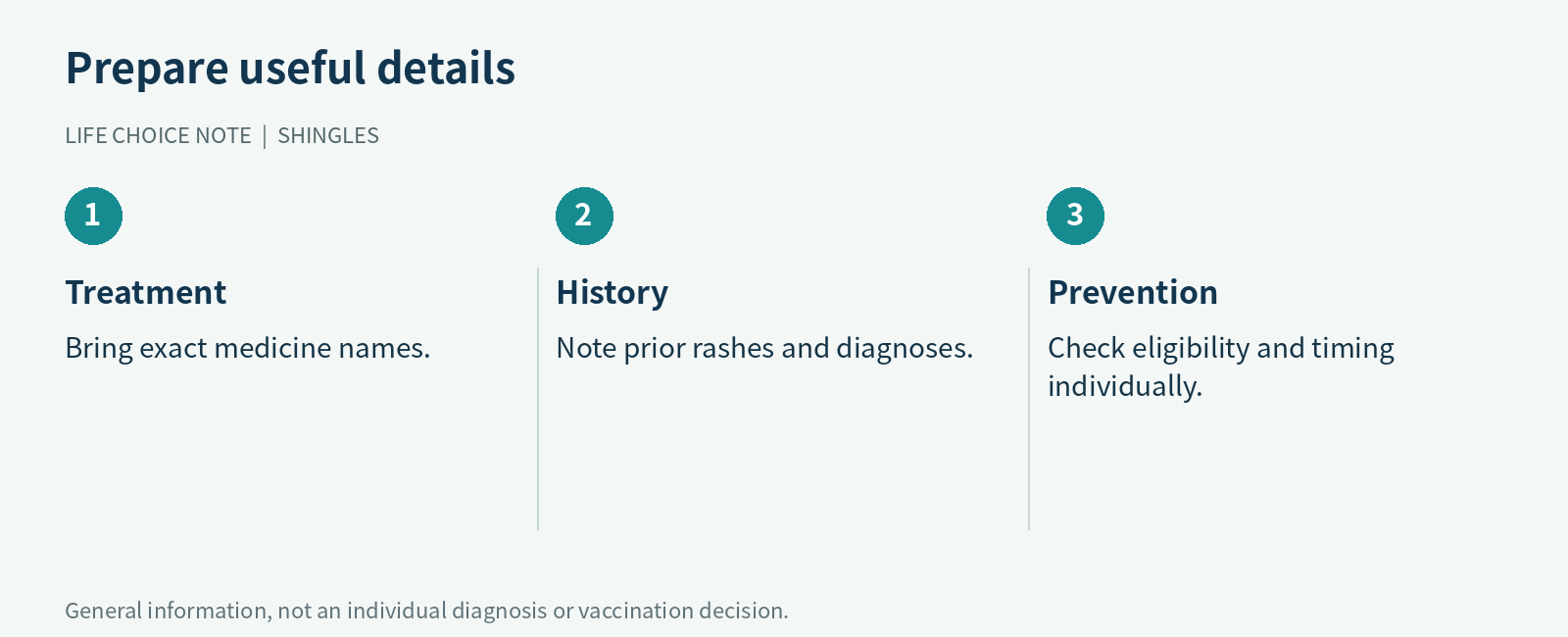
Cancer treatment, transplant medicines and other immune-suppressing treatments can increase risk. Bring names, doses and schedules, including treatment for skin, joint or bowel conditions. A vague statement that you have no major illness can leave out relevant medication.
Also record when pain and rash began and whether similar blisters occurred before. Do not stop steroids or other prescribed treatment in an attempt to improve immunity without guidance.
Additional tests depend on the clinical picture
One episode in a young adult does not by itself establish cancer or a severe immune disorder. Repeated, widespread or unusually severe episodes may warrant a different review when considered with the rest of the history.
Ask what a proposed test is intended to clarify and whether the result would change treatment. Not every young adult needs the same panel. An atypical rash may need testing for its cause; planning investigations should not delay care for the current illness.
Tap the diagram to view full size
Vaccine eligibility depends on more than feeling tired
CDC recommends recombinant zoster vaccine in the US for adults aged 50 and over and for immunodeficient or immunosuppressed adults aged 19 and over. Korean guidance uses 18 and over for the qualifying high-risk immunocompromised group. Healthy people in their 20s and 30s are not all routine candidates just because shingles can occur at that age.
If immune-suppressing therapy is underway or planned, discuss product choice and timing with the treating team. Separate treatment of a current episode from vaccination after recovery. Fatigue scores or supplement use cannot determine vaccine eligibility.
This article offers general education, not an individual immune-system assessment. Seek care for a new painful rash and discuss further testing or vaccination according to your own history and local guidance.
Sources and review date
- CDC Clinical Overview of Shingles
- Lee et al. (2026): Epidemiological Trends of Herpes Zoster in Korea, 2010–2022
- Schmidt et al.: Perceived Psychological Stress and Herpes Zoster Risk (2021)
- KDCA Immunization Guidance: Shingles (Korea)
- NHS England: Pharmacy First Clinical Pathways, Version 2.5
- CDC: Shingles Vaccine Recommendations
Sources checked October 6, 2026. General health information; discuss individual diagnosis, treatment and vaccination with a qualified healthcare professional.