Is Shingles Contagious to Family? Chickenpox Risk and Household Precautions
Seek prompt medical advice after exposure involving a pregnant person, a newborn or premature infant, or someone with a weakened immune system. Do not wait for symptoms to appear.
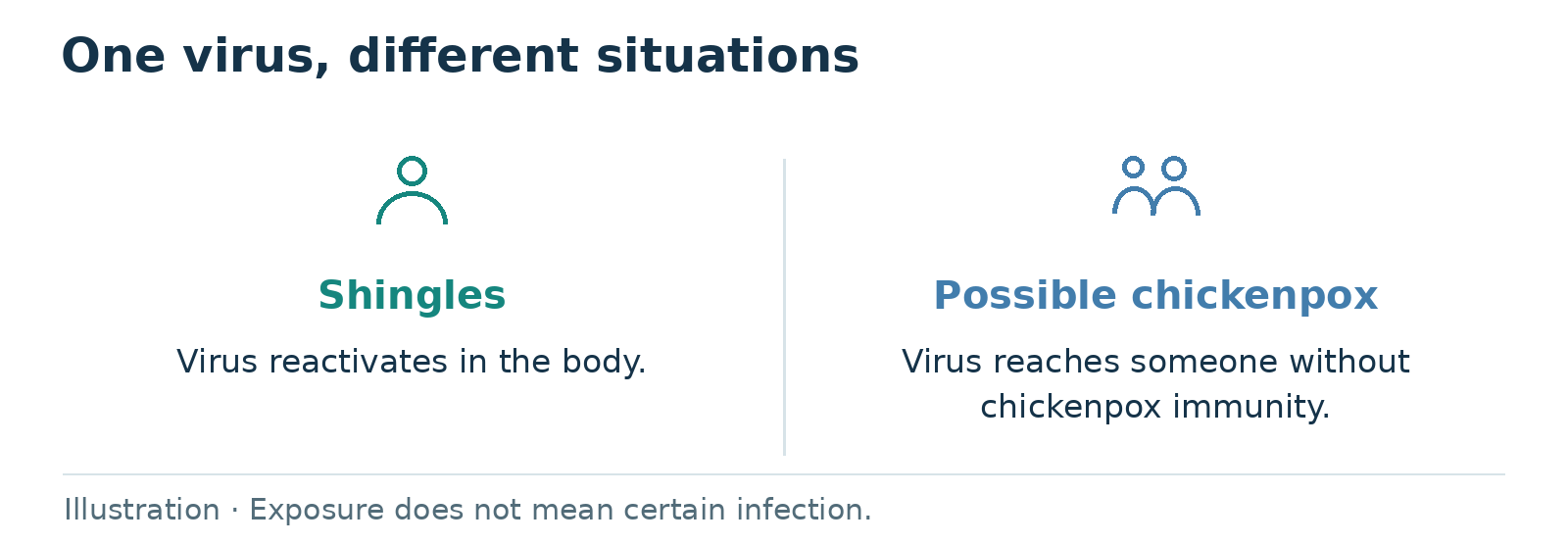
A person with shingles can pass on varicella-zoster virus. Someone without immunity to chickenpox may then develop chickenpox, rather than immediately “catching shingles.” Household decisions depend on the state of the rash, the type of contact, and the exposed person’s health and immunity.
What can spread, and how?
Shingles results from reactivation of virus already in the body. The CDC shingles overview explains that the virus from active blisters can reach another person through direct contact with blister fluid or by breathing in virus particles released from the blisters. A susceptible person may develop chickenpox.
Check available chickenpox illness and vaccination records rather than relying only on vague memories. A clinician can help assess uncertain immunity, especially in someone receiving immune-suppressing treatment. Sharing a home does not by itself prove that transmission occurred.
Tap the diagram to view full size
When do precautions end?
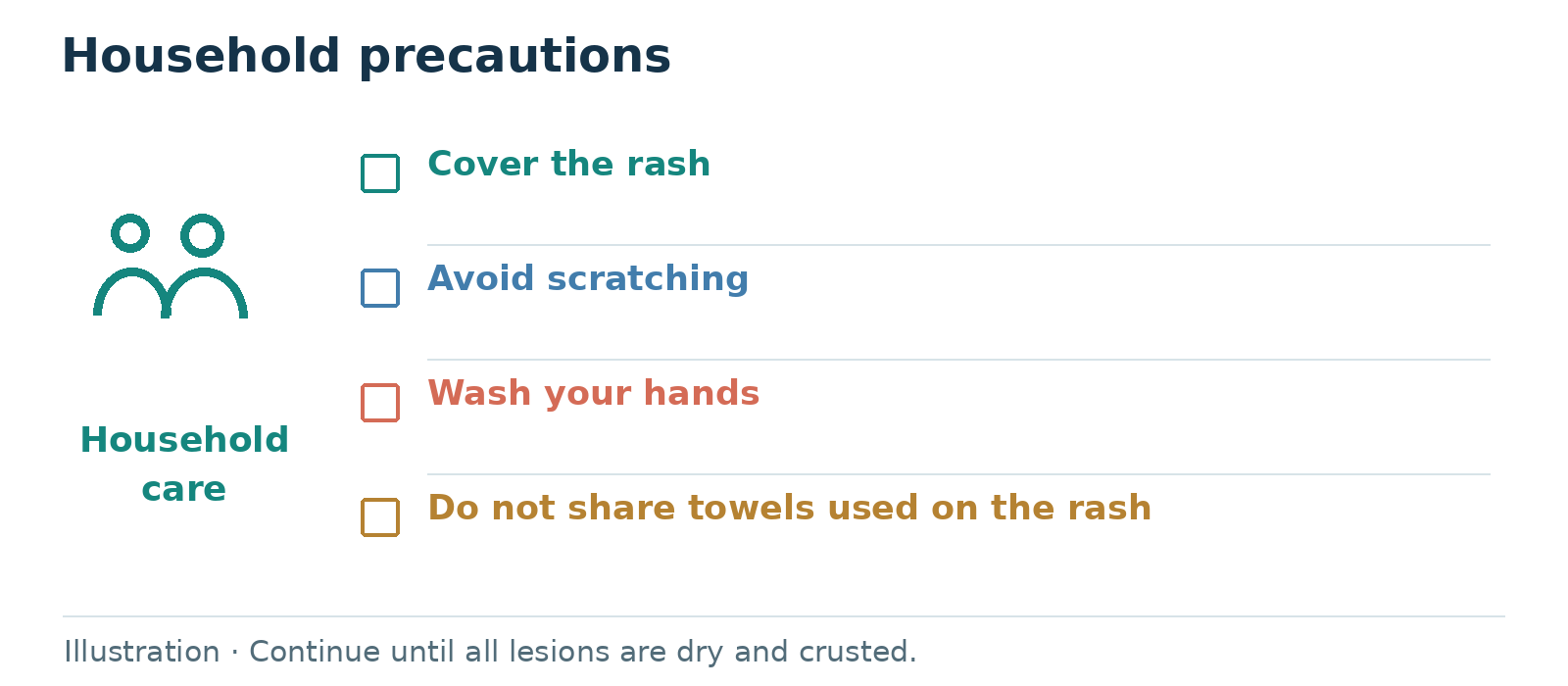
CDC advises that shingles lesions do not spread the virus before blisters appear or after the rash has crusted. Keep precautions in place until every lesion is dry and crusted. A few remaining wet blisters matter even when most of the rash has healed.
Less pain or the date you started an antiviral is not a reliable endpoint for precautions. Cover the rash with clothing or a suitable nonstick dressing and avoid scratching or opening blisters.
Practical steps at home
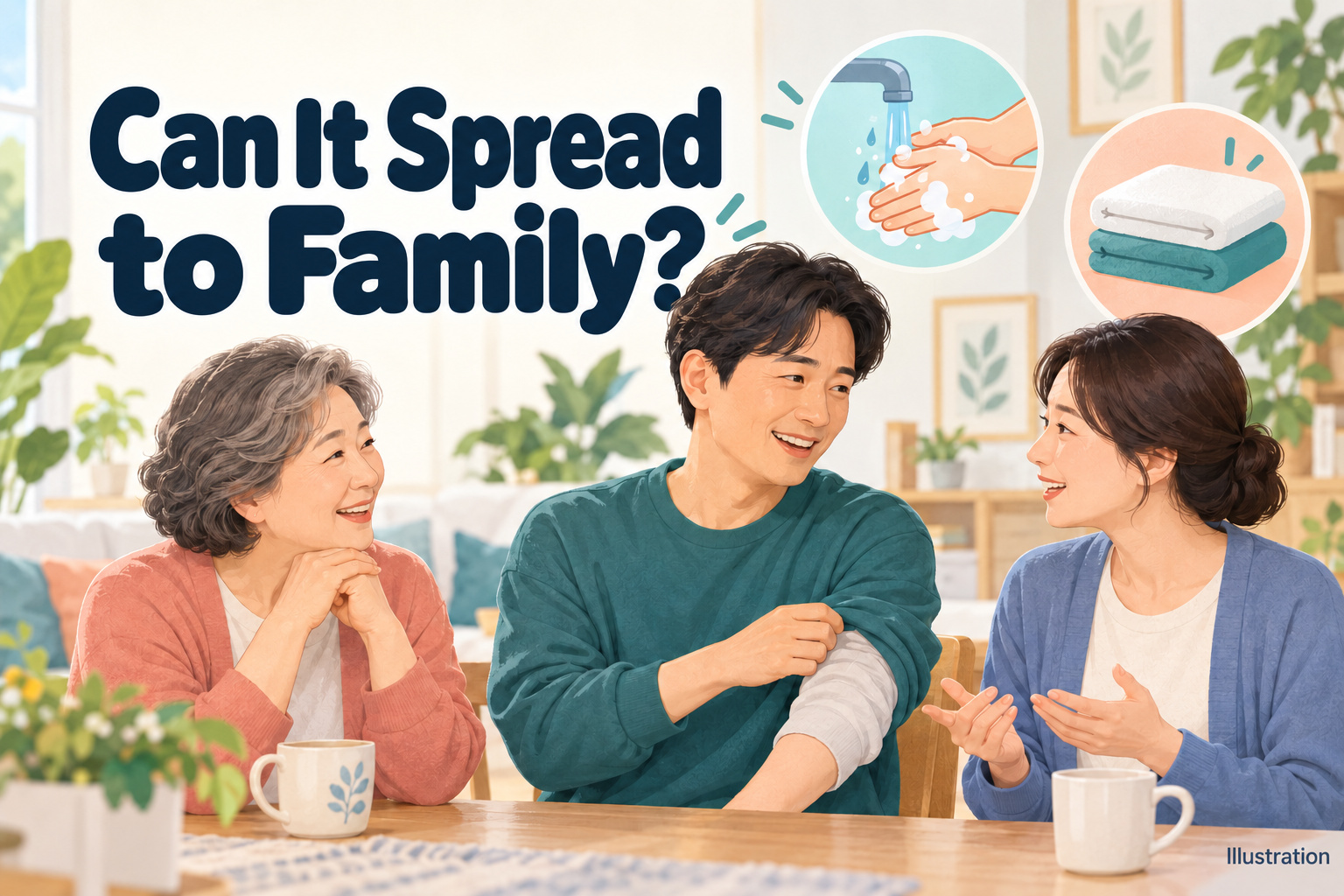
Wash your hands after touching the rash or a dressing. Do not share a towel that touches the affected area, and wash clothing or bedding contaminated with blister fluid. MedlinePlus aftercare advice covers these practical care measures.
Avoid contact with vulnerable household members until all lesions have crusted. If caring for an infant could bring the baby into contact with the rash, ask another caregiver to help. Someone assisting with dressings should avoid direct contact with fluid and follow hand hygiene.
Tap the diagram to view full size
Who needs prompt advice after exposure?
Contact a healthcare professional promptly for a pregnant person whose chickenpox immunity is absent or uncertain, someone who is immunocompromised, or a newborn, premature, or low-birth-weight infant. Infant risk varies, so report the baby’s age and birth circumstances rather than assuming all babies have the same risk. CDC guidance on severe chickenpox risk and the NHS shingles page discuss vulnerable contacts.
A pregnant person exposed to the virus and at risk of developing chickenpox is in a different situation from a pregnant person whose own dormant virus has reactivated as shingles. Post-exposure measures are time-sensitive and depend on individual circumstances. Do not arrange a live chickenpox vaccine during pregnancy or share an antiviral prescription as a do-it-yourself response.
What to tell the care team
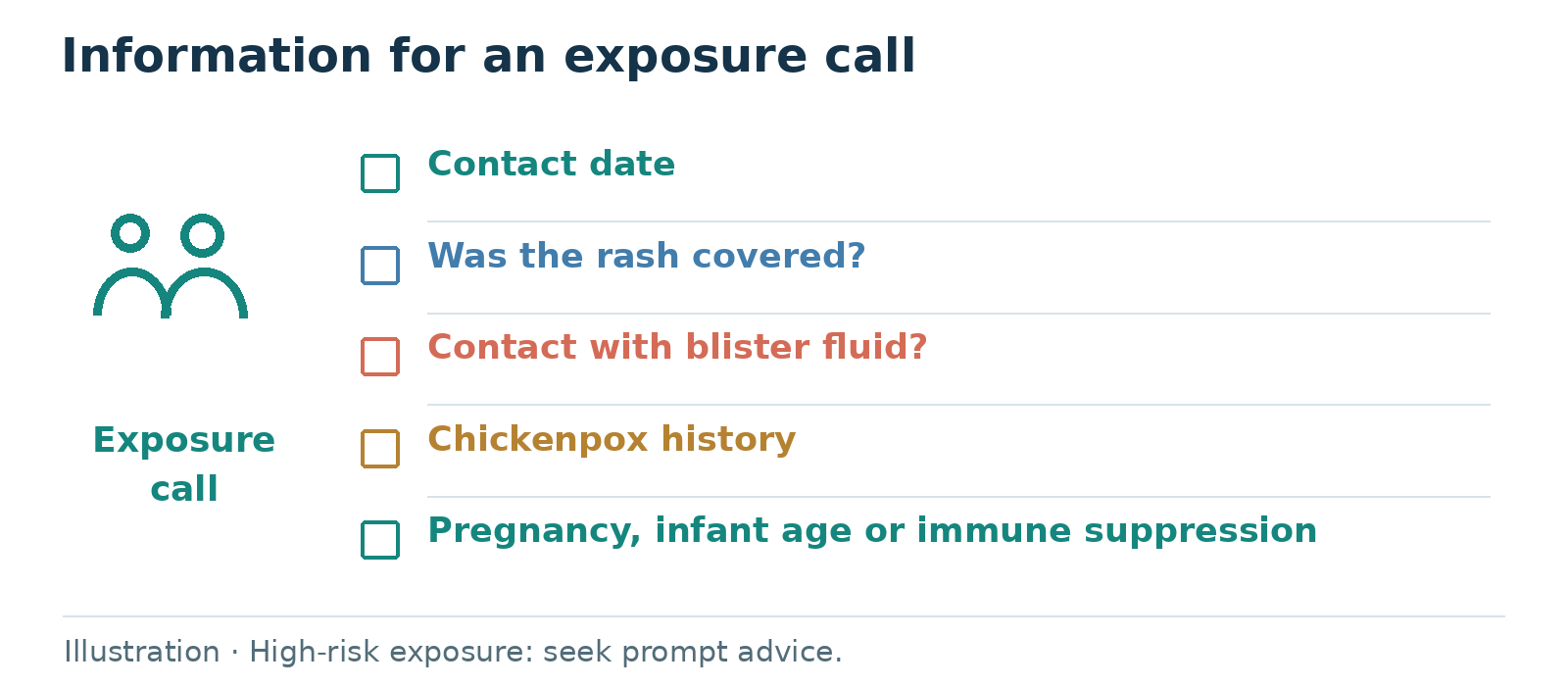
Give the date of contact, whether the rash was covered, whether anyone touched blister fluid, and the exposed person’s chickenpox and vaccination history. Include pregnancy, infant age, and immune-suppressing treatment where relevant. Call before arriving so the service can give appropriate visit instructions.
Localized shingles in an otherwise immunocompetent person is different from disseminated shingles, where lesions are more widely spread. CDC healthcare isolation guidance uses additional airborne and contact precautions for disseminated disease and certain immunocompromised situations. Hospital precautions are not instructions to install hospital-style isolation at home. A widespread rash or weakened immune system requires individualized medical advice.
Tap the diagram to view full size
Frequently asked questions
Can a family member catch shingles from me?
They cannot catch shingles directly. If they lack chickenpox immunity and acquire the virus, they can develop chickenpox. Shingles can occur later when virus in the body reactivates.
Can precautions stop when only one blister remains?
No. Continue until all lesions are dry and crusted. Improvement in pain or partial crusting is not the same as that endpoint.
A baby was held near the rash but has no symptoms. What now?
Report the contact to the baby’s healthcare professional, especially for a newborn, premature infant, or other high-risk baby. The rash coverage, contact type, and baby’s health matter; do not wait for symptoms in a vulnerable infant.
Scope and safety
This article provides general health information, not a diagnosis or an individual treatment plan. Your symptoms, medical conditions, and medicines can change the care you need. Do not delay urgent care to complete notes or read more material.
Sources and review date
- CDC: About shingles and protecting others
- CDC: Clinical guidance for people at risk for severe chickenpox
- CDC: Isolation precautions for herpes zoster in healthcare settings
- NHS: Shingles and contact with vulnerable people (UK)
- MedlinePlus: Shingles aftercare
Public sources checked and text reviewed: October 5, 2026.