Can shingles come back? New blisters versus lingering nerve pain
Shingles can recur, but pain in a previously affected area does not prove a new episode. Get new blisters assessed promptly. Eye or ear symptoms, facial weakness, widespread rash or symptoms during immune-suppressing treatment need urgent clinical advice.
A previous episode does not provide lifelong protection
CDC notes that shingles can occur more than once. Recurrence does not automatically mean the earlier treatment failed or that someone managed recovery badly. Age, immune status, illness and treatment history can affect risk.
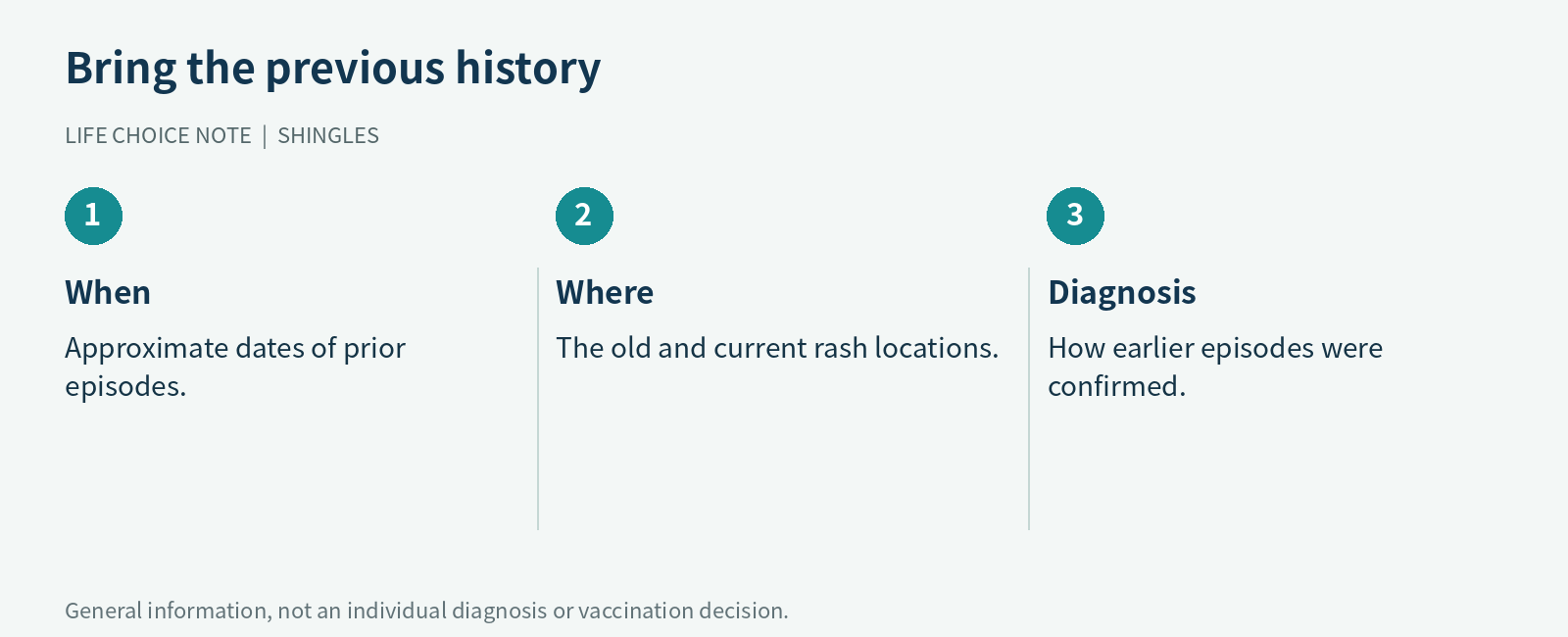
Bring earlier diagnoses, approximate dates, rash locations and treatment records if available. It matters whether each event previously called “shingles” was clinically confirmed or only assumed from similar symptoms.
Tap the diagram to view full size
Read recurrence percentages with the study definition
A 2019 Korean population-based cohort followed 39,441 people for an average of 4.4 years and identified 2,100 recurrences, about 5.3%. Its definition required at least six months after the initial episode. This is not an annual probability that applies to every person.
The study used diagnosis and prescription records, so misclassification is a limitation. A 2026 Korean study using 2010–2022 data defined recurrence at least 12 months after the first diagnosis. Different definitions, follow-up periods and populations should not be combined into one exact personal forecast.
Record what is new and what never fully went away
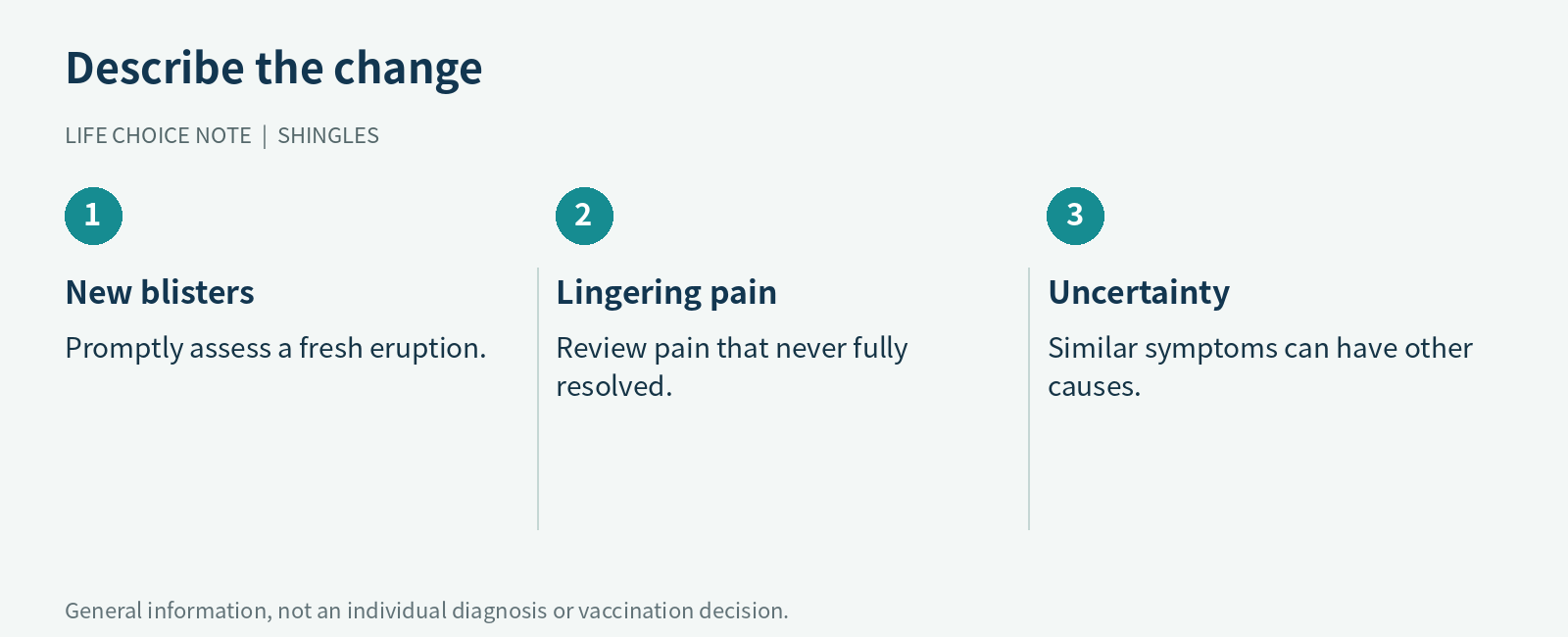
Burning or touch-sensitive pain persisting after the original rash healed can reflect postherpetic neuralgia. New blisters or a fresh rash need a new skin assessment. These observations help a clinician; they are not a home diagnostic test.
No visible blisters cannot exclude every case, and not every blistering rash is shingles. Note whether pain is newly appearing, continuously present or fluctuating. CDC’s more-than-90-days definition for PHN is different from recurrence and does not mean pain should go untreated until then.
Tap the diagram to view full size
Other rashes can resemble another episode
Herpes simplex, contact dermatitis and other conditions can resemble shingles. Repeated symptoms in the same location do not establish the cause. Tell the clinician how previous diagnoses were made.
When diagnosis is uncertain, a clinician may consider PCR testing from a skin lesion. CDC identifies vesicles, scabs and lesion material as useful samples for varicella-zoster testing. Do not break blisters or remove scabs yourself to collect a specimen; blood antibody tests do not always establish a current episode.
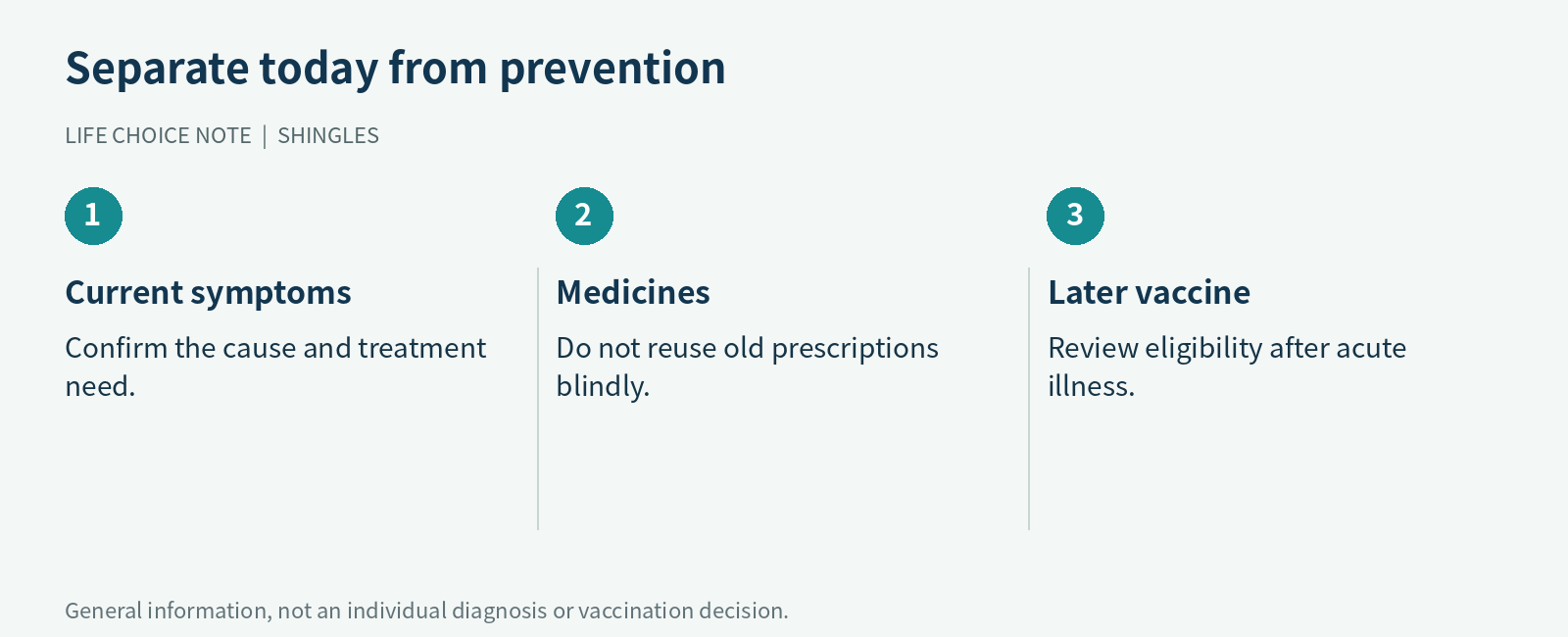
Do not simply restart the old prescription
The present cause, kidney function, other medicines and immune-suppressing treatment may differ from the previous episode. Bring your current medicine list and dates of the new pain and rash. Do not stop existing immune-suppressing treatment yourself.
Not everyone with recurrence needs the same investigation panel. Ask what the current pattern and history suggest needs checking. A fresh eruption needing prompt treatment and persistent pain needing longer-term management can require different approaches.
Tap the diagram to view full size
Discuss prevention after the acute illness
In the United States, CDC recommends recombinant zoster vaccine for adults aged 50 or older and for immunodeficient or immunosuppressed adults aged 19 or older. Recommendations and product eligibility differ internationally; Korean guidance includes high-risk immunocompromised adults aged 18 or older.
An earlier shingles episode does not automatically remove the need for vaccination. Nor does recurrence alone mean that every younger adult should immediately receive it. Vaccines do not treat the current rash. Discuss eligibility, previous doses and an appropriate post-illness vaccination plan with your clinician.
This is general information. Have new symptoms assessed instead of labeling every recurrence of pain as another shingles episode. Separate care for the current problem from prevention after recovery.
Sources and review date
- CDC Clinical Overview of Shingles
- Kim et al. (2019): Recurrence Rate of Herpes Zoster and Its Risk Factors
- Lee et al. (2026): Epidemiological Trends of Herpes Zoster in Korea, 2010–2022
- CDC Clinical Features of Shingles
- CDC Laboratory Testing for Varicella Zoster Virus
- KDCA Immunization Guidance: Shingles (Korea)
- CDC: Shingles Vaccine Recommendations
Sources checked October 6, 2026. General health information; discuss individual diagnosis, treatment and vaccination with a qualified healthcare professional.