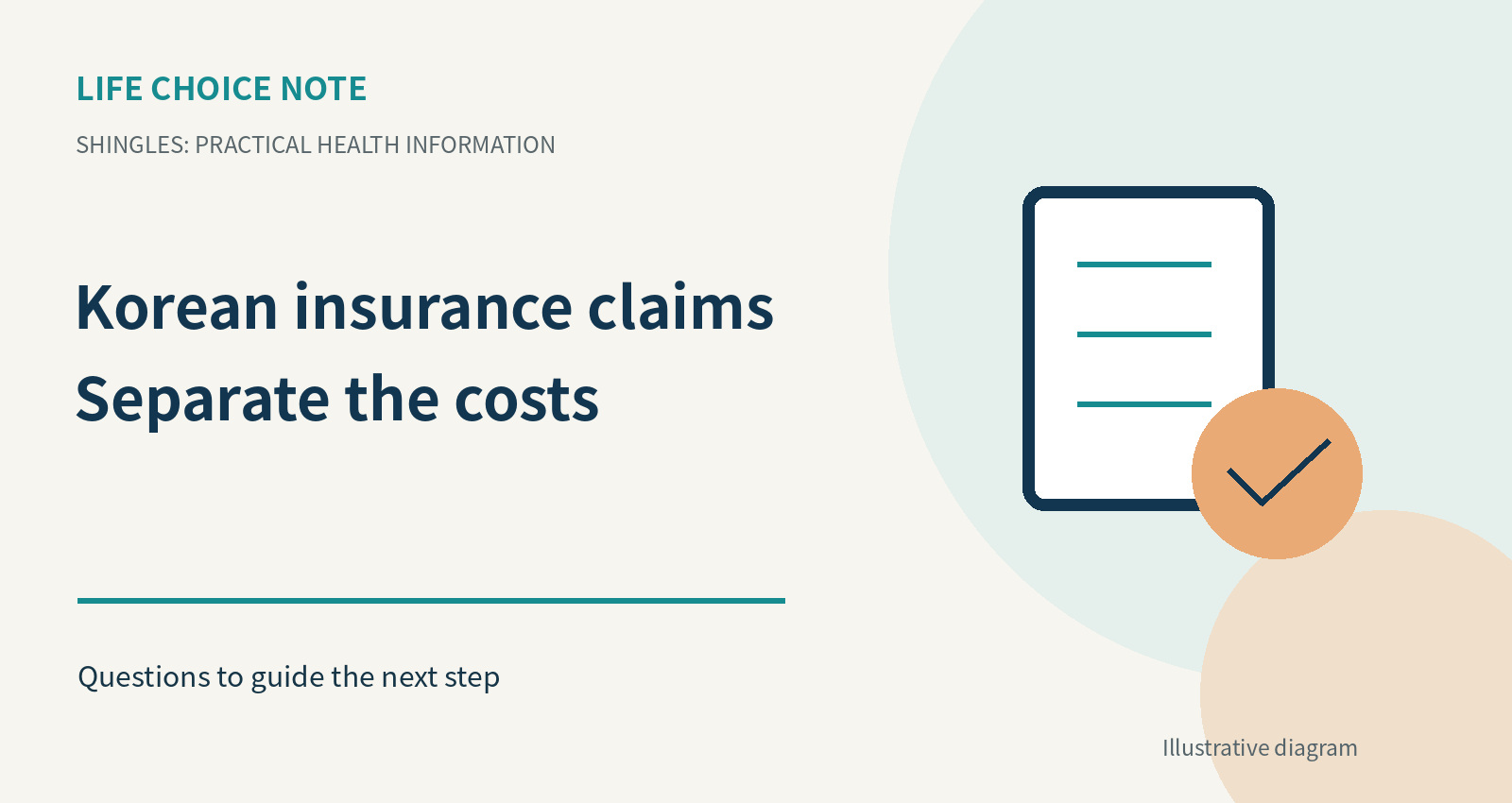
Shingles insurance claims in South Korea: treatment, vaccination and fixed benefits
Treatment bills, preventive vaccine costs and a fixed diagnosis benefit are different insurance questions. This guide concerns South Korean private insurance, not US or international coverage rules. Payment depends on the actual contract and care received; no disease name guarantees a particular reimbursement.
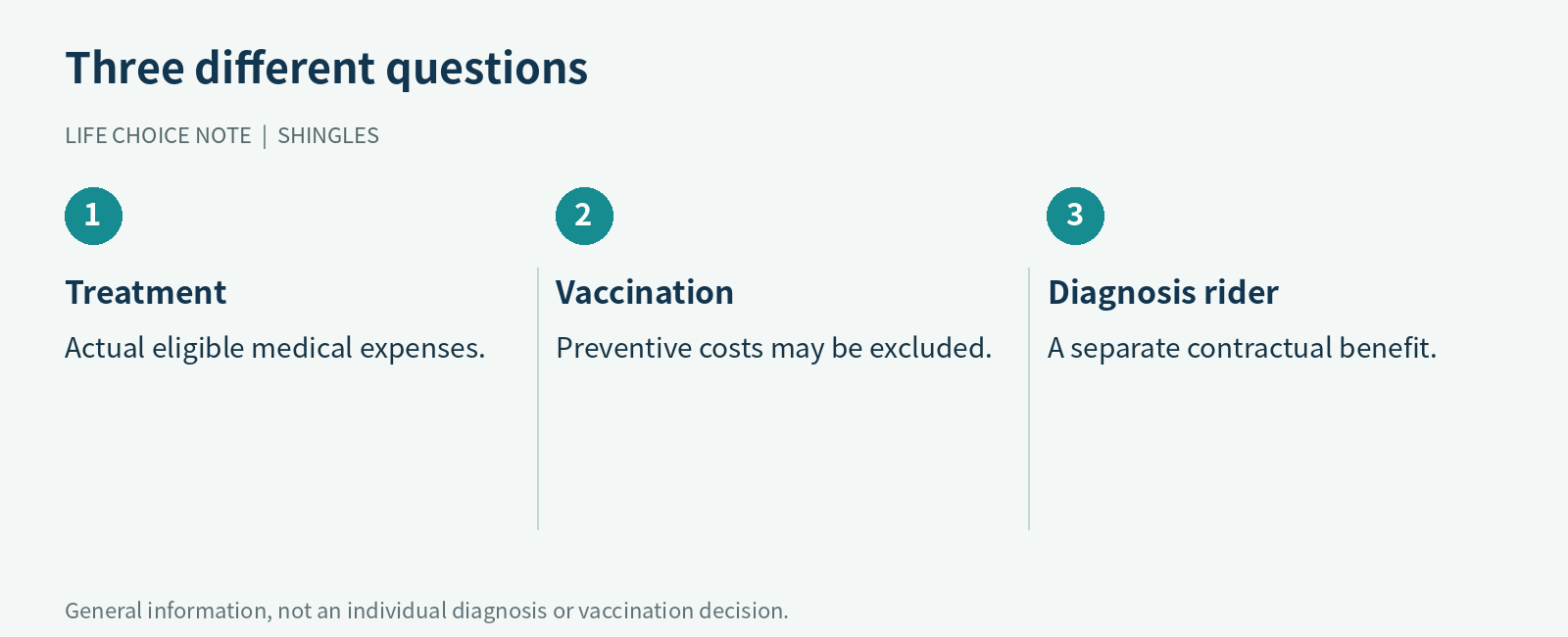
Separate three categories before asking about payment
The first category is assessment, tests, medicines, hospital care or other treatment for existing shingles. Korean indemnity medical insurance applies its covered-expense rules, deductibles and limits. A diagnosis does not mean every amount on a receipt is reimbursable.
The second category is preventive vaccination. The third is a separate rider paying a specified benefit when defined diagnostic conditions are met. Having indemnity insurance does not automatically mean a shingles diagnosis rider is included. Put the policy and itemized bills together before asking which coverage applies.
Tap the diagram to view full size
Do not budget for vaccine reimbursement by assumption
Official policy examples from Lotte’s let care indemnity medical insurance IV 2501 and AXA’s 2501 reinstatement product exclude preventive care while describing particular exceptions for preventive injections used for covered treatment. Such an exception does not establish that routine shingles vaccination qualifies.
Preventive Shingrix vaccination is different from antiviral treatment of an existing episode. The two example contracts are not a substitute for your own policy. Ask your insurer about exclusions, exceptions and any separate vaccination benefit before assuming the expense will be refunded. Medical suitability and insurance payment are separate decisions.
Treatment coverage also varies by item and contract
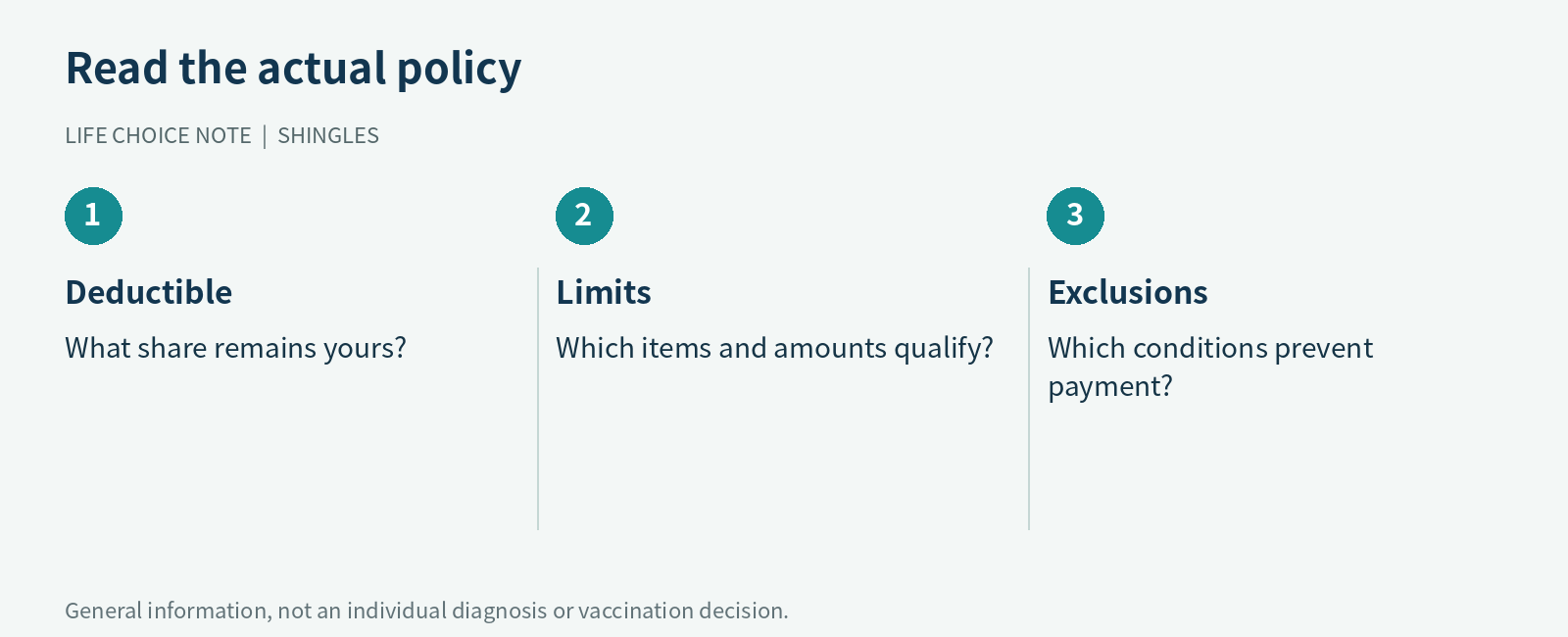
Outpatient versus inpatient care, covered versus noncovered services, drug costs, pain procedures and optional riders can involve different rules. The policy generation, issue date and subsequent changes may affect deductibles and limits. News about a new product does not automatically change an older contract.
Multiple indemnity policies do not mean the same expense is paid in full repeatedly beyond the actual loss. Instead of asking “How much does shingles pay?”, ask what deductible, limit and exclusion apply to a specified bill under your exact contract.
Tap the diagram to view full size
Check the document list before paying for certificates
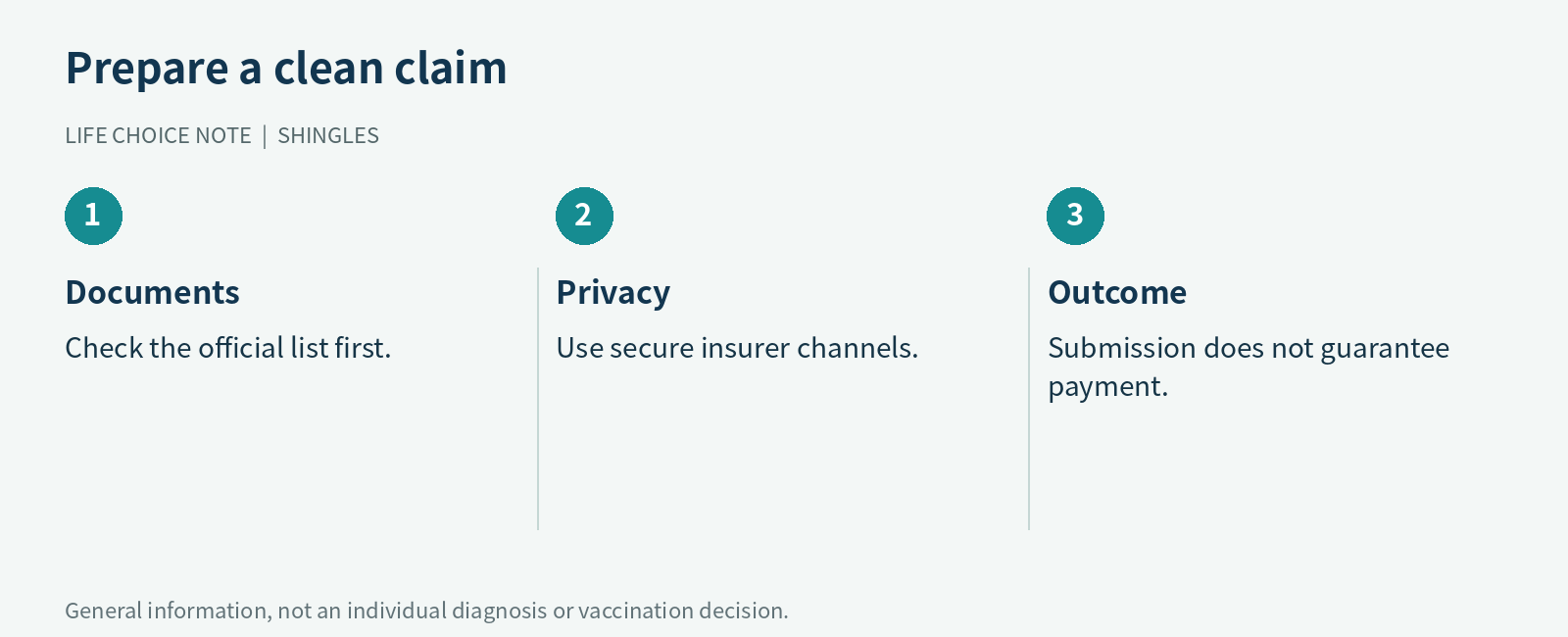
Samsung Fire’s official claim guidance illustrates possible requirements: inpatient medical receipts and itemized statements, with diagnostic or admission/discharge evidence depending on the claim; outpatient receipts, a prescription with a disease classification code, and an itemized statement when noncovered charges occur. Requirements can differ by insurer and claim.
Ask whether pharmacy receipts or alternative documents are needed. A card-payment slip is not the same as a medical receipt showing care details. Do not assume every person needs a paid diagnostic certificate. Use the insurer’s official claim channel and do not post identifiable medical documents in public comments.
Read a diagnosis rider separately
First confirm that the rider actually exists in your policy. A first-diagnosis requirement, yearly payment limit, waiting period or reduced-benefit condition can vary. One product example cannot establish another contract’s coverage.
Ask how diagnosis is defined, which disease classifications qualify, when cover begins, and what evidence is required. Prior episodes and recurrence may affect the contractual review. Never change or invent a diagnosis or alter records to obtain payment.
Tap the diagram to view full size
A submitted claim is not an approved claim
Keep the receipt number and documents, and check requests for further evidence through official channels. If payment differs from your expectation, ask the insurer to identify the coverage, deductible, excluded items and relevant policy provisions used.
The clinician explains medical care and records; the insurer evaluates the contract. A clinic’s informal reassurance is not a payment decision. Do not choose medically unnecessary tests or procedures for an assumed insurance benefit, and do not delay urgent care while comparing coverage.
This is general preparation guidance for Korean private-insurance claims, not a legal opinion or payment determination. Review the actual policy and medical records with the insurer. New eye symptoms, facial weakness or severe illness still need prompt medical assessment.
Sources and review date
- Lotte Insurance: let care Indemnity Medical Insurance IV 2501 Policy
- AXA Korea: 2501 Indemnity Medical Insurance Policy
- Samsung Fire: Documents for Illness and Injury Claims
- Financial Services Commission: Multiple Indemnity Insurance Policies
- Samsung Fire: 365 Ansim Care 2404.3 Product and Policy Summary
Sources checked October 6, 2026. General health information; discuss individual diagnosis, treatment and vaccination with a qualified healthcare professional.