Shingrix Side Effects: What Is Common and When to Get Help
A sore arm, tiredness, muscle aches and flu-like symptoms are common after Shingrix and usually improve within 2 to 3 days. Trouble breathing, swelling of the face or throat, and new progressive muscle weakness need a different response. Do not use the usual recovery timeline to dismiss a warning sign.
This U.S.-focused guide helps you describe symptoms and decide when to seek care. It cannot determine whether a symptom was caused by vaccination or diagnose an allergic or neurologic disorder.

What reactions are commonly expected?
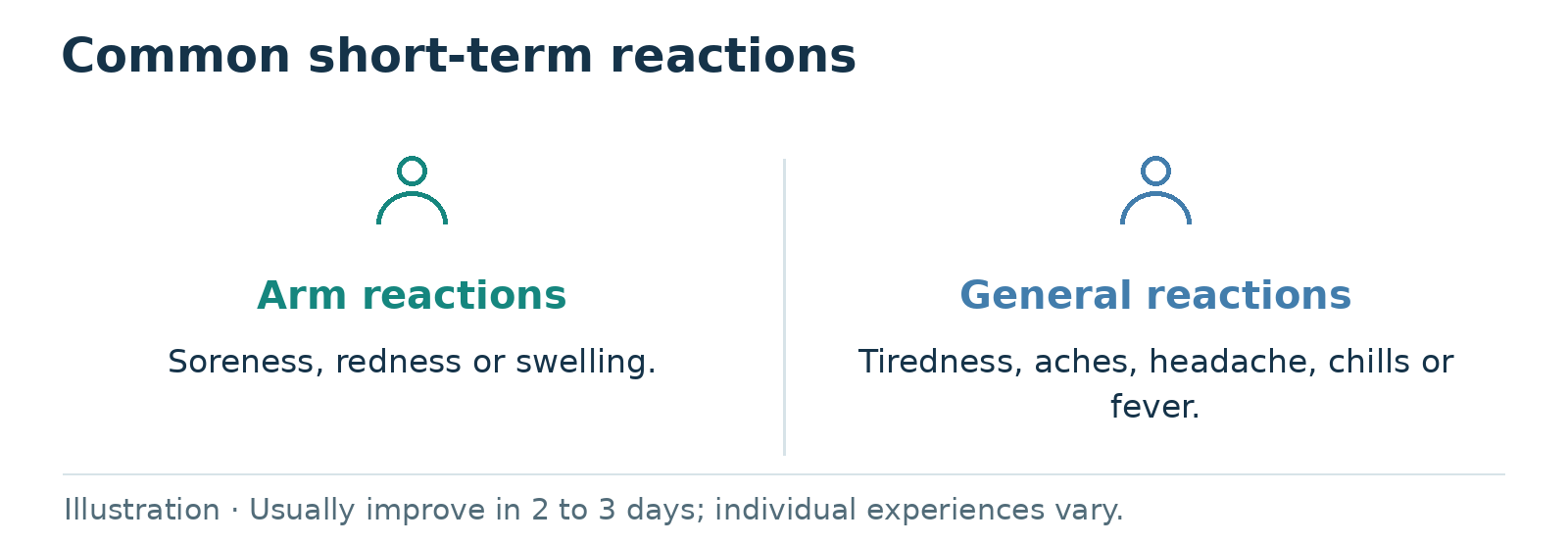
Pain, redness or swelling at the injection site can occur, along with fatigue, headache, muscle aches, chills, fever or stomach symptoms. Reactions can briefly interfere with ordinary activities. CDC describes a usual duration of 2 to 3 days, but people do not all have the same experience. (CDC: Shingles Vaccination)
Give yourself room to adjust plans after vaccination. Track whether you are improving, not just how many hours have passed. If symptoms are worsening or not improving, contact a healthcare professional rather than assuming they must be part of a normal response.
Tap the diagram to view full size
Severe allergic symptoms require emergency help
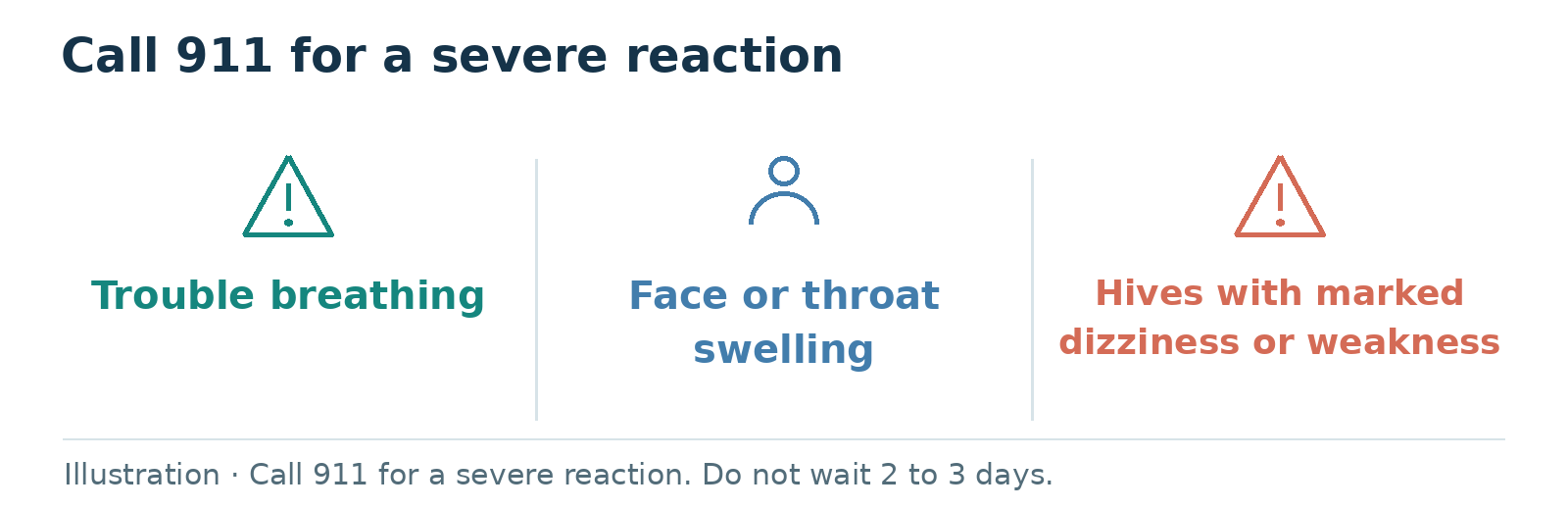
In the United States, call 911 for signs of a severe allergic reaction, such as difficulty breathing or swelling of the face and throat, especially with widespread hives, marked dizziness or weakness. These reactions are rare but can be life threatening. (CDC: Shingles Vaccine Safety)
Do not wait to see whether these symptoms resolve within the usual 2-to-3-day period. If you are still at the vaccination site, tell staff immediately. After leaving, emergency symptoms still require immediate help.
Tap the diagram to view full size
What does the current FDA warning about GBS say?
The FDA prescribing information revised in February 2026 describes an increased risk of Guillain-Barré syndrome during the 42 days after Shingrix in postmarketing observational studies. The two studies involved U.S. adults aged 65 and older; the label says their results suggest a causal association. (FDA: SHINGRIX Prescribing Information, revised February 2026)
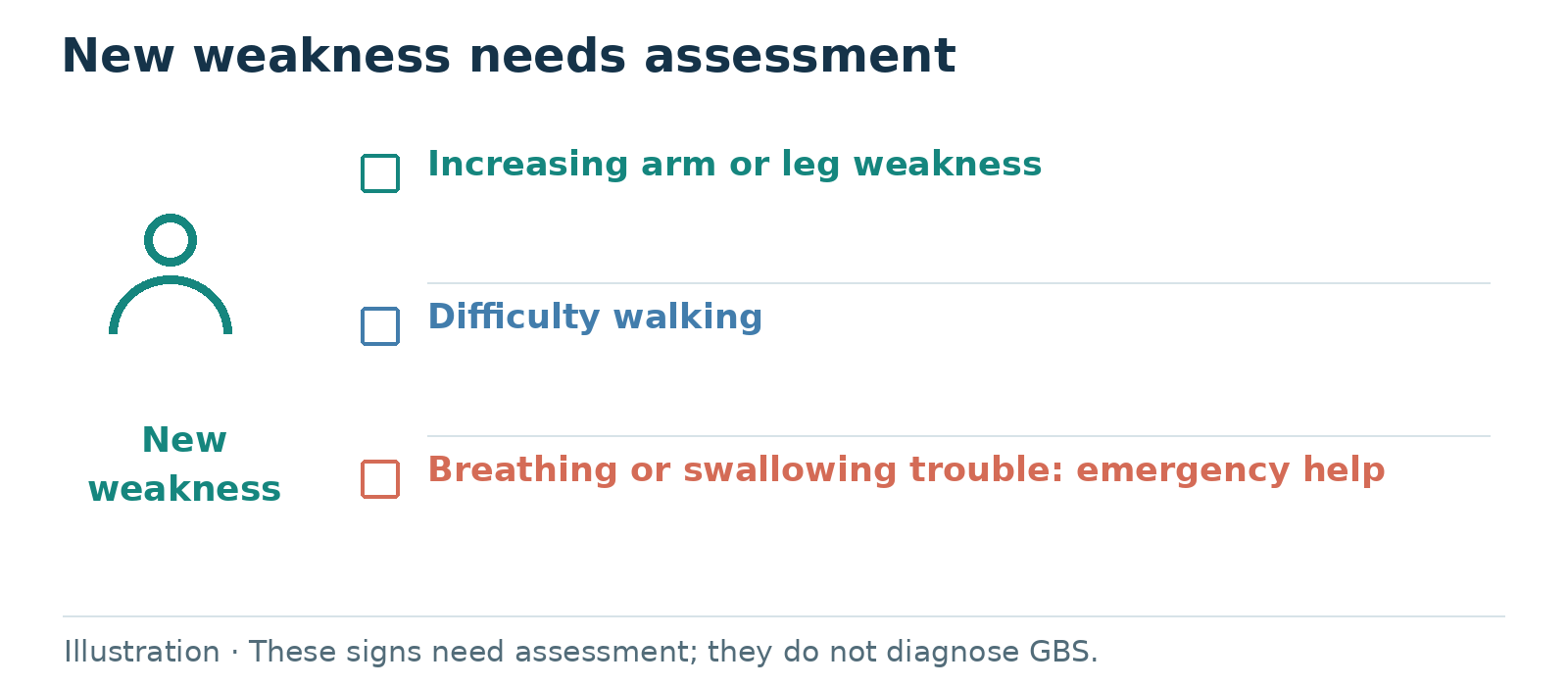
GBS remains a rare event. The study findings do not supply a precise personal risk for every age group, and they do not mean that ordinary injection-site soreness is GBS. Progressive arm or leg weakness or difficulty walking needs prompt assessment; trouble breathing or swallowing needs emergency care. (NHS: Guillain-Barré syndrome)
If you have a history of GBS or another significant neurologic illness, tell the clinician before vaccination so the decision can consider your medical history. Avoid making that decision from a headline about relative risk alone.
Tap the diagram to view full size
What can you do about discomfort?
If you need medicine for pain or fever, ask which option is suitable with your medical conditions, allergies and current medicines. This is especially important if you have kidney or liver problems or are already taking a combination cold or pain product.
CDC generally does not recommend taking pain or fever medicine in advance solely to prevent vaccine reactions. Such medicine may be used for symptoms after vaccination when appropriate. An individual choice and dose should come from the product directions and advice from your clinician or pharmacist. (CDC: Shingrix in Immunocompromised Adults)
Does a difficult first dose mean skipping the second?
CDC encourages completion after common non-anaphylactic reactions. A severe allergic reaction to a previous Shingrix dose or an ingredient is a contraindication and needs a different clinical discussion. Do not put “a sore arm for two days” and “trouble breathing with swelling” in the same category. (CDC: Shingrix in Immunocompromised Adults; FDA: SHINGRIX Prescribing Information, revised February 2026)
Tell the vaccination provider what happened, how long it lasted and whether you needed treatment. That detail is more useful than simply saying the first shot was bad. Agree on a plan for the next visit rather than silently abandoning the series.
What to record when you contact the provider
- The vaccine name, dose number and date
- When symptoms began and whether they are improving
- Your temperature if you measured it
- Any hives, breathing difficulty, swelling or new weakness
- Medicines taken and any medical care received
A symptom occurring after a vaccine is a reason to report and evaluate it, not automatic proof of causation. A clinician can help assess the event and advise about reporting through the appropriate vaccine safety system. Never delay urgent care to finish the record.
Frequently asked questions
Are stronger side effects a sign of better protection?
The intensity of your reaction is not a personal test of vaccine protection. Follow the recommended series rather than judging success by how sore or tired you feel.
Should I wait until day three to call?
No. Emergency signs need immediate help. Worsening symptoms or a concerning change warrant advice even if fewer than three days have passed.
Is weakness the same as feeling tired?
Feeling tired and losing muscle strength are different descriptions. New progressive weakness, trouble walking, or breathing or swallowing problems need medical assessment rather than a self-diagnosis.
Practical resources for your appointment
Use these to prepare for care, not to delay care when symptoms need attention.
Sources and review date
- CDC: Shingles Vaccination
- CDC: Shingles Vaccine Safety
- FDA: SHINGRIX Prescribing Information, revised February 2026
- NHS: Guillain-Barré syndrome
- CDC: Shingrix in Immunocompromised Adults
Sources checked October 5, 2026. This article provides general health information. Discuss individual diagnosis, treatment and vaccination decisions with a qualified healthcare professional.