MMR and Chickenpox Vaccines in Korea: Adult Immunity
Start with evidence, rather than memory
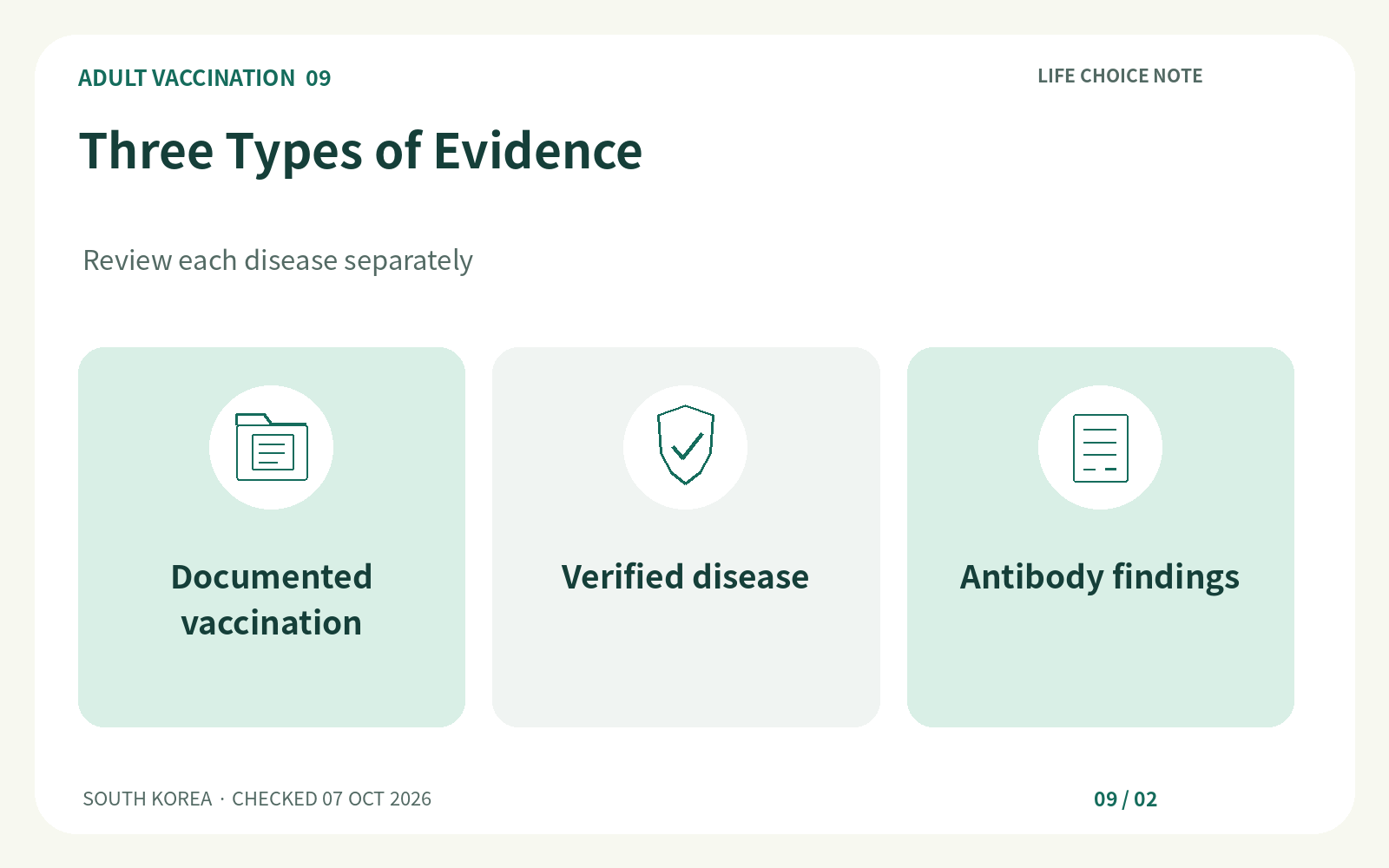
South Korea · Sources checked 7 October 2026. If you cannot remember childhood MMR or chickenpox vaccination, collect dated vaccine records, laboratory reports and disease documentation before arranging extra doses. Korean guidance considers different evidence for measles and varicella. Your reason for checking, such as healthcare employment, overseas study or pregnancy planning, also matters. [1][7]
Bring the receiving organisation’s form as well as your records. Ask what it accepts: vaccine dates, a laboratory report, a clinician’s statement, or a particular combination. This separates the clinical assessment from the paperwork you need to submit.
Reading an MMR record
MMR means measles, mumps and rubella, or 홍역·유행성이하선염·풍진. It is a combined live vaccine. The Korean approval for M-M-R II identifies prevention of these three diseases. [5]
Look for the vaccine name, each date and the issuing clinic. If an old document says only “measles,” ask whether it records a single-disease vaccine or MMR. Do not fill in missing dates from memory. Overseas records should retain their originals; flag ambiguous dates such as 03/04 before the appointment.
Korea’s measles birth-year guidance needs context
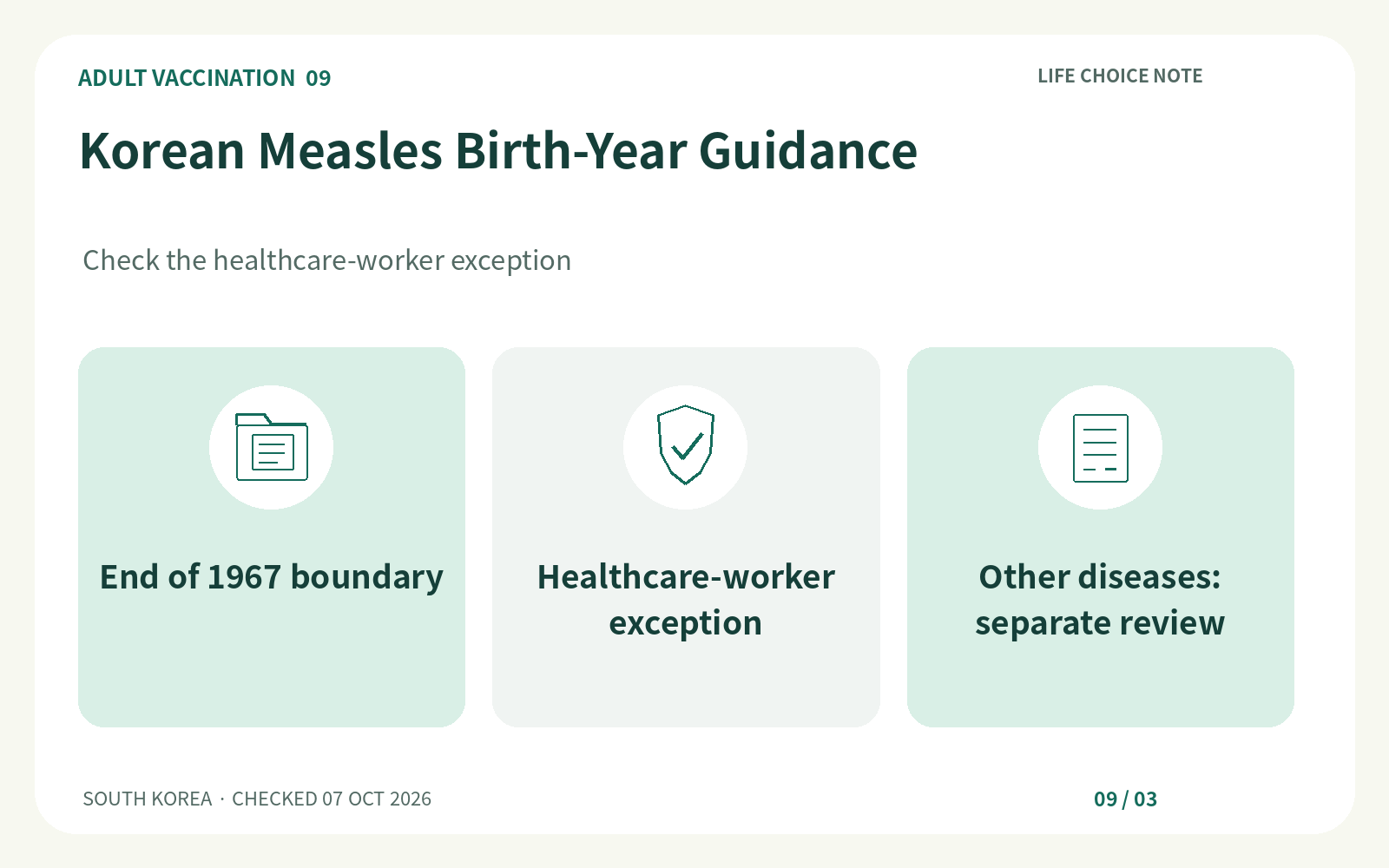
KDCA’s 2025 quarantine-infection guidance lists laboratory-confirmed measles, two documented doses given after the first birthday at least four weeks apart, and measles antibodies as evidence. It also presumes natural immunity for people born in Korea on or before 31 December 1967, with an exception for healthcare personnel. Adults born from 1 January 1968 without evidence need at least one dose; healthcare workers and international travellers are among the groups advised to receive two, at least four weeks apart. [1]
This is Korean measles guidance, rather than evidence for every MMR component. Someone born and raised abroad should discuss their country of birth, childhood vaccination programme and actual records. A foreign school may use its own documentation rules, so ask the school separately what it needs.
Chickenpox evidence and the adult schedule
KDCA’s varicella information identifies laboratory-confirmed disease, documented varicella vaccination and a positive varicella antibody result as immunity evidence. A remembered childhood rash deserves discussion with the clinician, particularly if no diagnosis survives. [7]
Korean public guidance gives two varicella doses four to eight weeks apart for people aged 13 or older. The Korean Varivax approval includes that adolescent/adult schedule. Existing dated doses should be reviewed, not silently replaced with a new blank record. Confirm the actual product; a vaccine offered for children does not automatically have the same adult approval. [3][4]
Shingles and chickenpox involve the same virus, but their vaccine purposes differ. A shingles-vaccine entry should not be counted as a chickenpox-vaccine dose. Bring a previous shingles diagnosis as a separate medical history item. [7][4]
What an antibody result can miss
Ask what question a proposed blood test will answer and whether your existing documentation already answers it. Keep the full report, including the test name, date and positive, negative or borderline interpretation.
As a laboratory limitation explained by the U.S. CDC, commercial varicella tests may miss vaccine-induced immunity and produce false-negative results. Therefore, a negative result alongside completed vaccination records needs clinical interpretation; it is not an automatic instruction for more doses. The CDC’s separate U.S.-birth presumption should not be imported into a Korean assessment. [6]
Pregnancy and immune suppression come before booking
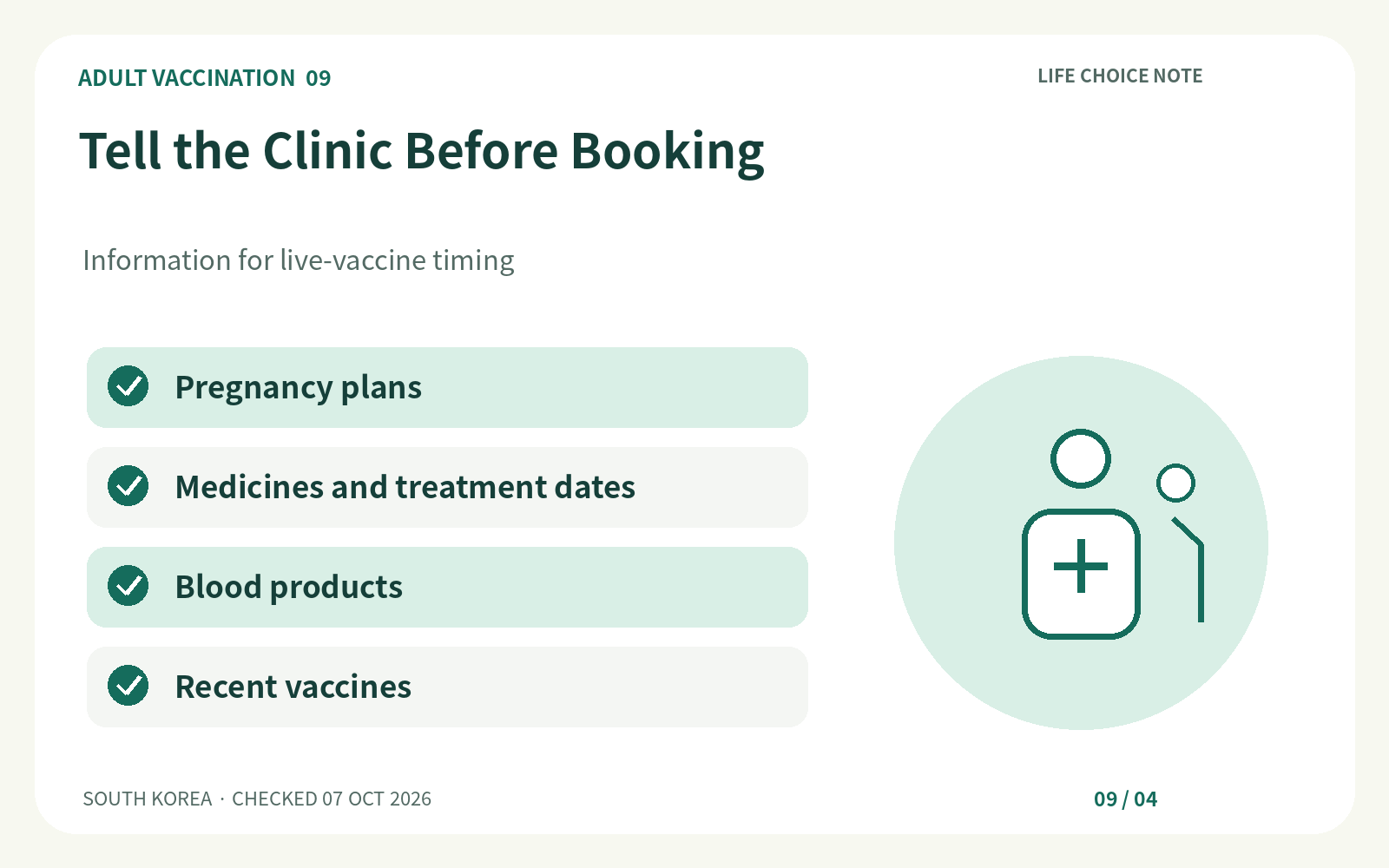
MMR and varicella are live vaccines and are contraindicated during pregnancy. Significant immune suppression and immunosuppressive treatment require assessment by the treating team. Different immune conditions and products have exceptions, so avoid blanket assumptions or stopping medication yourself. [2][3]
The pregnancy-avoidance period is product-specific. Korean M-M-R II information specifies contraception for one month after vaccination; Korean Varivax information specifies three months. Confirm the product and the plan with your obstetrician and vaccinating clinic, rather than applying one interval to every live vaccine. If vaccination occurred unexpectedly during pregnancy, provide the exact product and date for individual counselling. [4][5]
Report recent transfusions and immunoglobulin, too. These can change MMR or varicella timing according to the preparation and dose, so a simple four-week calculation is insufficient. [2][3]
Planning a visit in Korea
MMR and varicella may be given at the same visit using separate injections. If injectable live vaccines are not given together, a general minimum four-week interval applies, subject to product and clinical review. [9]
Useful clinic questions are: “Can you review my overseas records?” and “Which evidence is sufficient for each disease?” In Korean, try: “접종기록과 항체검사 결과를 함께 확인해 주세요.” Ask about adult vaccine availability, consultation and test fees, certificate charges, and whether the required English form can be completed.
For a certificate, confirm the spelling of your name, date of birth, vaccine dates and the language the receiving organisation needs. Ask whether the clinic can complete its exact form or only issue a standard certificate. Keep a copy of what you submit and a separate note of any clinical advice. Do not add missing dates yourself, even when a deadline is close.
Being listed in Korea’s national immunisation programme does not make every adult catch-up dose free. Routine childhood MMR and varicella funding must be distinguished from your adult eligibility and any separate local support. [8]
Before leaving, save the product name, dose date and any issued certificate. Write the next agreed action in your own calendar and keep the original evidence together. This article provides general information; your clinician should determine your individual testing and vaccination plan using your records, health, product and documentation needs.
Related published guides
- South Korea Vaccination Law 2026: What Changes and When?
- Can You Get Flu and COVID Vaccines at the Same Time?
Sources
- 2025 검역감염병 대응지침: 홍역 예방접종, 인쇄 167쪽 · 질병관리청 · 2025년 판 · 2026-10-07 KST
- 예방접종도우미: 홍역(Measles) · 질병관리청 · 최종검토 2025-01-20 · 2026-10-07 KST
- 예방접종도우미: 수두(Varicella) · 질병관리청 · 최종검토 2025-01-20 · 2026-10-07 KST
- 바리박스주 국내 허가사항 · 식품의약품안전처 의약품안전나라 · 최초허가 2006-08-29; 효능효과 변경 2025-03-25 · 2026-10-07 KST
- 엠엠알II 국내 허가사항 · 식품의약품안전처 의약품안전나라 · 최초허가 1995-07-01; 2026-10-07 현재 허가본문 확인 · 2026-10-07 KST
- Varicella Vaccine Recommendations · 미국 CDC · 2024-07-15 · 2026-10-07 KST
- 수두와 대상포진: 면역의 증거 도해 및 예방 · 질병관리청 국가건강정보포털 · 등록 2025-04-28; 업데이트 2026-05-11 · 2026-10-07 KST
- 국가예방접종현황 · 질병관리청 · 최종검토 2025-12-16 · 2026-10-07 KST
- 2026년 국가예방접종 지침 의료기관용, 10월2일 수정 · 질병관리청 · 2026-10-02 수정본 · 2026-10-07 KST
- 예방접종 대상 감염병: 성인 예방접종 표 · 질병관리청 · 2026-10-07 현재 공개 본문 확인 · 2026-10-07 KST