Is Sudden Big-Toe Pain Gout?

A hot, swollen joint at the base of your big toe can make a bedsheet feel unbearable. Gout is one possible explanation, especially when severe pain develops quickly. However, the location and intensity of pain cannot establish the diagnosis. A first episode needs medical assessment.[1][2]
Your immediate decision is how urgently to seek care. Fever, shivering, feeling very unwell, or rapidly worsening joint pain should prompt urgent assessment. Having a previous gout diagnosis does not guarantee that every new painful joint has the same cause.[1][3]
1. What does a typical gout flare feel like?
Gout involves inflammation associated with urate crystals in and around joints. A flare may develop rapidly, often overnight. Swelling, warmth, and tenderness can make walking or wearing shoes difficult. The familiar site is the joint where the big toe meets the foot, but other joints can be affected, including ankles, knees, wrists, and elbows.[2][8]
Describe exactly where the pain is rather than saying only “my toe hurts.” Pain near a toenail, in the toe joint, and across the foot may need different assessment. Redness can also be less obvious on darker skin. Record changes in swelling, warmth, and function instead of comparing your skin with an online photograph.[1]
2. Why does another cause need to be considered?
A painful, swollen joint can also reflect infection, calcium pyrophosphate crystal arthritis, or another inflammatory condition. A clinician considers these possibilities alongside gout. Recent injury also belongs in the history. A conversation focused only on last night’s meal or alcohol intake can miss information needed to assess the joint properly.[2][4]
Joint infection needs prompt treatment. Importantly, infection and gout can coexist, even when urate crystals were previously documented or a scan already showed gout. Temporary pain relief does not establish the cause. A symptom checklist can help you describe what happened, but it cannot safely rule out infection at home.[3][6]
3. When should you seek urgent assessment?
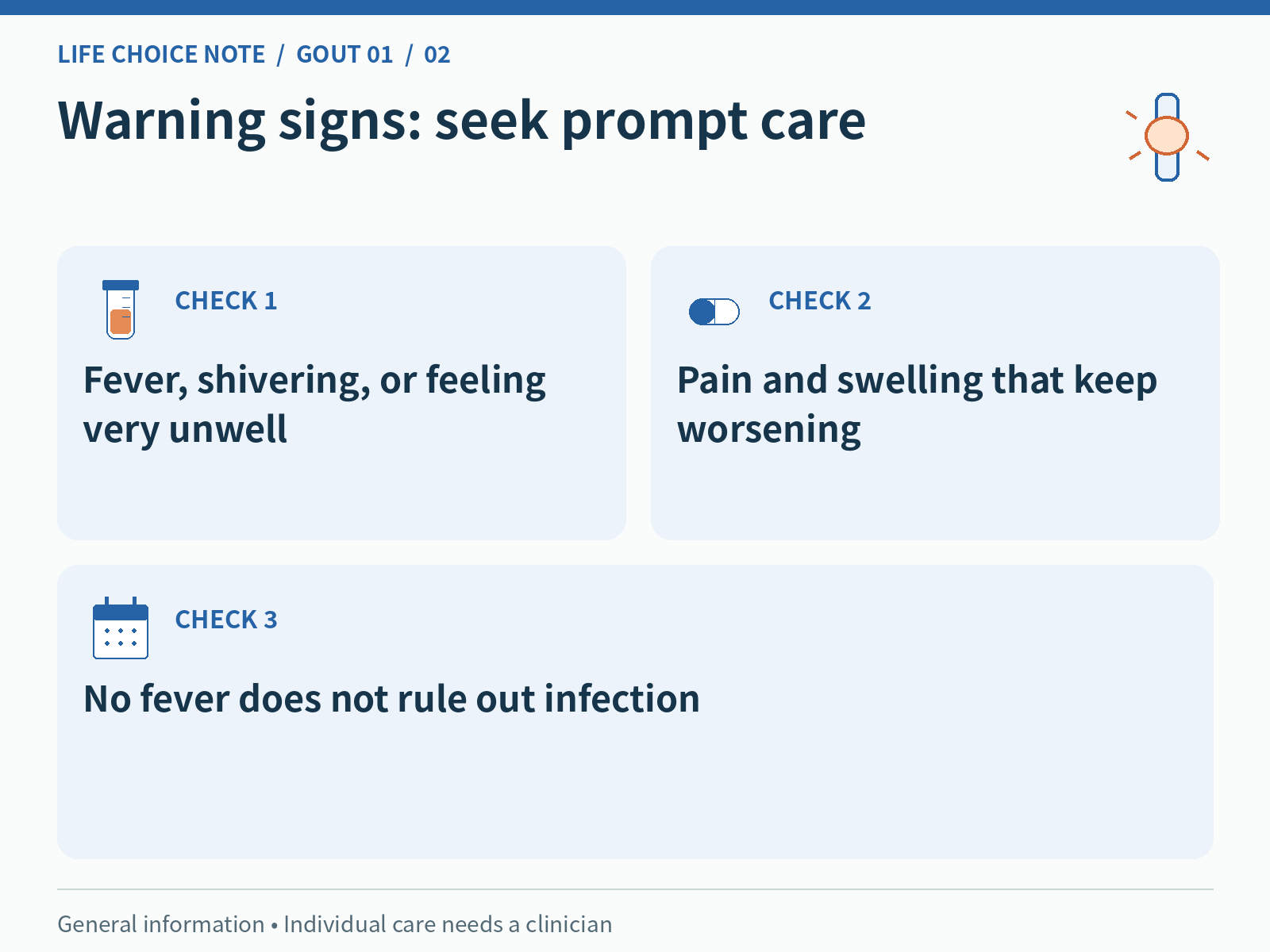
Seek urgent care for sudden joint pain and swelling accompanied by fever, shivering, feeling markedly unwell, nausea, or difficulty eating. Worsening pain is another reason to be assessed promptly. NICE, the UK guideline body, advises immediate referral through the local care pathway when septic arthritis is suspected.[1][2]
Do not use a normal temperature as proof that there is no infection. Tell the clinician about recent joint procedures, surgery, wounds, infection, or immune-suppressing treatment. In Korea, use an available same-day medical service or an emergency department according to severity. For an emergency such as confusion or breathing difficulty, call 119. Get help with transport if pain makes driving unsafe.[3][6]
4. What happens during the appointment?
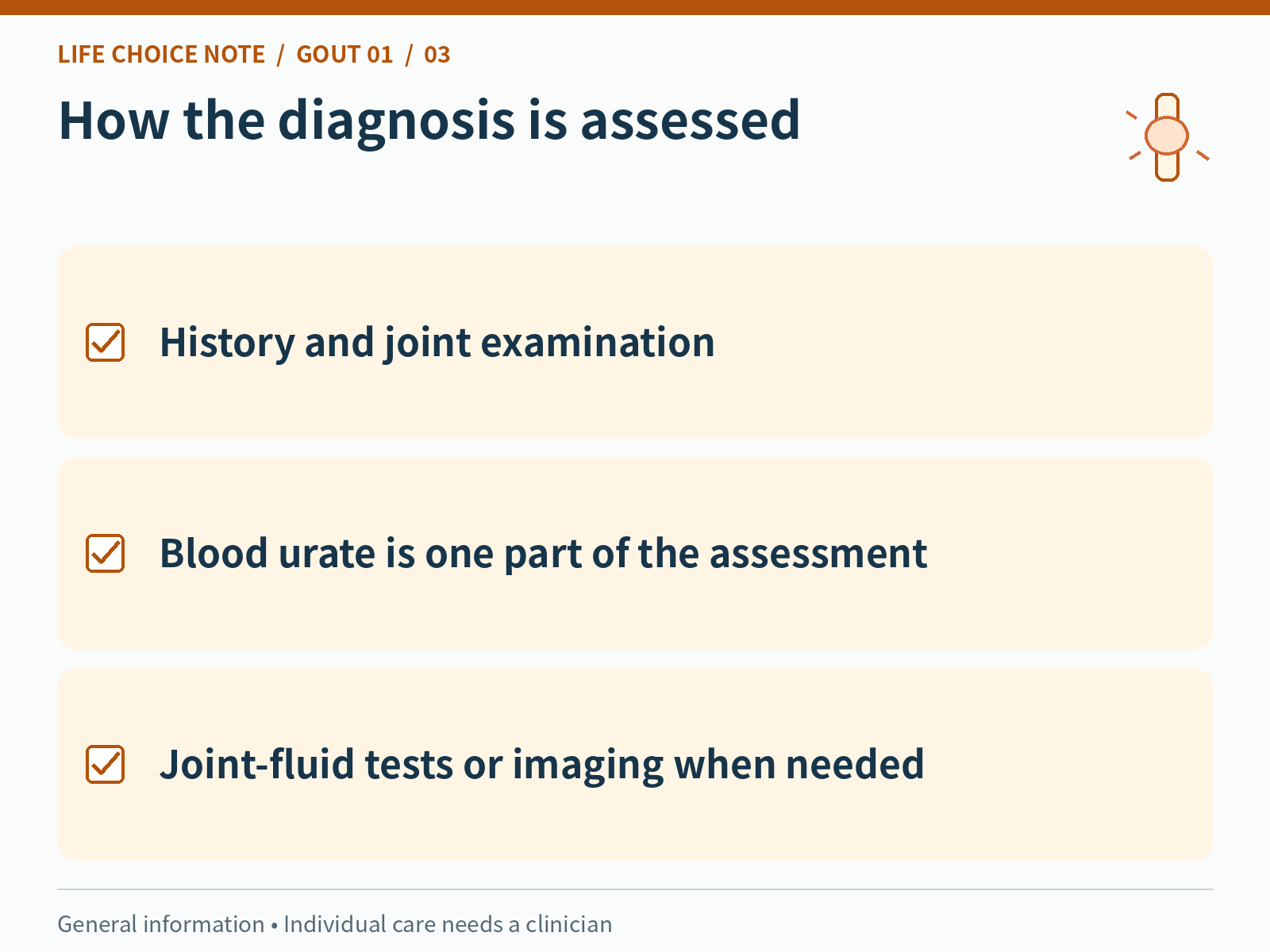
Expect questions about when symptoms began, how quickly they worsened, previous attacks, medicines, and other health conditions. Examination and a blood urate test may help. Urate can be lower during a flare, so a single non-elevated result cannot by itself exclude gout. Equally, a high result cannot replace assessment of the painful joint.[2][4]
When uncertainty remains, the clinician may sample joint fluid to look for crystals and investigate infection when indicated. Ultrasound or dual-energy CT can provide additional information. A gout-like scan does not settle every question about infection. Ask what each proposed test is intended to answer, rather than assuming everyone needs the same sequence of tests.[3][7]
5. How can you protect the joint while arranging care?
Rest the affected area and raise it comfortably if possible. A cold pack wrapped in cloth may provide additional relief; do not place ice directly on skin. Avoid repeatedly pressing the joint to “test” it or forcing yourself to walk on it. These measures support comfort while you obtain assessment; they cannot establish the cause.[1]
If this is your first episode, do not borrow someone else’s gout medicine or reuse an old prescription without advice. If you have a current, individual flare plan, follow its instructions and contact your care team when symptoms differ or treatment is not helping. A photo, symptom start time, temperature, and medicine list can be useful, but collecting them must not delay urgent care.[1][4]
6. What should happen after the pain settles?
A quiet interval between attacks does not necessarily mean that gout has disappeared. Once the diagnosis is established, discuss a plan for future flares and whether long-term treatment is appropriate. The immediate painful episode and the longer-term treatment decision are separate conversations that may happen at different visits.[5][8]
Before leaving, check how you will receive results and what changes should trigger another call. Ask for specific guidance if “come back if worse” feels unclear. For an appointment in Korea, a short written symptom timeline and a list of medicine names can also help when you and the clinician do not share a first language. Keep the follow-up plan even if walking becomes easier. Describe practical effects too: whether you missed work, could put weight on the foot, or were unable to sleep. Before leaving, separate your questions into what to do during another painful episode and what follow-up is needed after recovery. If instructions are unclear in translation, ask the clinic to write down the medicine names and return precautions. Keep that information with your results so another clinician can understand the current plan without relying on your memory of a painful visit.
What to bring to your appointment
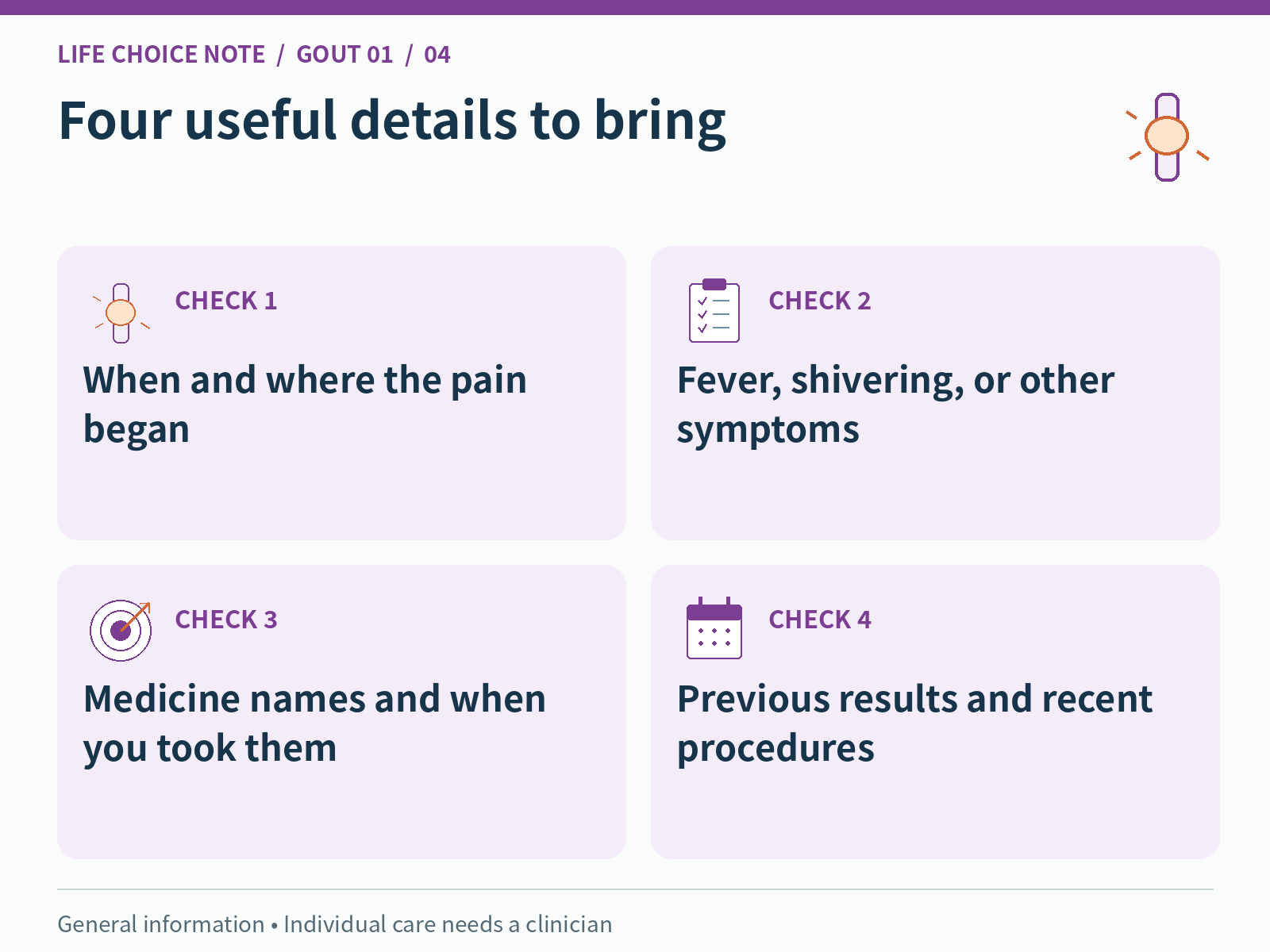
- When the pain started and which joint is affected
- Fever, shivering, illness, or worsening symptoms
- Previous confirmed gout and joint-fluid results
- Recent wounds, joint procedures, or infections
- Medicine names and anything already taken for this episode
- How to obtain results and when to seek reassessment
Common questions
Can joint infection be excluded if I do not have a fever?
No. A normal temperature alone cannot exclude infection. Worsening or unusual joint symptoms need assessment, including in someone with established gout.[2][3]
Can gout affect a knee or wrist instead of the big toe?
Yes. Gout can involve several different joints. The location does not establish the diagnosis, so a new acute episode still needs appropriate assessment.[1][2]
Can I just use ice until my booked appointment?
Ice is a comfort measure. Do not wait for a routine appointment if you develop fever, shivering, significant illness, or worsening joint pain.[1]
This article provides general health information for adults, not an individual diagnosis or prescription. Tests and medicines depend on your symptoms, medical conditions, and other treatments. Seek prompt medical assessment for a rapidly worsening painful joint or possible infection.
Related published reading
- CKD and Supplements: Bring the Bottle, Labs and Medicine List
- Supplements That Can Interfere With Lab Tests: Biotin and Beyond
- Next: Does High Uric Acid Always Need Gout Medication?
- Continue with: Can You Have Gout With a Normal Uric Acid Test?
Official and primary sources
- Gout · NHS · Page reviewed 2023-08-24; video reviewed 2026-02-16 · Checked 2026-10-15
- Gout: diagnosis and management (NG219), recommendations · NICE · Published 2022-06-09 · Checked 2026-10-15
- 2023 EULAR recommendations on imaging in diagnosis and management of crystal-induced arthropathies in clinical practice · EULAR / Annals of the Rheumatic Diseases · Published 2024; recommendations named 2023 · Checked 2026-10-15
- Gout: Diagnosis, Treatment, and Steps to Take · NIAMS, National Institutes of Health · Reviewed 2023-12 · Checked 2026-10-15
- 통풍 · 질병관리청 국가건강정보포털 · Updated 2026-05-18 · Checked 2026-10-15
- Septic arthritis · NHS · Page update date not stated in retrieved text · Checked 2026-10-15
- Synovial Fluid Analysis · MedlinePlus, U.S. National Library of Medicine · Last updated 2024-06-03 · Checked 2026-10-15
- Gout: Symptoms, Causes, and Risk Factors · NIAMS, National Institutes of Health · Reviewed 2023-12 · Checked 2026-10-15