What Should You Do When a Gout Flare Starts?

When a painful joint flares, first check whether this episode is typical for you and whether urgent assessment is needed. If you have a current, individual plan from your clinician, follow it promptly. A first or unusual episode needs medical assessment rather than automatic reuse of an old prescription.[2][3]
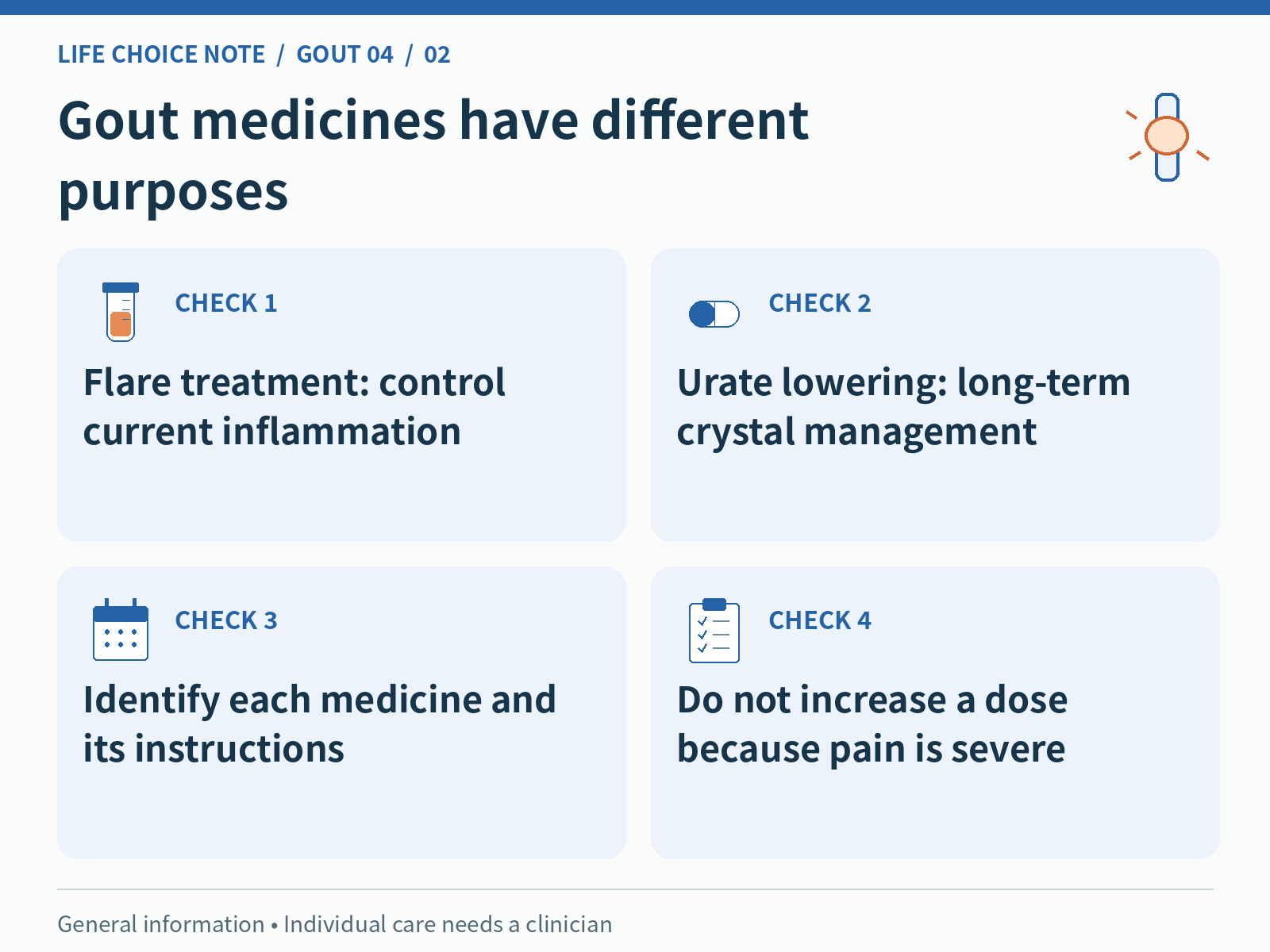
Flare treatment reduces the inflammation and pain happening now. Long-term urate-lowering treatment aims to reduce crystal burden and future problems. Medicines described as “gout medicine” may serve different purposes, so identify what you have before deciding what to do.[1][2]
1. Check whether urgent assessment comes first
A hot, swollen joint should not automatically be labelled gout. Seek prompt care if pain is worsening or occurs with fever, shivering, or feeling very unwell. A normal temperature alone does not exclude infection. Even with established gout, another cause can require assessment. Do not wait for a routine appointment when the current episode is concerning.[3][4]
In Korea, use a same-day medical service or emergency department according to severity, and call 119 for an emergency. When contacting the clinic, describe the joint, start time, severity, and other symptoms before asking for a particular medicine. Mention recent wounds or procedures, your previous diagnosis, and anything already taken. Explain if walking or arranging transport is difficult.
2. Identify your medicines and current instructions
Common flare treatments include non-steroidal anti-inflammatory drugs, or NSAIDs, colchicine, and corticosteroids. They have a different role from long-term urate-lowering drugs. Use the prescription, pharmacy label, or package to identify medicines rather than their colour or shape. Check which instructions apply to this episode and when you should contact the clinician.[1][2]
Do not independently stop or increase established urate-lowering treatment because a flare has occurred. Starting a new urate-lowering medicine is a separate decision involving clinical circumstances and Korean product information. Suspected serious allergy or another severe adverse reaction needs immediate medical advice and the product-specific safety instructions; a general message about regular treatment must not delay that assessment.[2][9]
3. How does a clinician choose flare treatment?
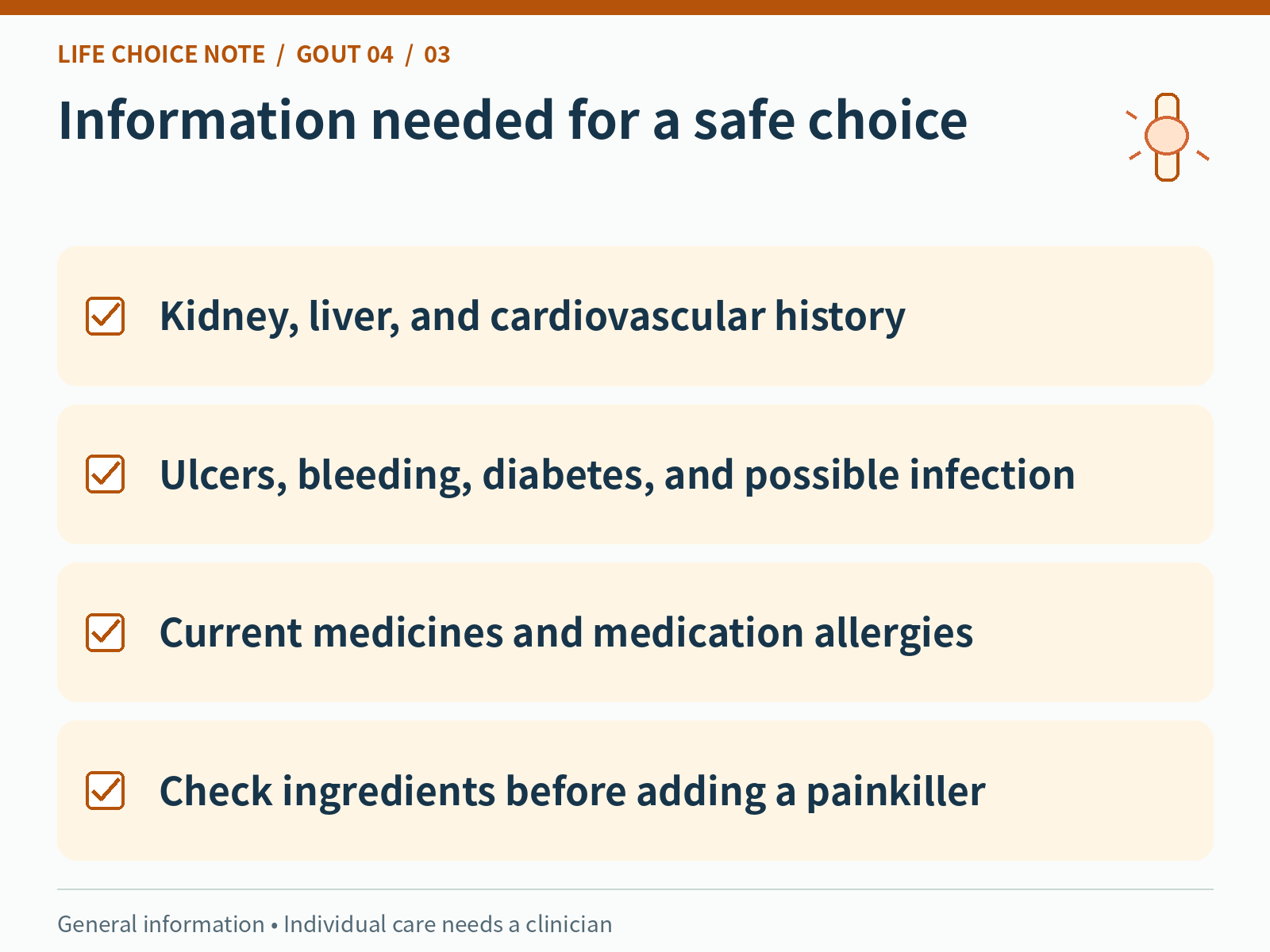
The Korean 2023 guideline conditionally recommends NSAIDs, colchicine, or corticosteroids as first-line options, without identifying one as best for everyone. Coexisting conditions and adverse-effect risk help determine the choice. A different prescription from last time may reflect a change in your circumstances rather than a more severe attack.[1]
Important information includes kidney or liver disease, ulcer or bleeding history, cardiovascular disease, diabetes, possible infection, and other medicines. KDIGO 2024 favours low-dose colchicine or intra-articular/oral glucocorticoids over NSAIDs for acute gout in CKD. Colchicine still requires kidney, liver, and interaction review. These are discussion points for the prescriber, not a menu from which to select your own drug or dose.[5][6][7][8]
4. Avoid adding or repeating medicines yourself
A differently branded painkiller or cold remedy may contain the same ingredient or another NSAID. Before adding one to your prescription, show the pharmacist or clinician the full list. More pain does not make an unreviewed combination safe. Ask what to do if relief is inadequate rather than increasing the amount yourself.[6]
Colchicine needs careful instructions, particularly if you already take it for prevention. Do not add an attack regimen to a prevention regimen on your own. Report new antibiotics and other prescriptions. Severe or persistent vomiting or diarrhoea should be reported promptly. Check the specific safety instructions for your medicine.[5]
If new muscle pain or weakness, unusual bruising, or bleeding occurs while taking colchicine, stop colchicine and contact your clinician immediately. Suspected overdose requires immediate emergency-department assessment without waiting for symptoms.[5] With ibuprofen, black stools or vomiting blood require stopping further doses and immediate medical care; breathing difficulty requires emergency assessment. These serious-reaction instructions are different from adjusting treatment yourself because a joint still hurts.[6]
5. Rest and cooling can support comfort
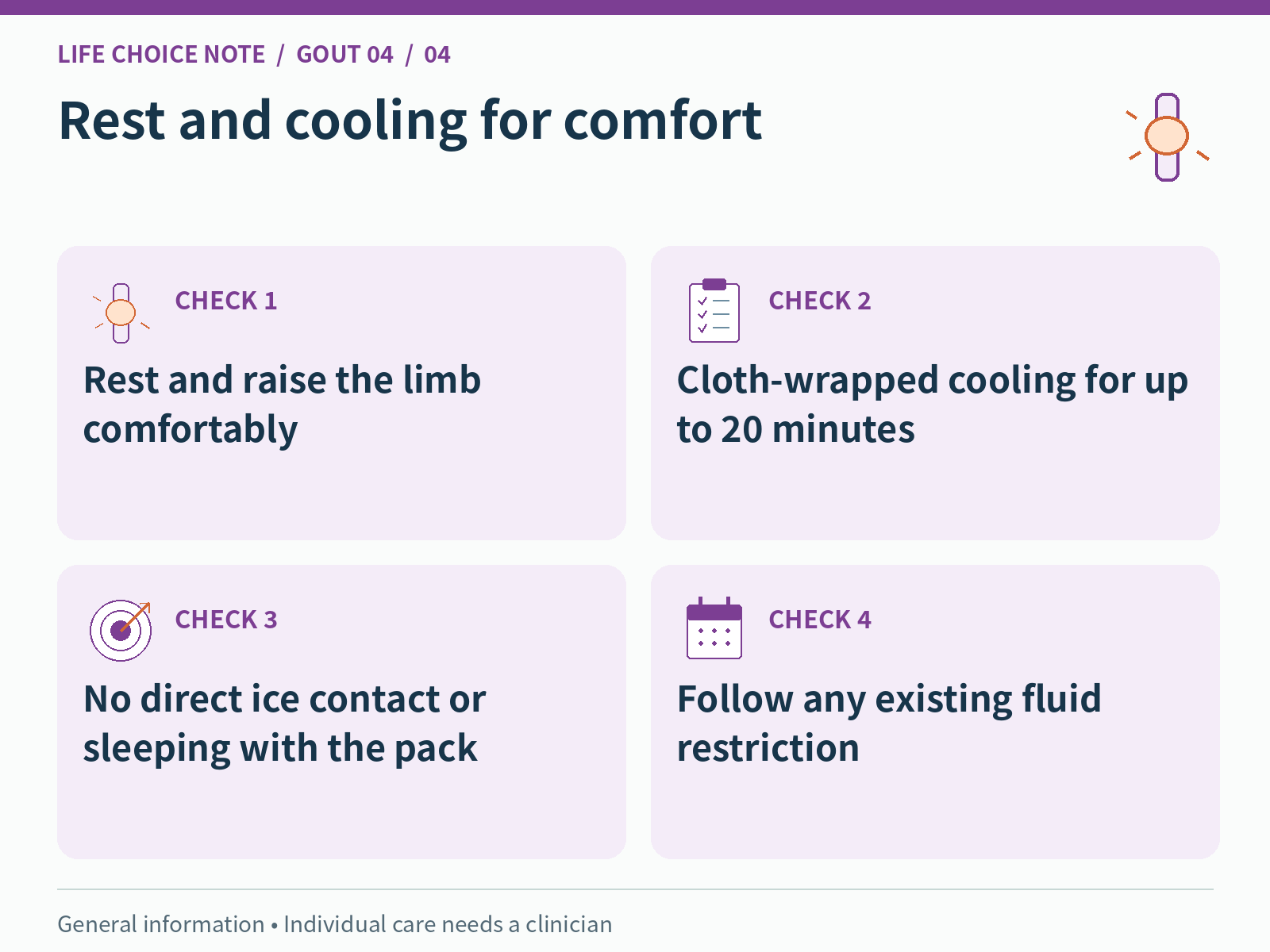
Reduce pressure on the painful joint and raise the limb comfortably when possible. Avoid forcing exercise through severe pain. Adjust shoes or bedding so they do not press on the area. Use a cold pack wrapped in cloth for short periods, up to 20 minutes at a time; do not place ice directly on skin or fall asleep with it attached.[3]
NICE describes cold packs as an addition to prescribed treatment. They do not replace assessment or medicine when needed. Avoid dehydration, but follow an existing fluid restriction for kidney or heart disease. There is no need to rapidly drink large amounts to “flush out” gout. Focus on the agreed treatment, comfortable rest, and changes that should be reported.[2][3][4]
6. Review recovery and prepare the next plan
Keep a brief record of symptom onset, affected joints, medicine names and times, and subsequent changes. Ask when improvement should occur and when to call if it does not. Worsening or persistent symptoms need reassessment rather than self-escalation. After the flare settles, review urate, other health conditions, and whether long-term treatment is appropriate.[3][4]
For future episodes, request written instructions covering when to start treatment, how to use it, expected duration, and reasons to seek care. Ask how to handle evenings or travel when your usual clinic is unavailable. In Korea, keeping medicine names in their original packaging can help another clinician or pharmacist review them. Recheck an older plan when your kidney function, other medicines, or health conditions change. If instructions from two clinics conflict or prescriptions overlap, ask the prescriber or pharmacist to reconcile them. Report exactly what you already took and when; if you are unsure, say so rather than estimating.
What to bring to your appointment
- Whether this episode is new or different
- Fever, shivering, illness, or worsening pain
- Medicine names and doses already taken as prescribed
- Kidney, liver, heart, ulcer, bleeding, and diabetes history
- Other prescriptions, pharmacy products, supplements, and allergies
- When to contact the clinic for poor response or side effects
- The follow-up appointment and long-term treatment discussion
Common questions
Will taking extra urate-lowering medicine relieve the pain faster?
Urate-lowering treatment and acute flare treatment have different purposes. Do not increase urate-lowering medicine yourself because pain is severe; check the flare plan with your clinician.[1][2]
Can I use leftover NSAIDs or a relative’s colchicine?
Do not use an unreviewed prescription. Your current conditions and other medicines affect the choice and dose. Confirm an individual plan rather than borrowing someone else’s treatment.[1][5][6]
Can I manage with ice alone for a few days?
Ice is a comfort measure. A first or unusual episode needs assessment. Fever, shivering, significant illness, or worsening joint pain should prompt urgent medical review.[3][4]
This article provides general health information for adults, not an individual diagnosis or prescription. Tests and medicines depend on your symptoms, medical conditions, and other treatments. Seek prompt medical assessment for a rapidly worsening painful joint or possible infection.
Related published reading
- CKD and Supplements: Bring the Bottle, Labs and Medicine List
- Supplements That Can Interfere With Lab Tests: Biotin and Beyond
- Previous: Can You Have Gout With a Normal Uric Acid Test?
- Next: Do You Need Long-Term Treatment After Your First Gout Flare?
Official and primary sources
- Korean guidelines for the management of gout · Korean College of Rheumatology / Journal of Rheumatic Diseases · Published 2023-07-01 · Checked 2026-10-15
- Gout: Diagnosis, Treatment, and Steps to Take · NIAMS, National Institutes of Health · Reviewed 2023-12 · Checked 2026-10-15
- Gout · NHS · Page reviewed 2023-08-24; video reviewed 2026-02-16 · Checked 2026-10-15
- Gout: diagnosis and management (NG219), recommendations · NICE · Published 2022-06-09 · Checked 2026-10-15
- Colchicine: drug information · MedlinePlus / American Society of Health-System Pharmacists · Revised 2025-05-15 · Checked 2026-10-15
- Ibuprofen: drug information · MedlinePlus / American Society of Health-System Pharmacists · Last revised 2023-09-15 · Checked 2026-10-15
- Prednisone: drug information · MedlinePlus / American Society of Health-System Pharmacists · Last revised 2024-06-20 · Checked 2026-10-15
- KDIGO 2024 Clinical Practice Guideline for the Evaluation and Management of Chronic Kidney Disease, section 3.14 · KDIGO · Published 2024-03 · Checked 2026-10-15
- 2020 American College of Rheumatology Guideline for the Management of Gout · American College of Rheumatology · Published 2020 · Checked 2026-10-15