Late for Your Second Shingrix Dose? How to Resume the Series
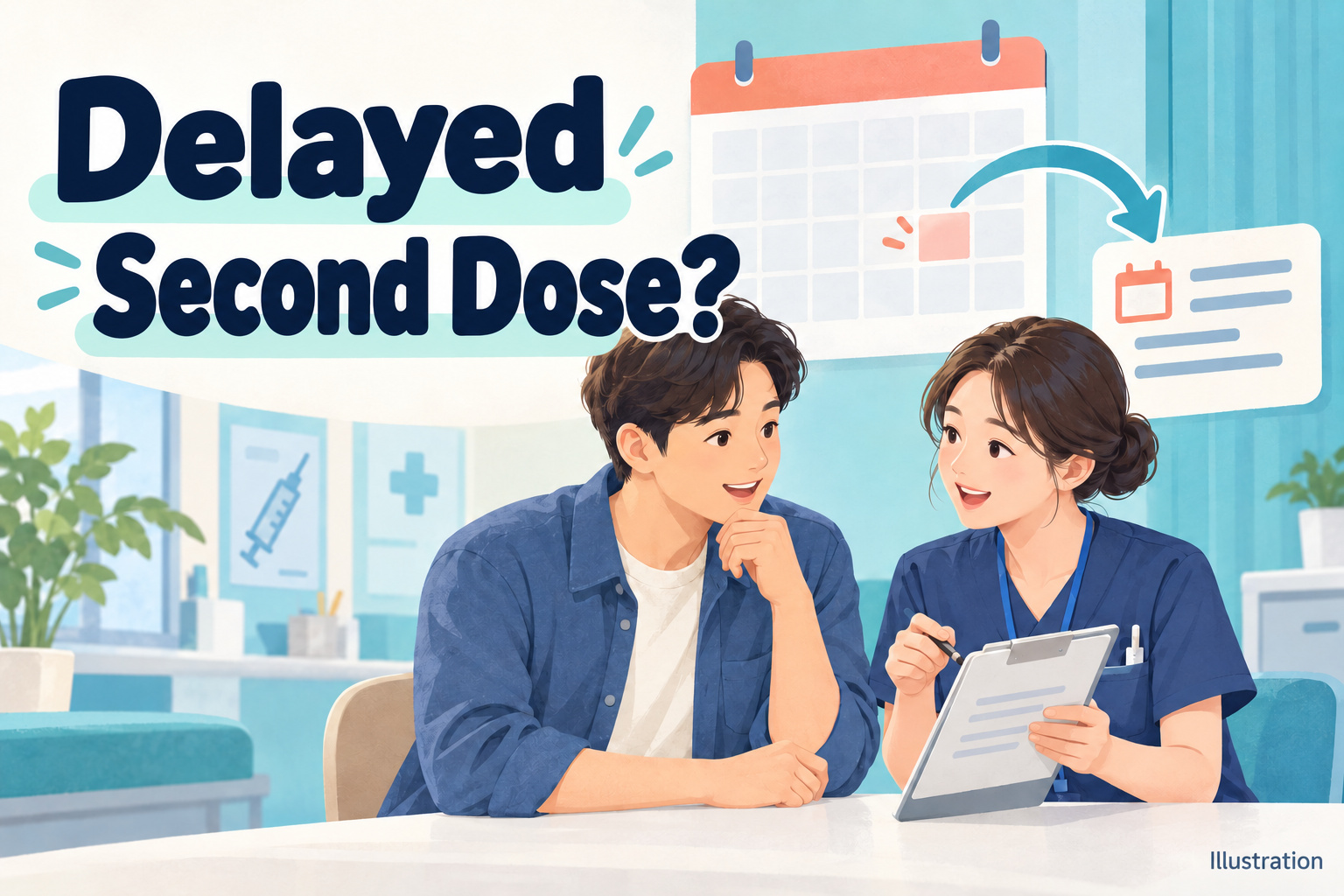
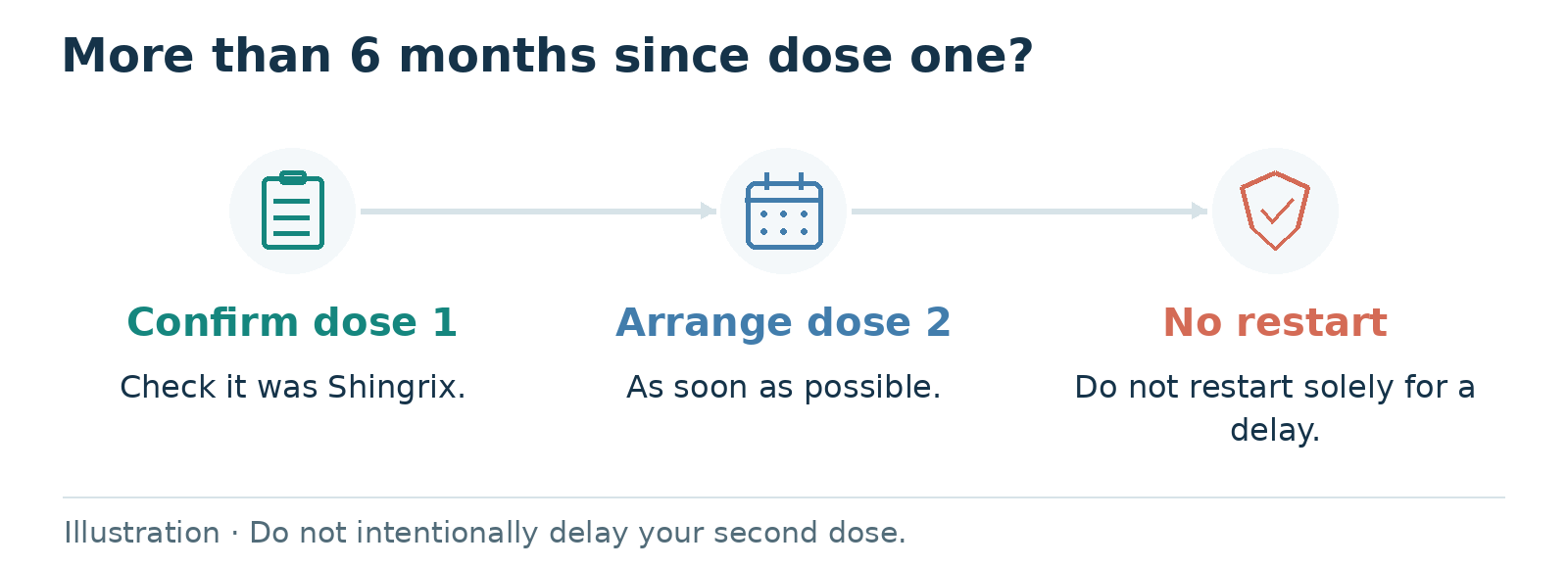
If more than 6 months have passed since your first Shingrix dose, CDC says to give the second dose as soon as possible and not restart the series. First confirm the product and date, then arrange the completion visit with your healthcare professional.
This U.S. guide concerns a delayed second Shingrix dose. It does not treat a previous Zostavax dose as Shingrix dose one or tell you to vaccinate through a current illness or a serious previous reaction.
What is the usual U.S. interval?
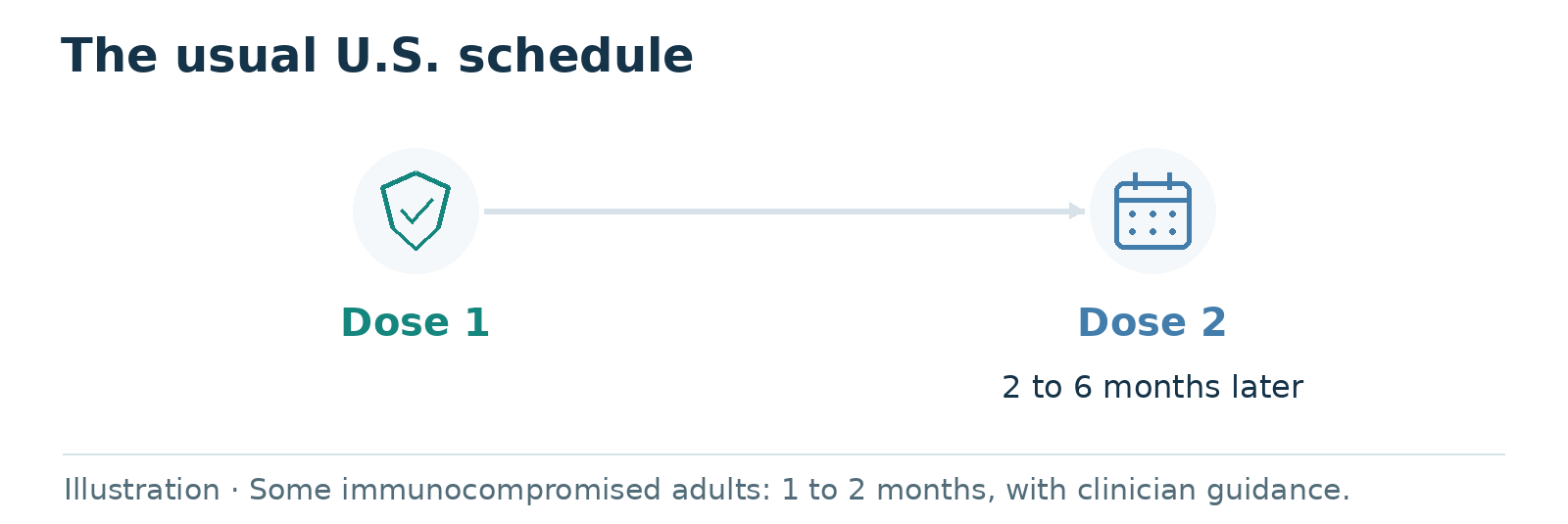
For most eligible adults, the second Shingrix dose is given 2 to 6 months after the first. Some people who are or will be immunocompromised may benefit from a shorter 1-to-2-month interval, selected with their clinician. (CDC: Shingles Vaccine Recommendations)
The target interval helps plan the series. Instructions for recovering from a missed appointment answer a different question: how to finish safely once the planned window has passed.
Tap the diagram to view full size
A delay alone does not mean starting over
CDC explicitly says not to restart the series when more than 6 months have elapsed. Contact the vaccination provider, explain the delay and arrange the second dose as soon as possible. (CDC: Shingles Vaccine Recommendations)
This does not mean postponing on purpose is equally protective, nor does it mean that one dose is a complete series. The useful next step is to finish the outstanding dose rather than add an extra first dose on your own.
If you delayed because of illness, treatment, a previous reaction or difficulty paying, say so when booking. Those details can change what needs to be checked before the appointment.
Tap the diagram to view full size
Confirm what your first “shingles shot” actually was
| Your record says | What to tell the new provider |
|---|---|
| Shingrix, with a date | You need advice about the delayed second dose |
| Zostavax | You have a previous live-vaccine history, not a first Shingrix dose |
| Product or date unclear | You need help obtaining the original vaccination record |
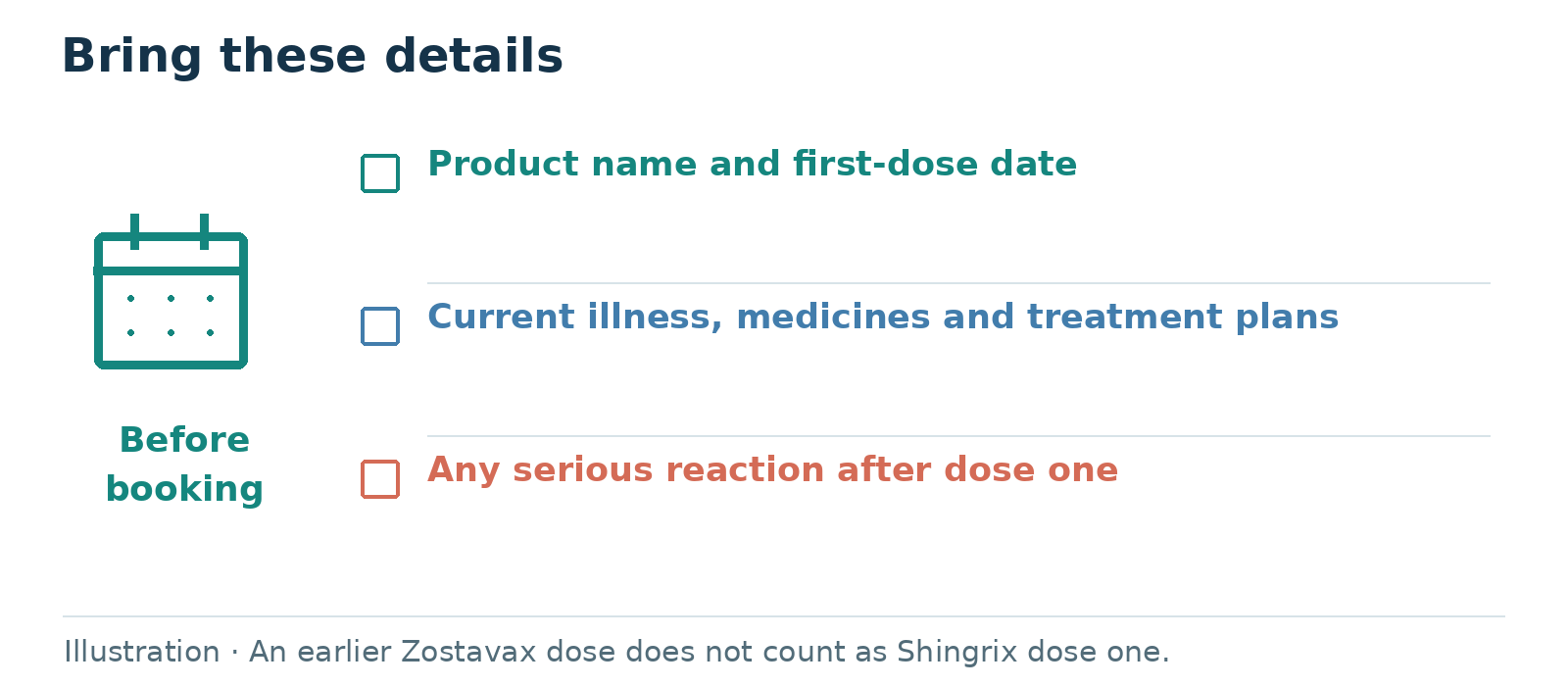
Two Shingrix doses are recommended regardless of previous receipt of Zostavax. Zostavax has not been available in the U.S. since November 2020. (CDC: Shingrix in Immunocompromised Adults)
Ask the original clinic or pharmacy for documentation if the record is missing. When moving between providers, bring the actual record rather than an estimated product name or date.
Immune-suppressing treatment needs coordinated timing
For immunocompromised adults, CDC advises considering disease stability and the timing of treatment when planning vaccination. The clinician managing the underlying condition may need to coordinate with the vaccine provider. Shorter intervals can sometimes help complete vaccination before more intensive immune suppression. (CDC: Shingrix in Immunocompromised Adults)
Send both teams the same treatment schedule and medication list. Do not stop immune-suppressing medicines, postpone chemotherapy, or make other treatment changes yourself to fit a vaccine date.
What should be mentioned before the next dose?
Tell the provider if you currently have shingles, a moderate or severe illness, pregnancy, or a history of a severe allergic reaction after dose one or to a vaccine ingredient. These need clinical review before proceeding. Common short-lived soreness is different from a severe allergy and should be described separately. (CDC: Shingles Vaccination)
If the reason you missed the visit has resolved, explain what changed. If it has not resolved, ask who should help decide the next date rather than leaving the series indefinitely without a plan.
A simple catch-up checklist
- Find the first-dose record and verify that it says Shingrix.
- Write down current medicines, treatment dates and any previous reaction.
- Call the provider: “My second dose is late. What needs checking before I complete it?”
- Confirm the appointment, product availability and billing route.
- After vaccination, keep the completed series record.
A reminder is most useful when it includes a fallback: if the appointment is moved, choose the replacement date at the same time. This avoids another missed window without requiring you to recalculate the medical schedule yourself.
Tap the diagram to view full size
Frequently asked questions
I am eight months or a year late. Is dose one invalid because of that?
CDC says not to restart solely because more than six months have passed. Your provider should verify the record and arrange completion.
Can I shorten the interval to one month for convenience?
The 1-to-2-month schedule is for certain immunocompromised people when a shorter series is clinically beneficial. Do not choose it solely for convenience.
Can a different pharmacy give dose two?
Ask the new location to review the product and date from dose one and confirm that it can give Shingrix. Also recheck insurance billing and keep the final record.
Practical resources for your appointment
Use these to prepare for care, not to delay care when symptoms need attention.
Sources and review date
- CDC: Shingles Vaccine Recommendations
- CDC: Shingrix in Immunocompromised Adults
- CDC: Shingles Vaccination
Sources checked October 5, 2026. This article provides general health information. Discuss individual diagnosis, treatment and vaccination decisions with a qualified healthcare professional.