Can You Shower With Shingles? Gentle Care for Blisters and Scabs
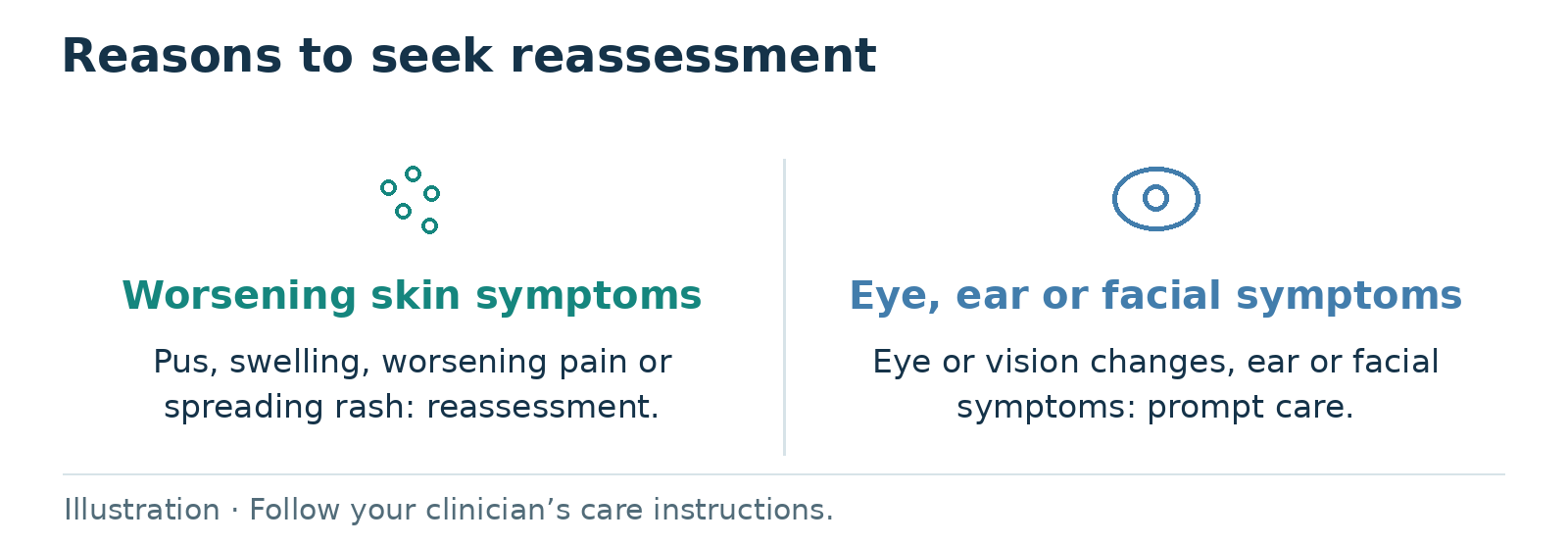
Seek reassessment for pus, swelling, worsening pain, or a spreading rash. Eye or nose involvement, vision changes, or ear symptoms with facial weakness need prompt medical attention.
You do not generally need to avoid showering simply because you have shingles. Gentle cleaning and careful drying can help you care for the skin without adding friction. If you have a special dressing, a large open area, or specific wound-care instructions, ask your care team how showering fits that plan.
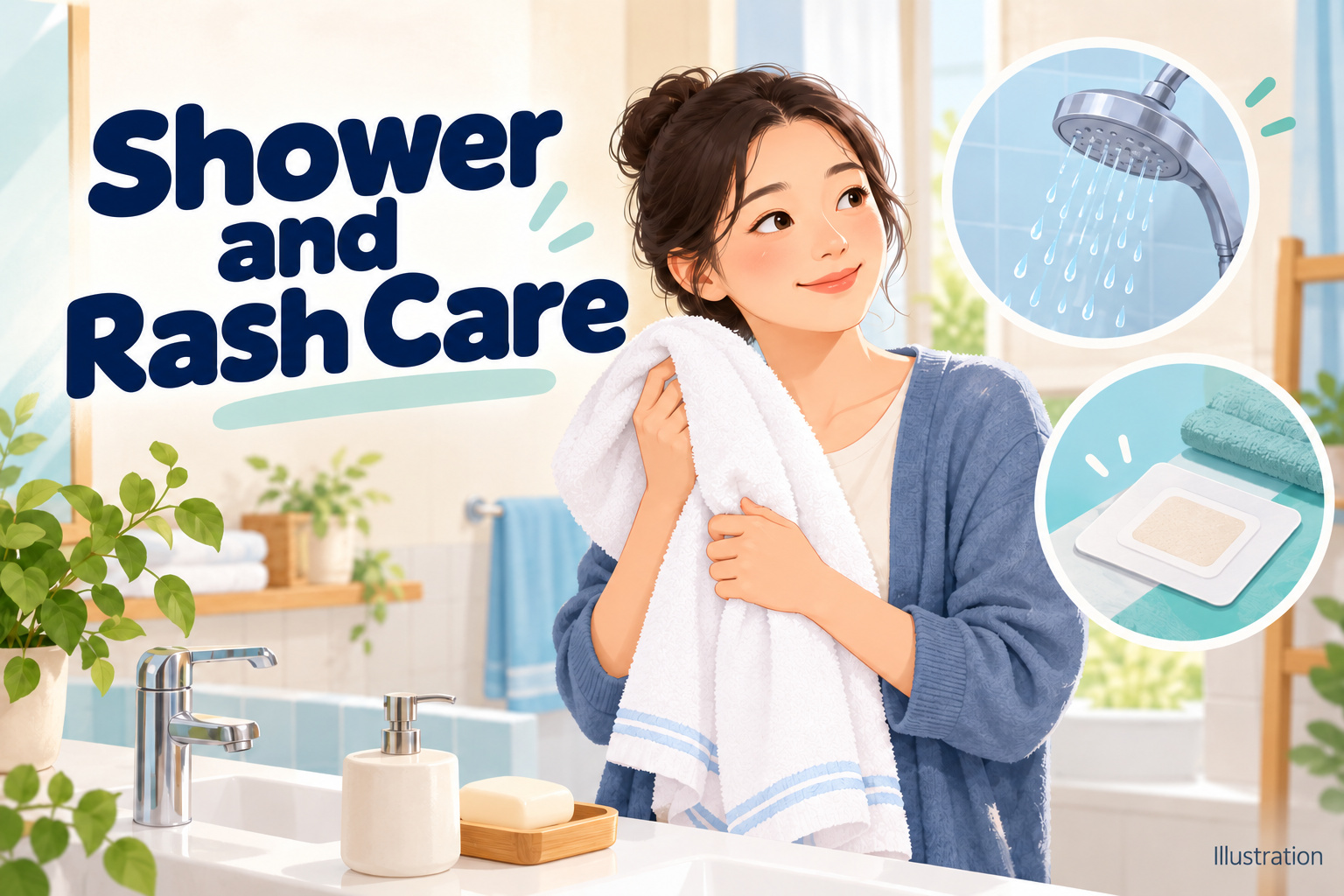
Wash gently and pat the area dry
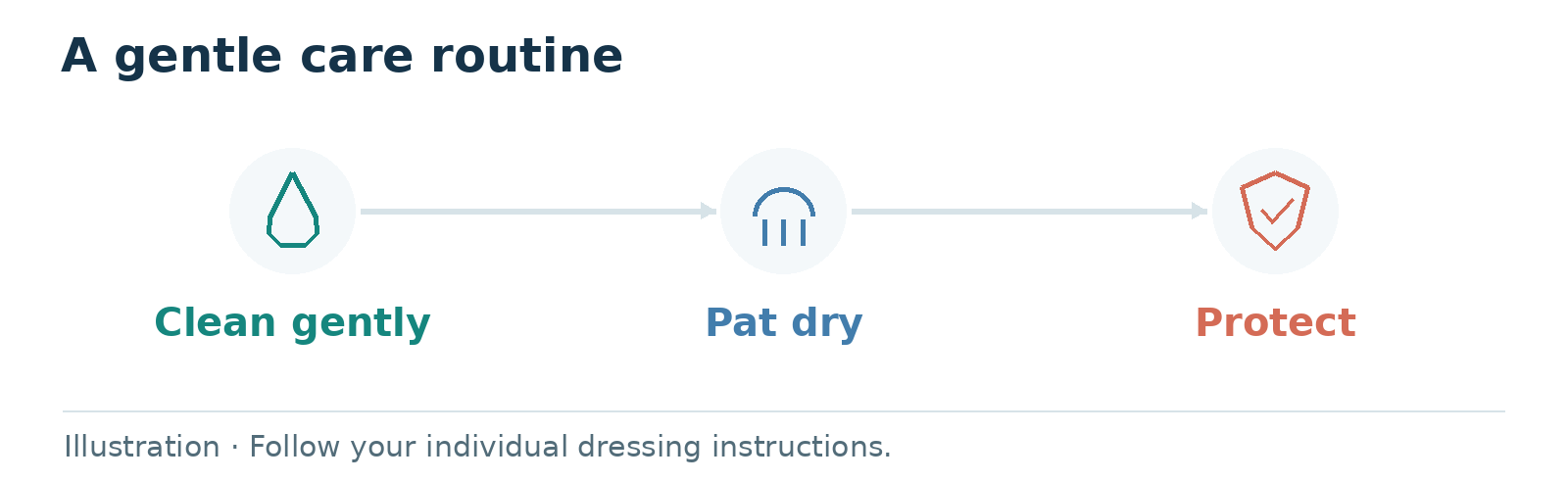
Use a mild cleanser and avoid scrubbing the rash. If the spray or water temperature stings, reduce the irritation. After washing, use a clean towel to pat away water instead of rubbing. You do not need to scrub the skin to remove the virus.
Healthdirect Australia discusses gentle drying after a shower, and the American Academy of Dermatology advises gentle cleansing and protection of the rash. If a dressing is meant to stay in place, or the area is large and weeping, ask how to manage it before changing your routine.
Tap the diagram to view full size
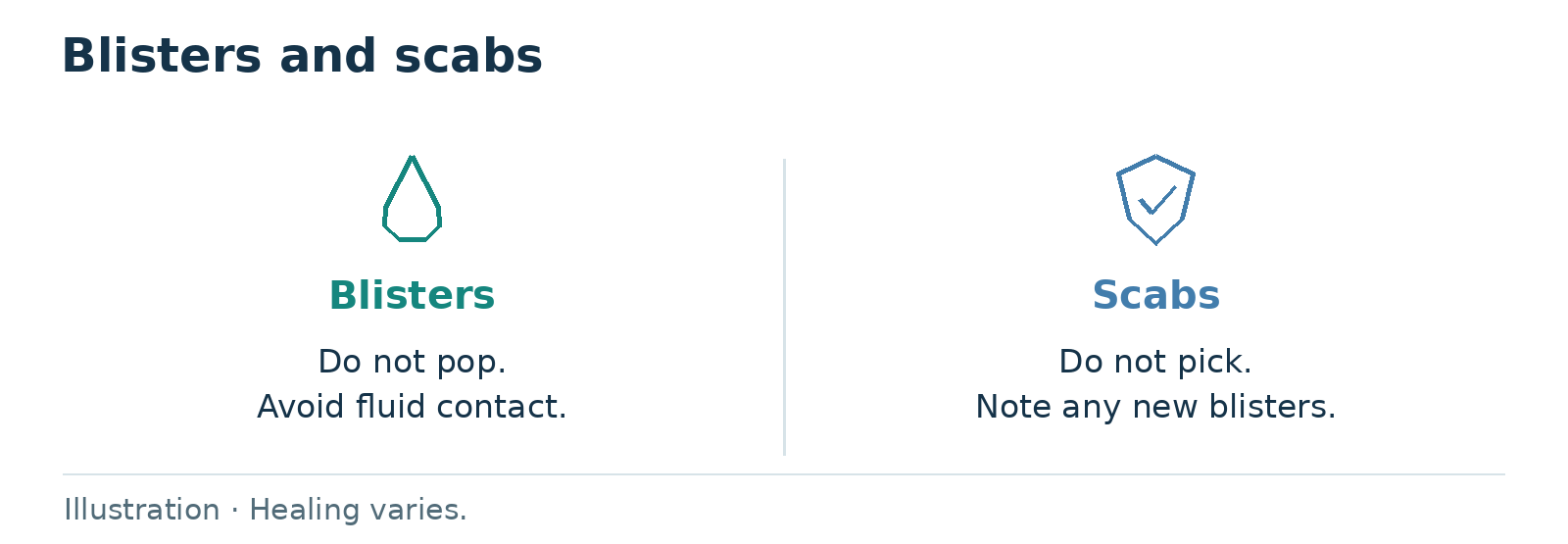
Leave blisters and scabs alone
Do not pop blisters or pick off scabs. Opening the skin does not make the virus leave the body faster. Scratching and repeated handling can injure the skin and increase the chance of bacterial infection.
Wear soft, loose clothing. A suitable nonstick dressing may help protect an area that rubs against clothing. Do not place adhesive directly over blisters or pull a stuck dressing off by force. The best dressing and replacement method depend on the area and drainage, so follow the care instructions you were given.
Tap the diagram to view full size
Keep itch relief simple
A clean, cool, damp cloth applied briefly may ease discomfort. Avoid direct ice or harsh products, and gently remove excess moisture afterward rather than leaving the skin persistently wet.
Do not layer disinfectants, antibiotic ointments, and steroid creams just because they are available at home. Their suitability depends on the skin and location. Keep skin products out of the eyes and ask about any prescribed topical treatment. NHS advice emphasizes keeping the rash clean and dry and reducing irritation.
Include towels, clothing and hand hygiene
Wash your hands before and after caring for the area. Do not share towels used on the rash. Wash clothing and bedding contaminated with blister fluid, and do not reuse a used dressing. Protect susceptible and vulnerable household members while lesions remain active; precautions continue until all lesions are dry and crusted.
Rest if you feel unwell and reduce activities that make the rash more uncomfortable through sweat or friction. Tell your clinician if pain prevents sleep or makes clothing difficult to tolerate. MedlinePlus aftercare guidance addresses skin care, laundry, and ongoing pain together.
Know when another assessment matters more than home care
Increasing swelling, pus, worsening pain, or feeling more unwell may signal an additional problem such as bacterial infection. Continuing new blisters or a rash spreading to several areas also deserves reassessment. Contact your treating team early if your immune system is suppressed.
Do not troubleshoot a shower routine instead of seeking care for a rash near the eye or nose, a vision change, or ear symptoms with facial weakness. Also remember that skin healing and pain recovery can happen on different schedules. Record new blisters, drainage, and sleep disruption to help explain how you are doing.
Tap the diagram to view full size
Frequently asked questions
Will shower water make shingles spread across my skin?
Water contact alone is not a reason to assume that the rash will spread. Focus on gentle cleaning, avoiding friction, and following any specific dressing or wound-care instructions.
Should I open blisters so they can dry faster?
No. Do not pop blisters or pick scabs. This can damage the skin and increase infection risk without being a useful way to speed recovery.
Should I just tolerate pain once the rash looks better?
No. Skin improvement does not mean pain needs no attention. Tell your clinician if discomfort is persistent or interferes with sleep and daily activities.
Scope and safety
This article provides general health information, not a diagnosis or an individual treatment plan. Your symptoms, medical conditions, and medicines can change the care you need. Do not delay urgent care to complete notes or read more material.
Helpful resources for your visit
Sources and review date
- Healthdirect Australia: Shingles and skin care
- American Academy of Dermatology: Shingles self-care
- NHS: Shingles care and urgent warning signs (UK)
- MedlinePlus: Shingles aftercare
Public sources checked and text reviewed: October 5, 2026.