Does High Uric Acid Always Need Gout Medication?
A flagged uric acid result on a health check can be worrying, especially when you feel well. However, high blood urate and a diagnosis of gout are different findings. Many people with elevated urate never develop gout, and the number alone does not determine whether medicine is appropriate.[2][3]
The useful next step is a clinical review of the result, your symptom history, kidney health, stones, and medicines. This article concerns a high result without established gout symptoms. It should not be used as a reason to stop treatment already prescribed for gout or another condition.[1][2]
1. What does asymptomatic hyperuricemia mean?
Urate is produced when purines from the body and foods are broken down. Its level reflects both production and removal. Diet is one influence, but kidney handling and inherited factors also matter. A high result is not proof that you caused the problem by eating one particular meal.[2][3]
Asymptomatic hyperuricemia describes elevated urate without clinical gout symptoms. For its 2020 recommendation, the American College of Rheumatology, or ACR, used a serum urate level of at least 6.8 mg/dL with no previous gout flares or subcutaneous tophi. That definition is not a universal laboratory reference range or a stand-alone diagnostic test. Tell your clinician about past swollen joints even if they resolved years ago.[1]
2. What should you check on the laboratory report?
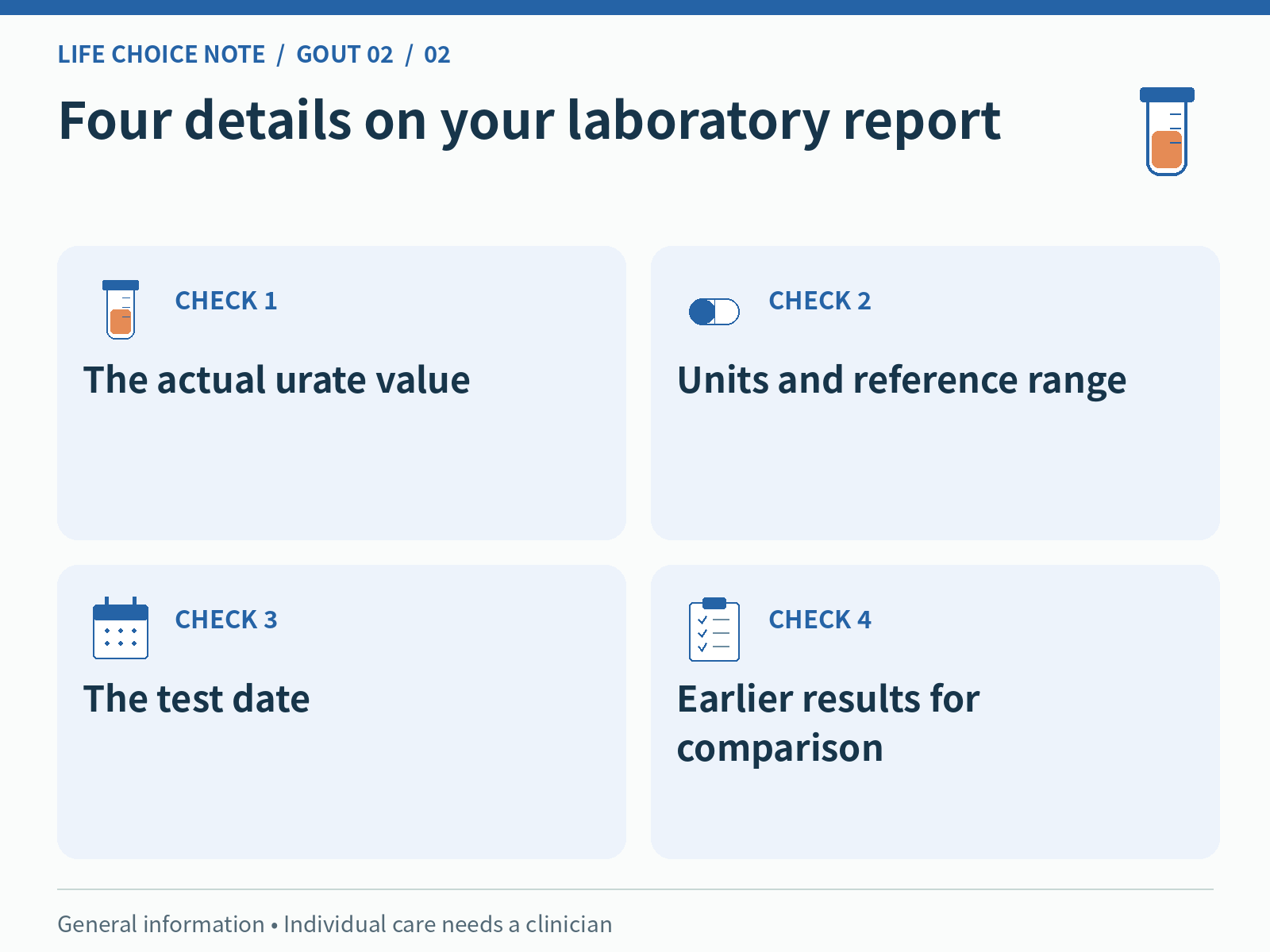
Keep the actual value, unit, test date, and laboratory reference range together. Bring previous results when available, especially if they came from another clinic or country. A blood urate measurement and a urine uric acid test may answer different questions. Ask which test you had and why it was ordered.[2]
Explain recent illnesses, dehydration, medicine changes, and supplements. Follow the clinic’s instructions for any repeat test rather than trying to “pass” by fasting excessively or stopping medicines. Also separate a laboratory reference range from a treatment target for established gout: an unflagged result may still need interpretation in someone already receiving treatment, while a flagged screening result does not automatically create a treatment indication.[1][2]
3. Why does ACR advise against routine medication?
The US ACR 2020 guideline conditionally recommends against starting pharmacological urate-lowering treatment for asymptomatic hyperuricemia. It weighs the expected benefit against medication risks, costs, and treatment burden in people who have not had gout symptoms. This is not a recommendation that everyone with an elevated result should begin lifelong treatment.[1]
A conditional recommendation leaves room for clinical circumstances and informed preferences. It also does not cover every reason a clinician might manage uric acid, such as certain cancer-treatment situations or stone-related problems. If a medicine has already been prescribed, ask what diagnosis and purpose it addresses before drawing conclusions from an online threshold. The relevant history may include a previous attack you no longer remember clearly.[1][2]
4. How do Korean and kidney guidelines fit?
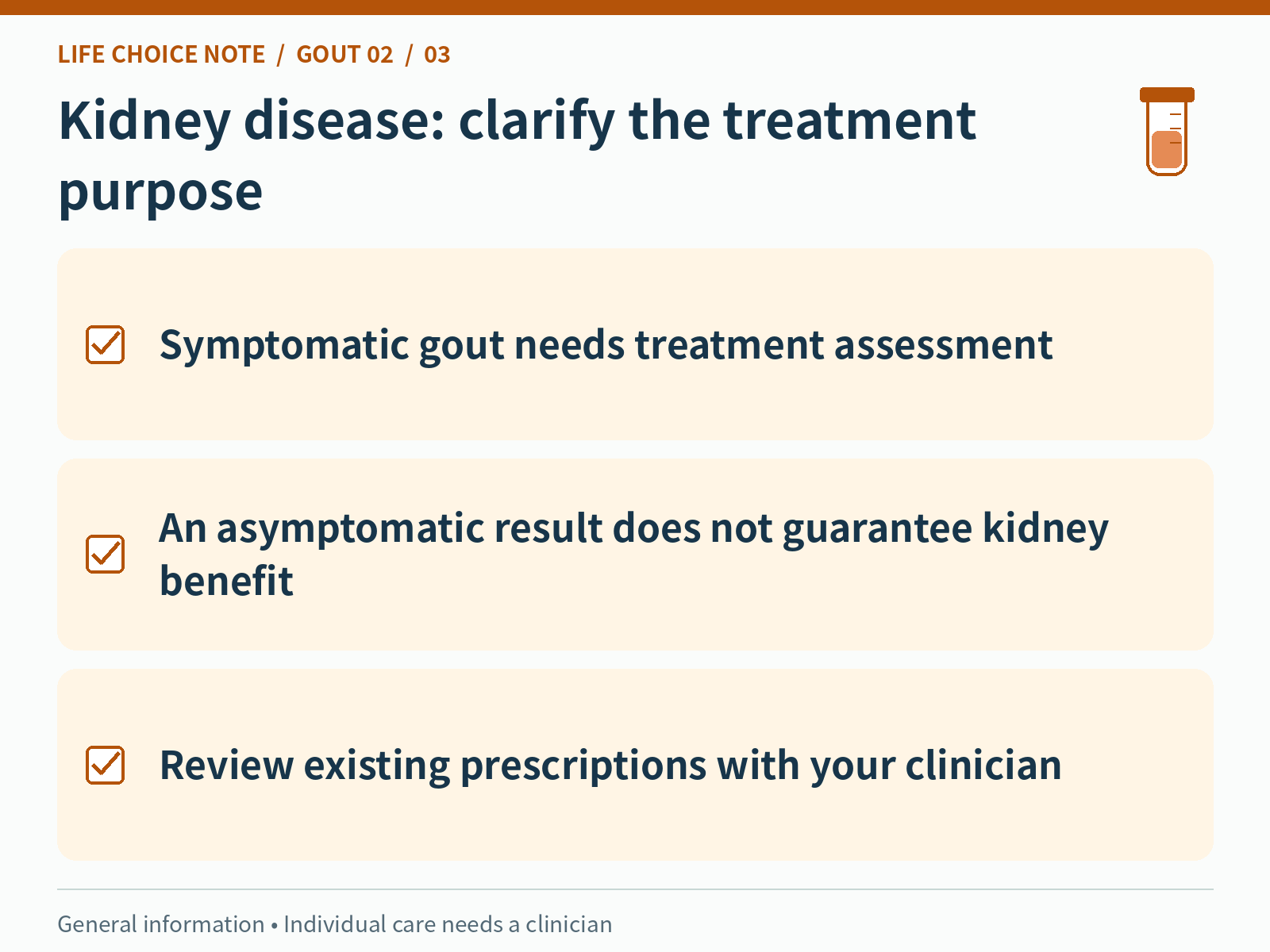
The Korean 2023 gout guideline supports broad use of urate-lowering treatment in people with gout unless contraindicated. Its target population in that recommendation matters: the statement must not be extended to every person whose health check shows elevated urate. The guideline did not establish a recommendation for treating asymptomatic hyperuricemia with chronic kidney disease because the benefits and harms remained uncertain.[4]
KDIGO 2024, an international kidney guideline, distinguishes symptomatic hyperuricemia from an elevated value without symptoms. It supports treatment for symptomatic disease in CKD, but suggests against urate-lowering medicine solely to slow CKD progression in asymptomatic hyperuricemia. In a Korean clinic, ask whether the proposed treatment is intended to manage gout, stones, or another problem. Do not treat a foreign guideline as an automatic replacement for your individual clinical assessment.[5]
5. What else belongs in the review?
Bring prescription medicines, pharmacy products, vitamins, and supplements. Some medicines can affect urate, including diuretics. Their original purpose remains important: do not stop a blood-pressure or heart medicine simply because a high result appears. Any substitution needs a clinician to consider the benefits and risks of the treatment as a whole.[1][2][6]
Balanced meals, sustainable weight management, and reducing excessive alcohol or sugary drinks can support general health. Extreme food bans are not a useful response to a single test. Nor can lifestyle changes guarantee that gout medication will never be needed. If you have a fluid restriction for kidney or heart disease, follow that plan rather than generic advice to drink large quantities of water.[3][7]
6. What should the follow-up plan include?
If you and your clinician decide against medicine now, ask when the result should be reviewed and what new symptoms should prompt contact. The interval depends on your wider health context; there is no single retesting schedule in this article. Record the agreed plan alongside the report so it does not become a forgotten warning on a screening sheet.
Do not wait for a routine repeat test if a joint becomes hot, swollen, and very painful. Fever or feeling unwell needs prompt assessment for other causes, including infection. Flank pain or blood in urine also deserves clinical attention. The main question is not just “How high is the number?” but “What does it mean alongside my history, and what is the plan?”[2][3]
What to bring to your appointment
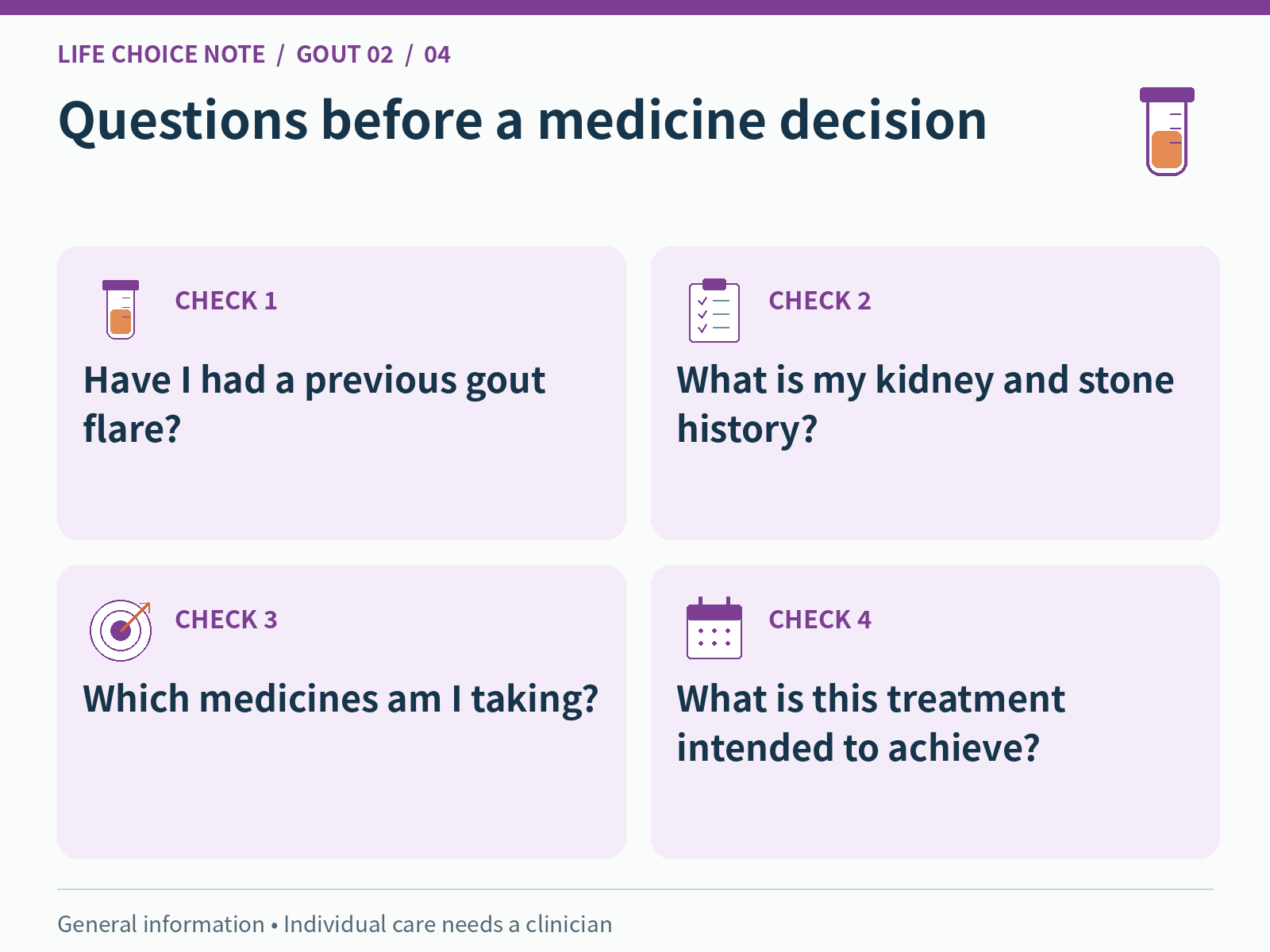
- Actual value, units, date, and earlier results
- Any previous sudden joint pain or swelling
- Kidney test results and history of stones
- All medicines and supplements
- The purpose of any proposed prescription
- Agreed follow-up and reasons to contact the clinic
Common questions
If I feel well, can I stop a newly prescribed urate medicine?
Do not stop it on your own. Ask whether it was prescribed for prior gout, a stone-related condition, or another reason. Feeling well today does not establish that you have never had gout.[1][2]
Will a high result definitely turn into gout?
No. Elevated urate is associated with gout, but not everyone with a high result develops it. Assessment includes symptoms and medical history as well as the test.[3]
Will lowering urate protect my kidneys if I have no symptoms?
That benefit is not established. KDIGO 2024 suggests against medicine solely to slow CKD progression in asymptomatic hyperuricemia. Treatment of symptomatic gout is a separate decision.[5]
This article provides general health information for adults, not an individual diagnosis or prescription. Tests and medicines depend on your symptoms, medical conditions, and other treatments. Seek prompt medical assessment for a rapidly worsening painful joint or possible infection.
Related published reading
- CKD and Supplements: Bring the Bottle, Labs and Medicine List
- Supplements That Can Interfere With Lab Tests: Biotin and Beyond
- Previous: Is Sudden Big-Toe Pain Gout?
- Next: Can You Have Gout With a Normal Uric Acid Test?
Official and primary sources
- 2020 American College of Rheumatology Guideline for the Management of Gout · American College of Rheumatology · Published 2020 · Checked 2026-10-15
- Uric Acid Test · MedlinePlus, U.S. National Library of Medicine · Last updated 2026-07-15 · Checked 2026-10-15
- Gout: Symptoms, Causes, and Risk Factors · NIAMS, National Institutes of Health · Reviewed 2023-12 · Checked 2026-10-15
- Korean guidelines for the management of gout · Korean College of Rheumatology / Journal of Rheumatic Diseases · Published 2023-07-01 · Checked 2026-10-15
- KDIGO 2024 Clinical Practice Guideline for the Evaluation and Management of Chronic Kidney Disease, section 3.14 · KDIGO · Published 2024-03 · Checked 2026-10-15
- 통풍 · 질병관리청 국가건강정보포털 · Updated 2026-05-18 · Checked 2026-10-15
- Gout: patient information · American College of Rheumatology · Updated 2025-02 · Checked 2026-10-15