Shingles vaccination during cancer or immune-suppressing treatment
If cancer treatment, transplantation or immune-suppressing medicines affect your care, plan shingles vaccination with your treating team. Do not stop or delay essential treatment yourself to fit a vaccine appointment. A new painful rash or eye, ear or neurologic symptoms needs prompt assessment, even if you were vaccinated.
Bring the condition and medicine names, not just “low immunity”
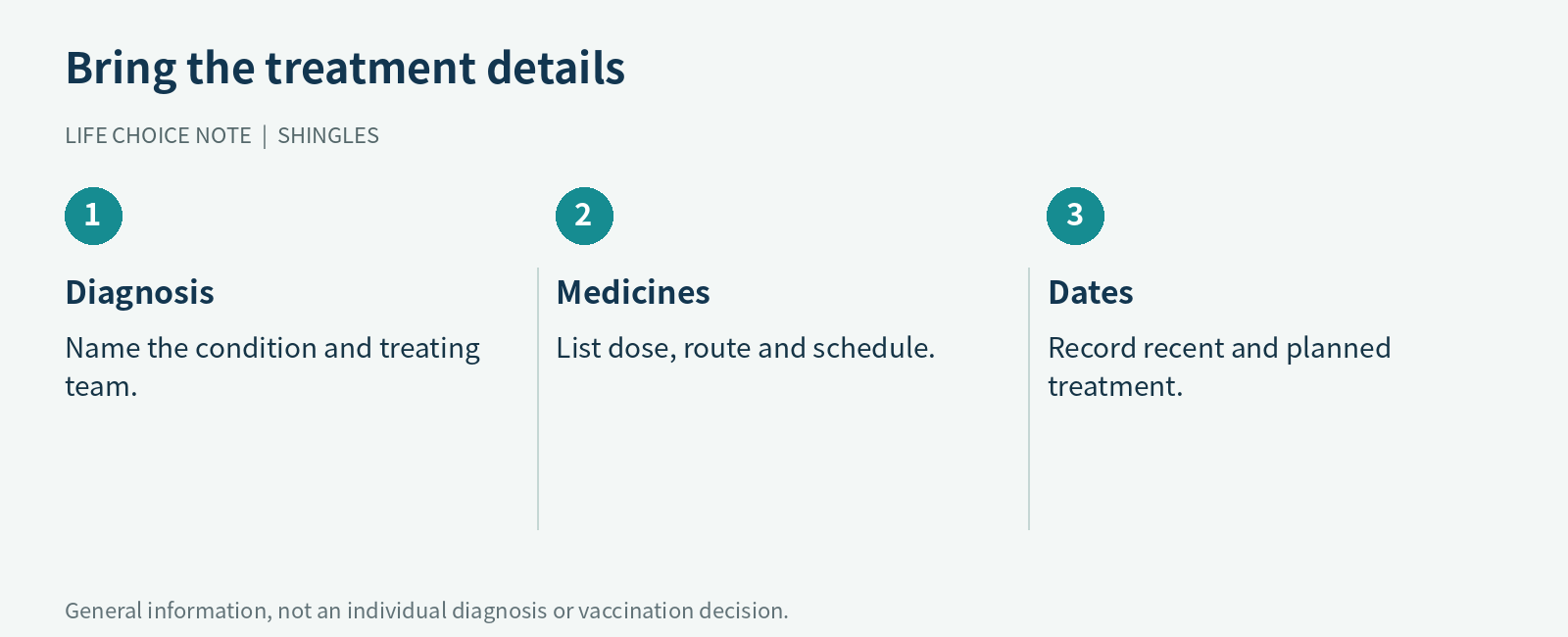
Feeling tired or catching colds frequently does not by itself define immunocompromise. The diagnosis, medicine, dose, route, treatment intensity and schedule matter. Record the last treatment date and the next planned one.
Bring prescriptions and include steroids, cancer medicines and treatment for inflammatory conditions. If the vaccination clinic and treating specialist differ, ask which team will confirm the final schedule and how to report fever or other symptoms after vaccination.
Tap the diagram to view full size
Live and recombinant vaccines are different
Shingrix is a recombinant vaccine and does not contain live varicella-zoster virus. Live shingles vaccines still used in some countries may be unsuitable in significant immunosuppression. Price or local funding should not determine the choice without a clinical check.
CDC recommends two recombinant zoster vaccine doses for qualifying immunodeficient or immunosuppressed adults aged 19 or older in the US. Korean guidance and product authorization include qualifying high-risk adults aged 18 or older. A product’s licensed age and a national recommendation are not always identical. Non-live does not mean free of contraindications or adverse reactions.
Discuss timing when the treatment plan is made
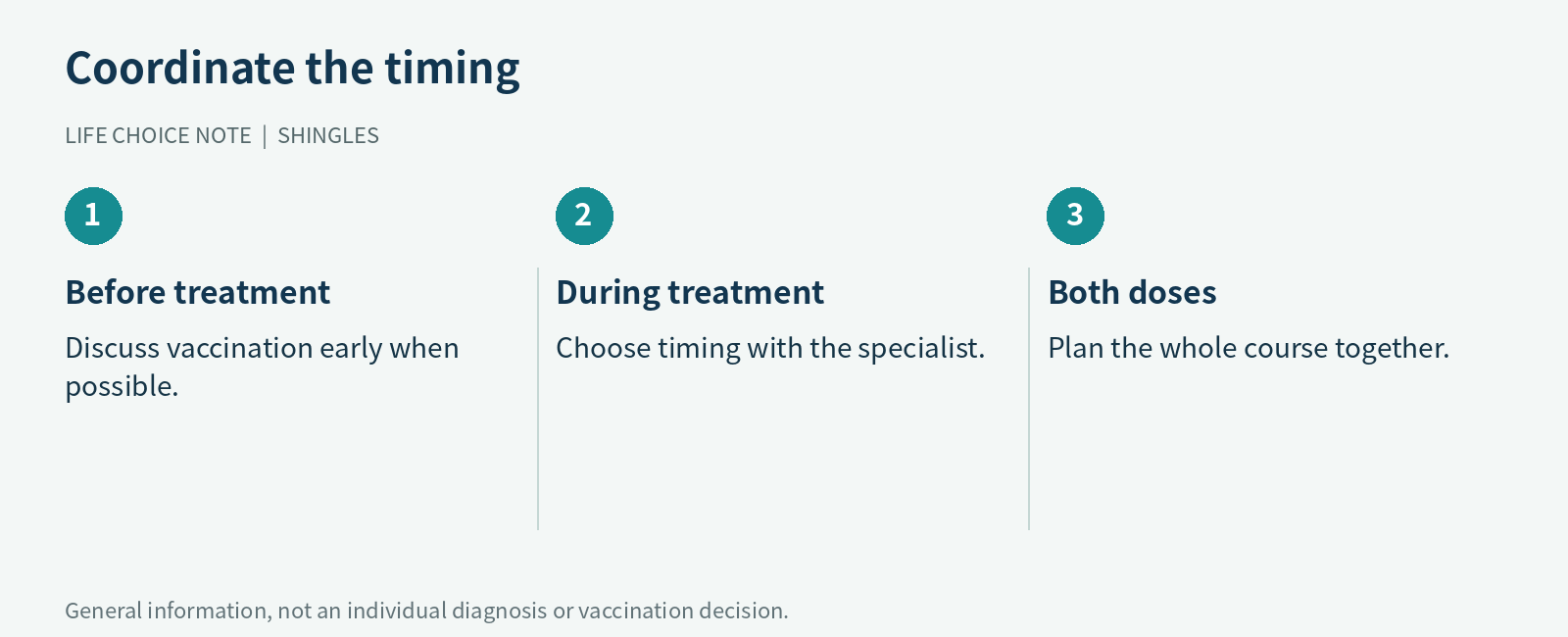
CDC advises vaccinating before immunosuppression when possible, or at a time when the response is expected to be most robust if treatment is already underway. Disease stability, intensity of immune suppression and the risks of delaying treatment all matter.
ASCO’s adult cancer vaccination guideline supports early review of vaccination history. Missing the opportunity before treatment does not mean vaccination can never be considered later. Transplantation, continuing chemotherapy and B-cell-depleting treatments do not share one universal calendar.
Tap the diagram to view full size
Plan both doses, not only the first appointment
In the US, the usual Shingrix interval is two to six months. For people who are or will be immunodeficient or immunosuppressed and would benefit from a shorter course, CDC allows the second dose one to two months after the first. This is an individualized option, not a command for every patient to return after one month.
Korean product information describes a basic two-month interval, flexibility to two to six months and a one-to-two-month option in specified immune-suppressed circumstances. Confirm the local schedule with the team. Tell both clinics if treatment dates or vaccination appointments change.
Do not omit antivirals or previous serious reactions
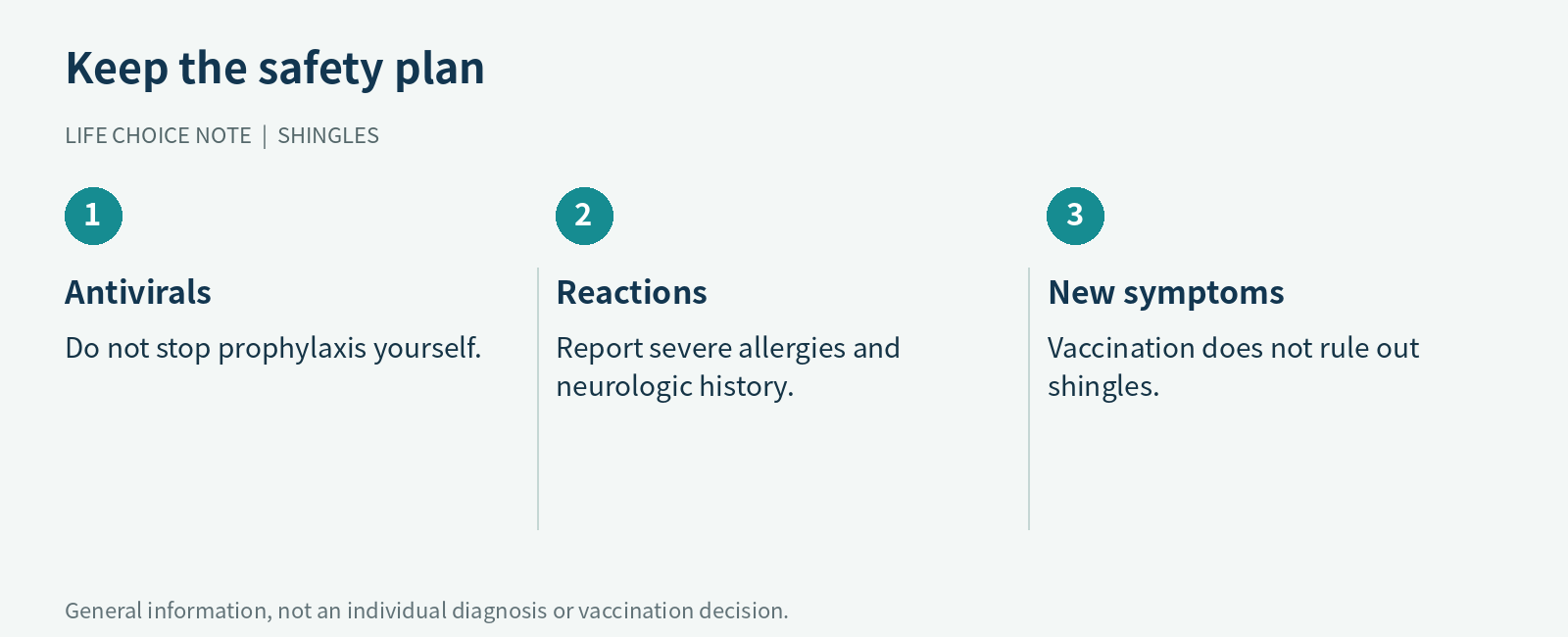
CDC notes that recombinant zoster vaccine can be given while antiviral medicines are being used because it is not a live vaccine. That statement does not authorize stopping antiviral prophylaxis. The original treating team decides whether and when those medicines change.
Report previous severe vaccine allergies and neurologic history, including Guillain–Barré syndrome. Trouble breathing or swelling of the face or throat after vaccination requires emergency help. New progressive limb weakness should not simply be labeled expected post-vaccine aches.
Tap the diagram to view full size
Leave with a coordinated follow-up plan
Record the proposed product, reason, first and second dose dates, and who to contact if the treatment schedule changes. If a date cannot yet be chosen, ask after which treatment stage or assessment the decision will be revisited.
Vaccination reduces risk but does not eliminate it. Keep a plan for assessment of new symptoms, and do not use a completed vaccine record as a reason to dismiss a possible episode.
This is general information for preparing a specialist discussion. Your treating team should coordinate vaccination with the individual treatment plan; do not independently stop or postpone essential medicines.
Sources and review date
- KDCA Immunization Guidance: Shingles (Korea)
- MFDS Shingrix Product Information (Korea)
- CDC: Clinical Considerations for Shingrix in Immunocompromised Adults
- ASCO (2024): Vaccination of Adults With Cancer Guideline
- Korean Society of Infectious Diseases: Revised Adult Vaccination Recommendations
- US FDA: Shingrix Prescribing Information (February 2026)
Sources checked October 6, 2026. General health information; discuss individual diagnosis, treatment and vaccination with a qualified healthcare professional.