Shingles Vaccine Types: Why Shingrix Is a Two-Dose Series in the U.S.
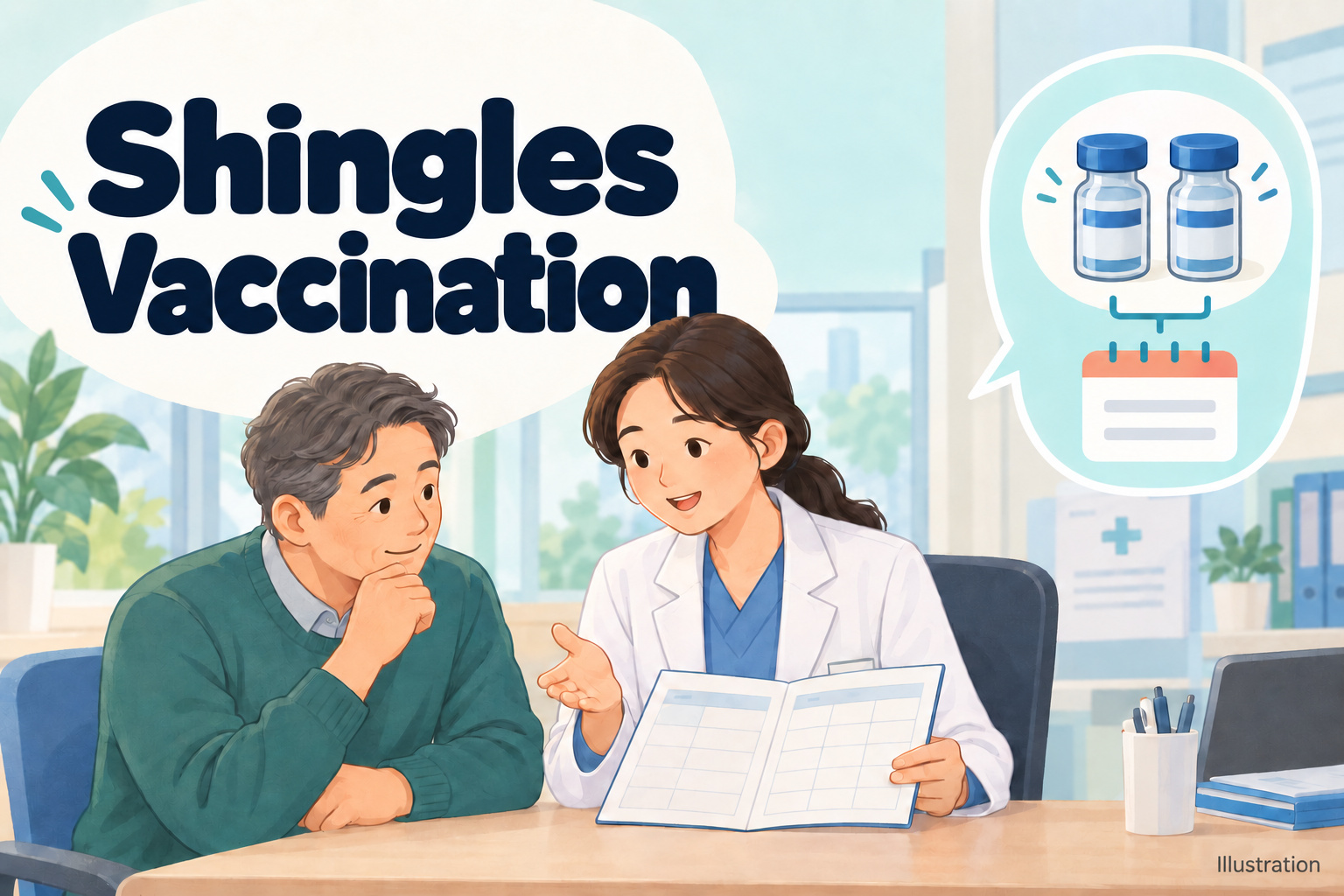
For adults in the United States, Shingrix is the currently available shingles vaccine. It is a recombinant, non-live vaccine given as two doses. The older live vaccine, Zostavax, is no longer available for use in the U.S.; a past Zostavax dose does not replace either Shingrix dose.
This guide uses U.S. recommendations. Vaccine choices and eligibility in other countries differ. It is general information for planning a conversation with a clinician or pharmacist, not an individual vaccination order.
Which shingles vaccines are current and which are historical?
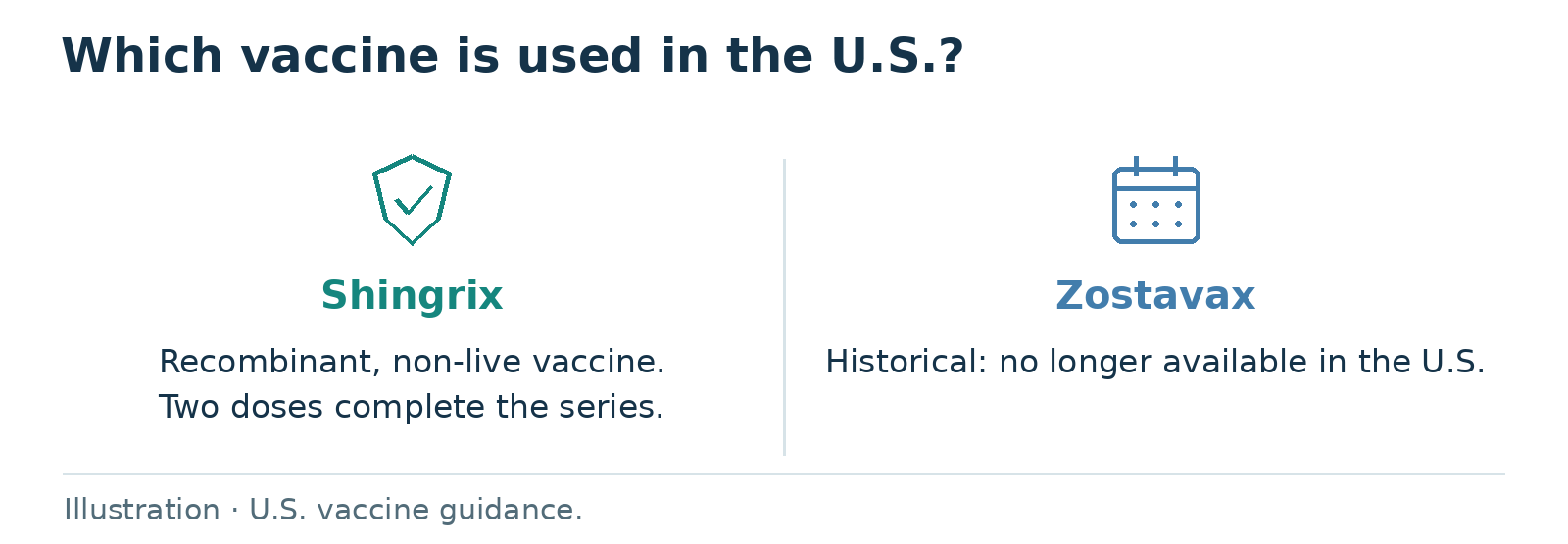
Shingrix is the recombinant zoster vaccine, often shortened to RZV. It uses a viral protein and an adjuvant to help the immune system respond; it does not contain a live varicella-zoster virus. Zostavax was a live vaccine and has not been available in the U.S. since November 18, 2020. (CDC: Shingles Vaccination; FDA: SHINGRIX Prescribing Information, revised February 2026)
Online comparisons can mix countries and publication years. A product offered in South Korea is not automatically an option at a U.S. pharmacy. Check where the article applies before comparing doses or booking a particular brand.
Tap the diagram to view full size
Who does CDC recommend Shingrix for?
| Group | U.S. recommendation |
|---|---|
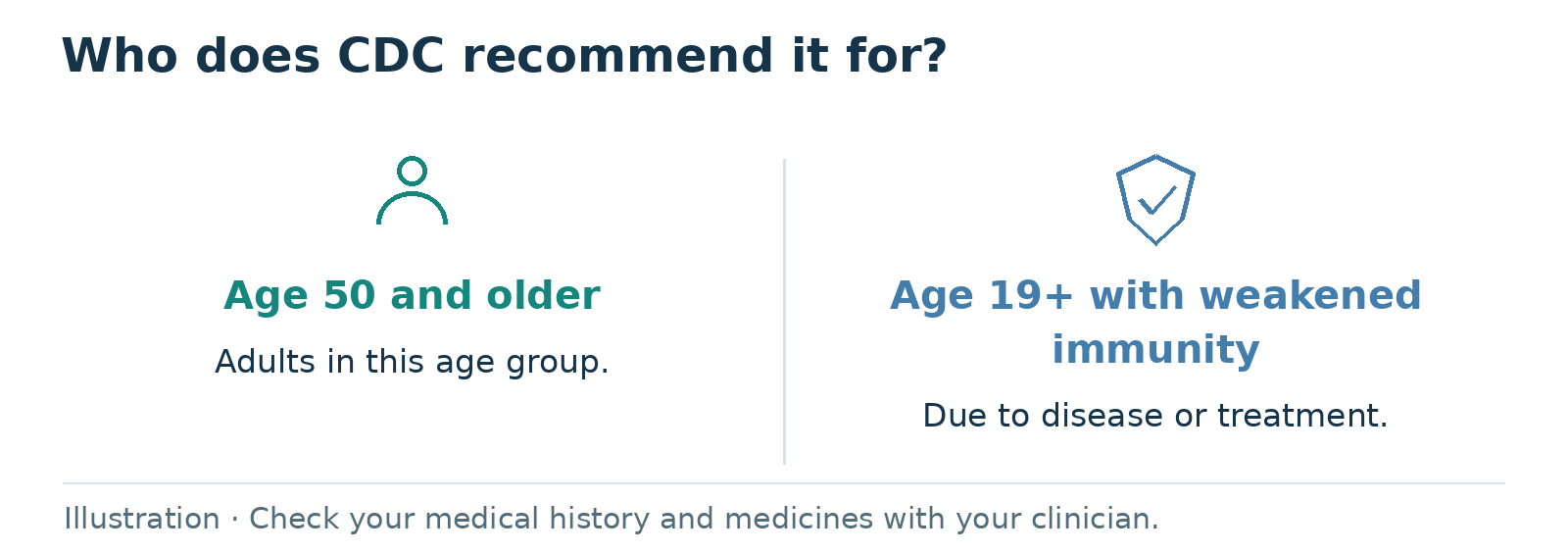
| Adults age 50 and older | Two Shingrix doses, including people with a previous shingles episode or Zostavax vaccination |
| Adults age 19 and older with weakened immunity due to disease or treatment | Two doses; timing depends on the condition and treatment plan |
| Healthy adults under 50 | Not part of the routine CDC recommendation |
The FDA indication for the immunocompromised or immunosuppressed high-risk group starts at age 18, while the CDC/ACIP recommendation starts at age 19. These are different regulatory and recommendation statements. An 18-year-old with a high-risk condition needs individualized advice rather than an assumption based on a search result. (CDC: Shingles Vaccine Recommendations; CDC: Shingrix in Immunocompromised Adults)
Tap the diagram to view full size
How far apart are the two doses?
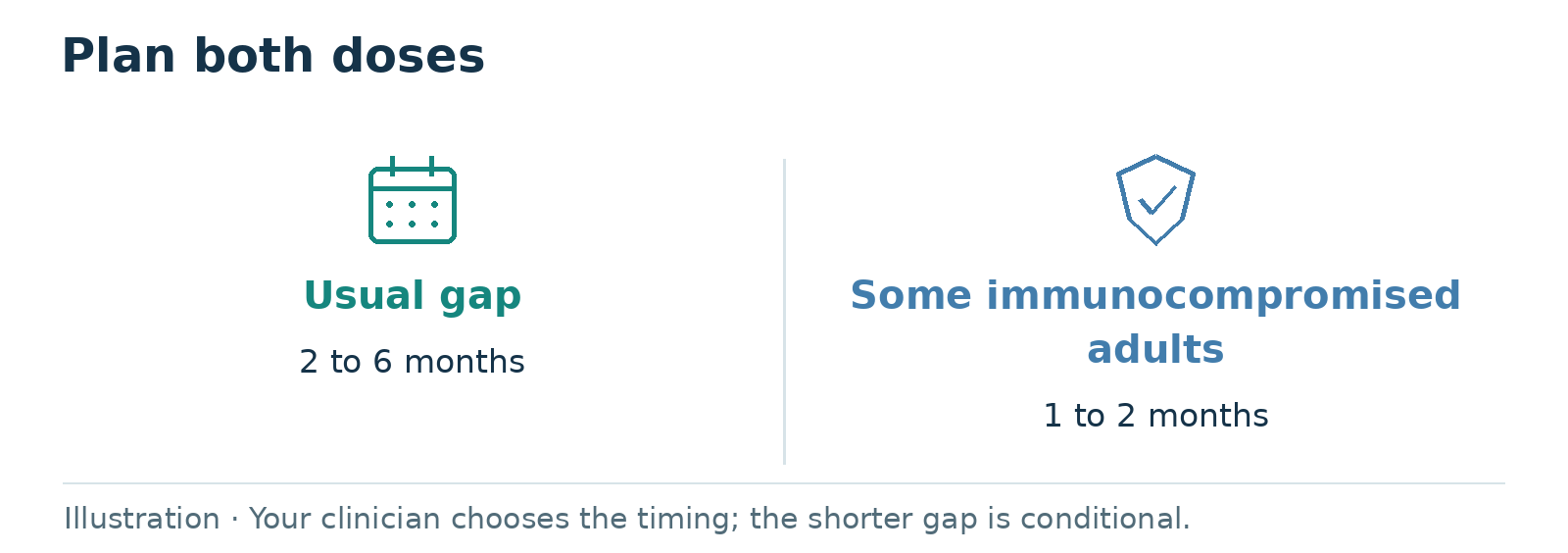
The usual U.S. interval is 2 to 6 months. For some people who are or will be immunocompromised, a clinician may use an interval of 1 to 2 months if finishing sooner would be helpful. This exception is based on medical circumstances, not simply a preference for a shorter schedule. (CDC: Shingles Vaccine Recommendations)
At the first visit, agree on a target date for dose two, find out who will send a reminder, and keep the vaccination record. If you change pharmacies, take the product name and first-dose date with you.
Tap the diagram to view full size
What if you had shingles or an older vaccine?
A previous shingles episode does not remove the recommendation for vaccination, but Shingrix is not given during an acute episode. A previous Zostavax vaccination also does not replace the two-dose Shingrix series. Tell the vaccinating clinician when you had shingles or received the old vaccine so the timing can be checked. (CDC: Shingles Vaccine Recommendations; CDC: Shingrix in Immunocompromised Adults)
If all you remember is “a shingles shot,” ask the original provider for the record. Avoid guessing the product or treating any previous injection as dose one.
What should change the pre-vaccine conversation?
Mention a severe allergic reaction to a previous dose or ingredient, current illness, pregnancy, and immune-suppressing treatment. A sore arm after a previous dose is a different issue from anaphylaxis and should be described accurately. If chemotherapy, transplant care, or another immune-suppressing treatment is planned, coordinate with the team managing that treatment. (CDC: Shingles Vaccination; CDC: Shingrix in Immunocompromised Adults)
Do not stop prescribed medicines to make a vaccine appointment fit. The question is how to place the vaccine within your treatment plan, with the right clinical advice.
A five-question appointment checklist
- Am I in a recommended group under the current U.S. guidance?
- Does my previous vaccination record change when I should start?
- When should I receive dose two, and who will remind me?
- What reactions should I expect, and which symptoms need help?
- Can this location bill my insurance, and what should I confirm before each visit?
Keep the answers in the same place as your vaccination record. For a two-dose vaccine, the useful end point is a documented completed series, rather than simply having attended the first appointment.
Frequently asked questions
Is Shingrix a chickenpox vaccine?
No. It is used to prevent shingles and is not indicated to prevent primary chickenpox. If your chickenpox history or immunity is uncertain, especially with immune suppression, ask your clinician which guidance applies.
Can I choose Zostavax instead in the U.S.?
Zostavax is no longer available for use in the United States. References to it usually concern past vaccination or historical comparisons.
Does missing the second-dose date mean starting again?
CDC says not to restart because more than 6 months have passed. Contact your provider to complete the delayed second dose.
Practical resources for your appointment
Use these to prepare for care, not to delay care when symptoms need attention.
Sources and review date
- CDC: Shingles Vaccination
- CDC: Shingles Vaccine Recommendations
- CDC: Shingrix in Immunocompromised Adults
- FDA: SHINGRIX Prescribing Information, revised February 2026
Sources checked October 5, 2026. This article provides general health information. Discuss individual diagnosis, treatment and vaccination decisions with a qualified healthcare professional.