Weight-Loss Injections vs Insulin: What’s the Difference?
Weight-loss injections such as Wegovy or Zepbound are not insulin. They are different medicines with different treatment goals, mechanisms, and safety considerations. Some people with type 2 diabetes may use a GLP-1–based medicine and insulin at the same time, but one does not simply replace the other.
What insulin does
Insulin is a hormone that helps glucose move from the bloodstream into cells. People with type 1 diabetes need insulin because their bodies do not make enough of it. Some people with type 2 diabetes also need insulin when other treatments are not enough to control blood glucose.
What GLP-1–based weight-management medicines do
Medicines such as semaglutide and tirzepatide work through gut-hormone pathways rather than replacing insulin. NIDDK notes that GLP-1 receptor agonists can help reduce post-meal glucose rises, reduce appetite, and support weight loss in some people with type 2 diabetes, but they are not substitutes for insulin.
Examples of medicines that are often confused with insulin
| Medicine | Drug class | Common treatment role |
|---|---|---|
| Wegovy (semaglutide) | GLP-1 receptor agonist | Chronic weight management and certain other FDA-approved indications |
| Zepbound (tirzepatide) | GIP/GLP-1 receptor agonist | Chronic weight management and certain other FDA-approved indications |
| Insulin | Insulin hormone replacement/supplementation | Blood-glucose control in type 1 diabetes and some people with type 2 diabetes |
The exact approved uses differ by product and country, so brand names should not be treated as interchangeable.
Can someone use a weight-loss injection and insulin together?
Yes, in some cases. A person with type 2 diabetes may be prescribed a GLP-1–based medicine while also using insulin. When these medicines are combined, the risk of low blood glucose can increase, depending on the insulin regimen and other diabetes medicines. Any insulin change should be made by the prescribing clinician rather than by the patient independently.
Why the injection pens can look similar
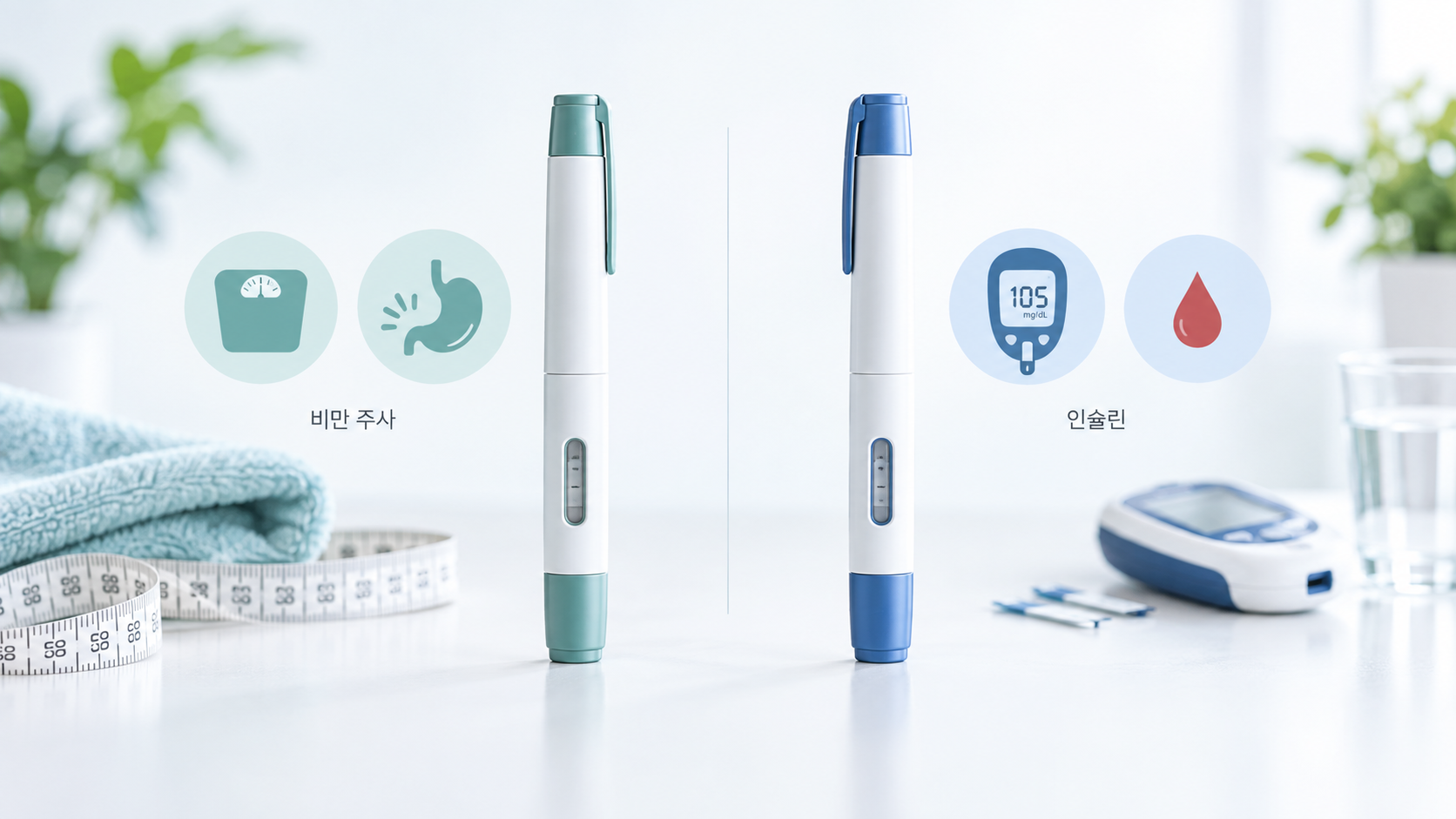
Many diabetes and obesity medicines are delivered with prefilled injection pens. Similar packaging does not mean the medicines contain the same ingredient or have the same purpose. Always check the active ingredient, prescribed dose, device instructions, and label before use.
Questions to ask before treatment
- What is the treatment goal: weight management, blood-glucose control, or both?
- What is the active ingredient in this pen?
- Am I also using insulin or another medicine that can cause low blood glucose?
- Which symptoms should prompt me to contact my clinician?
- How should I store and use this specific device?
When to seek medical help
Seek prompt medical assessment for severe or persistent abdominal pain, repeated vomiting or inability to keep fluids down. Breathing difficulty, swelling of the face or throat, seizures or loss of consciousness require emergency help. If you also use insulin, ask your clinician how to recognize and respond to low blood glucose.
Bottom line
Insulin and GLP-1–based weight-management injections are different treatments. They can sometimes be prescribed together, but they should not be swapped, combined, or dose-adjusted without a clinician.
Sources
- NIDDK — Insulin, Medicines, & Other Diabetes Treatments
- FDA — Wegovy Prescribing Information
- FDA — Zepbound approval for chronic weight management
Reviewed September 19, 2026. General educational information; it does not replace individualized diagnosis, prescribing, or medication adjustment.