Drink Calories: How to Compare Coffee, Juice and Alcohol
To reduce calories from drinks, check the size you actually drink before changing the ingredients. A larger sweetened coffee, repeated juice refills or a generous pour of alcohol can be easy to leave out of a food record. Calories, sugars and alcohol content answer different questions.
This guide is for adults making everyday drink choices. It does not prescribe a daily calorie allowance or promise a certain weight change. Drinks used for a medical nutrition plan or to treat low blood glucose need separate consideration.
Start with the label basis and your actual pour
Check whether the number describes 100 mL, one serving or the whole container. Include refills and extra pours. On US labels, serving size reflects the amount people typically consume; it is not a recommendation for how much you personally should drink. Elsewhere, use the stated local label basis.
Consider a fictional drink with 40 kcal per 100 mL. A 250 mL glass contains 100 kcal, and 500 mL contains 200 kcal. Multiply the per-100 mL figure by the volume you drink, then divide by 100. If a label already gives 200 kcal for the whole bottle, do not multiply that total by the bottle volume again.
Check the basis before multiplying
Fictional label
40 kcal per 100 mL
250 mL consumed
40 × 250 ÷ 100 = 100 kcal
500 mL consumed
40 × 500 ÷ 100 = 200 kcal
At a coffee shop, nutrition information may describe a standard recipe and a particular cup size. Check whether milk, syrup, whipped cream and toppings are included. Extra ice does not remove calories from the syrup or milk already added; recipe and serving changes matter.
Separate total sugars from added sugars and calories
On the US Nutrition Facts label, Total Sugars includes naturally occurring and added sugars. The Added Sugars line identifies the added part. These are not two values to add together. Milk contains naturally occurring lactose, and juice may contain sugars even when none were added. Label terms and requirements differ by country.
No added sugar does not mean no sugar or no calories. A sugar-free drink may still contain energy from other ingredients or alcohol. Compare calories and sugars separately, using the same volume, then consider how much you are likely to drink.
| Drink | What to check | An adjustment to consider |
|---|---|---|
| Sweetened coffee | Cup size, syrup and toppings | Choose a smaller size or less syrup |
| 100% juice | Label basis and the amount poured | Use a smaller glass; choose water for thirst |
| Diet or zero-sugar drink | Calories, sweeteners and caffeine | Include unsweetened options in your routine |
| Alcohol | Pour size, strength and mixers | Choose not to drink or reduce the amount |
A lower calorie number is not a complete nutrition score. Milk and drinks included in a nutrition care plan can also supply protein and other nutrients. Reducing habitual sweet drinks does not require removing every drink with nutritional value.
Adjust the coffee you order most often
Try one change you can repeat: a smaller size, less syrup or no whipped cream. Ask what is in the standard recipe rather than counting only sugar you add yourself. If you enjoy a latte, consider the sweet additions and the portion before assuming you need to remove the milk.
A pump of syrup is not a universal calorie unit. Different recipes, products and dispensers vary. When customized nutrition information is unavailable, record the change without assigning it an exact calorie saving.
FDA notes that sensitivity to caffeine varies. Do not increase coffee or energy drinks simply because they are low in calories. Sleep problems or palpitations are reasons to review the amount and timing and seek advice as needed. Decaf still contains some caffeine. Pregnancy, breastfeeding, medicines and medical conditions may call for individualized guidance.
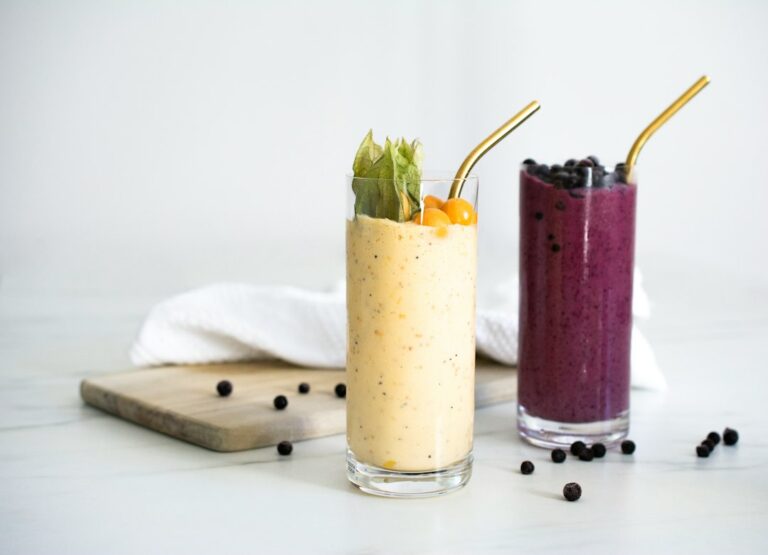
Treat juice and smoothies as drinks with ingredients
100% juice can contain calories and sugars without added sugar. WHO includes sugars in fruit juice and juice concentrates in its definition of free sugars, alongside sugars in honey and syrups. Whole fruit and juice are therefore not interchangeable for this guidance.
For thirst, consider water or unsweetened tea. If you want fruit, whole fruit is an option; if you choose juice, pour it into a smaller glass so you can see the amount. Smoothies differ: blended whole fruit can retain fibre, while added juice, honey, syrup or ice cream changes the recipe. Check what is actually in yours.
CDC explains that replacing sugary drinks with water can help reduce calorie intake. This describes a substitution, not a fat-burning effect of water. Your overall eating pattern, activity and health also matter.
Keep diet drinks in perspective
Replacing a sugar-sweetened drink with a lower-calorie alternative can reduce the calories from that drink. That arithmetic does not establish a lasting weight-loss effect or provide a reason to add extra food elsewhere.
WHO conditionally recommends against using non-sugar sweeteners for long-term weight control. Its recommendation excludes people with pre-existing diabetes. This exclusion does not establish weight-loss benefits or safety for people with diabetes. Uncertainty includes possible confounding in observational evidence; do not turn associations into claims that a particular sweetener causes disease.
The guideline is not a toxicological assessment of individual sweeteners and does not replace their established acceptable intake limits. An everyday approach is to make unsweetened options easier to choose, while checking calories, ingredients and caffeine separately.
Read beyond a zero-sugar claim
Nutrition
Check calories as well as sugars
Ingredients
Look for sweeteners and caffeine
Amount
Use the volume you actually drink
Alcohol has calories even without sugar
NHS guidance notes that alcohol supplies about 7 kcal per gram. A low-sugar spirit still contains energy from alcohol. Compare actual pour size, alcohol strength and the total amount consumed rather than assuming that every “glass” is equivalent. Include mixers and food eaten alongside drinks.
Do not skip meals to save calories for alcohol. Choosing not to drink, or reducing the amount or frequency, is more useful than treating a low-sugar alcoholic product as a weight-loss drink. Water alongside alcohol does not cancel the calories or health risks.
WHO describes health risks from alcohol even at low levels. If you do not drink, there is no reason to start for health or weight control. Avoid alcohol during pregnancy and before driving. Ask a clinician or pharmacist about alcohol with your medicines.
If you drink heavily every day or develop shaking, sweating or anxiety when you cut down, seek medical support before stopping abruptly. Alcohol withdrawal can be dangerous when a person is dependent. Severe confusion, hallucinations or seizures require emergency help.
Choose one repeatable change
For a few days, note the drink, size, additions and situation. “Large afternoon latte, standard syrup, no extra cream” can be useful without an exact calorie figure. Choose one recurring drink and try a smaller serving or less sweetness, then see whether the change fits your routine.
A useful drink record
Usual choice
Name, size and ingredients
One adjustment
Smaller size or less sweetness
What to keep
A choice that works in daily life
The Life Choice Note nutrition comparison tool uses values per 100 g and a portion weight in grams. Do not enter per-100 mL drink data into a per-100 g field without a valid conversion. For volume-based labels, use the calculation above; use the tool when you have suitable weight-based source data. It does not look up coffee-shop recipes.
Return to your usual meals rather than compensating for a drink by fasting. Sugary drinks used to treat hypoglycemia are a separate medical use: follow the treatment plan you have been taught. A sugar-free diet drink cannot supply the glucose needed for treatment. Discuss eating changes if you use insulin or another medicine that can cause low blood glucose.
Individual advice takes priority with a fluid restriction, pregnancy or breastfeeding, childhood or adolescence, underweight, or an eating-disorder history or risk. Do not remove prescribed nutrition drinks or set the same water target for everyone.
Common questions
Can I drink unlimited juice if it has no added sugar?
No added sugar does not mean no sugars or calories. Check the amount you pour and consider water or another unsweetened option for thirst.
Does zero-sugar alcohol have zero calories?
No. Alcohol itself supplies energy. Read alcohol strength, volume and total calories separately; low sugar does not make alcohol risk-free.
How many calories does removing syrup save?
It depends on the syrup, the quantity dispensed and the recipe. Without information for that order, avoid assigning an exact saving to one pump.
How much weight will I lose by cutting 100 drink calories a day?
You cannot convert that drink difference into a guaranteed monthly weight change. Other food intake, activity and changes in energy needs also affect the result. The worked example teaches label arithmetic, not a weight-loss forecast.
Sources and scope
This guide uses public-health guidance and WHO guidelines for everyday adult drink choices. FDA label terminology refers to US products; label rules vary by country. The arithmetic and ordering examples are illustrations, not weight-loss trial results.
- CDC Water and healthier drinks
- FDA Serving size on the Nutrition Facts label
- FDA Total and added sugars
- WHO Healthy diet and free sugars
- FDA Caffeine and individual sensitivity
- WHO Recommendation on non-sugar sweeteners
- WHO Guideline on non-sugar sweeteners
- NHS Calories in alcohol
- WHO Alcohol and health risks
- NHS Alcohol-use disorder and withdrawal
- NIDDK Low blood glucose and hypoglycemia
Sources checked 4 October 2026. General health information, not individual diagnosis, treatment or nutrition advice.