Protein for Weight Loss: How Much and Which Foods?
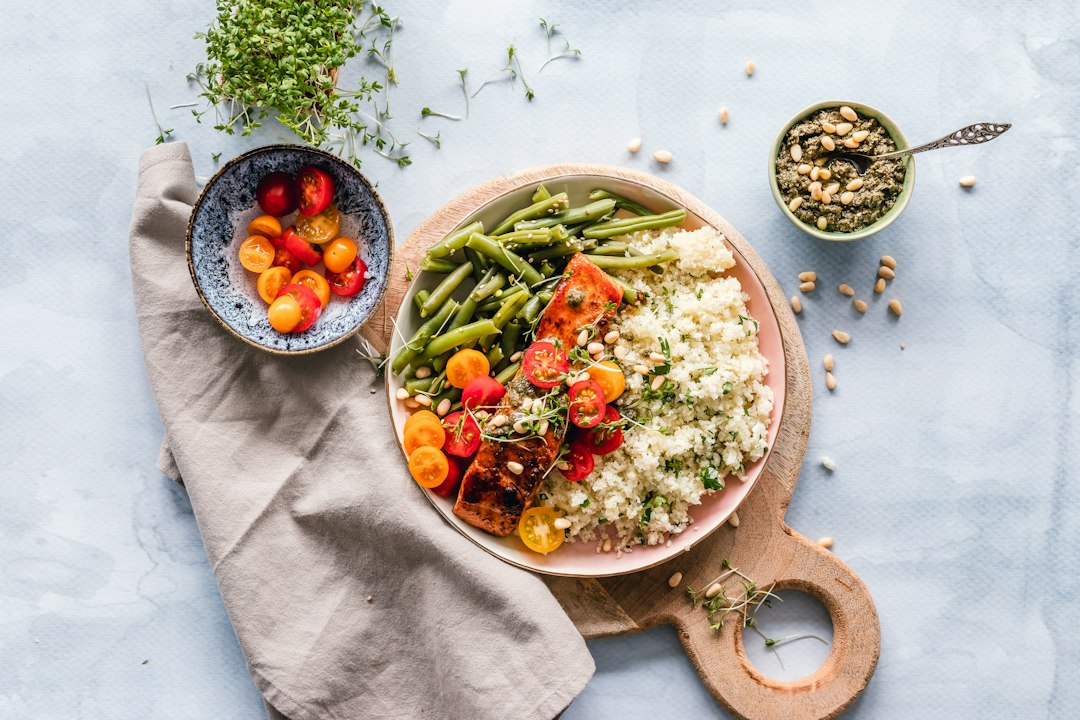
Start with the protein already in your meals before choosing a target or buying a shake. A population nutrition reference and a range discussed in weight-loss research answer different questions. Food weight and protein weight are different, too. Understanding those distinctions makes labels and meal planning more useful.
Separate a nutrition reference from a weight-loss plan
For context, the 2025 Dietary Reference Intakes for Koreans give recommended protein intakes of 65g/day for men and 55g/day for women aged 30–49. These are Korean population nutrition references for the stated groups, not universal weight-loss targets or values for every age.[1]
| Source and group | Amount | Meaning |
|---|---|---|
| 2025 Korean DRIs: men 30–49 | 65g/day | Recommended nutrient intake |
| 2025 Korean DRIs: women 30–49 | 55g/day | Recommended nutrient intake |
| Leidy et al., 2015 review | 1.2–1.6g/kg/day | Range discussed in weight-management research |
The Leidy review described benefits in shorter, controlled studies, alongside limited and conflicting longer-term findings. Its range is not a prescription for everyone.[2] Label any number you save as a population reference, a study intervention or a personal clinical recommendation. Finding a larger number does not automatically mean you need to add more protein.
Check the population and purpose before interpreting a number.
2025 Korean Dietary Reference Intakes
Adults aged 30–49: men 65 g/day · women 55 g/day
Recommended intake for healthy adults.
Range discussed in a weight-loss review
1.2–1.6 g per kg of body weight per day
A research range, not a target for everyone.
Use the reference in context and adapt plans to individual health needs.
Sources: Korean DRI (2025); Leidy et al., AJCN (2015) · General information, not an individual prescription.
What does grams per kilogram mean?
As arithmetic only, 60kg × 1.2 equals 72g/day, and 60kg × 1.6 equals 96g/day. This explains the notation; it does not tell every person weighing 60kg to eat 72–96g.
This article also does not assign a universal rule for using actual, ideal or adjusted body weight. That choice requires appropriate assessment. Multiplying the largest available weight by the highest factor can produce a precise-looking answer without establishing a suitable target.
Keep another distinction in mind: 150g of a food is not 150g of protein. One is the weight of the whole food; the other is the amount of a nutrient within it.
Read the label’s basis before doing the calculation
Korean food-label guidance advises comparing the stated reference amount with what you actually eat.[3] For a U.S. Nutrition Facts label, check the serving size and servings per container. FDA explains that a serving size is not a recommendation of how much you should eat.[4]
Imagine a fictional product with 20g of protein per 100g of food. This is not a composition claim about a particular food or brand.
| Food eaten | Calculation | Protein eaten |
|---|---|---|
| 50g | 20 × 50 ÷ 100 | 10g |
| 100g | 20 × 100 ÷ 100 | 20g |
| 150g | 20 × 150 ÷ 100 | 30g |
The formula is listed protein × amount eaten ÷ label’s reference amount. If a label instead reports protein for an entire package, identify that package’s reference amount before calculating a partial portion.
When using a food database, match the food and preparation state. A raw weight paired with a cooked-food entry is not a like-for-like calculation. Save the label or source beside your entry so you know where the number came from.
Fictional label values, not the actual composition of a particular food.
Fictional label
20 g protein per 100 g of food
Food eaten
150 g
Protein eaten
20 × 150 ÷ 100 = 30 g
First check whether the label is per 100 g, per serving or per package.
Life Choice Note editorial example; fictional nutrition label · General information, not an individual prescription.
Build options into ordinary meals
Eggs, tofu, beans, fish, lean meat, milk and yogurt are possible protein foods. The amount varies by product, preparation and portion, so these ideas do not promise a fixed protein total:
- Breakfast: check whether eggs, tofu, milk or yogurt fit your usual meal and preferences.
- Lunch: identify the fish, beans or meat in the meal and record the amount you actually eat.
- Dinner: choose another practical option rather than assuming one food must appear at every meal.
Consider allergies, tolerance, budget and how you prefer to eat. If you avoid animal foods, plan varied plant-based choices you can actually prepare. Start by counting what is already present: a lunch containing fish does not automatically need a protein snack added afterward.
Look at the whole meal, including cooking oil, sauces, drinks, calories and fibre-containing foods. Vegetables, whole grains and beans still have a place in meal planning. Do not let one protein number turn a varied diet into a short list of products.
These are alternatives, not foods you must eat all together.
Breakfast
Choose from eggs, tofu or plain yogurt.
Lunch
Choose from fish, lean meat or beans.
Dinner
Choose from tofu, beans or fish.
Include grains and vegetables too. Portions are individual.
A protein shake is not essential.
Life Choice Note editorial examples; not product endorsements · General information, not an individual prescription.
Do you need a protein shake?
If ordinary meals meet your appropriate protein needs, adding a shake is not essential. If convenience makes a supplement worth considering, first identify the gap it would fill. Is it replacing something or adding to an already adequate meal?
Compare the actual portion, calories, sugars, allergen ingredients and cost as well as protein. Count the milk or other ingredients mixed into it. A product’s headline number does not assess the adequacy of your day.
If you are comparing supplement products, see how to compare protein-powder ingredients, price and quality evidence. It is a product-comparison guide, not a personal protein prescription or treatment-fit test.
Protein also does not guarantee that muscle will be preserved. A 2024 meta-analysis found better muscle-mass retention with increased protein during weight loss, but no significant benefit for muscle strength or physical function.[6] Consider your overall diet and an appropriate resistance-exercise plan, rather than treating protein as the whole strategy.
When individual guidance takes priority
With chronic kidney disease, neither automatically increasing nor sharply restricting protein is appropriate for everyone. NIDDK notes that too little can contribute to malnutrition, while dialysis can change protein needs. Work with your care team on the amount and sources. If kidney disease is part of the picture, also review what to check before a high-protein weight-loss diet.[5]
Pregnancy, breastfeeding, growth and treatment-related nutrition needs require separate guidance. Do not apply the adult age-group examples or research range above as a personal prescription.
Frequently asked questions
Is 25–30g a fixed absorption limit per meal?
No such limit follows from a study discussing meal amounts. Do not turn a research quantity into a universal digestive ceiling or compulsory meal target.
Does enough protein guarantee no muscle loss?
No. Meeting a number does not establish your individual muscle response. Food intake, activity and health need to be considered together.
What should I check in today’s meals?
Record the food and portion, identify the label’s reference amount and calculate the protein actually eaten. Compare that total with an appropriate personal plan.
Compare foods on the same basis
The food nutrition comparison tool uses per-100g values you enter manually and scales them to your portion. It does not automatically retrieve nutrition data or determine personal protein targets. Verify the source, product and preparation state; a blank means missing information, not zero.
Sources
Checked October 1, 2026. General information, not individualized nutrition treatment. The 60kg and fictional-label calculations explain notation only.
- Ministry of Health and Welfare and Korean Nutrition Society: 2025 Dietary Reference Intakes for Koreans (Korean); summary PDF hosted by Seoul Medical Center.
- Leidy et al. The role of protein in weight loss and maintenance. 2015.
- MFDS Food Safety Korea: Using nutrition labels (Korean).
- FDA: Serving Size on the Nutrition Facts Label.
- NIDDK: Healthy Eating for Adults with Chronic Kidney Disease.
- Kokura et al. Enhanced protein intake on maintaining muscle mass, strength, and physical function in adults with overweight/obesity. 2024.