Supplements That Can Interfere With Lab Tests: Biotin and Beyond
A supplement can change a blood-test result in two different ways: it can change something in your body, or it can disrupt the method used to measure it. Biotin is an important example of the second problem. Before a planned test, an accurate supplement timeline helps the ordering clinician and laboratory decide how to obtain and interpret a useful result.
Make a timeline the lab can use
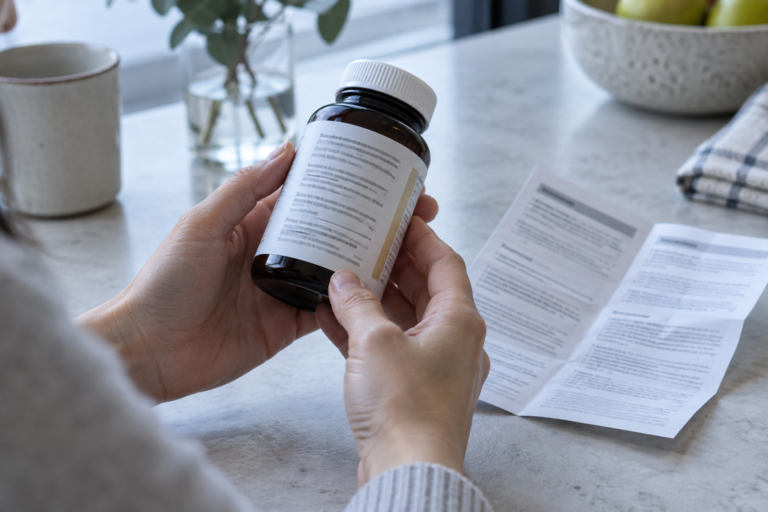
“I take a vitamin” is a starting point, but the label and timing are more useful. Bring the bottle or clear label photos and record:
- The full product name and ingredient list, including hair, skin and nail products, multivitamins and B-complex supplements.
- The amount of each ingredient per serving and the servings you actually take.
- How often you take it, when you started, and the date and time of your last dose.
- Any recent increase, decrease or pause, and whether a clinician prescribed it.
Tell both the ordering clinician and the testing team before collection. MedlinePlus recommends disclosing medicines, vitamins and supplements. Also mention kidney disease, because it can affect how quickly biotin is cleared. If you already had the test, provide the same information rather than trying to correct the result yourself.
Read the units before judging the amount
U.S. Supplement Facts labels give serving size and ingredient amounts per serving. Milligrams and micrograms are different units: 1 mg = 1,000 mcg. Check the units and actual servings when combining products; biotin can appear in more than one bottle.
NIH ODS lists the usual adult biotin intake reference in micrograms. Milligram-level amounts in some hair or nail supplements can greatly exceed ordinary nutritional needs. Most people obtain enough biotin from food, and evidence supporting hair, skin and nail improvement is limited. This is a reason to review the purpose of a high-dose product, not to remove ordinary biotin-containing foods from your diet.
What biotin can do to a test
Some laboratory methods use biotin as part of their measuring system. Extra biotin in the sample can distort that system, producing a result that is falsely high or falsely low. The direction depends on the particular test and its design. This does not mean every laboratory test, or every version of the same test, is affected.
NIH ODS describes misleading thyroid-test results, including patterns that can suggest an overactive thyroid when interference is responsible. An unexpected thyroid result deserves clinical review; do not diagnose yourself or change thyroid medicine from that number alone. The lab can check whether its method is vulnerable and help the clinician decide what confirmation is needed.
The FDA warns about falsely low troponin results in certain assays. Troponin helps clinicians evaluate possible heart injury. A falsely low result can be dangerously reassuring. Some manufacturers have reduced interference in their tests; that does not establish that every assay has the same protection.
Emergency care comes first
If you have possible heart-attack symptoms, such as chest pressure or discomfort, shortness of breath or discomfort spreading to the arm or jaw, call 911. The American Heart Association advises acting even if you are unsure. Do not wait at home for biotin to clear or delay urgent testing to complete a supplement pause.
Tell the emergency team which products you take, the amounts and your last dose. That information helps them select and interpret testing. A supplement history belongs alongside the symptoms and examination; it does not replace emergency assessment.
“Beyond” biotin: some changes are real
| Type of change | Example | Question for the clinician |
|---|---|---|
| Analytical interference | Biotin distorts a susceptible assay’s signal. | Could this method be affected? |
| Biological change | Vitamin D intake changes blood vitamin D status. | Does the result reflect treatment and actual intake? |
NIH ODS explains that blood 25-hydroxyvitamin D reflects vitamin D obtained from food and supplements, as well as production in the body. A rise during supplementation can therefore be a genuine biological response. The amount of change varies; it is not a guaranteed improvement in every health outcome.
This distinction prevents two mistakes: dismissing every changed value as interference, or assuming every value accurately represents physiology. The clinician still needs the actual test method, treatment history and clinical context. These examples do not imply that vitamin D tests are universally immune to analytical problems.
Ask for a test-specific plan
The 2020 AACC laboratory guidance explains that interference varies by test and manufacturer. Dose, time since the last dose and kidney function also matter. A single internet rule about stopping biotin for a fixed number of hours or days cannot cover every situation.
For a planned test, ask whether your product needs to be held, for how long, and when it should be resumed. If biotin was prescribed for a medical condition, coordinate any change with the prescriber. Follow your test’s fasting instructions separately; fasting is not an automatic substitute for managing interference.
If results conflict with symptoms or previous findings, ask the clinician to discuss possible interference with the laboratory. Depending on the situation, they may consider an alternative method or a repeat sample under a specific plan. Do not arrange your own washout experiment or change prescribed treatment to make a result look more plausible.
Frequently asked questions
Does biotin affect every blood test?
No. Susceptibility depends on the assay and platform. Tell the laboratory what you take so it can check.
Can I use the same stopping interval for every test?
No. Get instructions based on the dose, timing, kidney function and actual test; coordinate prescribed biotin with its prescriber.
Should I delay urgent care because I took biotin?
No. Seek urgent care when needed and disclose the product, amount and last dose to the emergency team.
Related reading
- Hair, skin and nails supplements: why the lab team needs the label
- Read the Supplement Facts label without misreading the dose
- Check ingredient overlap across several supplements
- What to check before a blood test or procedure
General information for adults, checked September 30, 2026. This article does not replace medical assessment or provide a personal prescription.
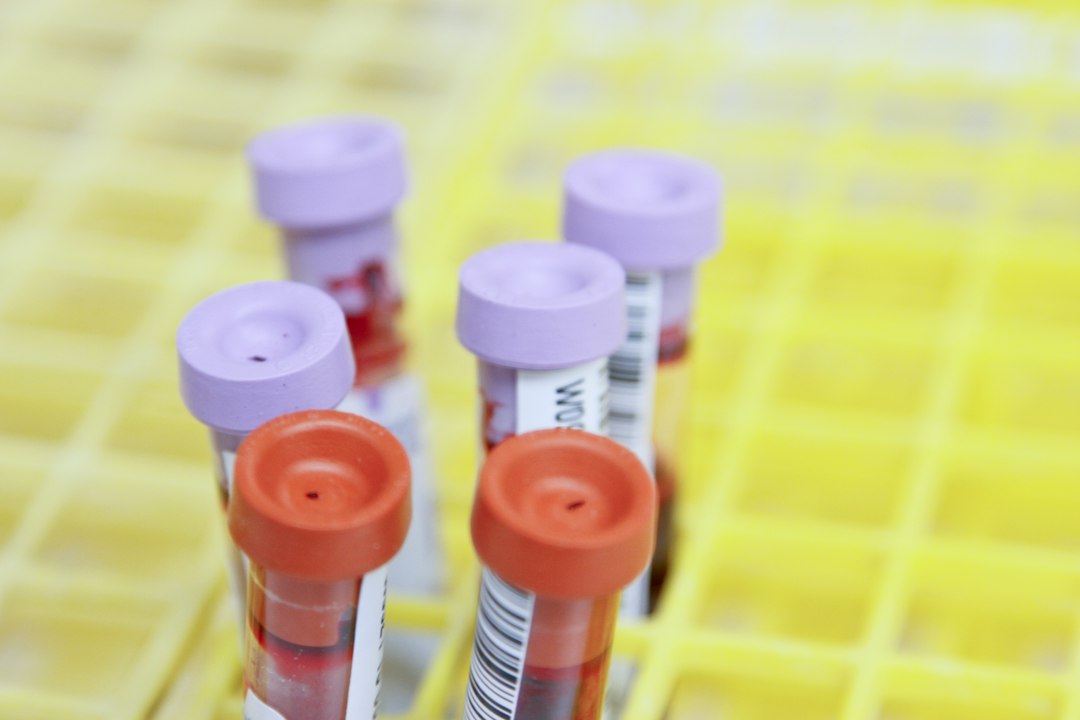
Illustrative stock photo of blood sample tubes. Photo: National Cancer Institute / Unsplash.