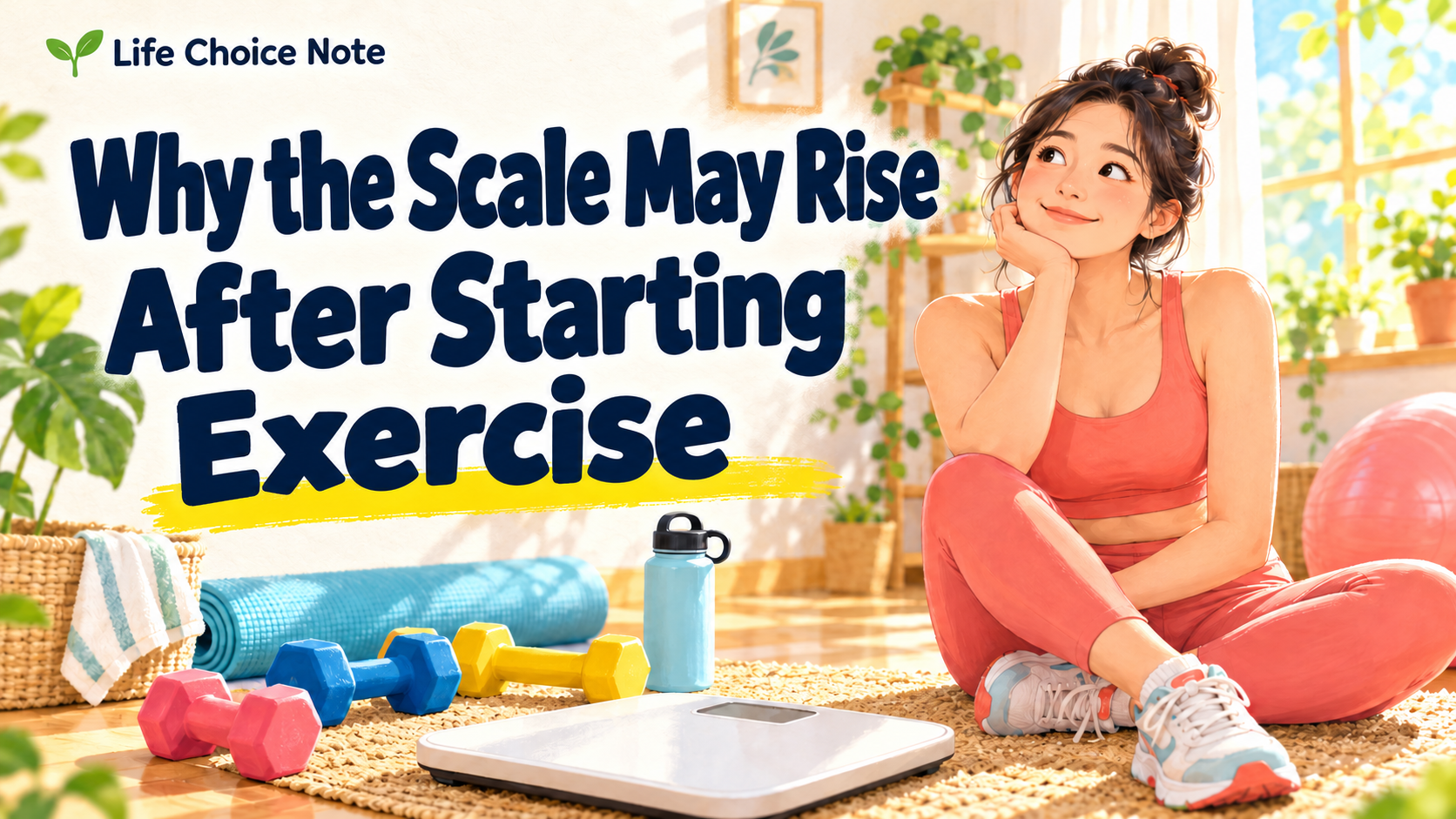
Why the Scale May Rise After Starting Exercise
A higher reading the morning after a new workout can feel discouraging. Yet a scale cannot tell you whether that change came from fat, muscle, fluid or something else.
Start with measurement conditions and how you feel, then compare records taken under similar conditions. A single reading is not a reason to sharply restrict food or double your training load.
Do not directly compare pre- and post-workout readings
Match conditions before comparing
Scale
Use the same device
Timing
Separate post-workout checks
Context
Activity, meals and drinks
Sweat losses, subsequent drinks and meals all change what a scale measures. A gym reading after an evening session and a reading at home the next morning are not a controlled before-and-after comparison.
For comparison, use the same scale at a similar time. Note whether it was a training day and whether meals or drinks differed from usual. NHS England recommends consistent weighing conditions. NHS England How to Record Your Weight
Water and stored carbohydrate contribute to body weight
Carbohydrate is stored as glycogen, and changes in those stores are accompanied by changes in water. When exercise and eating patterns change, these can contribute to scale movement. NIDDK’s body-weight model accounts for glycogen and water separately. NIDDK Body-weight model: glycogen and water
That does not establish that all extra weight after exercise is water. A fixed allowance such as “two kilograms of swelling” or a guaranteed date for its disappearance cannot be assigned to an individual. A day or two of change also cannot be labelled entirely as fat gain.
Separate soreness from muscle-mass estimates
Mild discomfort can follow unfamiliar activity, but the amount of soreness is not a score for training success. NIDDK advises building activity gradually and reviewing its type and amount when it causes pain. NIDDK Staying Active at Any Size
If a home device suddenly reports more muscle, do not assume that amount of new muscle has been built. Body composition is estimated, and mixing readings taken under different conditions, such as immediately after exercise, makes interpretation harder. Weight and estimated muscle moving together do not establish a cause.
Record the changes around the workout
Three notes beside the weight
What you did
Activity type and duration
How you felt
Discomfort and recovery
What changed
Meals and drinks
A useful note might read: “Tuesday: longer lower-body session than usual; stairs uncomfortable the next day; added a large drink afterward.” This is context for a discussion, not a diagnostic checklist.
Notice whether hunger, snacks or drinks changed with the new routine. Do not treat a device’s calorie estimate as an exact food allowance. Plan ordinary meals and recovery instead. If detailed tracking is burdensome, start with just activity duration and how you felt.
Look beyond the scale for reasons to continue
Consider whether the same walk feels easier, daily movements are more comfortable and the routine is realistic for next week. Physical activity can benefit health even without weight loss. NIDDK Staying Active at Any Size
If weight keeps increasing or the plan is hard to maintain, bring your activity and eating notes to a consultation. Observation is not a reason to delay needed care. Existing advice for a medical condition, pregnancy, injury or medically required weight monitoring takes priority.
Do not dismiss warning symptoms as adaptation
Symptoms take priority over the number
Severe pain
Worse than expected
Dark urine
Tea or cola coloured
Severe weakness
Stop and seek care
Stop exercise and seek immediate medical assessment for muscle pain far worse than expected, tea- or cola-coloured urine, or severe weakness. CDC lists these as warning symptoms of rhabdomyolysis; symptoms alone cannot diagnose it. CDC Signs and Symptoms of Rhabdomyolysis
Chest pain or severe breathlessness calls for emergency help. Persistent or substantial swelling also deserves assessment rather than reassurance that it is just an exercise effect. Recording symptoms and their onset matters more than repeatedly checking the scale.
Common questions
Will stopping exercise immediately lower my weight?
That cannot be predicted. Without warning symptoms, review conditions, recovery and the wider routine rather than stopping solely because of one number. Pain or a health condition may call for advice on modifying activity.
Is exercise pointless if my weight increases?
No. A scale does not display every benefit of activity. Consider wellbeing and daily function, and seek advice about persistent changes when needed.
Related tools and reading
Life Choice Note weight and waist log
Use this log to organise weight records, with separate notes on dates, measurement conditions and the context discussed above. A record does not diagnose a condition or determine fat change.
Sources and scope
General health information based on official guidance and the cited original sources. Scenarios and diagrams explain concepts; they do not predict individual outcomes. Country-specific rules and product conditions must be kept distinct.
- NIDDK Staying Active at Any Size
- NIDDK Body-weight model: glycogen and water
- CDC Signs and Symptoms of Rhabdomyolysis
- NHS England How to Record Your Weight
Sources checked 5 October 2026 (Korea time). This does not replace individual diagnosis, treatment, nutrition or exercise advice. A separate medical professional review has not been completed.