Before Starting Weight-Loss Injections: 5 Questions for Your Clinician | Video Guide
Before starting a prescribed GLP-1–based injection for obesity, prepare five conversations: your health goals, medical history and medicines, progress reviews, warning symptoms, and a sustainable plan for care.
This guide concerns adults receiving prescribed obesity treatment. Another person’s results cannot establish whether a medicine suits you. Bring recent weight trends, health results and a medicine list to your appointment.
Watch the video · 5:05
English audio is available. In the YouTube player, select Settings → Audio track → English. On-screen labels remain in Korean; an English summary is below.
1. Match treatment to your health needs
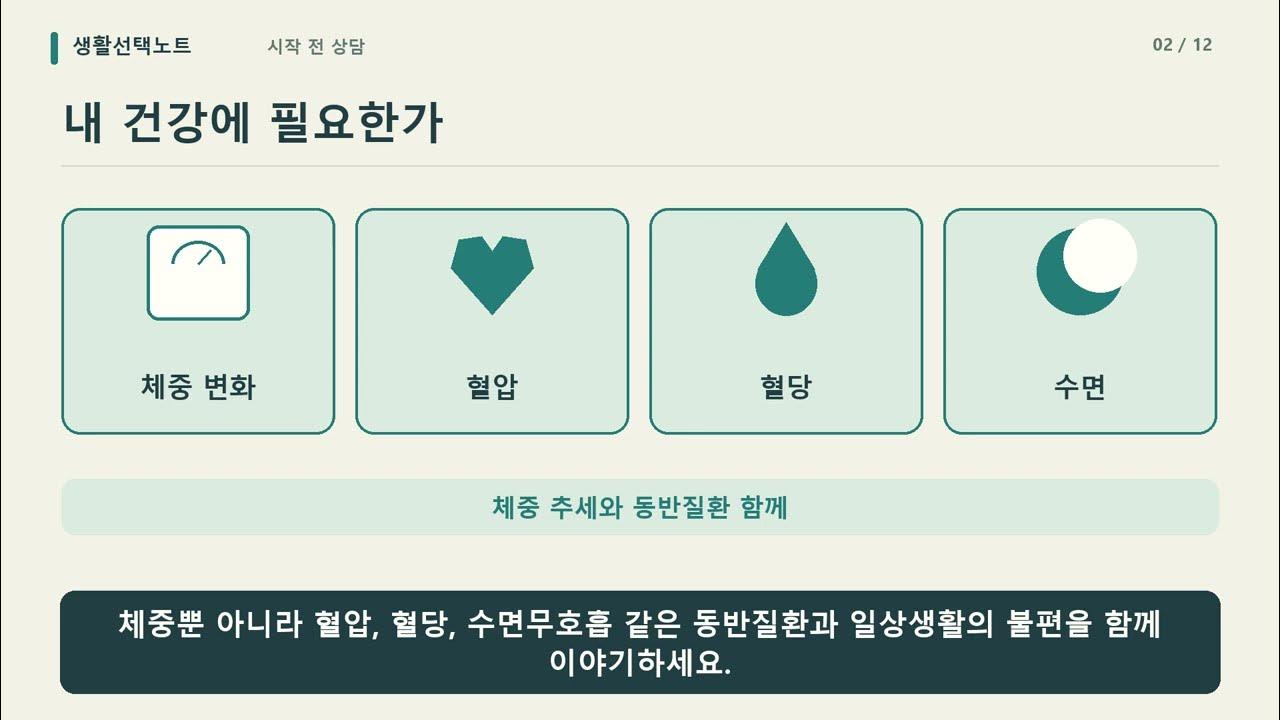
Discuss problems you hope to improve, including blood pressure, diabetes, sleep apnea or everyday difficulties. Explain earlier eating and activity plans and medicines you have tried.
Obesity definitions, clinical guidelines, product indications and insurance rules are separate. BMI is only part of the assessment. Check the intended product’s indication where you receive care, alongside your individual benefits and risks.
2. Bring a complete history and medicine list
Include prescriptions, nonprescription medicines, supplements, other injections and oral contraceptives. Packages or photos can help. Mention pancreatitis, gallbladder disease, severe gastrointestinal problems, kidney problems, diabetes-related eye complications and diabetes treatments.
Share exact thyroid diagnoses, including medullary thyroid cancer, and relevant family history. Discuss pregnancy, breastfeeding or pregnancy plans. These details do not all represent the same contraindication; decisions depend on the product. Tell the procedural team about your medicines before surgery or sedation, without choosing a stopping interval yourself.
3. Agree on how progress will be reviewed
Ask when weight trends and health measures will be assessed and whom to contact with concerns. Study averages do not guarantee your result, and a few early weigh-ins do not establish success or failure. Do not increase the dose or combine medicines yourself.
4. Have a clear symptom plan
Nausea, vomiting, diarrhea or constipation can occur. Greater discomfort does not mean better results. Record symptoms, food and fluid intake, and your last injection if eating or daily activities become difficult.
- Severe, persistent abdominal pain: do not take another dose and contact your healthcare provider immediately for medical assessment.
- Repeated vomiting that prevents you from keeping fluids down: seek prompt, same-day care.
- Breathing difficulty or swelling of the face or tongue: seek emergency help for possible severe allergy.
If you use insulin or certain other diabetes medicines, arrange a low-blood-sugar plan. This list is not exhaustive; follow your product information and clinician’s contact instructions.
5. Plan for continuing, stopping and restarting
Obesity needs long-term management. Weight can return after stopping medication, with different experiences between individuals. Regain does not establish weak willpower. Discuss medication, appointment and necessary testing costs, follow-up visits and alternatives if treatment must stop.
Be open about cost or side effects that might interrupt care. Agree on when to return after stopping. Do not restart a leftover high-dose pen using your old regimen without advice.
Take these questions to your appointment
- Does this product fit my health goals and its local indication?
- Which conditions or medicines need attention?
- When and how will we review progress?
- Which symptoms require contact, and with whom?
- What is our plan for continuing or stopping?
Read the detailed guides
- Before starting GLP-1 medication: organize conditions, medicines and consultation questions.
- Weight regain after stopping GLP-1 medication: prepare a realistic maintenance discussion.
- BMI and health criteria for GLP-1 treatment: understand eligibility in context.
Continue with the food, activity and muscle video guide.
Official information and references
- MFDS Consumer Safety Information for GLP-1 Obesity Medicines (2025-10-24)
- MFDS GLP-1 Obesity Treatment Safety Press Release (2026-07-08)
- NIDDK Prescription Medications to Treat Overweight and Obesity
- MedlinePlus Semaglutide Injection
- MedlinePlus Tirzepatide Injection
- STEP 1 extension: Weight regain after withdrawal of semaglutide
Sources reviewed: October 4, 2026
Medical notice: This article and video provide general education about prescribed GLP-1–based obesity treatment in adults. They do not replace an individual diagnosis, prescription, nutrition plan or exercise assessment. Follow your prescribed product information and care team’s advice.