TB Disease and Latent TB Infection: Understanding the Difference

TB CHOICE NOTES 1 / 9
Seeing the word “tuberculosis” on a test report can raise immediate worries: could I pass it to my family, and do I need to put everyday life on hold? The first question is whether the result refers to infection with TB bacteria or to TB disease that is present now. Latent TB infection and active TB disease need to be understood separately. 1
This article is not a guide to diagnosing yourself from the wording of a report. It helps you organize three questions: “Do I have TB disease now?”, “Could I spread TB?” and “What do I need to discuss next?” An infection test needs to be considered alongside symptoms, medical history and any further tests. 2
1. TB infection and TB disease are different conditions
Latent TB infection (LTBI) means that a person has been infected with TB bacteria but has not developed active TB disease. People diagnosed with LTBI have no symptoms caused by TB and cannot spread TB bacteria to others. Being infectious now and having a risk of developing TB disease in the future are separate issues. 1 3
Active TB disease develops when TB bacteria multiply and cause disease in the body. It usually affects the lungs but can also affect other sites, including the lymph nodes and bones. Not everyone infected with TB bacteria develops active TB disease. Individual risk depends on factors such as how recently infection occurred and the person's health. 1 4
An LTBI diagnosis is therefore not a prediction that you will soon become ill. At the same time, feeling well is not a reason to skip the discussion. Check why you were tested and which follow-up assessments, if any, remain to be done.
2. Having no symptoms does not establish an LTBI diagnosis
Symptoms of active TB disease can be subtle or develop slowly. The absence of a cough or weight loss does not rule it out. If screening has found an abnormality, have the recommended assessment even if you can carry on with your usual activities. 5
The Korean radiology term “비활동성 결핵,” used for old or inactive TB-related changes, should not automatically be read as latent TB infection. This differs from the CDC’s patient-facing term “inactive TB,” which means LTBI. 3 Korean counseling materials use the Korean expression when discussing traces of TB that was active in the past. Previous treatment and earlier images may need to be reviewed together. If your report uses this wording, ask what it means in your case. 6
A more useful question than searching for the same word online is: “Does this describe old changes on an image, an infection test result, or an assessment of disease I have now?” Keep reports that show the test name and date. This helps avoid confusing results from tests that answer different questions.
3. The word “TB” alone does not tell you whether someone is infectious
Active TB disease in the lungs or larynx can release TB bacteria into the air through activities such as coughing or speaking. The likelihood of transmission is affected by the person's infectiousness, the time and proximity involved in sharing a space, ventilation and the health of those exposed. Infectiousness is not the same in every case of active TB disease. 5
TB does not spread through handshakes or touching the surfaces of eating utensils. However, saying that sharing food is not itself a route of transmission does not mean the indoor air at a shared meal is always safe. If you have been contacted about exposure to infectious TB, surface cleaning or separate utensils cannot replace recommended testing. 7
TB outside the lungs is usually not infectious, but there are exceptions, including TB in the larynx or TB outside the lungs occurring together with pulmonary TB. Ask the treating clinician rather than deciding infectiousness from the disease name alone. Separately, latent TB infection itself cannot spread to other people. 3 5
4. A positive infection test is followed by an assessment of your current condition
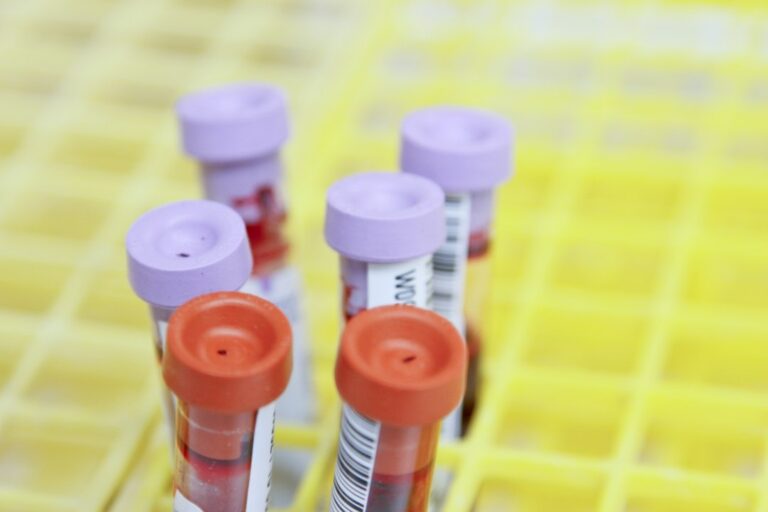
An IGRA blood test and a tuberculin skin test (TST) measure the immune response to TB infection. A positive result alone cannot show whether you currently have active TB disease or whether you could spread it. Clinicians consider symptoms, exposure, previous treatment and chest X-rays, and may use further tests, such as sputum testing, when needed. 2
Even with a negative result, tell the team about symptoms or recent exposure. Early in infection, a detectable response may not yet have developed. A weakened immune system can also require particular care when interpreting the result. When discussing your report, ask whether you need any additional or repeat tests rather than focusing only on the word “positive” or “negative.” 8
The article on testing examines what each test checks and which tests can be affected by BCG vaccination. For now, the important point is not to treat all “TB tests” as though they answer the same question.
5. LTBI treatment aims to lower the risk of future TB disease
Although LTBI is not infectious, it can progress to active TB disease, which is why treatment is discussed. The aim is to lower the risk of developing disease in the future. The plan takes account of recent infection, conditions or treatments that weaken the immune system, liver health and other medicines. 9
Active TB disease must be ruled out before LTBI treatment begins. Treatment should not be started on the assumption that “I have no symptoms, so a simple medicine will do,” or by following someone else's prescription. Discuss the expected benefits, possible adverse effects, necessary visits and tests, and whom to contact if a problem develops. 10
Treatment for active TB disease addresses disease that is already present and is not the same as LTBI treatment. Do not treat their medicines or durations as interchangeable based on lists found online.
6. Families need accurate information, not stigma
If you have been assessed for active TB disease and diagnosed with LTBI, you cannot pass TB bacteria to your family because of that LTBI. Ordinary contact with you is not a reason to assume transmission. However, if you recently spent time with someone with infectious TB and your family shared that exposure, their need for testing is assessed on the basis of that separate exposure. 3 11
Stick to what has actually been established. Instead of saying “The test is positive, so the person is dangerous,” you might say, “The infection test result is back, and the team is checking whether TB disease is present,” or “The clinician explained that this is LTBI, not active TB disease.” Avoid guessing who infected whom or disclosing someone else's diagnosis. Keep the conversation focused on the testing and care that are needed.
Notes to make after receiving a result
- Have you kept the exact test name, date and result?
- Has the assessment for active TB disease been completed?
- Do you know when additional or repeat tests are due and how to receive the results?
- Have you reported recent exposure, previous treatment, existing conditions and medicines?
- If results seem to differ, have you asked what each test was checking?
Common questions
If I have LTBI, does my whole family automatically need testing?
LTBI cannot spread to others, so living with someone who has LTBI does not, by itself, make a person a contact of someone with infectious TB. If family members were exposed to the same person with infectious TB, or have their own symptoms or risk factors, they should discuss whether testing is needed. 3 11
If someone looks healthy and has no cough, does that rule out active TB disease?
No. Active TB disease can cause mild symptoms or no symptoms. An abnormal screening result or a notification of exposure should be followed by the recommended assessment. 5
Does a positive infection test mean I need to start TB medicines today?
First, the team needs to assess whether active TB disease is present and discuss treatment suited to your condition. Do not obtain medicines and start taking them on the basis of a test result alone, or follow someone else's prescription. 2 10
This article provides general health information, not an individual diagnosis, prescription or assessment of infectiousness. If you have symptoms, have been notified of TB exposure or have an abnormal test result, contact a clinician or public health center. Sources were checked on 24 October 2026 (KST); this is not their publication or update date.
Official sources
- 2026 National Tuberculosis Control Guidelines (in Korean) · Korea Disease Control and Prevention Agency (KDCA) · 2026 · Definitions · Checked 2026-10-24.
- Clinical Testing and Diagnosis for Tuberculosis · CDC · 2025-04-17 · Checked 2026-10-24.
- About Inactive Tuberculosis · CDC · 2025-01-16 · Checked 2026-10-24.
- Tuberculosis · WHO · 2026-03-24 · Checked 2026-10-24.
- Clinical Overview of Tuberculosis Disease · CDC · 2025-04-17 · Checked 2026-10-24.
- 2026 Standard Counseling Casebook for TB and LTBI Management (in Korean) · KDCA · Posted 2026-10-08 · Q6, printed p. 5 · Checked 2026-10-24.
- Tuberculosis: Causes and How It Spreads · CDC · Date shown at top: 2025-01-17 · Checked 2026-10-24.
- Clinical Testing Guidance: Interferon Gamma Release Assay · CDC · 2024-05-09 · Checked 2026-10-24.
- Clinical Overview of Latent Tuberculosis Infection · CDC · 2025-04-17 · Checked 2026-10-24.
- Treatment for Latent Tuberculosis Infection · CDC · 2025-04-17 · Checked 2026-10-24.
- Exposure to Tuberculosis · CDC · 2024-03-25 · Checked 2026-10-24.