Shingles pain keeping you awake? Prepare for a treatment review
If shingles pain repeatedly wakes you or prevents sleep, contact the clinician treating you. Do not simply add a sleeping pill or increase pain medicines yourself. Pain relief, side effects and daytime function need to be reviewed together.
Describe what happens during the night
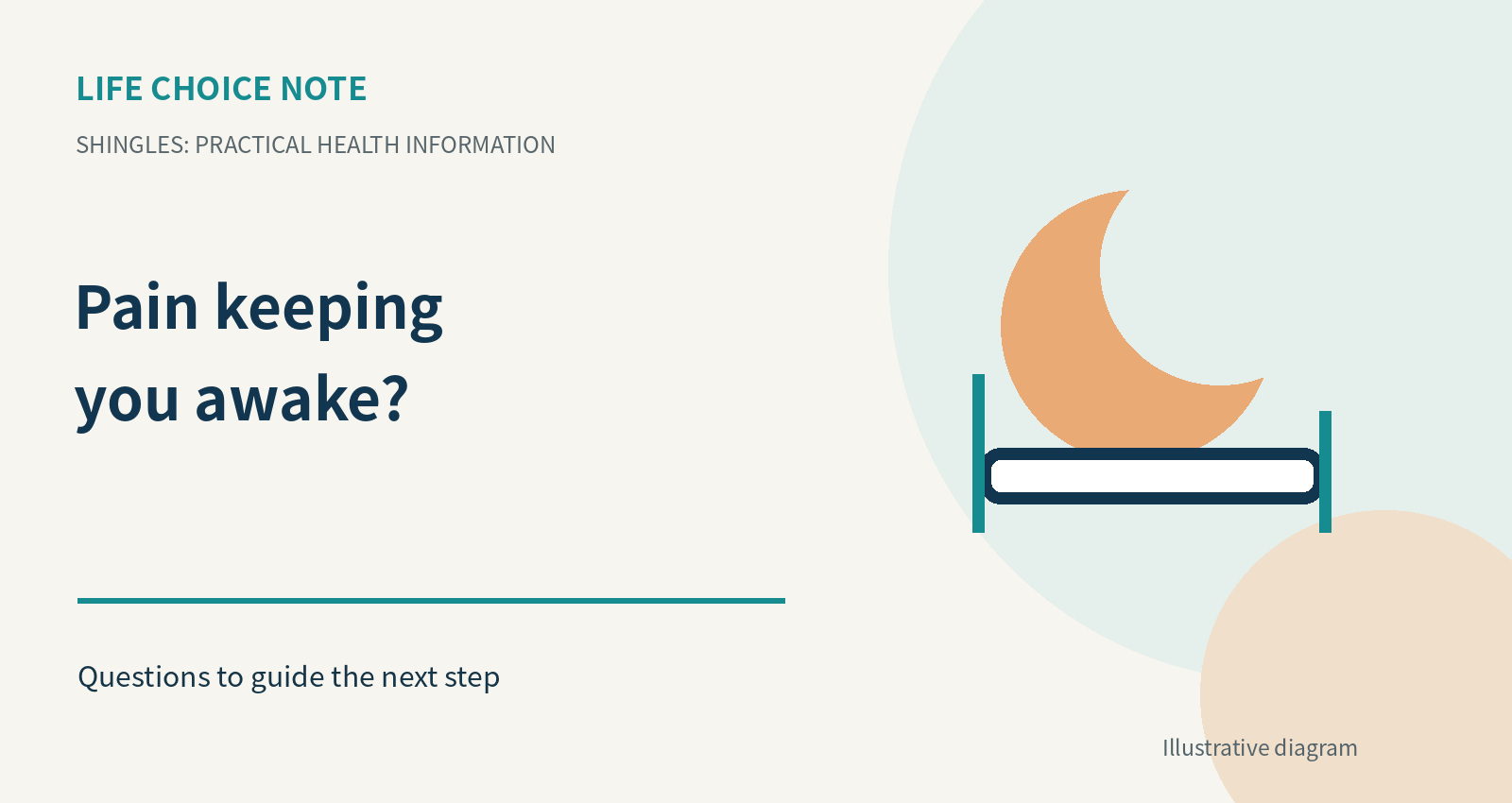
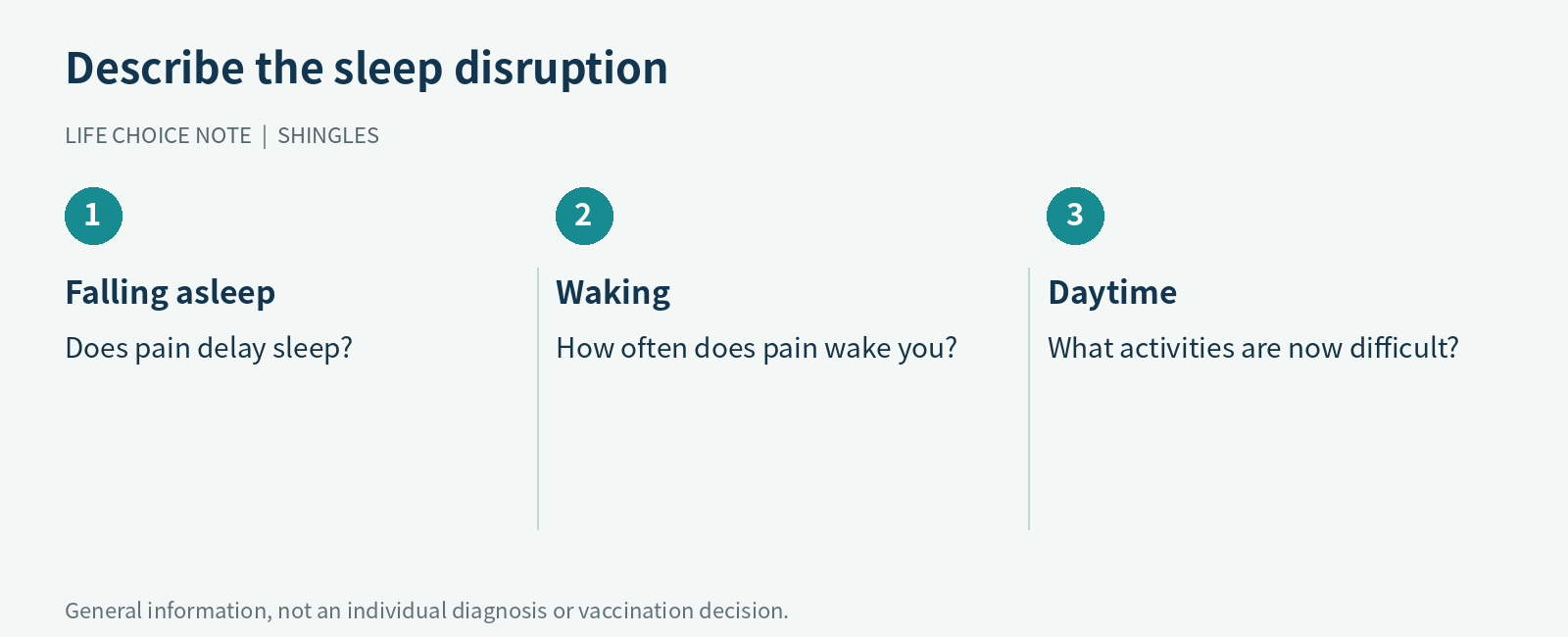
Explain whether pain prevents falling asleep, wakes you after a few hours, or hurts when bedding touches the skin. Burning, stabbing and touch-sensitive pain may need a different discussion from soreness alone. A pain score is useful, but it does not tell the whole story.
For two or three nights, note roughly when you slept, how often pain woke you and what you took. Do not postpone care to complete a diary. Report problems with eating, walking or work as well as sleep.
Tap the diagram to view full size
Bring every medicine, including nonprescription products
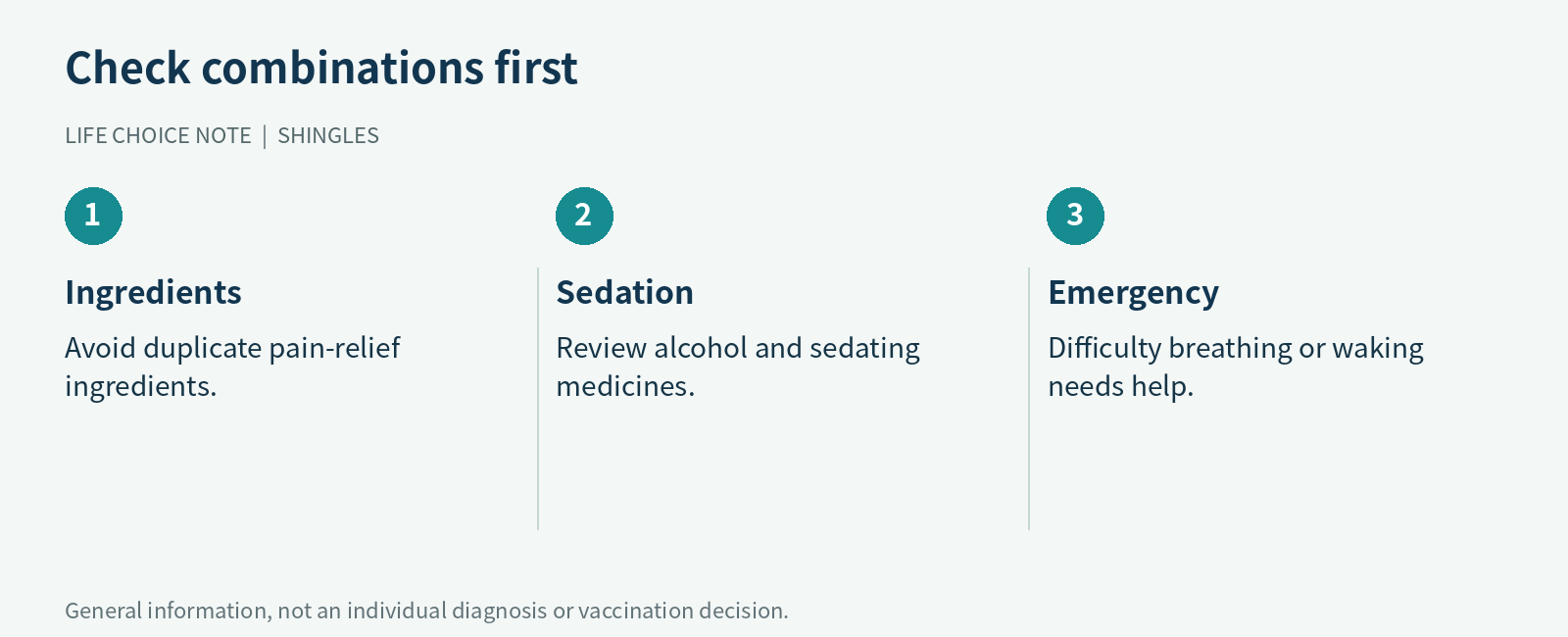
List each medicine’s name, strength, dose and timing, plus cold remedies, sleep aids and supplements. Different brands can contain the same ingredient. FDA warns that taking too much acetaminophen, also called paracetamol, can cause severe liver injury.
Ask a pharmacist to check the complete list before adding an over-the-counter product. Do not take an extra dose because the first did not produce immediate relief, and do not use someone else’s prescription.
Sedation is not the same as safe restorative sleep
Some nerve-pain medicines can cause drowsiness or dizziness. Combining them with alcohol, opioids, sleeping medicines or other sedating drugs can increase risks. FDA warns of serious breathing problems with gabapentin or pregabalin in people with respiratory risk factors, including use of other central nervous system depressants.
Slow or difficult breathing, severe confusion or inability to wake someone normally needs emergency help. Discuss falls, driving and machinery with the prescriber. A medicine that makes you sleepy still needs a clear purpose, dose and follow-up plan.
Tap the diagram to view full size
Reduce friction without relying on home measures alone
Loose soft clothing, bedding that does not rub the rash and a comfortable position may reduce irritation. Follow advice on keeping the rash clean and dry; a cool compress may help discomfort. Do not place ice directly on the skin.
Keep necessary items close by so you do not repeatedly get up while unsteady. Avoid new irritating creams or adhesive products on damaged skin. These measures support comfort but are not adequate treatment for pain that is preventing most sleep.
Ask what the next treatment step should achieve
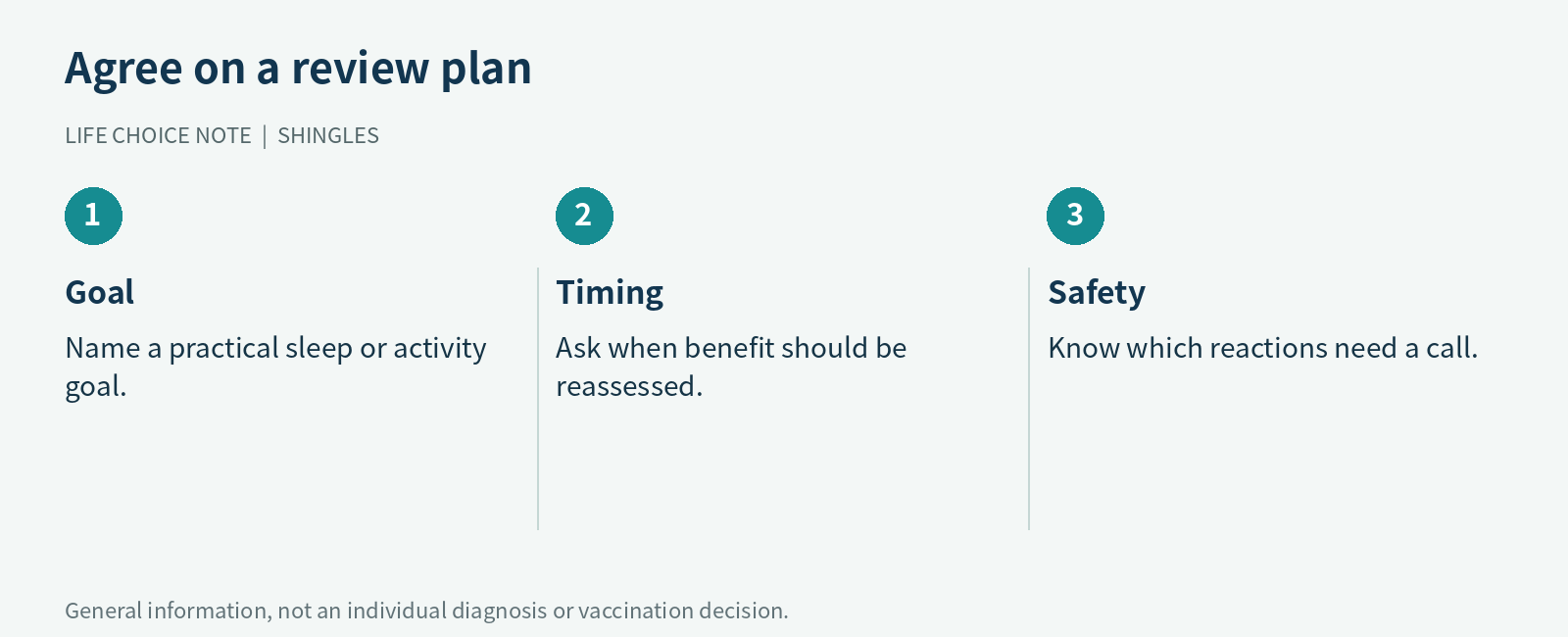
Explain what remains difficult despite taking prescribed treatment correctly. For example: “I woke four times from pain and cannot function normally in the morning.” Ask whether the pain plan needs reassessment and whether adverse effects could be contributing.
If a medicine is changed, ask when benefit should be assessed, which reactions need a call and how the medicine should eventually be reduced or stopped. Some medicines for nerve pain take time to assess and should not be abruptly discontinued.
Tap the diagram to view full size
Keep urgent symptoms separate from a sleep problem
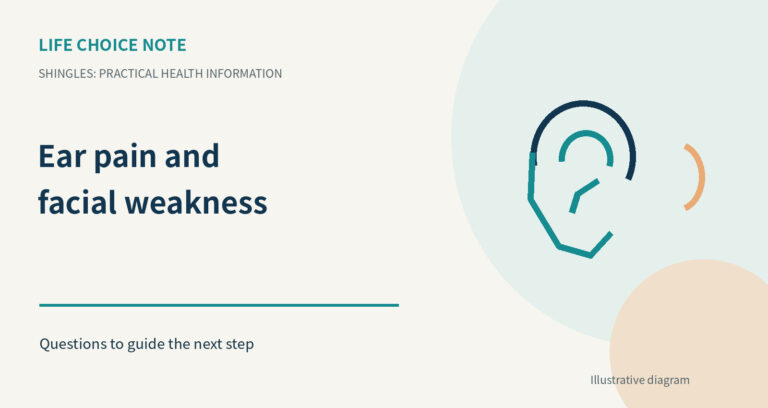
New eye or ear symptoms, facial weakness, spreading rash, or marked deterioration require prompt evaluation. Do not assume that a new symptom is simply caused by being tired. People receiving immune-suppressing treatment should report new concerns promptly.
Review sleep, pain and daytime function at the agreed follow-up. The aim is safer and more manageable daily life, not merely a lower pain number or stronger sedation.
This is general information. Persistent pain that disrupts sleep warrants a treatment review; do not independently combine sedatives, increase doses or abruptly stop prescribed nerve-pain medicines.
Sources and review date
- NHS England: Pharmacy First Clinical Pathways, Version 2.5
- NHS Shingles
- NHS Post herpetic neuralgia
- US FDA: Acetaminophen Safety
- NHS: Common Questions About Gabapentin
- US FDA: Gabapentin and Pregabalin, Serious Breathing Problems Warning
Sources checked October 6, 2026. General health information; discuss individual diagnosis, treatment and vaccination with a qualified healthcare professional.