Pain After Shingles: Postherpetic Neuralgia and When to Seek Help
Pain can continue after the shingles rash heals. If it is not improving or is disrupting sleep and everyday activities, contact your healthcare professional. The 90-day definition used for postherpetic neuralgia is a classification threshold, not a requirement to wait before getting pain treatment.
This guide concerns ongoing pain after shingles. New blisters, a new pattern of pain, eye or vision symptoms, or new weakness need reassessment rather than an assumption that they are part of an old diagnosis.
How can pain continue when the skin looks better?
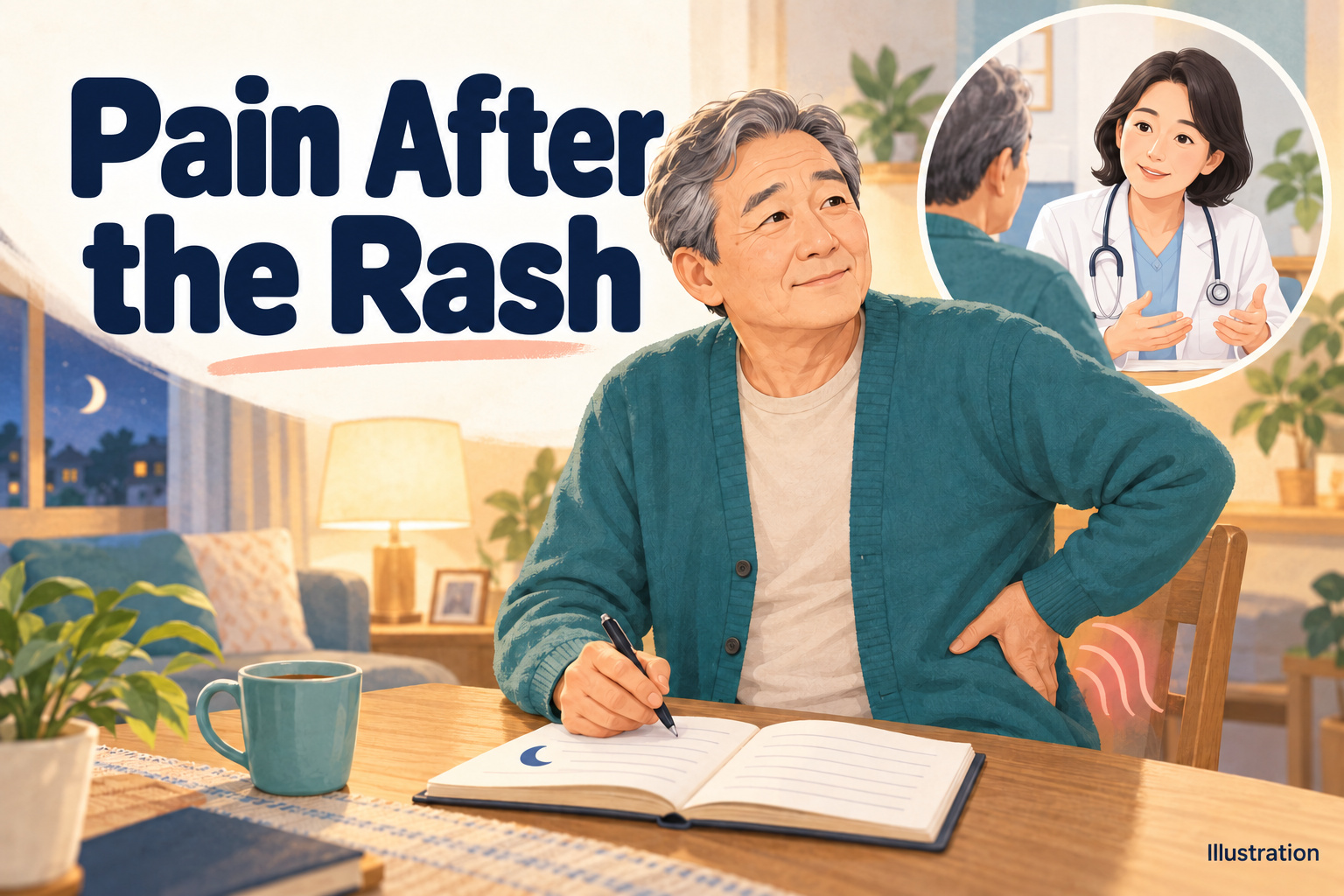
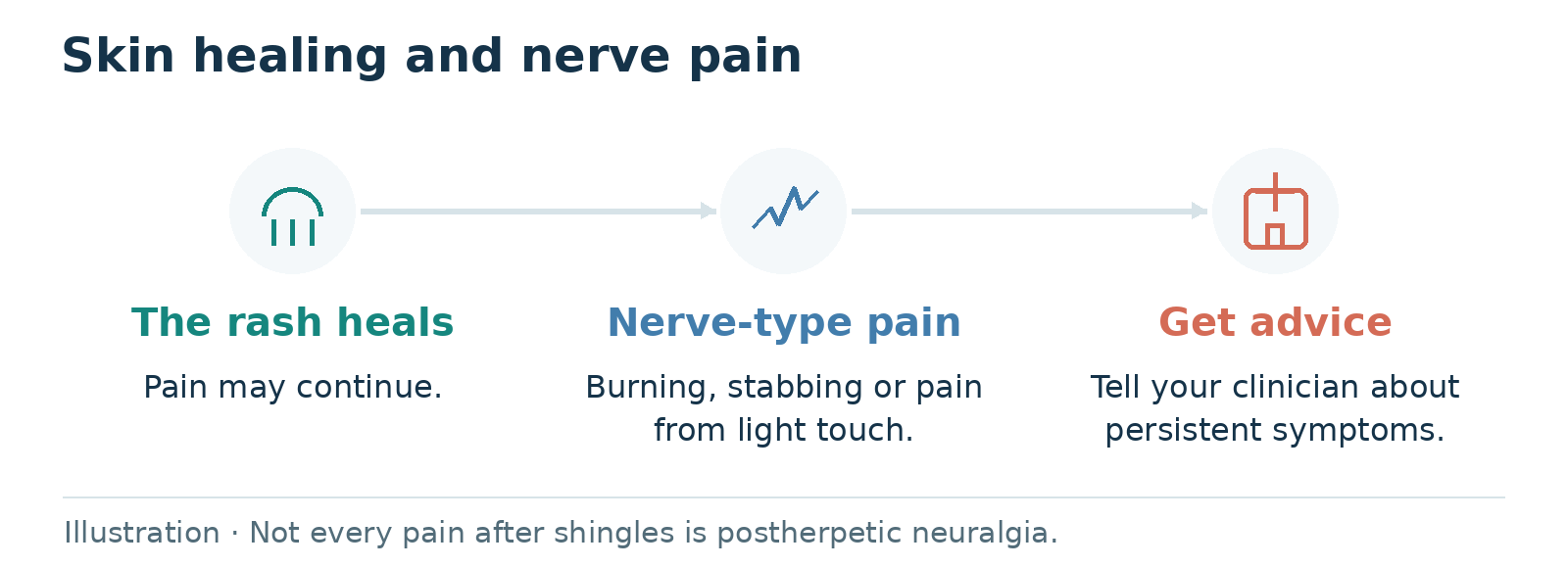
Shingles can damage nerves, leaving burning, sharp or aching pain after the visible rash improves. A light touch from clothing may hurt, and itch or altered sensation can occur. The appearance of the skin does not reliably show how much pain someone has. (NHS: Post-herpetic neuralgia)
Describe the effect in concrete terms: waking repeatedly, avoiding a shirt that touches the area, or stopping an activity because the pain increases. This helps a clinician understand what needs to improve beyond a single pain score.
Tap the diagram to view full size
What exactly does the 90-day definition mean?
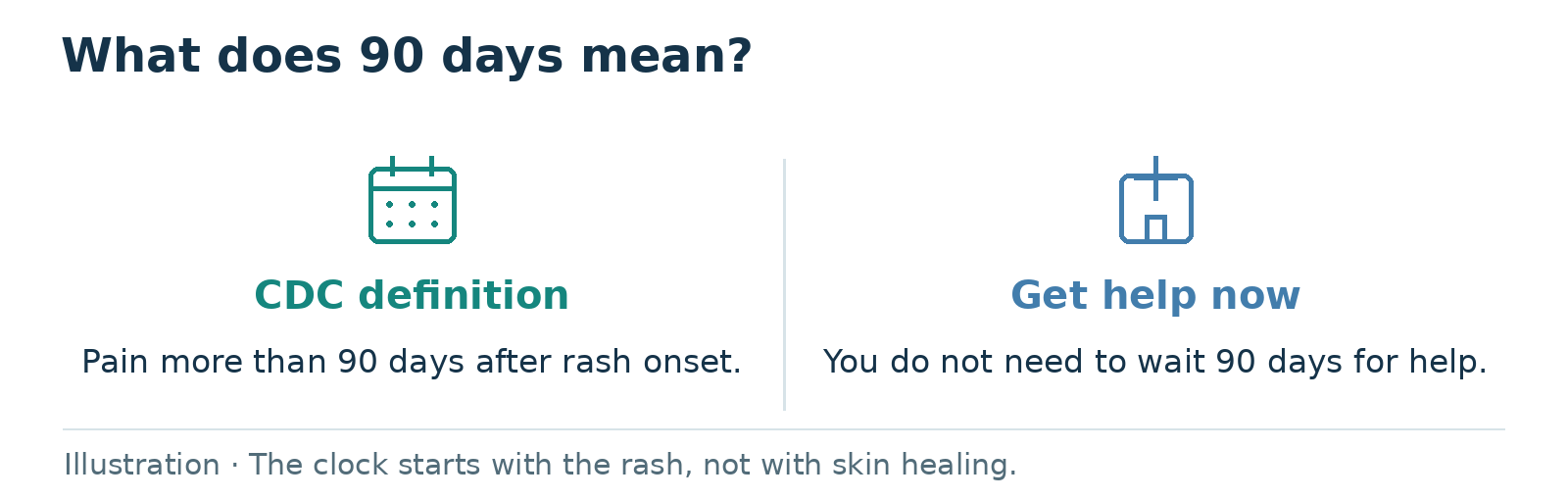
CDC describes postherpetic neuralgia, or PHN, as pain in the area of the previous rash that continues more than 90 days after the rash began. The starting point is rash onset, not the date the skin finished healing. PHN can persist for months or years. (CDC: Clinical Features of Shingles)
Other sources and studies may use different definitions. That can change the reported frequency, so avoid comparing percentages without checking the age group and time threshold. A population estimate also cannot predict exactly what will happen to one person.
Do not wait for day 90 to ask for help. Uncontrolled pain while the rash is present, or in the weeks after it heals, still deserves assessment.
Tap the diagram to view full size
Start with a review of the current pain
Contact the clinician who treated the shingles or your regular healthcare professional. If pain is severe, interferes with activities, or is not responding to initial treatment, specialist pain or neurologic care may be considered. (NHS: Post-herpetic neuralgia)
Bring the rash onset date, where the rash was, and a list of treatments already tried. Explain whether pain is improving, unchanged or getting worse. New symptoms matter because pain after shingles is not automatically explained by PHN.
What treatment discussions may include
Treatment can include medicines used for neuropathic pain and, in some circumstances, topical treatments. They need to be chosen for the person, taking existing conditions, other medicines and adverse effects into account. Follow-up may be needed to adjust the plan; some nerve-pain medicines do not work immediately. (NHS: Post-herpetic neuralgia)
Ask what change to expect, when to reassess, and which side effects should prompt a call. Do not increase doses or abruptly stop a prescribed medicine based on this article. A plan should be manageable enough that you understand what to take and whom to contact if it is not helping.
Specialist procedures are not a required next step for everyone. If one is proposed, ask about the expected benefit, risks, alternatives and how success will be assessed.
Why pain can persist despite antiviral treatment
Antiviral medicines used during acute shingles can shorten the illness and reduce symptom severity. They do not guarantee that persistent pain will never develop. (CDC: About Shingles)
A Cochrane review published in 2014 did not find that acyclovir significantly prevented longer-term PHN, and evidence for other antivirals was insufficient. Its searches extended only through April 2013, so it should be read with that limitation. This is not a reason to disregard prescribed acute treatment or to assume that ongoing pain means the initial care was pointless. (Cochrane: Antiviral treatment for preventing postherpetic neuralgia)
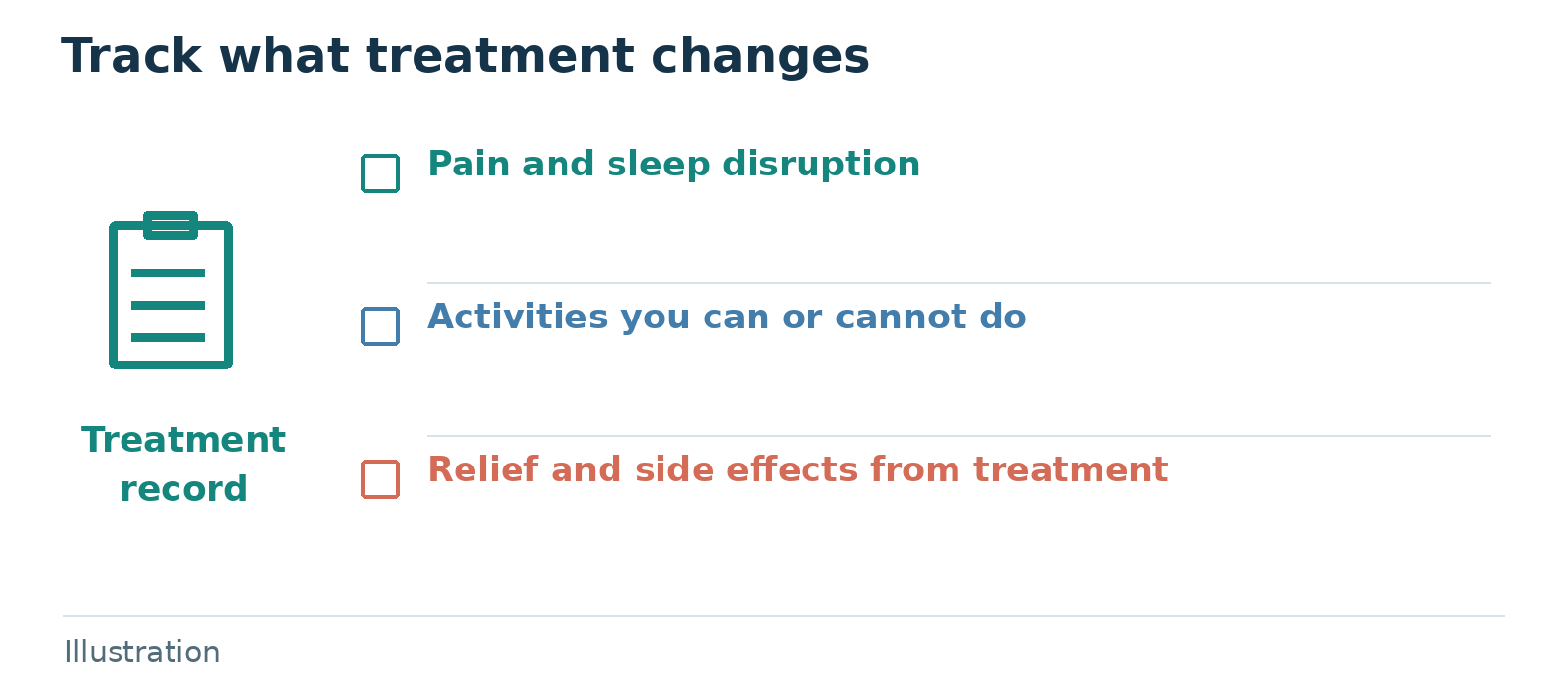
Use a short record that supports the next decision
| Record | Example of useful detail |
|---|---|
| Pain | Location, character and whether touch triggers it |
| Sleep | How often pain woke you or delayed sleep |
| Activity | A task you could do, or had to stop |
| Treatment | What was used and any noticeable relief |
| Adverse effects | New sleepiness, dizziness or another concern |
Use the same few fields each day so the pattern is easy to review. It is not necessary to make a detailed diary before seeking care. Loose, soft clothing may reduce irritation, and the clinician can advise about local skin care. (NHS: Post-herpetic neuralgia)
Choose a practical goal for the next review, such as fewer interrupted nights or greater comfort getting dressed. Recovery times vary, so avoid promises about an exact finish date while continuing to work on pain and function.
Tap the diagram to view full size
Frequently asked questions
Does pain before 90 days count as something worth treating?
Yes. The definition does not set the earliest date for care. Persistent or poorly controlled pain warrants discussion before that threshold.
Does a healed rash mean pain should be gone?
No. Skin healing and nerve-related symptoms can follow different timelines. Tell your clinician what persists and how it affects you.
Will a shingles vaccine treat existing PHN?
Shingles vaccination is preventive, not a treatment for established pain. Ask separately about current pain care and when future vaccination is appropriate.
Practical resources for your appointment
Use these to prepare for care, not to delay care when symptoms need attention.
Sources and review date
- CDC: Clinical Features of Shingles
- NHS: Post-herpetic neuralgia
- CDC: About Shingles
- Cochrane: Antiviral treatment for preventing postherpetic neuralgia
- CDC: Shingrix in Immunocompromised Adults
Sources checked October 5, 2026. This article provides general health information. Discuss individual diagnosis, treatment and vaccination decisions with a qualified healthcare professional.