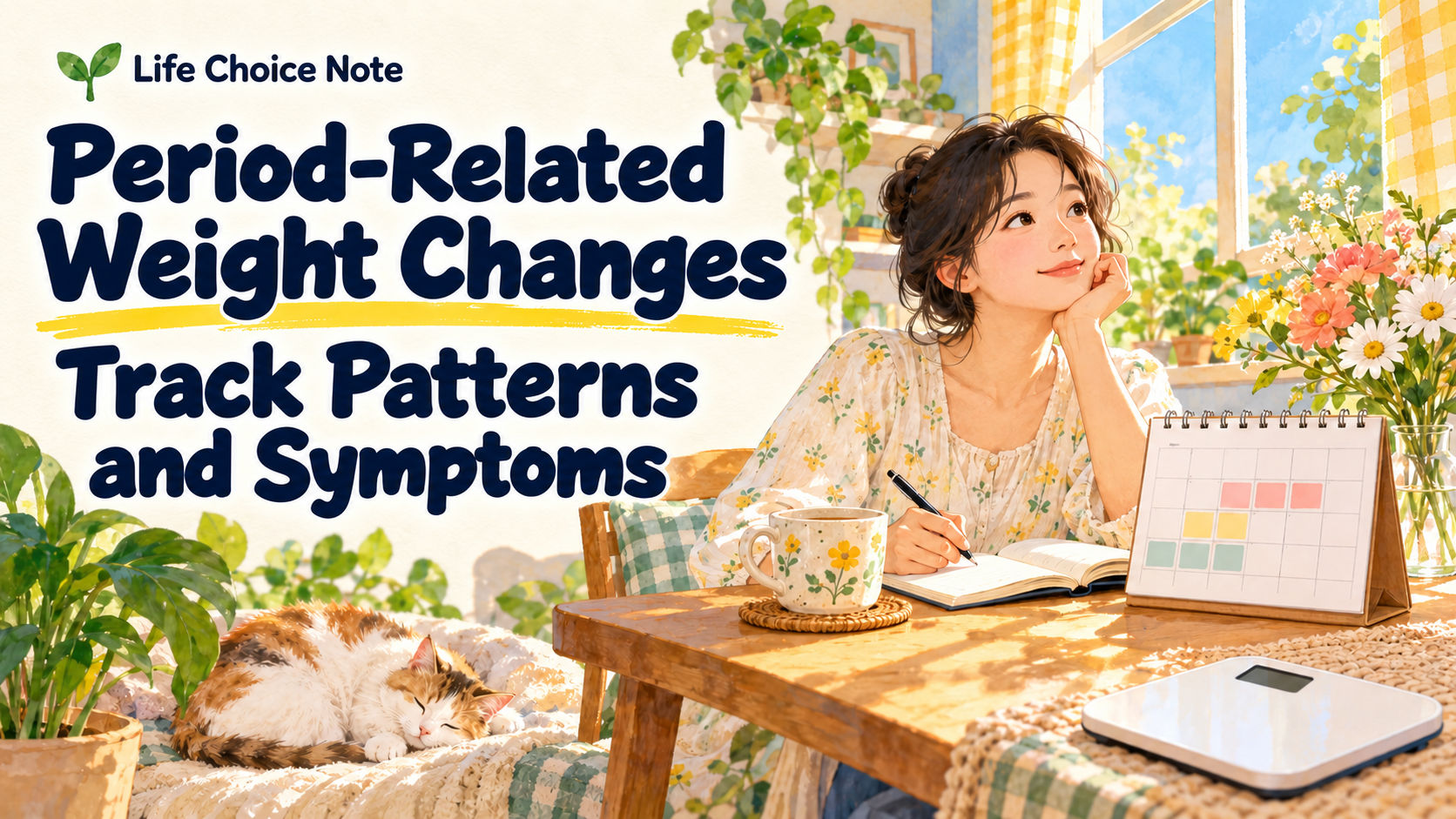
Period-Related Weight Changes: Track the Pattern and Symptoms
When the scale rises before a period despite a familiar routine, it can be tempting to tighten the diet. Instead, record the period start date alongside bloating, appetite and pain.
Cycle-related changes may contribute, but not every increase can be attributed to a period. Look for your own pattern without using the calendar as a reason to endure concerning symptoms.
Weight and bloating provide different information
Record three different kinds of information
Cycle
Date and period onset
Symptoms
Bloating, appetite and pain
Measurement
Weight and conditions
NHS lists bloating, breast discomfort, appetite changes, mood changes and sleep problems among possible premenstrual symptoms. Experiences differ between people and from one month to the next. NHS Premenstrual Syndrome
Record the sensation of swelling or abdominal fullness separately from the scale reading. Discomfort does not measure fat gain, and an unchanged weight does not make symptoms unimportant. There is no single permitted number of kilograms that can classify everyone’s change.
Connect records to the start of the period
Note the date and period start date. If you weigh yourself, add the time and conditions. For symptoms, choose a simple description you can use consistently, such as none, mild or disruptive.
An example is: “Three days before the period: evening bloating, late lunch, stronger sweet cravings than usual.” This does not calculate hormone levels or diagnose a condition. NHS recommends a symptom diary over at least two menstrual cycles for a PMS discussion. NHS Premenstrual Syndrome
Compare similar cycle points, not just calendar dates
Place similar cycle points side by side
Previous record
Relative to period onset
Current record
Find a similar point
Also review
Overall trend and symptoms
Comparing last month just after a period with this month just before one mixes different conditions. Where feasible, place records from similar points relative to period onset side by side and also look at the wider trend.
Irregular cycles or hormonal treatment can make timing less straightforward. An app prediction does not establish ovulation or an ideal fat-loss window. Comparing similar points is a way to organise observations, not a formula for prescribing food or training by cycle phase.
Plan for recurring difficulties before restricting more
If appetite changes recur at a recognisable time, prepare for meals not to become excessively delayed and include foods you enjoy in the plan. When holding off hunger repeatedly makes eating harder, review meal timing and composition rather than simply trying to tolerate more.
On uncomfortable days, support sleep and recovery and choose activity you can manage. Do not deliberately dehydrate yourself or self-prescribe diuretics, laxatives or supplements to lower a reading. Weight or bloating alone is not a reason to change medicine or contraception.
Discuss persistent or disruptive symptoms
When to seek care without waiting
Daily impact
Pain, bleeding or mood
New change
Altered or absent periods
Severe symptoms
Prompt medical assessment
Seek care when symptoms persist beyond the usual pattern or pain, bleeding or mood changes interfere with daily life. A sudden change in previously regular periods, or periods stopping, should not be treated as evidence that weight management is working. NHS Period Problems
A delayed period can have several causes, including pregnancy, stress, rapid weight loss or excessive exercise. Check for pregnancy when relevant and seek appropriate advice. Severe pain, fainting or heavy bleeding with marked dizziness needs prompt medical assessment; do not wait to complete two months of records.
Make weighing optional and communicate symptoms
If weighing increases anxiety or restrictive behaviour, focus on dates and symptoms and discuss a suitable approach with a professional. Bring the timing of onset and improvement, the impact on daily life and any recently started medicines to the consultation.
You can add cycle timing and symptoms to the notes area of a general weight record. It does not automatically interpret hormones or diagnose PMS. Choose deliberately who receives records containing personal health information.
Common questions
Should I avoid weighing before my period?
It is not prohibited. If you weigh, record timing and conditions. Discuss frequency or another approach if the numbers increase anxiety.
Is every drop after a period fat loss?
A scale does not separate the components of a change. Do not convert the difference around a period into a quantity of fat lost.
Related tools and reading
Life Choice Note weight and waist log
Use this log to organise weight records, with separate notes on dates, measurement conditions and the context discussed above. A record does not diagnose a condition or determine fat change.
Sources and scope
General health information based on official guidance and the cited original sources. Scenarios and diagrams explain concepts; they do not predict individual outcomes. Country-specific rules and product conditions must be kept distinct.
Sources checked 5 October 2026 (Korea time). This does not replace individual diagnosis, treatment, nutrition or exercise advice. A separate medical professional review has not been completed.