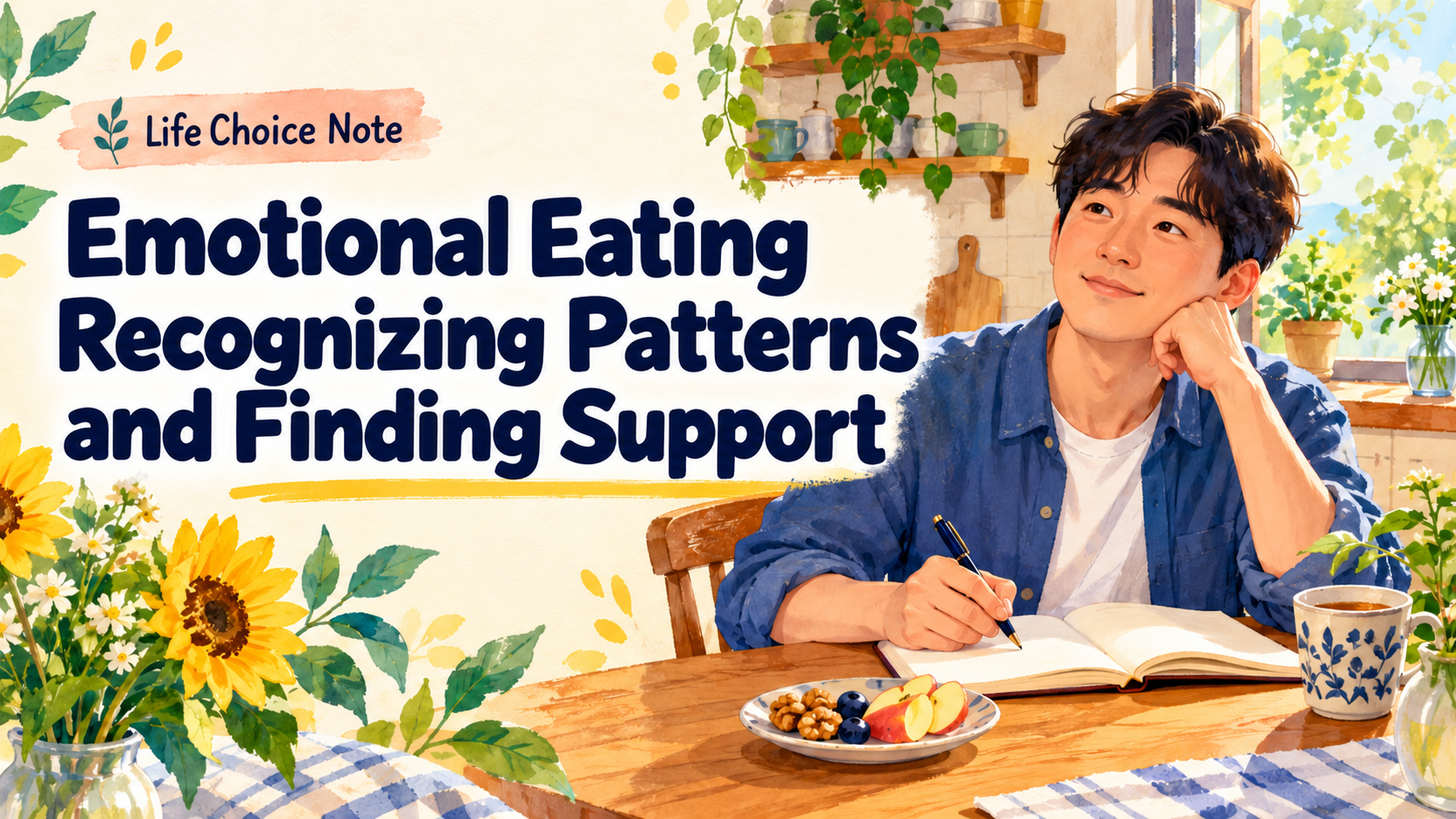
Emotional Eating Recognizing Patterns and Finding Support
Food can be comforting after a difficult experience. An emotion influencing a meal does not, by itself, mean you have done something wrong or have an eating disorder.
If an unwanted pattern repeatedly causes distress, it can help to understand the situation in which it begins. The record here is a short note about eating, emotions and support needs, rather than a calorie scorecard.
Hunger and emotions can occur together
Several needs can exist together
Hunger and tiredness
Stress and feelings
Meals and opportunities to rest
You do not have to choose between stress and “real” hunger. After missing lunch and sitting through a long meeting, hunger, irritability and fatigue may all be present. The presence of emotion is not a reason to postpone a needed meal.
A sudden urge or a preference for a particular food does not identify its cause. Instead of labelling hunger as false, note your last meal, tiredness, mood and current situation.
Cambridge University Hospitals guidance suggests recording thoughts and feelings alongside eating to recognize patterns. This is an aid to understanding, not a diagnostic test or a guaranteed weight-loss method.
Make a brief record of the situation
What a short note can include
Time place and events
Last meal and emotions
Feelings and support needed
Consider noting the time and place, what happened beforehand, your last meal and hunger, emotions, food eaten and how you felt afterwards. You do not need perfect detail. Leave out calorie numbers if they add pressure.
An invented example: “5 pm at my desk. A late, small lunch. Exhausted and irritated after an urgent revision request. Ate crackers and milk. Felt a little better after a break.” The useful questions concern missed nourishment and rest, not whether the food was good or bad.
Choose an amount of detail you can manage. A missed entry does not require restriction or closer surveillance tomorrow. Reduce or stop recording and seek a safer approach if it increases guilt or preoccupation with food.
A pause should create a choice rather than prohibit eating
You can briefly ask whether you need a meal, rest, contact with someone or a combination. If you are hungry, eating remains a valid choice. Water or a walk should not be used to force hunger away.
When you are overwhelmed rather than hungry, options may include settling your breathing, changing the setting briefly or contacting someone you trust. None has to eliminate the urge every time, and an ongoing urge is not a failure.
University Hospitals Sussex guidance describes examining links among triggers, thoughts, feelings and eating. If recurring conflict is the trigger, support with the conflict itself may matter more than simply rearranging snacks.
Avoid using restriction as compensation
After eating more than you wanted, do not impose a rule that the next meal must be skipped or the food worked off. Return to regular eating and examine the context without punishment. A blaming record is unlikely to make the next choice easier.
If strict restriction repeatedly alternates with feeling unable to control eating, seek support before making the diet rules stricter. Not every episode has this cause, but the connection is worth discussing when it occurs in your pattern.
NHS guidance warns that dieting during binge-eating-disorder treatment can make stopping binges harder. If you are in treatment, the professional care plan takes priority over the weight-management setting of this article.
Emotional eating is not the same as a binge eating diagnosis
Reasons to ask for support
Feeling unable to stop
Recurring secrecy or shame
Fasting purging or overexercise
NIDDK describes binge-eating disorder as involving recurrent episodes of eating a large amount with a sense of loss of control. An emotionally influenced snack is not enough for that diagnosis, and body size cannot establish it.
Consider support if you repeatedly feel unable to stop, hide eating, experience marked shame or distress, or find the pattern disrupting life. You do not need to wait until you think a diagnostic frequency or duration has been met.
Tell a clinician about self-induced vomiting, laxative use, prolonged fasting or excessive exercise intended to compensate. Acute symptoms such as fainting, severe dehydration or chest pain need immediate medical attention.
Bring the most difficult pattern to a consultation
You can describe the difficult experience directly: “After work I start eating and feel unable to stop, then fast the next day.” Loss of control, emotions and the effect on daily life may be more important to discuss than the particular food.
NIDDK describes treatment options including psychological therapy and professional support. The appropriate approach depends on symptoms and health. Completing a perfect diary is not a condition for getting help.
The Life Choice Note symptom and visit-question form is a blank way to organize what you want to discuss. It does not diagnose emotional eating or store entries on a server. Keep sensitive notes somewhere safe and prepare only what you want to share with your clinician.
Common questions
Does eating because of emotion mean binge-eating disorder
No. These are not equivalent. A professional can assess recurrent loss of control, distress and the effect on daily life.
Must I wait a fixed number of minutes before eating
No. You can eat when hungry. A brief check-in is intended to create choice, not prohibit needed nourishment.
What if recording makes me think about food more
Reduce or stop the record and discuss that burden. Safe eating and everyday functioning take priority over detailed monitoring.
Sources and scope
Official and NHS hospital guidance informs this approach to records and consultation. The everyday example is fictional, not a treatment outcome. Do not use the article to diagnose yourself or someone else.
- CUH A Brief Guide to Tackling Emotional Eating · 2025-09-15 approved
- University Hospitals Sussex Managing Emotional Eating
- NHS Binge Eating Disorder Treatment · 2023-07-17 reviewed
- NIDDK Binge Eating Disorder Definition and Facts · 2021-05 reviewed
- NIDDK Binge Eating Disorder Diagnosis and Treatment · 2021-05 reviewed
Sources checked 5 October 2026, Korea time. General adult health information, not individual diagnosis, treatment or exercise prescription. This article has not undergone separate clinical expert review.