Eating, Activity and Muscle During Weight-Loss Injection Treatment | Video Guide
During prescribed GLP-1–based obesity treatment, pay attention to food, activity, strength and everyday function alongside weight. Falling weight does not tell the whole story if meals are repeatedly missed or stairs become harder.
This adult guide offers discussion points for your care team. Protein, fluid and activity targets need to fit your health, medicines and current intake.
Watch the video · 5:02
English audio is available. In the YouTube player, select Settings → Audio track → English. On-screen labels remain in Korean; an English summary is below.
Build meals you can manage
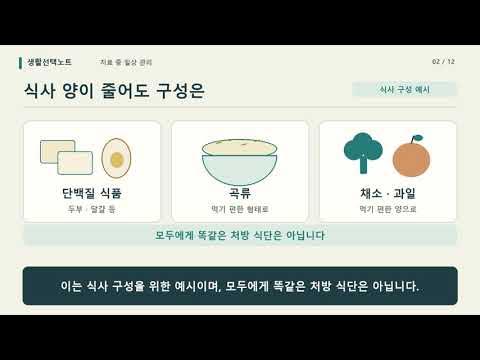
Look for a suitable protein food, such as tofu, eggs, fish or yogurt, alongside manageable grains, vegetables and fruit. Rice with tofu and cooked vegetables is an illustration, not a universal meal plan.
Notice repeated missed meals or reliance on drinks and sweets. If larger meals are difficult, discuss smaller portions spread through the day. Avoid inventing long-term food-group exclusions without considering diabetes medicines, allergies, kidney disease and other needs.
Think beyond protein alone
Protein does not automatically preserve muscle. Adequate overall nutrition and suitable resistance activity belong together. Review what you actually eat before adopting an online protein target, especially with kidney disease or dietary restrictions. Protein drinks and vitamins are not essential for everyone.
Explain why eating is difficult
Early fullness, nausea and fear of regaining weight call for different support. Record intake and symptoms, including anxiety about eating. Persistent inadequate intake or marked fatigue deserves discussion. Follow any fluid restriction prescribed for a heart or kidney condition.
- Severe, persistent abdominal pain: do not take another dose and contact your healthcare provider immediately for medical assessment.
- Repeated vomiting that prevents you from keeping fluids down: seek prompt, same-day care.
- Breathing difficulty or swelling of the face or tongue: seek emergency help for possible severe allergy.
Assessing symptoms takes priority over an exercise target. Follow the product instructions; this warning list is not exhaustive.
Combine manageable aerobic and strength activity
Walking is useful but does not replace all the roles of strength activity. Brief walks, body-weight movements, resistance bands or machines may offer starting points. Choose movements for your fitness and joints; adjust painful movements rather than pushing through them.
General adult activity guidance is not a first-week prescription. Discuss suitable activity if you have a condition or disability. Do not push through dizziness or inadequate food and fluid intake. Insulin and some diabetes medicines require a low-blood-sugar plan around activity.
Stop and seek emergency help for chest pain, fainting or severe breathlessness during activity. Sweat alone does not measure fat loss.
Watch function as well as body-composition estimates
Weight loss can include lean mass, which contains water and other tissues as well as muscle. Hydration and measurement conditions affect estimates; one reading cannot establish muscle loss.
Notice changes in getting up from a chair, walking, stairs or carrying objects. These observations are not diagnostic tests. Persistent weakness or a new fall risk needs assessment, even when weight is falling.
Make three short notes today
- What and how much did you eat?
- How did you move?
- How were your energy and symptoms?
Bring these notes and weight trends to your next appointment.
Read the detailed guides
- Exercise and strength training: plan aerobic and resistance activity together.
- Eating when appetite drops: review meal structure and intake.
- Muscle, lean mass and function: interpret changes in context.
For preparation, see the five questions before starting treatment video guide.
Official information and references
- 2025 Joint Advisory Nutritional Priorities to Support GLP-1 Therapy
- CDC Adult Activity: An Overview
- MedlinePlus Semaglutide Injection
- MedlinePlus Tirzepatide Injection
Sources reviewed: October 4, 2026
Medical notice: This article and video provide general education about prescribed GLP-1–based obesity treatment in adults. They do not replace an individual diagnosis, prescription, nutrition plan or exercise assessment. Follow your prescribed product information and care team’s advice.