How long does shingles last? Rash, pain and fatigue recover differently
A shingles rash commonly heals in about two to four weeks, but that range is not a personal recovery deadline. Pain and fatigue can follow different timelines. New lesions, worsening symptoms or eye and ear problems deserve reassessment rather than waiting for a calendar date.
Separate skin healing from pain and energy
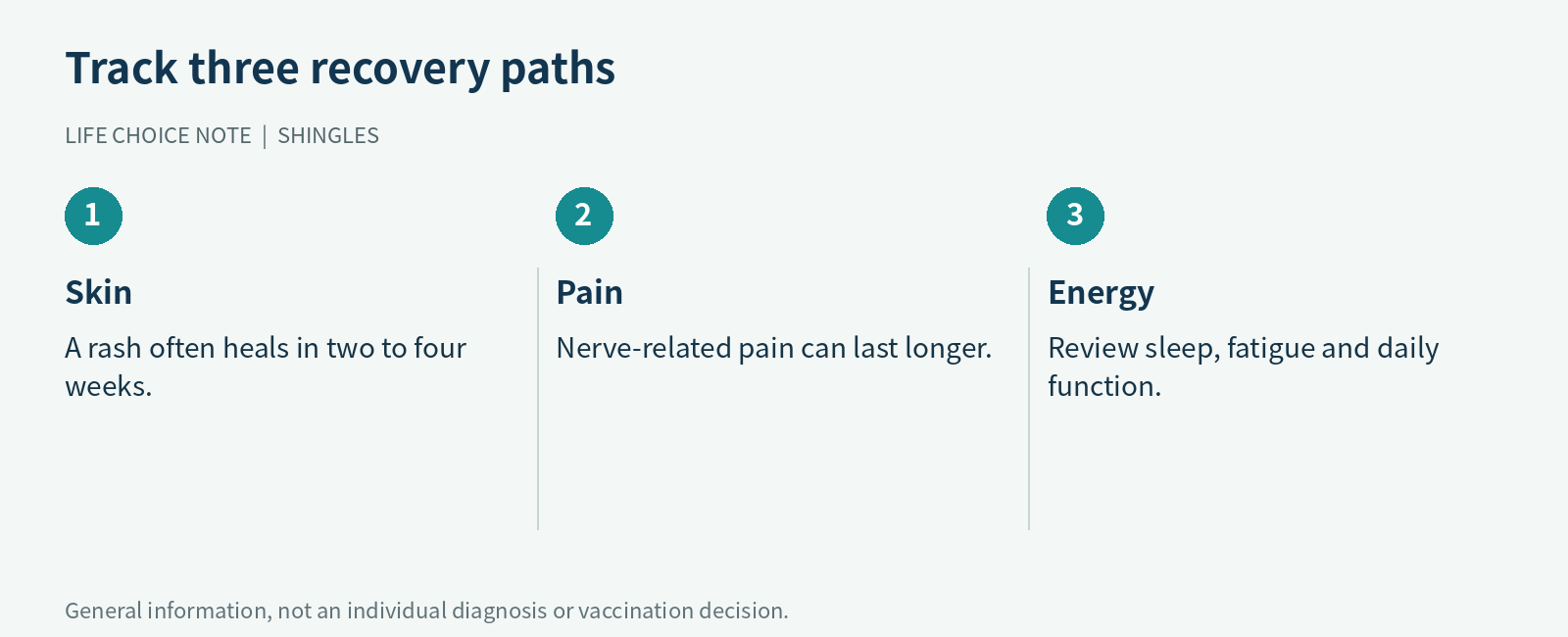
Blisters, crusting, pain and tiredness do not necessarily improve together. CDC describes a usual rash-healing period of two to four weeks. The NHS similarly notes that recovery of the rash may take up to four weeks.
These are general descriptions, not guarantees. The site and extent of the rash, immune status, complications and other health conditions can change the course. Compare changes over time instead of treating a particular day as proof of success or failure.
Tap the diagram to view full size
A drying rash is useful information, not the whole answer
Watch for whether new blisters are still appearing, existing lesions are drying, and redness or swelling is increasing. Do not pick crusts or break blisters to speed recovery. Gentle skin care and the treating clinician’s instructions are more useful.
Spreading redness, increasing warmth, discharge, fever or feeling much more unwell can require a new assessment. A clinician can judge whether another problem, such as a secondary infection, is present.
Pain can outlast the visible rash
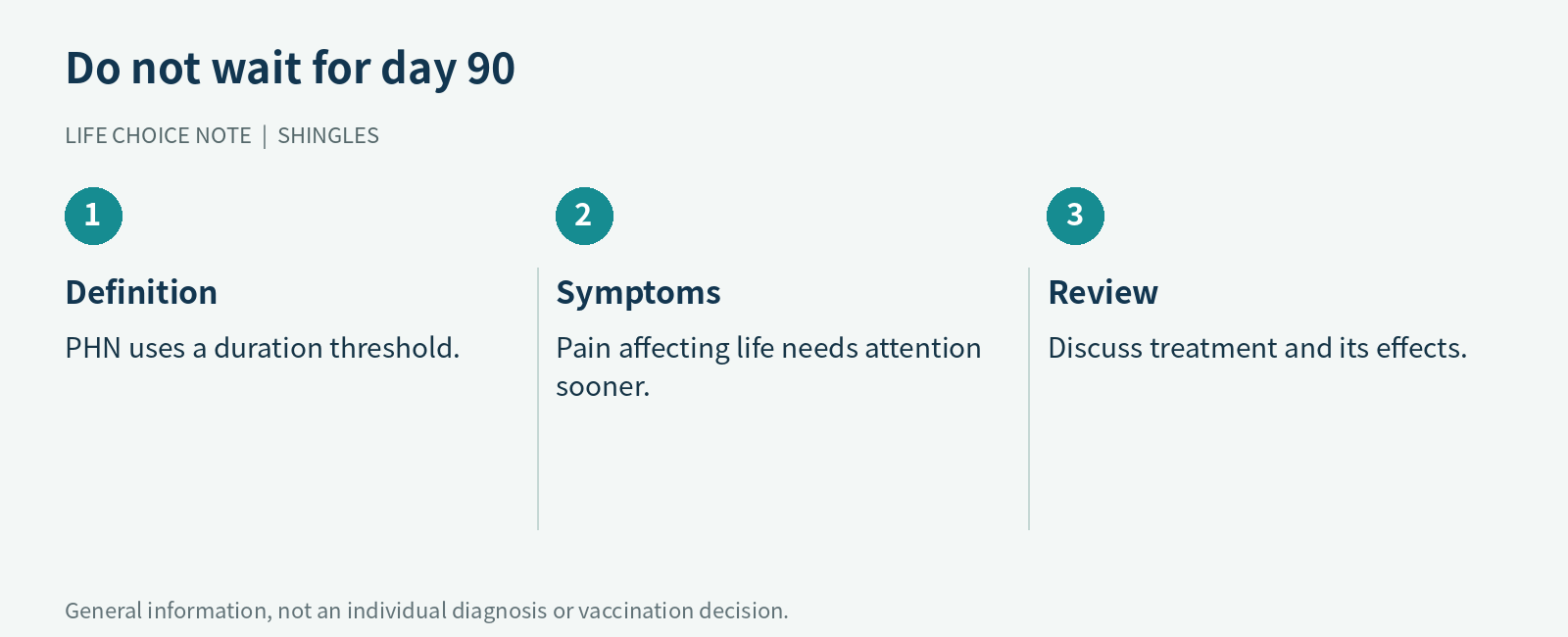
Burning, stabbing pain or pain from light touch may continue after the skin appears healed. CDC uses pain persisting more than 90 days after rash onset to describe postherpetic neuralgia. Definitions in other sources may differ.
The 90-day definition is not an instruction to wait for pain treatment. If pain interrupts sleep, dressing or movement, arrange a review now. Persistent symptoms do not by themselves show that you took the wrong medicine or caused the problem.
Tap the diagram to view full size
Restore activity gradually without treating fatigue as a diagnosis
Plan manageable activities and rest periods while recovery is underway. Fatigue is nonspecific: it can reflect interrupted sleep, illness, medicines or another issue. Do not assume every new symptom is explained by shingles.
Ask about unexpectedly severe, persistent or worsening fatigue, particularly with other new symptoms. Returning to usual activity should reflect how you function, not simply how the rash looks.
Know when the expected timeline no longer helps
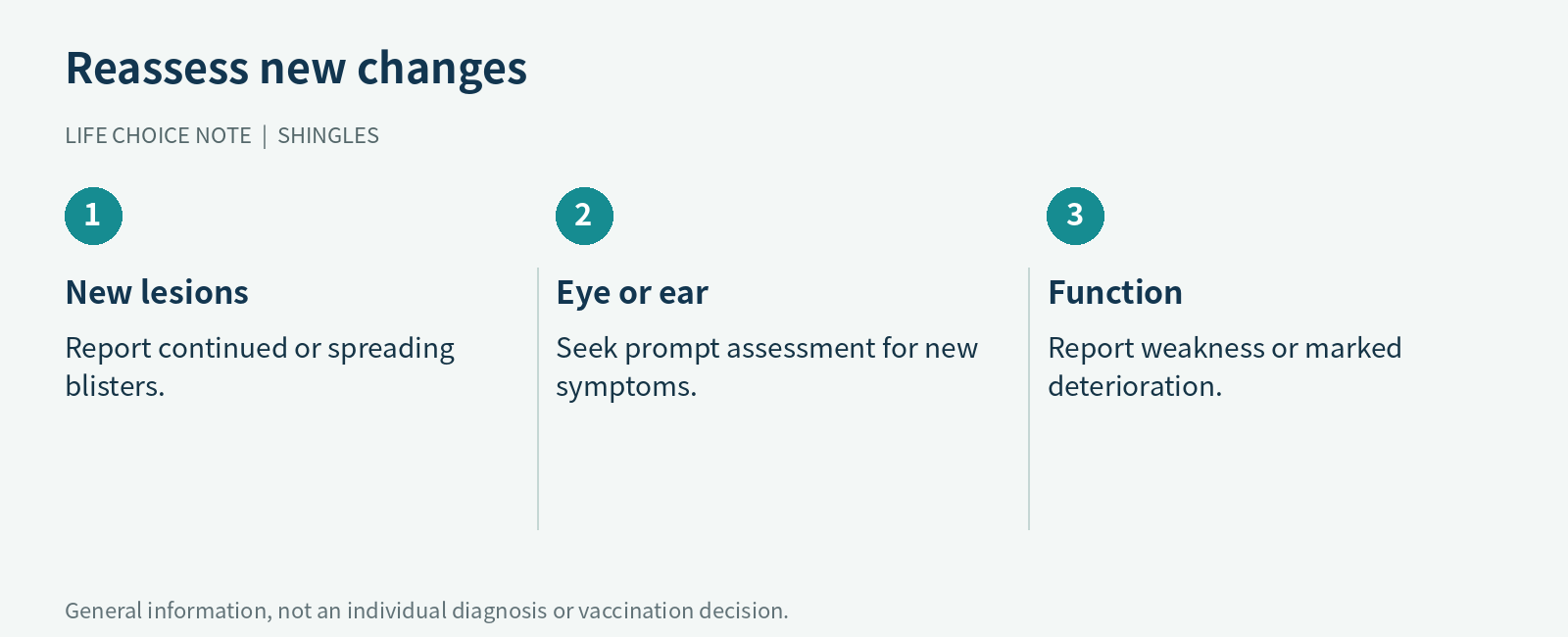
New eye pain or visual change, ear symptoms, new weakness, severe headache, widespread rash or marked deterioration needs timely evaluation. Those problems should not wait until the end of a two-to-four-week estimate.
People with impaired immunity may need closer follow-up. Tell the clinician if new blisters continue or symptoms worsen despite treatment, and follow the agreed review schedule. Do not extend, repeat or stop prescriptions based on the timeline alone.
Tap the diagram to view full size
Bring a short trend record to follow-up
Write the date the rash started, whether new blisters appeared, how often pain woke you, and one activity that was easier or harder. Photographs can be useful if your clinician requests them, but avoid sharing identifying images publicly.
Ask which symptoms should be improving next and when to call if they do not. Separate goals for skin, pain, sleep and activity make the plan clearer than asking only when shingles will be completely gone.
General timelines help set expectations, but persistent pain and new warning signs need their own assessment. This information is not a substitute for individual follow-up.
Sources and review date
- CDC Clinical Features of Shingles
- American Academy of Dermatology: Shingles Self-Care
- NHS Post herpetic neuralgia
- NHS England: Pharmacy First Clinical Pathways, Version 2.5
- British Association of Dermatologists: Shingles (Herpes Zoster)
Sources checked October 6, 2026. General health information; discuss individual diagnosis, treatment and vaccination with a qualified healthcare professional.