Ear pain, facial weakness and shingles: when to get urgent help
Call your local emergency number immediately for sudden facial drooping, especially with trouble speaking or weakness in an arm or leg. Do not assume shingles is the explanation. Ear pain with new facial weakness, difficulty closing an eye or sudden hearing loss also needs prompt assessment.
Sudden facial drooping needs an emergency assessment
Note when the change started. A suddenly uneven smile, slurred speech, weakness, or a sudden change in vision or balance can indicate a stroke. In the United States, call 911; elsewhere, use the local emergency number. Even symptoms that go away need urgent evaluation.
Blisters near an ear do not rule out a stroke. Online tests involving forehead wrinkles or eye closure cannot safely exclude an emergency. New facial weakness should not be watched at home for several days while you try to identify its cause.
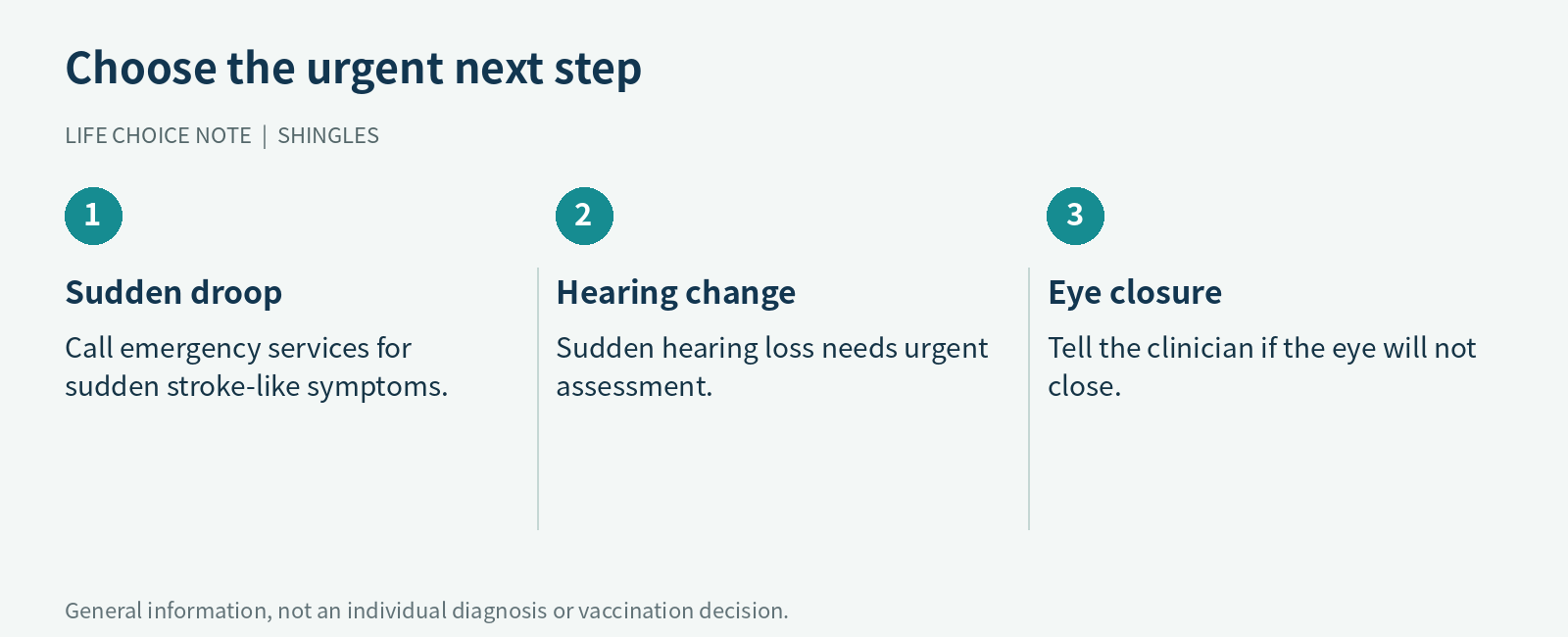
Tap the diagram to view full size
Look at ear symptoms and facial movement together
Ramsay Hunt syndrome can occur when the varicella-zoster virus affects nerves in the head. A painful rash around or inside the ear, sometimes in the mouth, can accompany facial weakness. Dizziness, tinnitus and hearing changes can also occur.
Tell the clinician if one side moves less when you smile, drinking causes leakage from the mouth, or an eye does not close fully. There are other causes of ear pain and facial weakness. Do not insert cotton swabs or other tools to search for blisters, and do not delay assessment because no rash is visible.
Record the onset of hearing loss and dizziness separately
A phone sounding quieter on one side, new ringing, fullness in the ear, or spinning dizziness are useful details. Less ear pain does not prove hearing has recovered. The US National Institute on Deafness and Other Communication Disorders advises treating sudden hearing loss as a medical emergency.
Do not assume sudden hearing loss is just wax or congestion. An ear examination and hearing assessment may be needed. Write down when each symptom began, and arrange help with travel rather than driving if dizziness makes movement unsafe.
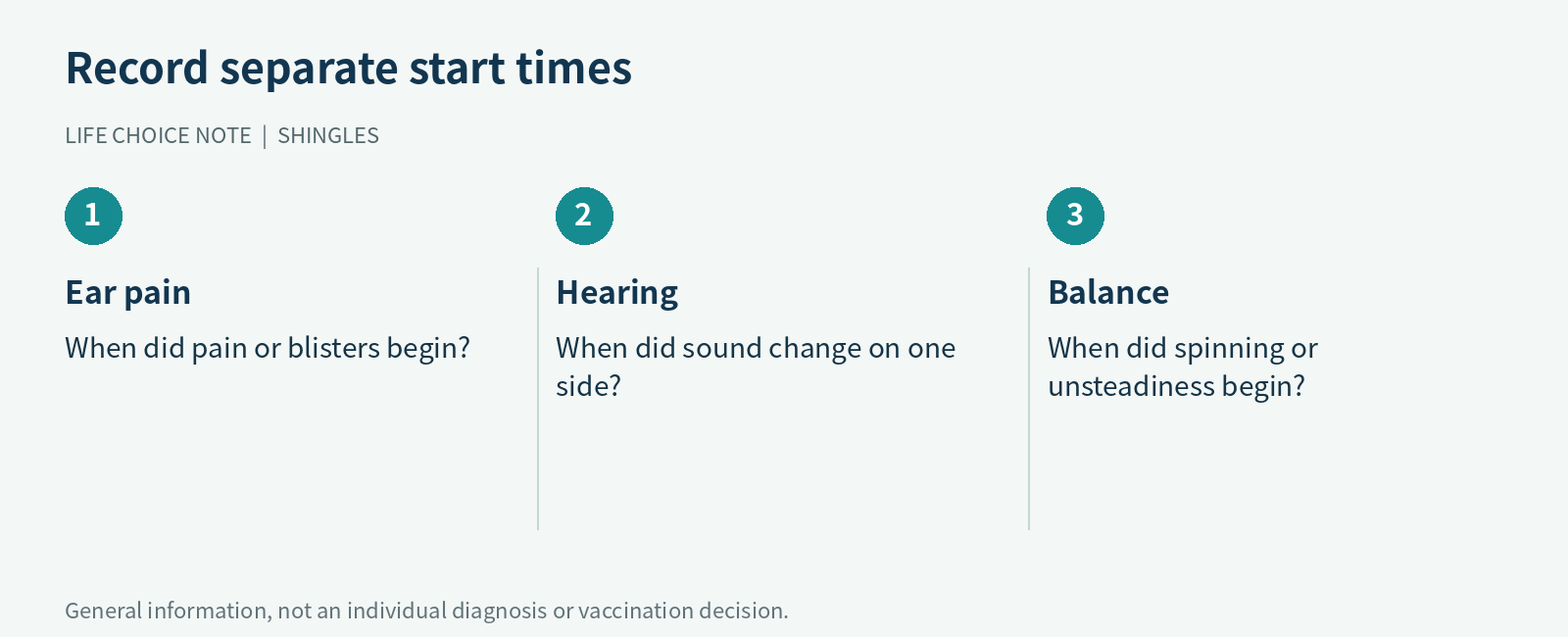
Tap the diagram to view full size
An eye that does not close needs protection
Facial weakness can prevent complete eye closure. The exposed surface can dry out and become damaged even without a rash near the eye. Tell the clinician specifically about eye closure, irritation and vision.
Eye drops and protective measures should be selected and demonstrated by a healthcare professional. If taping or covering the eye is advised, ask exactly how to do it. Do not press an eye shut using an internet example or use leftover eye medicines. Eye pain, marked redness or blurred vision warrants prompt reassessment.
Timing matters, but a clock does not replace an assessment
The examination considers the skin, facial movement, hearing, balance, existing conditions and medicines. Not everyone needs the same imaging or nerve tests. Treatment for shingles-related facial nerve problems may involve antiviral medicines and other prescribed treatment.
Do not abandon care because more than 72 hours have passed. Ear, eye and neurologic symptoms need clinical assessment rather than a home decision based on elapsed time. Do not restart old steroids or antivirals yourself; bring your current medicine and allergy list.
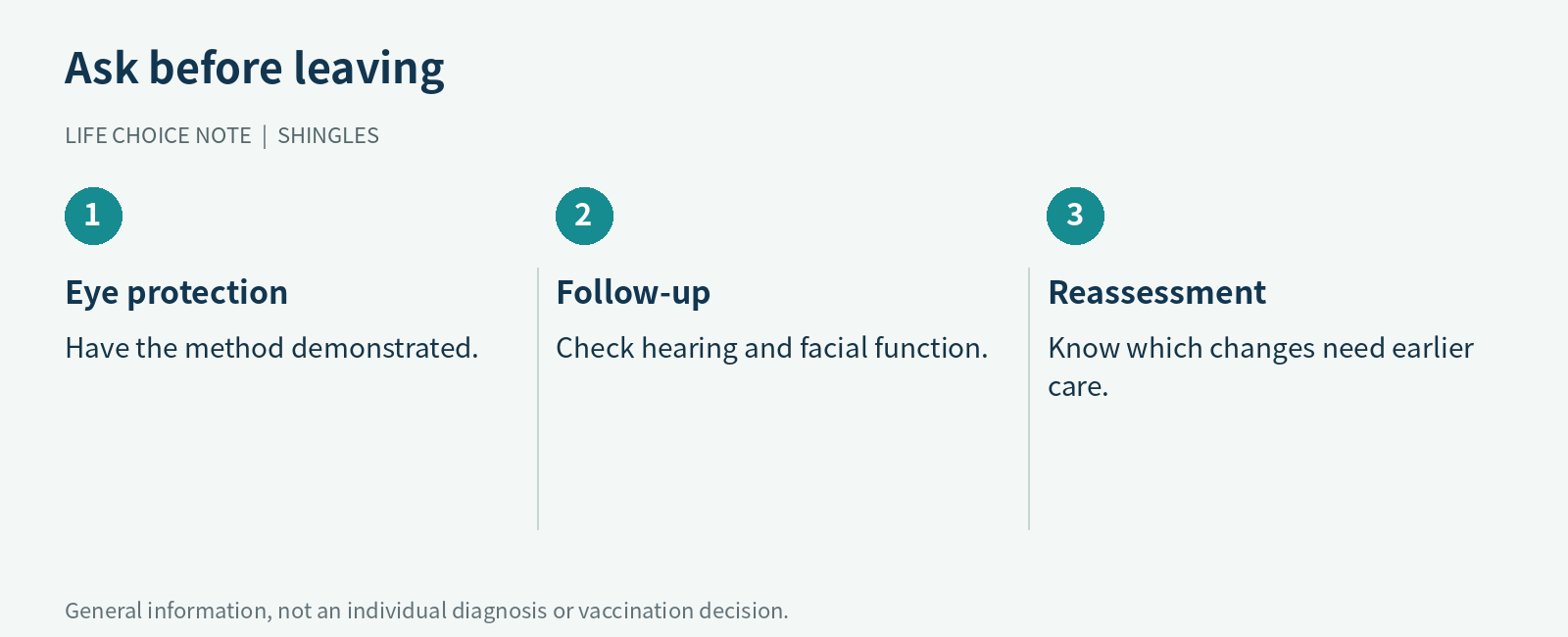
Tap the diagram to view full size
Agree on follow-up for each affected function
Before leaving, ask how to protect the eye, when hearing and facial movement will be checked again, and which changes need an earlier call. A companion or a short written plan may help you remember the instructions.
Recovery varies with the extent of nerve involvement. The day the blisters dry is not a deadline for hearing or facial movement to recover. Record practical difficulties with eating, eye closure, conversation or phone calls so follow-up addresses everyday needs.
This is general health information, not a diagnosis. Ear pain with new facial weakness deserves prompt care; sudden stroke-like symptoms require emergency help. A short symptom timeline and medication list can support, but should never delay, that assessment.
Sources and review date
- KDCA National Health Information Portal: Chickenpox and Shingles (Korea)
- MedlinePlus: Ramsay Hunt Syndrome
- NHS Bell’s palsy
- NIDCD: Sudden Deafness
- NHS England: Pharmacy First Clinical Pathways, Version 2.5
Sources checked October 6, 2026. General health information; discuss individual diagnosis, treatment and vaccination with a qualified healthcare professional.