How to Move More at Home and Work When Time Is Short
When you cannot protect an hour after work, look for gaps in the day you already have. A short walk after lunch, movement between meetings or an activity break at home may fit more readily than a complete schedule change.
Short periods of movement matter. However, standing up, light activity and moderate-intensity exercise are not identical doses. Keeping them distinct helps you build a realistic plan without dismissing the small steps.
You can accumulate activity in shorter periods
Keep the types of movement distinct
Change position
Easy indoor movement
Talk but not sing
CDC adult activity guidance allows weekly activity to be split into smaller chunks. General guidance includes 150 minutes of moderate aerobic activity, or 75 minutes of vigorous activity or an equivalent combination, plus muscle strengthening on at least two days.
This is not a test you must pass on the first day. Begin with more movement than you currently do. Find a feasible five-minute opportunity and adapt frequency or duration as you become comfortable.
Do not dismiss an opportunity simply because it lasts less than ten minutes. Equally, a few brief breaks do not automatically replace the entire recommended amount. Note actual duration and intensity so the total keeps its meaning.
Separate sitting breaks from aerobic exercise time
WHO recommends limiting sedentary time and replacing it with physical activity. Getting water or moving around a room can interrupt a long seated stretch. Standing at a desk should not automatically be counted as moderate aerobic exercise.
The CDC talk test uses being able to talk but not sing as a rough guide to moderate intensity. Comfortable standing or very slow walking may not reach that level. Relative intensity depends on fitness and circumstances.
A standing desk does not require standing all day. Vary feasible positions and add walking or another suitable movement. Adjust if a position causes pain or fatigue.
Use natural transitions at work
Attach movement to a transition
A short indoor or outdoor walk
Use an available break
Move in a safe space
Choose transitions that already happen: after a meeting, after lunch or before starting the next task. “A lap of the indoor corridor after lunch” is easier to remember than “move when I have time.” This is a planning example, not a fixed exercise requirement.
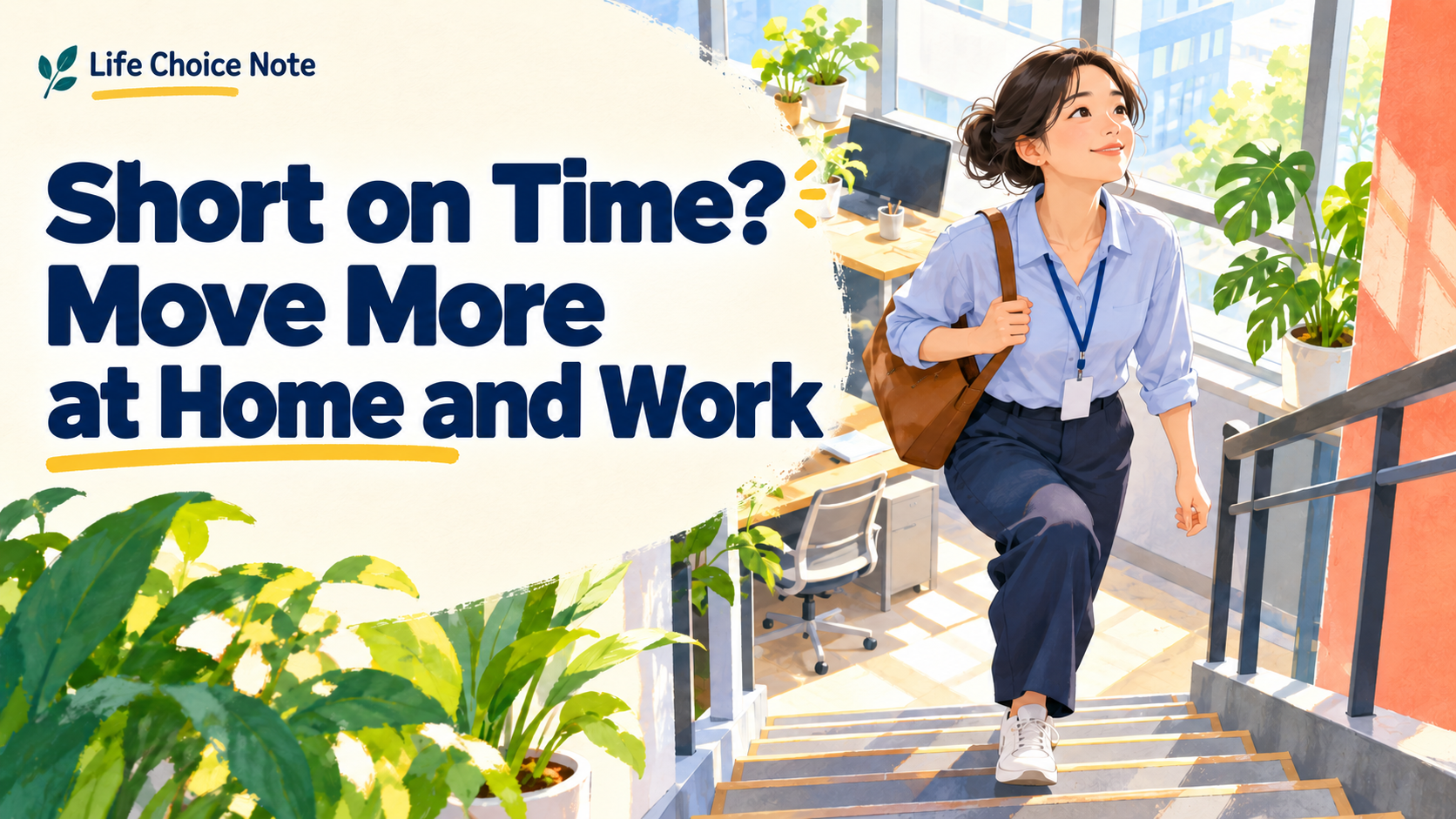
Walking during a call is an option only when the setting and task are safe. Avoid watching a screen on stairs or rushing upstairs while carrying awkward loads. Level movement is a valid alternative if stairs are difficult.
If your work keeps you at a station, use breaks and arrangements that are actually available. A plan built around permitted rest periods may work better than constant reminders. Limited opportunities are not simply a matter of willpower.
Choose home activities that need little preparation
If changing into exercise clothes is a barrier, a safe indoor walk or gentle movement during a song may be easier to start. Clear slippery surfaces, thresholds, toys and other trip hazards first.
Household tasks can involve activity, but their names do not establish intensity. Folding laundry and carrying a heavy load place different demands on the body. Do not add unsafe lifting or climbing on an unstable chair as a workout.
If standing or walking is difficult, ask about suitable seated or upper-body activities. Movement does not have to mean stairs. Someone whose day is already physically demanding may need recovery rather than turning every break into more exercise.
Add up what you actually did
Calculate the actual weekly total
5 minutes × 3 = 15 minutes
15 × 5 = 75 minutes
Light or moderate activity
For a simple planning example, five minutes three times a day on five days adds up to 75 minutes. Even if every bout were moderate, that is not 150 minutes. If the activity was light, record 75 minutes of light activity. Neither needs to be treated as zero.
In the first week, review whether the after-lunch break was feasible. Then consider adding another opportunity or extending a session. Increasing time, intensity and frequency together makes it harder to identify what became too demanding.
Keep room for suitable strength work as well; short walks do not automatically replace it. Do not count overlapping minutes twice or push through pain to reach a total.
Record the opportunity and what got in the way
A note of when, what, how long and how demanding is enough to begin. “Five-minute corridor walk after lunch, conversation easy” is one example. On a missed day, note the practical reason, such as meetings, rain or heat.
Use those notes to revise the plan. If weather repeatedly interrupts outdoor activity, choose an indoor alternative. If lunch is unpredictable, test a different transition. The record should help you adapt rather than assign a penalty.
The Life Choice Note health records hub provides blank health forms. It does not automatically collect activity or establish calories used. Keep the activity note separately and bring relevant changes or symptoms to a health appointment if needed.
Health benefits do not require a weight loss promise
More activity can support health without producing a fixed amount of monthly weight loss. Food intake, existing activity and health affect weight response. Early on, check whether you are moving more and whether the effort is manageable.
NIDDK advises building gradually and seeking advice for conditions or pain that affect safety. Stop and get immediate medical help for chest pain, severe breathlessness, fainting or marked dizziness.
If one short indoor movement break is what fits today, it can be a starting point. Look for a place in the routine that remains possible next week instead of copying someone else’s timetable.
Common questions
Can I record a five-minute break
Yes. Record its actual duration and activity without assuming every kind of movement is moderate exercise.
Does standing all day complete my exercise
Comfortable standing is not equivalent to aerobic or strength exercise. Vary posture, add suitable activity and pay attention to pain from prolonged standing.
Should I make up all missed activity at the weekend
Weekly activity can be distributed flexibly, but an unfamiliar amount all at once can be too demanding. Build a distribution that fits your fitness, recovery and schedule.
Sources and scope
This article applies general adult activity guidance to everyday schedules. Timetables and arithmetic are editorial examples, not trial results. Brief activity is not presented as diabetes treatment or a guaranteed weight-loss dose.
- CDC Adult Activity Overview · 2023-12-20
- WHO Physical Activity Fact Sheet · 2024-06-26
- CDC Measuring Physical Activity Intensity · 2025-12-04
- NIDDK Staying Active at Any Size · 2016-07 reviewed; current guidance cross-checked with CDC
Sources checked 5 October 2026, Korea time. General adult health information, not individual diagnosis, treatment or exercise prescription. This article has not undergone separate clinical expert review.